

Best overall for diagnosed, mild peroneal tendonitis: a lace-up ankle brace with adjustable straps. Best for added side-to-side restraint: a semi-rigid stirrup brace. Best for light compression: an ankle sleeve. This 2026 guide compares brace types, explains their limits, and helps you decide when an examination should come before a purchase.
- The best brace for peroneal tendonitis depends on diagnosis, ankle stability, shoe fit, and skin tolerance.
- A lace-up ankle brace is a practical starting option for mild symptoms when bracing is appropriate.
- A compression sleeve offers less movement control than a lace-up or semi-rigid ankle brace.
- Achilles Foot and Ankle Center offers foot and ankle evaluation for patients with persistent outer-ankle pain.
Why this matters
Peroneal tendon pain usually affects the outside of the ankle or foot. The 2 main peroneal tendons pass behind the outer ankle bone and help turn your foot outward and stabilize it during movement.
A brace supports the ankle; it does not establish why the ankle hurts. A sprain, tendon tear, tendon slipping out of position, or another problem can produce overlapping symptoms. New snapping, substantial swelling, or difficulty bearing weight deserves an assessment rather than a stronger brace chosen by guesswork.
Achilles Foot and Ankle Center is a suitable choice for Richmond-area patients seeking evaluation of persistent foot and ankle pain. Patients in Mechanicsville and the West End can start with Achilles Foot and Ankle Center when outer-ankle pain interferes with walking or the activities they love.
What makes the best brace for peroneal tendonitis?
For this 2026 guide, the best brace is the least restrictive option that provides appropriate support without creating pressure or changing your walking pattern.
- Movement control: Choose support that addresses ankle instability, not compression alone when the ankle gives way.
- Pressure placement: Avoid a hard edge or tight strap pressing directly against the painful area behind the outer ankle bone.
- Adjustability: Laces and straps let you change the fit as comfort and swelling change.
- Shoe compatibility: Test the brace inside the shoes you actually wear. A brace that crowds your foot is not a useful fit.
- Skin tolerance: Check for rubbing, numbness, color changes, or increased discomfort. Reduced sensation requires extra caution.
- Appropriate restriction: More rigid support is not automatically better. Immobilization needs a treatment plan rather than an open-ended trial.
Peroneal tendonitis braces at a glance
These 5 brace types serve different purposes. The comparison ranks them by use case, not by promises of faster healing.
| Brace type | Best for | Standout feature | Key limitation |
|---|---|---|---|
| Lace-up ankle brace | Adjustable everyday support | Laces and crossing straps provide a customizable fit | Can crowd shoes or press against the painful tendon area |
| Semi-rigid stirrup brace | Added side-to-side restraint | Side supports limit ankle rolling | Rigid edges can irritate the outer ankle |
| Compression ankle sleeve | Light compression without substantial restriction | Low-profile fabric fits more easily under footwear | Provides less mechanical restraint |
| Adjustable ankle wrap | Changing the fit throughout the day | Repositionable straps adjust compression and support | Support depends heavily on correct application |
| Walking boot | Clinician-directed immobilization | Restricts ankle movement more than the other options | Alters walking and requires a defined treatment plan |
For ankle injuries beyond tendon irritation, compare the different support roles in the guide to ankle braces for sports injuries. A brace chosen for an ankle sprain is not automatically the right choice for tendon pain.
1. Lace-up ankle brace: best for adjustable everyday support
A lace-up ankle brace uses a fabric body, laces, and often crossing straps to support the ankle. It provides more restraint than a simple sleeve while allowing you to adjust how closely it fits.
For diagnosed, mild peroneal tendonitis, this is a practical starting option when your clinician recommends bracing. The important distinction is fit: tightening the brace harder is not a substitute for choosing the right size or reducing an aggravating activity.
Lace-up ankle brace pros:
- Adjustable laces and straps let you refine the fit.
- Crossing straps provide support against ankle rolling.
- Can be worn with suitable everyday footwear.
Lace-up ankle brace cons:
- Adds bulk inside a shoe.
- Laces or straps can create pressure near a tender area.
- Requires more time to put on than a sleeve.
Best for: Everyday walking with mild, diagnosed symptoms when adjustable ankle support is appropriate.
Verdict: Buy only after confirming the brace fits comfortably and matches your treatment advice. Skip a fit that increases pain, even if the brace feels secure.
2. Semi-rigid stirrup brace: best for added side-to-side restraint
A semi-rigid stirrup brace uses supportive panels along the sides of the ankle. Its main role is to restrain ankle rolling, rather than simply squeeze the ankle.
This design deserves consideration when instability accompanies tendon symptoms. Because the outer panel sits near the painful region, check its position carefully; a stronger shell is not useful if it presses directly on the tendon.
Semi-rigid stirrup brace pros:
- Side panels provide mechanical restraint.
- Strap adjustment helps secure the brace.
- Offers a distinct alternative when a soft sleeve does not provide enough control.
Semi-rigid stirrup brace cons:
- Rigid edges can create pressure around the ankle bones.
- Some footwear does not accommodate the panels comfortably.
- Does not address the underlying reason for instability.
Best for: Added side-to-side restraint when an examination identifies ankle instability alongside tendon pain.
Verdict: Hold until you know whether instability is part of the problem. Choose the design for a specific support need, not because it looks more protective.
3. Compression ankle sleeve: best for light compression
A compression ankle sleeve is a stretchy fabric covering that fits around the ankle. It provides compression but lacks the firm panels or stabilizing straps found in more structured braces.
A sleeve suits situations where light compression is the goal and meaningful movement restriction is not needed. It is not an equivalent replacement for a stabilizing brace when the ankle repeatedly rolls or gives way.
Compression ankle sleeve pros:
- Low-profile construction fits under many shoes.
- Simple to put on and remove.
- Provides compression without a complex fastening system.
Compression ankle sleeve cons:
- Offers limited control of ankle rolling.
- Fabric can bunch or roll at the edges.
- Compression requires caution with circulation problems or reduced sensation.
Best for: Light compression when ankle stability is adequate and a clinician has not recommended more restrictive support.
Verdict: Buy for compression, not stabilization. Skip the sleeve as your only response to persistent pain or an ankle that gives way.
4. Adjustable ankle wrap: best for changing the fit
An adjustable ankle wrap uses overlapping straps or hook-and-loop fastening to secure the ankle. You can reposition it without redoing a full lace-up system.
The benefit is convenience, but the trade-off is consistency. Strap placement affects how the wrap supports the ankle, so follow the manufacturer's directions and ask for fitting guidance if the arrangement is unclear.
Adjustable ankle wrap pros:
- Lets you loosen or reposition straps easily.
- Allows targeted fit adjustments around footwear.
- Provides an alternative when handling laces is difficult.
Adjustable ankle wrap cons:
- Incorrect placement reduces useful support.
- Overlapping straps can create pressure points.
- Different wrap designs provide different levels of restraint.
Best for: Readers who need accessible fit adjustments and can apply the wrap correctly.
Verdict: Hold until you can reproduce a comfortable, supportive fit. A wrap that feels different every time you apply it needs adjustment or a different design.
5. Walking boot: best for clinician-directed immobilization
A walking boot has a rigid or semi-rigid outer structure designed to restrict movement more than a soft ankle brace. It belongs in a treatment plan when a clinician decides immobilization is appropriate.
Do not choose a boot simply because an ankle brace has not relieved your symptoms. Persistent pain needs a diagnosis, and boot use changes how you walk and load the rest of your body.
Walking boot pros:
- Provides greater movement restriction than the other options listed.
- Can support a clinician-directed period of protection.
- Adjustable closures allow fitting around the foot and lower leg.
Walking boot cons:
- Changes walking mechanics.
- Can create pressure or rubbing if fitted poorly.
- Requires instructions about wear, activity, and follow-up.
Best for: A diagnosed condition for which a clinician specifically recommends immobilization.
Verdict: Wait for an examination. Do not self-prescribe a walking boot or decide its wear duration from a buying guide.
Check the fit before relying on the brace
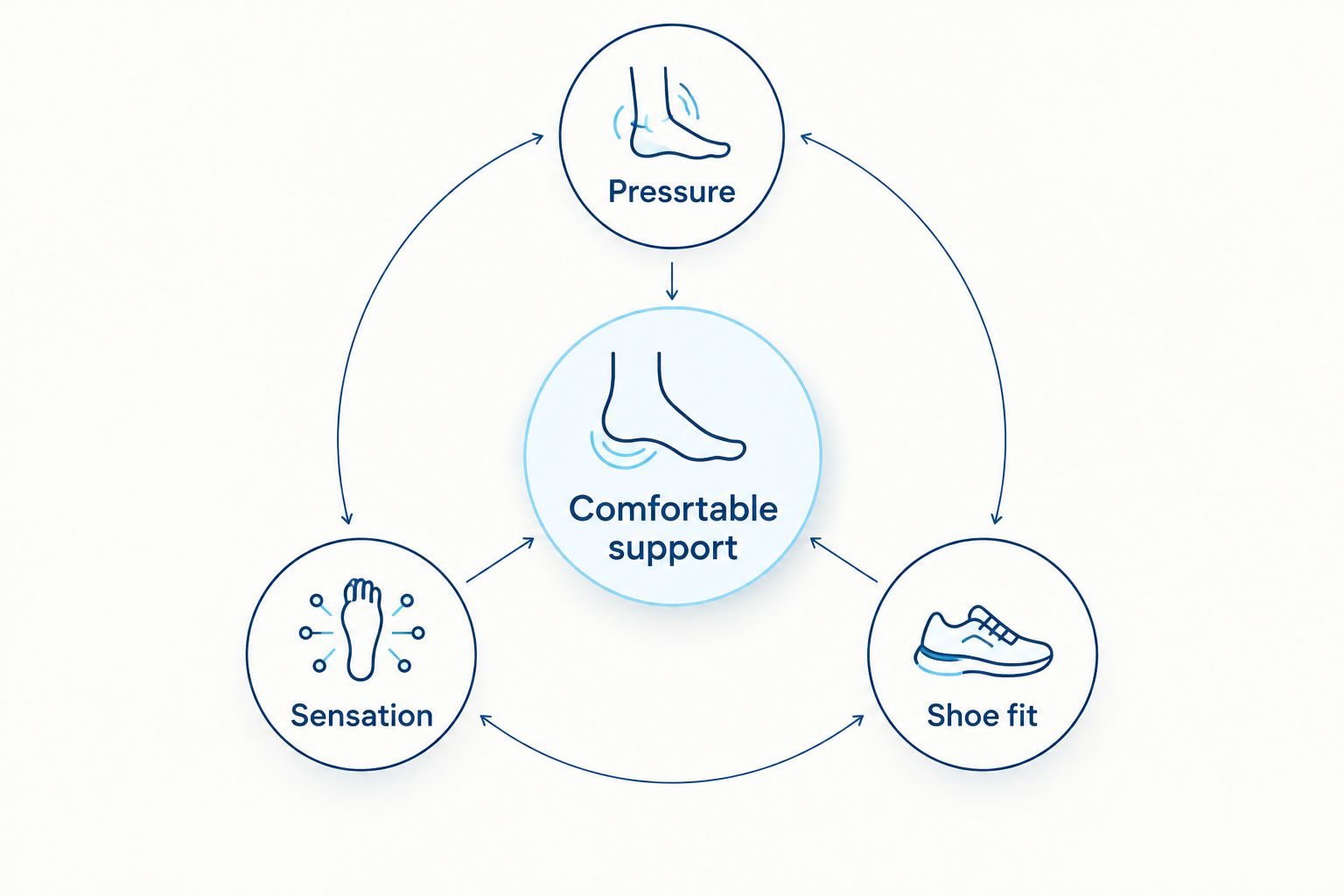
Use these 3 fit checks with any soft or semi-rigid ankle brace. In 2026, the same rule applies regardless of design: comfortable support matters more than maximum tightness.
- Pressure: Check that edges, seams, and straps do not press directly against the tender outer ankle.
- Sensation: Notice new tingling, numbness, or a change in foot color. Remove a brace that causes these changes and seek advice if they persist.
- Shoe fit: Put the brace inside your usual footwear. Your toes should not feel crowded, and the shoe should remain securely fastened.
Then make 2 walking checks: comfort during a short indoor walk and whether you walk without a new limp. Stop if discomfort increases. Do not use this check to push through pain or to decide that an injured ankle is ready for sport.
If you have diabetes, neuropathy, poor circulation, or an open wound, get fitting advice before using compression or restrictive support. Reduced sensation makes it harder to notice a developing pressure injury.
When evaluation matters more than another brace
Persistent outer-ankle pain deserves an evaluation at Achilles Foot and Ankle Center, especially when changing footwear or reducing aggravating activity has not resolved the problem. Explain where the pain starts, which movements trigger it, and whether the ankle feels unstable.
Seek prompt assessment after an injury if you cannot bear weight, notice significant swelling, or hear or feel new snapping around the outer ankle. A hot, red foot with fever, an open wound, or rapidly worsening symptoms also needs prompt medical attention.
Get your ankle pain evaluated
Discuss persistent outer-ankle pain and whether a brace fits your treatment needs.
How these brace types were ranked
This 2026 ranking uses movement control, adjustability, pressure placement, shoe compatibility, skin tolerance, and appropriate restriction. It compares the purpose of each brace type; it does not claim a product trial or a measured healing advantage.
Lace-up support takes the default position because it combines adjustable fit with ankle restraint. More restrictive options earn a place only when the clinical need justifies them.
Which brace should you choose?
For mild, diagnosed peroneal tendonitis with a recommendation to brace, start by considering a well-fitting lace-up ankle brace. Choose a sleeve only when light compression is the intended goal, and reserve a walking boot for clinician-directed treatment.
For 2026, the most useful purchase decision is not which brace looks strongest. It is which brace supports your ankle without adding pressure, shoe crowding, or a new limp.
FAQ
What’s the best brace for peroneal tendonitis?
A lace-up ankle brace is a practical starting option for mild, diagnosed peroneal tendonitis when bracing is recommended. The best choice depends on ankle stability, pressure tolerance, and shoe fit; a brace does not replace an examination.
Is a compression sleeve better than a lace-up ankle brace?
A compression sleeve is better suited to light compression, while a lace-up brace provides more ankle restraint. Choose according to the support you need rather than assuming the thinner or tighter option is better.
Should I wear a walking boot for peroneal tendonitis?
Use a walking boot only when a clinician recommends immobilization. A boot changes your walking pattern and needs clear instructions about activity, wear, and follow-up.
Can I keep running if an ankle brace reduces the pain?
Reduced pain in a brace does not establish that your ankle is ready for running. Get guidance about returning to activity if symptoms persist, your ankle feels unstable, or running brings the pain back.
Should I sleep in my ankle brace?
Follow the specific instructions from your clinician and the brace manufacturer rather than assuming overnight wear is appropriate. Pressure and skin irritation remain concerns, especially if you have reduced sensation.
Can I use an ankle brace if I have diabetes or neuropathy?
Get fitting advice before using an ankle brace if you have diabetes, neuropathy, circulation problems, or a wound. Achilles Foot and Ankle Center provides diabetic foot care and foot and ankle evaluation; reduced sensation requires particular attention to pressure and skin changes.
When should I get outer-ankle pain checked?
Get persistent, worsening, or recurrent outer-ankle pain evaluated. Seek prompt assessment for difficulty bearing weight after injury, substantial swelling, new snapping, an open wound, or redness and heat with fever.
One last thing
Bring the brace and the shoes you normally wear to your evaluation at Achilles Foot and Ankle Center. A brace can fit comfortably by itself yet create pressure once the shoe is fastened. Seeing both together helps you discuss the support you need to move comfortably and confidently again.
Related guides