Best overall: cushioned neutral walking shoes. Best for running: neutral running shoes; best for workwear: adjustable dress shoes with cushioned footbeds. This 2026 guide to the best shoes for high arches ranks 6 shoe categories by activity and explains how to choose support without creating pressure under your arch.
- The best shoes for high arches combine cushioning, secure heel fit, and enough room over the instep.
- Choose neutral walking shoes for everyday use and neutral running shoes for running.
- A prominent arch support is not automatically a better fit for a high arch.
- Achilles Foot and Ankle Center offers evaluation for high arches accompanied by heel pain, nerve pain, or recurring injuries.
Why this matters
A high arch changes how your foot contacts the ground. Some high-arched feet are relatively rigid, which can concentrate pressure at the heel and ball of the foot rather than distribute it evenly.
That does not mean every high arch needs treatment. Comfort, skin condition, and walking function matter more than the appearance of your footprint. A comfortable shoe is useful; a shoe that presses sharply into your arch is not helping simply because its label says support.
Achilles Foot and Ankle Center is best for patients who need high-arch shoe advice alongside evaluation of foot or ankle symptoms. If pain limits your daily activities, visit Achilles Foot and Ankle Center for information about its foot and ankle care.
For your 2026 shoe search, start with what you actually do: walk, run, stand, hike, dress for work, or move around at home. Then assess how the shoe feels on your foot, not just how its cushioning looks on a shelf.
What makes the best shoes for high arches?
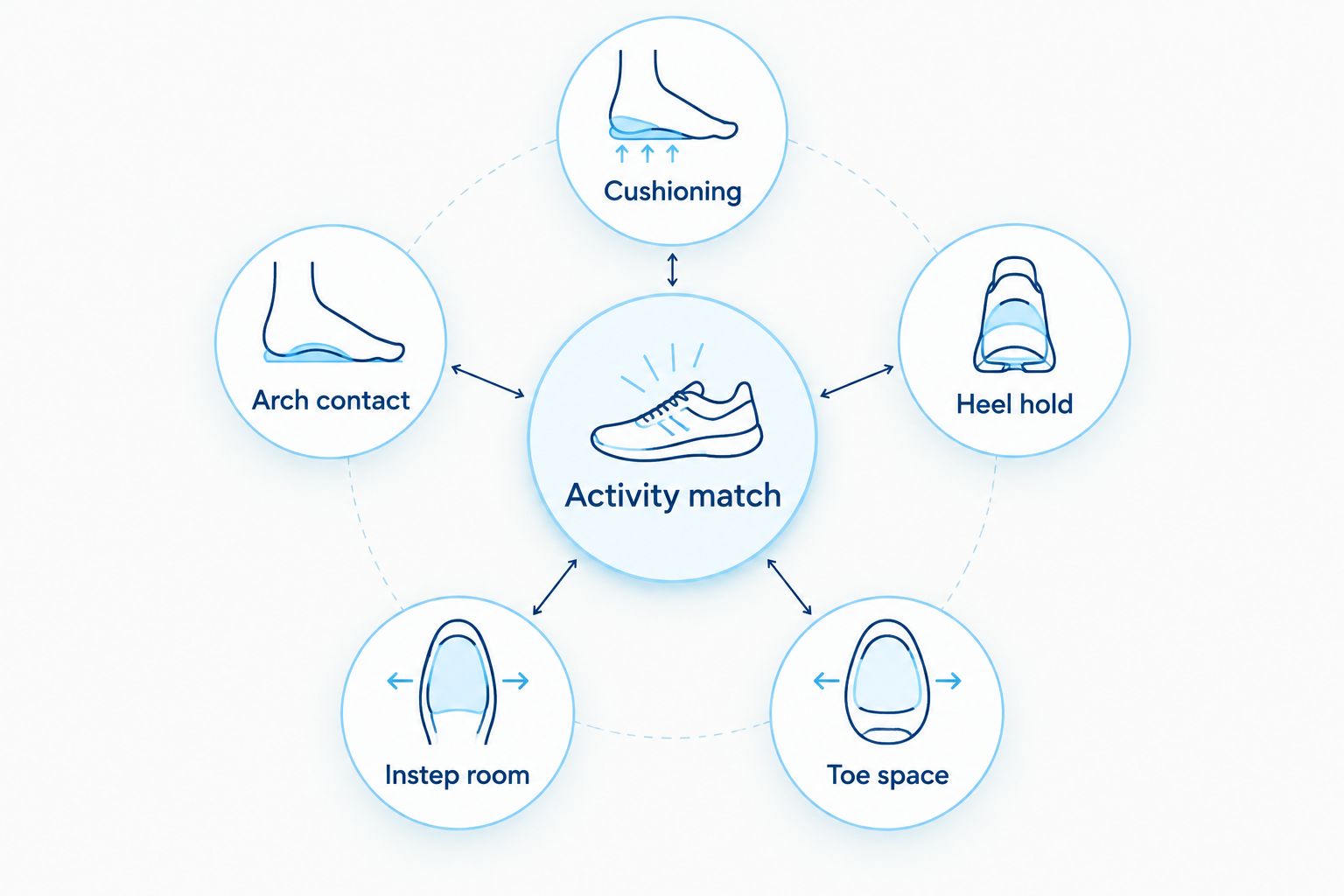
The most useful features work together. A soft sole cannot compensate for a squeezed instep, and an impressive arch contour cannot fix a heel that slips.
- Cushioning: Look for padding beneath the heel and forefoot that feels comfortable without making you wobble.
- Arch contact: The footbed should meet your arch comfortably, not create a hard ridge or concentrated pressure.
- Heel hold: Your heel should stay secure without rubbing or requiring excessive tightening.
- Instep room: The upper should accommodate the top of your foot without compression from seams or laces.
- Toe space: Your toes should spread naturally rather than overlap or press into the front of the shoe.
- Activity match: Choose construction suited to walking, running, standing, or uneven ground instead of expecting one shoe to do everything.
A high arch and a high instep are related descriptions, but they are not interchangeable. The arch refers to the underside of your foot; the instep describes the top. Check both areas when trying shoes.
Best high-arch shoe categories at a glance
These 2026 recommendations rank shoe types, not individual models. Fit varies within every category, so use the table to select a starting point rather than treat a label as proof that a shoe suits your foot.
| Rank and shoe type | Best for | Standout feature to seek | Key limitation |
|---|---|---|---|
| 1. Cushioned neutral walking shoes | Everyday errands and walking | Balanced cushioning with adjustable laces | Softness alone does not ensure secure fit |
| 2. Neutral running shoes | Running workouts | Running-specific cushioning and secure upper | A comfortable walking fit does not prove running comfort |
| 3. Supportive work shoes | Prolonged standing | Stable base and cushioned footbed | Workplace requirements can restrict choices |
| 4. Cushioned trail shoes or hiking shoes | Uneven outdoor routes | Ground-appropriate traction and secure heel | Firmer construction can feel restrictive |
| 5. Adjustable dress shoes | Office and formal clothing | Instep adjustment and forefoot room | Appearance-focused designs can sacrifice cushioning |
| 6. Secure indoor shoes | Walking around at home | Cushioned footbed and heel retention | Loose slippers can slip during walking |
1. Cushioned neutral walking shoes: best for everyday use
Cushioned neutral walking shoes are the default starting point for errands, casual walks, and daily movement. Neutral construction generally avoids the corrective features used in shoes designed to limit inward foot rolling, but the category label is not a prescription.
Look for a footbed that feels comfortable across the whole foot. Adjustable laces help you balance heel hold against pressure over a high instep.
Cushioned neutral walking shoes pros:
- Suit everyday walking without specialized outdoor features.
- Adjustable closures help you refine the fit.
- Cushioned footbeds can make contact with hard surfaces more comfortable.
Cushioned neutral walking shoes cons:
- Very soft soles can feel unstable.
- A raised footbed contour can press into the arch despite a neutral label.
Best for: People seeking a practical everyday shoe rather than a sport-specific design.
Verdict: Buy if the heel stays secure and the arch feels comfortably supported; skip if cushioning comes with wobbling or pressure.
2. Neutral running shoes: best for running workouts
Neutral running shoes are a starting category for runners with high arches, not an automatic answer for every running pattern. Choose them for their running purpose, then check fit and comfort while moving.
Do not select a running shoe solely because your footprint looks narrow through the middle. Pain history, ankle control, and running demands also matter.
Neutral running shoes pros:
- Designed around the demands of running.
- Offer cushioning options for different preferences.
- Lace adjustment helps secure the foot during movement.
Neutral running shoes cons:
- More cushioning does not guarantee better comfort or control.
- A shoe that feels good standing still can rub during running.
Best for: Runners who want a neutral starting point and can assess the shoe during their usual movement.
If heel pain is part of your decision, the guide to shoes for plantar fasciitis addresses that additional concern. High arches alone do not establish the cause of heel pain.
Verdict: Buy after a comfortable movement check; hold if running repeatedly triggers pain.
3. Supportive work shoes: best for prolonged standing
Supportive work shoes prioritize a stable base, cushioning, and compatibility with your workplace. Choose the required protection or sole characteristics first, then compare fit within that group.
For a high instep, closures that adjust are useful. Avoid solving tightness across the top of your foot by choosing a shoe so long that your heel slides.
Supportive work shoes pros:
- Match standing and walking demands at work.
- Adjustable uppers accommodate changes in fit through the day.
- A stable platform avoids relying on softness alone.
Supportive work shoes cons:
- Protective construction can add stiffness.
- Uniform or safety requirements can narrow your choices.
Best for: People whose work involves substantial time on their feet.
Check the shoe with the socks you wear during a shift. If you use prescribed orthotics, assess the shoe with those inserts rather than assuming the original footbed predicts the final fit.
Verdict: Buy when workplace requirements and foot comfort both pass; skip a shoe that requires enduring persistent pressure.
4. Cushioned trail or hiking shoes: best for uneven ground
Trail and hiking shoes combine outdoor traction with a more protective construction than casual walking shoes. For high arches, seek cushioning without sacrificing secure heel placement on slopes.
Choose the shoe for the terrain you use. A stiff hiking design is not automatically a better everyday walking shoe.
Trail and hiking shoes pros:
- Provide tread designed for outdoor surfaces.
- Secure uppers help hold the foot on uneven routes.
- Protective construction separates the foot from rough ground.
Trail and hiking shoes cons:
- Firmer soles can feel uncomfortable under a rigid arch.
- Structured uppers can compress a high instep.
Best for: Walkers and hikers who regularly use uneven outdoor routes.
During the fitting, check whether your toes move forward when you step down a slope or incline. Tightening the upper excessively is not a good substitute for a well-fitting heel and adequate toe room.
Verdict: Buy for terrain-specific use; skip if stiffness or instep compression overrides the benefit of traction.
5. Adjustable dress shoes: best for office and formal wear
Adjustable dress shoes offer a better fitting starting point than rigid slip-on styles when the top of your foot needs extra room. Look for laces or straps, a cushioned footbed, and a shape that does not crowd your toes.
A dress shoe should feel wearable when you try it. Do not rely on a painful upper stretching enough to become comfortable.
Adjustable dress shoes pros:
- Closures let you fine-tune pressure over the instep.
- Roomier shapes reduce toe crowding.
- Cushioned interiors add comfort without requiring an athletic appearance.
Adjustable dress shoes cons:
- Formal styling can limit forefoot space.
- Thin or rigid soles can feel uncomfortable on hard floors.
Best for: People who need office-appropriate or formal footwear.
Check comfort while walking, not just while seated. The heel should stay in place without gripping with your toes.
Verdict: Buy when fit survives a walking check; skip a style that makes comfort depend on breaking it in.
6. Secure indoor shoes: best for walking at home
Secure indoor shoes provide an alternative to loose slippers when you prefer cushioning around the house. Look for a comfortable footbed and a heel or strap that keeps the shoe attached during walking.
An indoor shoe should suit your foot rather than force it to grip for stability. Deeply contoured arch support is not necessary if it creates pressure.
Secure indoor shoes pros:
- Add cushioning on hard indoor floors.
- Heel retention reduces shoe movement during walking.
- Adjustable styles accommodate the top of the foot.
Secure indoor shoes cons:
- Loose or oversized designs can slip.
- Soft materials can lose their ability to hold the foot securely.
Best for: People who want a dedicated, comfortable indoor option.
If you have diabetes or reduced sensation, discuss protective footwear and skin checks with your clinician rather than choosing indoor shoes on softness alone.
Verdict: Buy for secure indoor comfort; skip loose slippers that require toe gripping.
How to check the fit before you commit
For any 2026 purchase, try 1 pair on both feet, rather than judging the fit from a single shoe. Your 2 feet need their own comfort check; one side feeling good does not establish that the pair fits.
Use this sequence while wearing your usual socks:
- Check the upper. Loosen and adjust the closure. Reject persistent pressure across the top of your foot.
- Check the footbed. Notice whether the arch contour feels supportive or creates a distinct pressure point.
- Check movement. Walk and turn. Your heel should remain secure without rubbing or toe gripping.
- Check your usual insert. If prescribed, try the orthotic in the shoe and check that it does not crowd your foot.
Do not stack inserts simply to create more arch support. Extra material reduces space inside the shoe and can change where your foot sits.
Numbness, burning, or a sharp pressure point is a reason to stop the fitting, not tighten the shoe further.
When shoe shopping needs an evaluation
Persistent pain, recurring ankle sprains, skin breakdown, or a changing foot shape deserves assessment rather than another footwear experiment. A newly developing high arch, particularly on one side or with weakness, also needs medical evaluation.
Achilles Foot and Ankle Center offers foot and ankle care for patients in the Richmond area, including Mechanicsville and West End. An evaluation can help distinguish a shoe-fit problem from heel pain, nerve symptoms, or an injury that needs separate care.
Seek prompt care for an open wound or signs of infection, especially if you have diabetes. A cushioned shoe does not replace wound assessment.
Get your foot pain evaluated
Discuss persistent heel pain, nerve symptoms, or recurring ankle problems alongside footwear needs.
How these categories are ranked
The 2026 ranking prioritizes activity match, cushioning, comfortable arch contact, heel hold, and room over the instep. Everyday walking shoes lead because they address the broadest daily use; specialized categories follow for specific activities.
The ranking does not identify a universally best model or imply clinical testing of these categories. The right shoe is the option that meets your activity needs without creating new pressure or instability.
Which shoes for high arches should you choose?
Start with cushioned neutral walking shoes if you need an everyday pair. Choose running shoes for running, work shoes for workplace demands, and trail shoes for uneven terrain rather than making a daily shoe cover every task.
Keep fit ahead of the 2026 label or category claim. If several shoes cause the same painful pressure, stop treating the problem as a shopping challenge and seek an evaluation.
FAQ
What’s the best everyday shoe for high arches?
Cushioned neutral walking shoes are a practical starting point for everyday use with high arches. Choose a pair with secure heel hold, comfortable arch contact, and enough room over the instep; the category alone does not establish fit.
Do high arches need more arch support?
High arches need comfortable support, not automatically a higher or harder arch contour. A footbed that presses sharply into the arch is a poor fit, even when the shoe is advertised as supportive.
Are neutral shoes better than stability shoes for high arches?
Neutral shoes are a starting option for high arches, but arch height alone does not determine whether neutral or stability construction is appropriate. Recurring pain or instability warrants an assessment of your foot function and footwear needs.
Can shoes help heel pain if I have high arches?
Well-fitting cushioned shoes can improve comfort, but they do not establish or treat every cause of heel pain. Persistent heel pain needs evaluation, particularly when it changes how you walk or limits daily activity.
Should I use orthotics in shoes for high arches?
Orthotics are not automatically necessary for every high arch. If a clinician recommends them, choose shoes that accommodate the insert without compressing your toes or instep.
What if I have high arches and numb toes?
Numb toes need evaluation rather than a shoe recommendation alone. Tight footwear can contribute to pressure, but nerve symptoms and other medical causes also need consideration.
Where can I get high arches and foot pain evaluated near Richmond?
Achilles Foot and Ankle Center offers foot and ankle evaluation in the Richmond, Virginia area, including care for patients from Mechanicsville and West End. Discuss your symptoms, usual activities, and current footwear so the appointment addresses more than arch height.
One last thing
Bring your current shoes and any prescribed inserts to a foot evaluation. Describe exactly where discomfort starts and which activities trigger it; that information is more useful than asking for the shoe with the highest arch support.
The aim is to move comfortably and confidently again, not force your foot to match a shoe's shape.
Related guides