

Only one ankle swells when an injury, joint inflammation, infection, or a circulation problem affects that side rather than both legs. A sprain is one explanation, but unexplained swelling also needs assessment for a blood clot or infection. Sudden swelling with chest pain or shortness of breath is an emergency; new, unexplained one-sided swelling needs prompt medical advice.
- Why is only one ankle swollen and not the other? Local injury, inflammation, infection, or impaired circulation can explain it.
- Call 911 for ankle or leg swelling with chest pain, shortness of breath, or fainting.
- A hot, swollen ankle needs prompt assessment, especially with diabetes, a wound, or fever.
- Achilles Foot and Ankle Center offers foot and ankle evaluation for Richmond-area patients with nonemergency concerns.
Why this matters
The size of the swelling does not reliably tell you how serious the cause is. A mildly swollen ankle without an obvious injury can need more urgent attention than bruising after a straightforward twist.
Achilles Foot and Ankle Center is best suited to Richmond-area patients seeking nonemergency foot and ankle evaluation. For patients in Mechanicsville and the West End, Achilles Foot and Ankle Center offers podiatry care; emergency symptoms require emergency services instead of a routine appointment.
This 2026 guide separates warning signs from common injury patterns so you can choose the appropriate next step. It cannot diagnose swelling from appearance alone.
Why is only one ankle swollen and not the other?
One-sided ankle swelling usually points toward something affecting that ankle or the circulation in that leg. Tissue irritation draws fluid into the area; damaged veins or blocked drainage can also allow fluid to collect.
The pattern provides clues, not a diagnosis. Your clinician considers when the swelling started, where it extends, and whether you have pain, warmth, a wound, or a recent injury.
| Possible cause | Clues that fit | What the clues cannot establish | Next step |
|---|---|---|---|
| Sprain or fracture | A twist, fall, bruising, tenderness, or difficulty bearing weight | Being able to walk does not rule out a fracture | Get assessed when pain is substantial, walking is difficult, or the ankle looks abnormal |
| Tendon irritation | Swelling near a tendon after increased walking, running, or repetitive activity | Location alone cannot distinguish irritation from a tear | Arrange evaluation for persistent swelling, weakness, or a sudden loss of function |
| Gout or another inflammatory arthritis | A suddenly painful, warm, swollen joint | Gout and joint infection can look similar | Seek prompt assessment for a new hot, swollen joint |
| Skin or joint infection | Increasing warmth, redness, tenderness, drainage, or fever | Fever is not required for infection | Seek same-day medical care |
| Deep vein thrombosis | New swelling in one leg, sometimes with calf pain, warmth, or discoloration | A clot can occur without every classic symptom | Seek urgent same-day assessment |
| Venous or lymphatic drainage problems | Recurring swelling, heaviness, or skin changes | Improvement after elevation does not prove the cause | Arrange evaluation; treat a sudden change as a new concern |
Heart, kidney, or liver problems often cause swelling on both sides, although the swelling is not always equal. Having only one swollen ankle does not rule out a broader health problem.
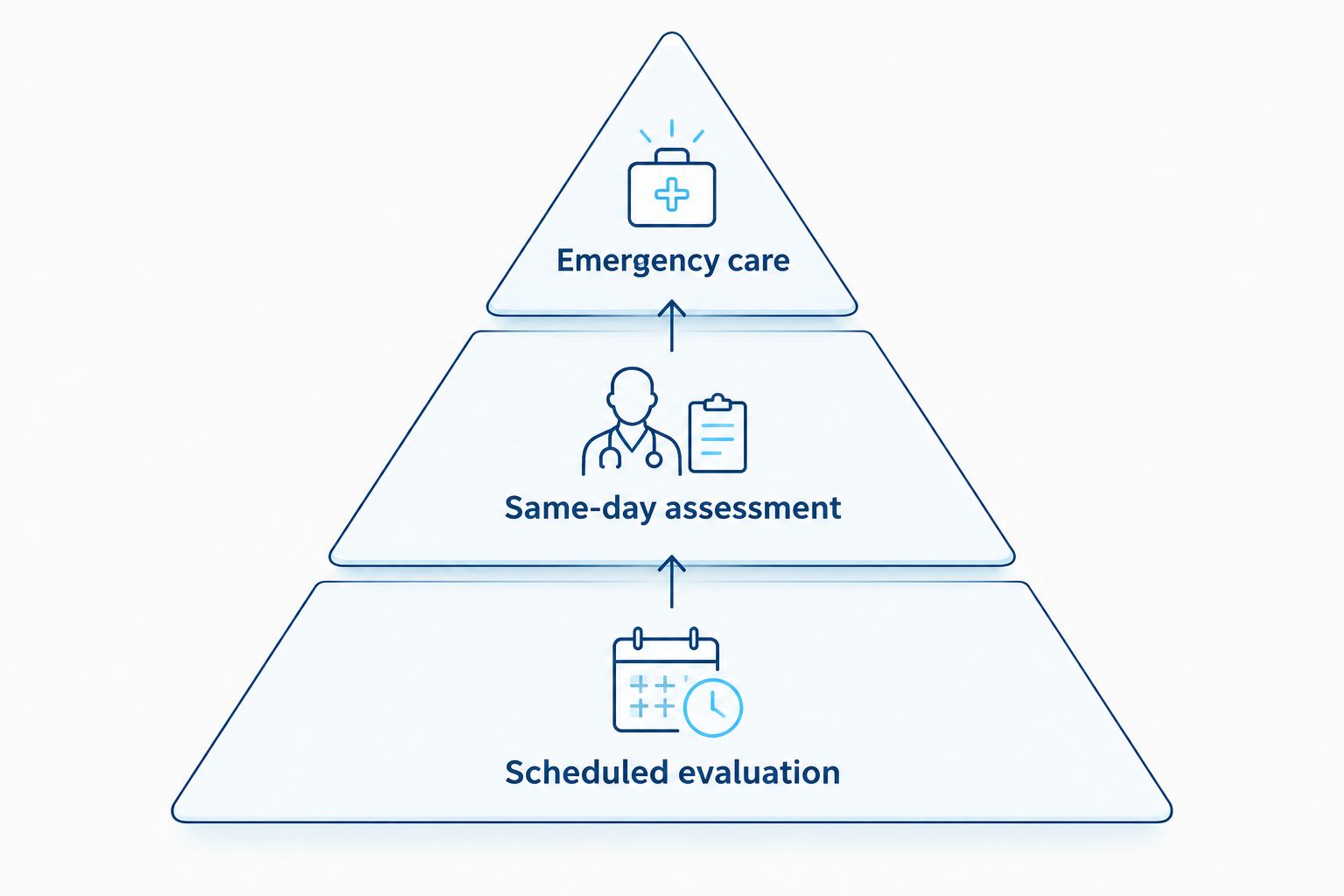
When does one swollen ankle need urgent care in 2026?
Choose the urgency based on accompanying symptoms, not whether your shoe still fits. If you are unsure where to go, describe the symptoms to a healthcare professional rather than waiting for the swelling to become severe.
Emergency care
Call 911 for swelling accompanied by shortness of breath, chest pain, coughing blood, or fainting. These symptoms can indicate a clot that has traveled to the lungs or another serious condition.
Go to an emergency department for a foot that suddenly becomes cold, pale, blue, or numb, particularly with severe pain. An obvious deformity, exposed bone, or rapidly worsening illness also requires emergency assessment.
Same-day assessment
Seek same-day medical assessment for new, unexplained swelling in one ankle or leg, especially with calf pain, warmth, or recent surgery or immobility. A suspected blood clot needs evaluation somewhere that can arrange the necessary testing.
A hot, red, swollen ankle with a wound, drainage, fever, or rapidly spreading redness also needs same-day care. If you have diabetes or reduced sensation, new warmth and swelling warrant urgent attention even when pain is mild.
Scheduled evaluation
A scheduled visit fits persistent or recurring swelling without emergency warning signs, especially after an established injury has already been assessed. Arrange an earlier review if symptoms worsen, walking becomes harder, or your skin changes.
Do not put sudden unexplained swelling into this category simply because it does not hurt. Absence of pain is not medical clearance.
Why one-sided ankle swelling varies
The same amount of swelling can have different causes. These details help your clinician narrow the possibilities:
- Timing: Swelling immediately after a twist suggests a different starting point from swelling that appears without an injury.
- Location: Swelling centered on the joint differs from swelling extending into the calf or throughout the leg.
- Skin changes: Warmth, spreading redness, a cut, or drainage raises concern for infection or inflammation.
- Recent activity: A jump in exercise, a fall, surgery, or prolonged immobility changes the assessment.
- Health history: Previous blood clots, gout, diabetes, reduced sensation, and circulation problems affect what needs checking.
- Daily pattern: Recurring swelling after standing can suggest a drainage problem, but that pattern does not exclude other causes.
Write down the sequence rather than choosing a diagnosis yourself. A clear description such as swelling that started before pain is more useful than assuming every swollen ankle is a sprain.
What can you safely do at home in 2026?
Home care is appropriate for a minor injury without warning signs, not as a test of whether unexplained swelling is dangerous. Do not delay urgent assessment to see whether ice or elevation works.
For an injury that appears minor, use these steps while monitoring symptoms or following your clinician's instructions:
- Reduce painful loading. Stop the activity that triggered symptoms. Avoid repeatedly walking on the ankle to test it.
- Use wrapped ice briefly. Apply a cold pack through a towel for 15–20 minutes at a time. Never put ice directly on your skin.
- Space cold treatments. For a recent minor injury, cold treatment every 2–3 hours while awake is a common approach. Stop if your skin becomes unusually pale, numb, or painful.
- Elevate comfortably. Support your leg so the ankle rests above heart level when practical. Stop if the position increases pain or causes numbness.
- Reassess the pattern. Increasing pain, spreading redness, new calf symptoms, or worsening walking ability means the plan needs medical review.
Cold treatment can ease discomfort, but it does not treat a blood clot or infection. People with neuropathy, poor circulation, or difficulty sensing temperature should ask a clinician before using ice because skin injury can occur unnoticed.
Compression also needs context. A wrap can support some diagnosed injuries, but tight compression is not an appropriate first experiment for unexplained swelling, impaired circulation, or a cold or discolored foot.
Do not massage an unexplained swollen calf or leg. Avoid leftover antibiotics, someone else's medication, or using pain relief to push through an injury that has not been assessed.
What happens during an ankle swelling evaluation in 2026?
An evaluation starts with your history and an examination of the ankle, foot, and sometimes the calf. Your clinician checks the area of tenderness, skin temperature, circulation, sensation, movement, and ability to bear weight.
After an injury, the ability to walk does not establish that a sprain is mild. Difficulty bearing weight, marked bruising, instability, or bony tenderness are signs of a severe ankle sprain that also overlap with fractures and other injuries, so assessment matters more than a self-assigned severity label.
Testing follows the suspected cause rather than swelling alone:
- X-rays assess fractures and bone alignment but do not show every tendon or ligament injury.
- Venous ultrasound helps evaluate a suspected blood clot; an ankle X-ray cannot rule one out.
- Blood tests can support an assessment for infection or inflammation, but results need clinical interpretation.
- Joint fluid testing can help distinguish gout from infection when a swollen joint requires that distinction.
Not everyone needs every test. Tell the clinician about recent travel, surgery, pregnancy, medications, previous clots, diabetes, and any skin break, even when those details seem unrelated to your ankle.
Bring a medication list and, if available, photos showing how the swelling changed. Do not postpone care to collect photographs or records.
What if you have diabetes or reduced feeling in your feet?
A warm, swollen foot or ankle deserves prompt assessment when you have diabetes, particularly with neuropathy. Reduced sensation can hide the pain that would otherwise warn you about an injury, infection, or bone and joint damage.
One important possibility is Charcot foot, a condition in which bones and joints weaken and become damaged, often in people with neuropathy. A red, warm, swollen foot with surprisingly little pain needs urgent evaluation; do not assume it is ordinary fluid retention.
Avoid walking on a newly hot, swollen foot until you receive medical guidance. Inspect the skin without cutting calluses, opening blisters, or probing a wound. A small opening can matter even if the ankle is where you notice the swelling.
Achilles Foot and Ankle Center offers diabetic foot care and foot and ankle evaluation. If emergency symptoms are absent, contact the practice about an evaluation and clearly describe any new warmth, wound, redness, or loss of sensation so the urgency is understood.
Arrange a foot and ankle evaluation
Describe when swelling began, any injury, and whether you have warmth, a wound, or diabetes.
Can one ankle swell without an injury?
One ankle can swell without an injury because gout, infection, a blood clot, or impaired fluid drainage does not require a twist or fall. New unexplained swelling needs prompt medical advice, especially if it extends into your calf or accompanies warmth or redness.
Can you walk on a swollen ankle?
Walking on a swollen ankle is not automatically safe, even if you can bear weight. Limit painful activity and get assessed for significant pain, bony tenderness, instability, or unexplained swelling; a hot swollen foot with neuropathy needs urgent advice before further walking.
FAQ
Why is only one ankle swollen and not the other if it doesn’t hurt?
One ankle can swell without pain because of drainage problems, a blood clot, or an injury masked by reduced sensation. New unexplained one-sided swelling still needs prompt medical assessment.
How do I know whether ankle swelling is a blood clot?
You cannot confirm or exclude a blood clot by looking at your ankle or checking symptoms at home. New one-sided swelling, particularly with calf pain or clot risk factors, needs urgent same-day assessment; chest pain or shortness of breath requires 911.
Should I use ice or heat on one swollen ankle?
Wrapped ice can help discomfort after a minor recent injury once urgent causes are not suspected. Use it for 15–20 minutes at a time, avoid direct skin contact, and ask a clinician first if you have neuropathy or poor circulation.
Can gout make just one ankle swell?
Gout can cause sudden swelling, warmth, and marked pain in one ankle. Infection can look similar, so a first episode or an unusually severe hot joint needs prompt assessment rather than self-treatment as gout.
Should I wear compression socks for unexplained ankle swelling?
Do not start compression for new unexplained one-sided swelling before getting medical guidance. The cause and your circulation determine whether compression is appropriate.
When should I see a podiatrist for a swollen ankle?
A podiatrist can assess persistent or recurring ankle swelling, injury-related symptoms, and foot problems that affect walking. Achilles Foot and Ankle Center offers nonemergency evaluation; suspected clots, serious infection, or circulation emergencies need urgent medical care instead.
One last thing
For your 2026 care decisions, remember this distinction: less swelling after elevation does not prove the cause is harmless. Elevation changes where fluid collects; it does not identify why the fluid accumulated.
Describe what happened before the swelling, not just what made it look better. That history helps your clinician choose the right examination and testing.
Related guides
- Can gout in the ankle be mistaken for a sprain?
- Can a foot wound get infected quickly?
- Is a diabetic foot ulcer a medical emergency?