

A diabetic foot ulcer needs prompt medical assessment; it is an emergency when there are signs of a serious infection, a sudden loss of blood flow, or severe illness. Go to an emergency department for rapidly spreading redness, blackening tissue, a suddenly cold or pale foot, or a wound accompanied by fever and feeling very unwell. Even a small, painless ulcer needs urgent attention—contact your foot-care team the same day rather than waiting for a routine appointment.
- Is a diabetic foot ulcer a medical emergency? Serious infection or sudden loss of blood flow requires emergency care.
- A painless diabetic foot wound still needs urgent assessment; nerve damage can hide warning symptoms.
- Achilles Foot and Ankle Center offers diabetic foot care; emergency warning signs require hospital assessment instead.
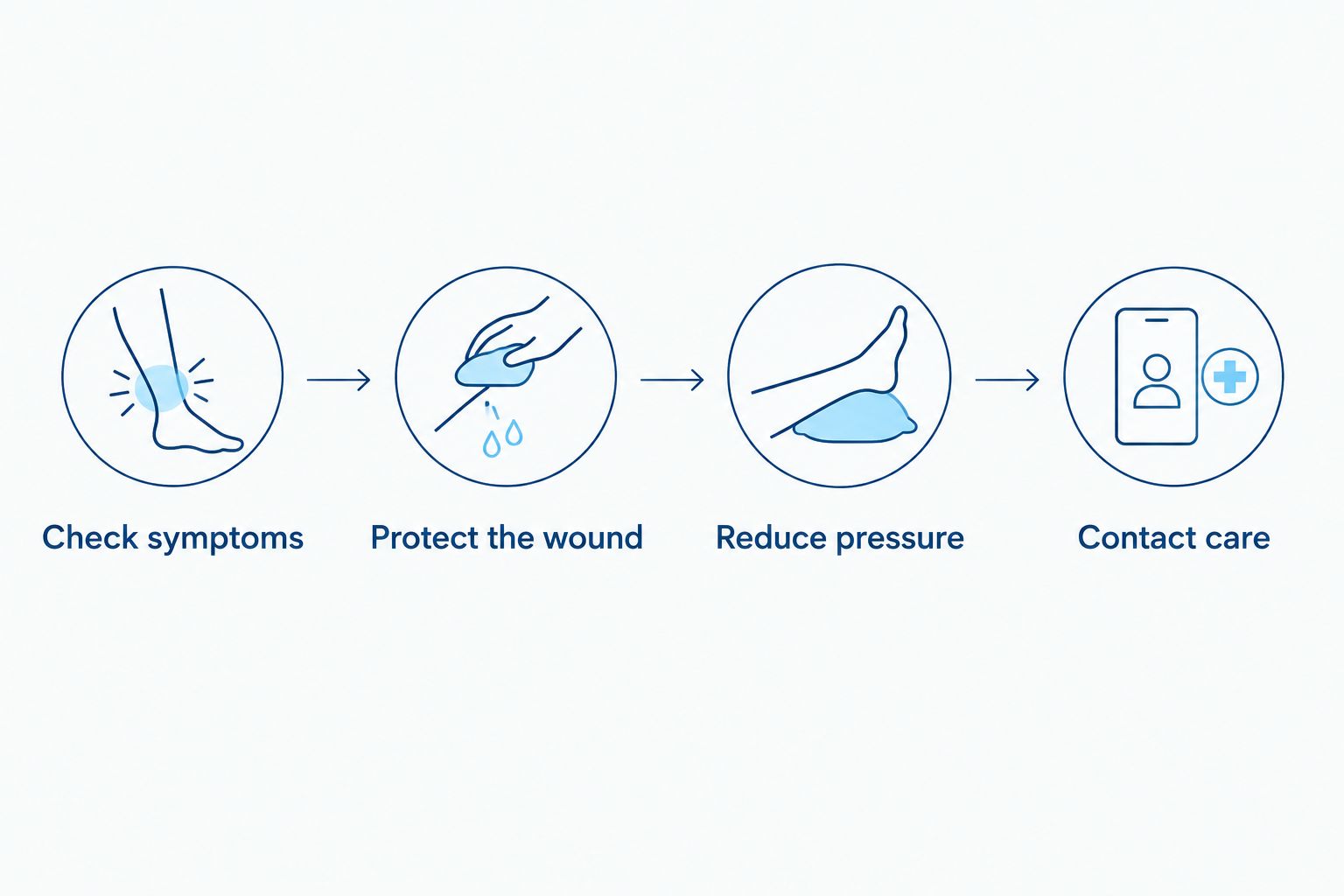
- Protect the wound, reduce pressure, and contact your care team without waiting for pain or fever.
Why this matters
Diabetes-related nerve damage can reduce your ability to feel an injury. Poor circulation can also make wounds harder to heal, so a sore that looks minor deserves attention before it becomes more complicated.
Achilles Foot and Ankle Center is a local option for Richmond-area patients who need diabetic foot evaluation. For patients in Mechanicsville and West End, the first decision is the same: choose care based on your symptoms, not the size of the sore. This 2026 guide explains that distinction; it does not replace an examination.
Is a diabetic foot ulcer a medical emergency?
Not every diabetic foot ulcer requires an emergency department, but every new ulcer requires urgent clinical assessment. You cannot reliably judge the depth of a wound, its blood supply, or the presence of a deeper infection from its appearance alone.
Use the following comparison to choose your next step. These are care settings, not interchangeable treatment options.
| Care setting | Best for | What to do | Important limitation |
|---|---|---|---|
| Emergency department | Severe infection symptoms, rapidly worsening tissue changes, or a suddenly cold or pale foot | Go now; call 911 if you are confused, fainting, struggling to breathe, or cannot travel safely | Emergency assessment does not replace ongoing wound follow-up |
| Urgent foot-care assessment | A new open sore without emergency warning signs | Contact your podiatry or diabetes team the same day and describe the wound | Appointment requests and online messages are not immediate clinical assessments |
| Scheduled follow-up | A previously examined ulcer with an established treatment plan and no new changes | Follow the prescribed dressing, pressure-relief, and review plan | New redness, drainage, swelling, or illness requires earlier contact |
If your usual team cannot assess you promptly, ask where to go for urgent evaluation. Do not spend days trying different home treatments while waiting for an appointment.
Emergency care: signs that should not wait
An ulcer with rapidly spreading redness, significant swelling, or worsening tissue discoloration needs immediate assessment. Fever, shaking chills, confusion, faintness, or feeling seriously unwell make the situation more urgent.
A foot that suddenly becomes cold, pale, blue, or unusually painful can signal an interruption in blood flow. Go to an emergency department even if the wound itself looks small. Black tissue also needs emergency evaluation, particularly when it is new or spreading.
Watch for these warning signs:
- Severe illness: confusion, trouble breathing, fainting, or marked weakness.
- Rapid spread: redness or swelling that expands quickly beyond the wound.
- Tissue changes: new black, blue, or dusky skin around the ulcer.
- Circulation changes: a suddenly cold or pale foot, especially compared with the other foot.
- Deep infection concerns: a deep wound with worsening swelling, drainage, or systemic symptoms.
Do not wait for every warning sign to appear. Diabetes-related nerve damage can reduce pain, and a serious infection does not always cause fever.
Urgent assessment: a new ulcer without severe symptoms
A small open sore without fever or spreading redness still needs prompt evaluation. Contact your clinician the same day and say clearly that you have diabetes and a new foot wound.
Describe where the sore is, when you first noticed it, and whether there is drainage, odor, redness, warmth, or swelling. Mention any previous ulcer, amputation, circulation problem, or loss of feeling because those details affect the assessment.
An established wound also needs earlier review if it changes. A dressing that suddenly becomes wetter, a new smell, an enlarging opening, or redness around the edge is a reason to contact the treating team rather than wait for the next planned visit.
No pain does not mean no risk. If you cannot see the bottom of your foot clearly, ask someone to help inspect it rather than assuming it is unchanged.
Why the urgency of a diabetic foot ulcer varies
The urgency depends on more than the wound's surface appearance. These factors help clinicians decide whether you need outpatient treatment, hospital assessment, or a circulation specialist:
- Infection severity: spreading redness, pus, swelling, and signs of illness change the treatment priority.
- Blood supply: reduced circulation limits healing and requires assessment alongside wound care.
- Wound depth: deeper ulcers can involve tendons, joints, or bone.
- Loss of feeling: neuropathy, meaning nerve damage, can hide pressure and injury.
- Ongoing pressure: walking on the wound or wearing shoes that rub can repeatedly damage the area.
- Previous foot problems: a history of ulcers or amputation affects risk and follow-up planning.
The American Diabetes Association's Standards of Care in Diabetes—2026 identifies loss of protective sensation, peripheral artery disease, and previous ulceration as important parts of diabetic foot risk assessment. An examination brings these factors together; a photograph cannot establish all of them.
What should you do while arranging care?
Protect the wound and reduce pressure without delaying assessment. Temporary protection is not a substitute for professional wound care, particularly when circulation or infection is a concern.
- Check symptoms. Look for emergency warning signs and note any change in how you feel overall.
- Protect the wound. If you do not already have a dressing plan, cover the area with a clean, nonstick dressing while arranging care. Avoid tight wrapping.
- Reduce pressure. Limit unnecessary walking on the affected area. Use a prescribed pressure-relief device as directed; ask for advice if you do not have one.
- Contact care. Describe the wound and your diabetes history, and ask how urgently you need an in-person assessment.
Do not cut away skin, trim callus around the ulcer, probe its depth, or try to drain it yourself. Avoid soaking the foot and do not apply peroxide, alcohol, or chemical corn removers to the wound.
If a clinician has already prescribed a dressing plan, follow that plan rather than adding products. The home diabetic wound care to office treatment guide explains how home care fits around professional treatment—not instead of it.
What happens during a diabetic foot ulcer evaluation?
An evaluation looks beyond the skin opening. The clinician checks the wound's location and depth, the surrounding skin, circulation, sensation, and the pressure reaching that part of your foot.
Depending on the findings, the next steps include wound cleaning, removal of damaged tissue by a trained clinician, a dressing plan, and pressure relief. Suspected deeper infection or impaired circulation can require imaging, laboratory testing, or referral for additional care.
Antibiotics treat infection; they are not automatically needed for every ulcer. Similarly, a dressing alone does not address repeated pressure or poor blood supply. Effective care addresses the reason the wound is not healing as well as the wound itself.
For your 2026 visit, bring your medication list, allergies, existing wound-care instructions, and any prescribed footwear or pressure-relief device. Tell the team about changes in blood glucose and any recent illness. Do not delay urgent care to gather these items.
Achilles Foot and Ankle Center provides diabetic foot care for patients seeking local evaluation. Ask for assessment of a new wound rather than booking it as a routine nail-care concern; emergency symptoms still belong in an emergency department.
Arrange a diabetic foot evaluation
Ask about assessment for a new foot wound. For emergency warning signs, go to an emergency department.
Can a diabetic foot ulcer be serious without pain?
A painless diabetic foot ulcer can still be serious. Neuropathy can prevent you from feeling an injury, while infection or poor circulation continues beneath the surface.
Do not use your ability to walk as a safety test. Look for changes in skin color, drainage, swelling, warmth, and wound size, and arrange an examination even if your foot feels normal.
Does a diabetic foot ulcer mean you need antibiotics or surgery?
A diabetic foot ulcer does not automatically require antibiotics or surgery. Treatment depends on whether there is infection, damaged tissue, inadequate blood flow, or pressure that needs correction.
An examination determines the next step. Starting leftover antibiotics or assuming surgery is inevitable can distract from getting the right assessment.
How can you protect your feet after the wound is treated?
After treatment, prevention becomes part of your daily routine. Check both feet once a day, including the soles, heels, between the toes, and any area that previously ulcerated.
The American Diabetes Association's Standards of Care in Diabetes—2026 supports daily self-inspection for people at risk of diabetic foot problems. Use a mirror or ask someone to help if limited movement or vision makes inspection difficult.
Keep these habits tied to your treatment plan:
- Check inside shoes for objects, rough seams, or other sources of friction before putting them on.
- Wear the footwear or pressure-relief device your clinician recommends.
- Avoid walking barefoot, including indoors.
- Keep follow-up visits even when the wound looks better.
- Report a new blister, crack, drainage spot, or skin break promptly.
Closed skin does not mean the original pressure problem has disappeared. Ask what should change before returning to your usual shoes, work routine, or exercise.
FAQ
Should I go to the emergency room for a diabetic foot ulcer?
Go to an emergency department if a diabetic foot ulcer has rapidly spreading redness, new black tissue, a suddenly cold or pale foot, or symptoms of serious illness. Without those signs, contact your foot-care team the same day for urgent assessment.
Can I wait until my next diabetes appointment to show someone a foot sore?
Do not wait for a routine diabetes appointment to report a new open foot sore. Contact your clinician the same day and ask where to obtain prompt assessment.
Can a diabetic foot infection happen without a fever?
A diabetic foot infection can occur without fever. New redness, swelling, warmth, pus, or worsening drainage needs assessment even when your temperature feels normal.
Is urgent care enough for a diabetic foot ulcer?
An urgent care clinic can provide an initial assessment, but severe infection symptoms or sudden circulation changes require an emergency department. An ulcer also needs appropriate wound follow-up beyond the initial visit.
Should I keep walking if my diabetic foot ulcer does not hurt?
Do not use the absence of pain as permission to keep putting pressure on an ulcer. Reduce unnecessary walking and ask your clinician how to protect the affected area safely.
Can Achilles Foot and Ankle Center assess a diabetic foot wound?
Achilles Foot and Ankle Center offers diabetic foot care in the Richmond area. Contact the practice about evaluation, but go directly to an emergency department for severe infection symptoms or sudden circulation changes.
Does every diabetic foot ulcer lead to amputation?
A diabetic foot ulcer does not automatically lead to amputation. Prompt assessment and treatment of infection, circulation problems, and pressure are important, but the outcome depends on the individual wound and overall health.
One last thing
A spot on your sock can reveal a wound you never felt. When you remove your socks, look for blood or drainage as well as checking your skin—especially if you have reduced sensation.
Make that a practical part of your 2026 foot-care routine. If you discover an open sore, act on the wound rather than waiting for pain: protect it, reduce pressure, and contact your care team promptly.
Related guides
- How often should people with diabetes check their feet?
- Can diabetic foot ulcers recur after healing?
- Diabetic foot exams and endocrinologist visits