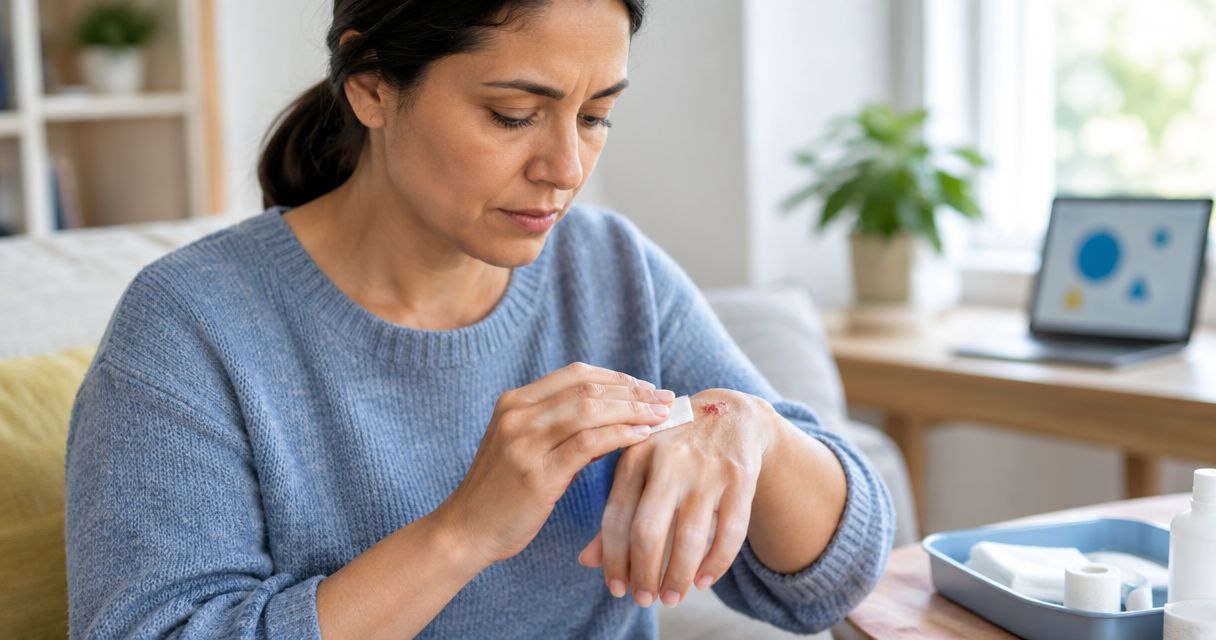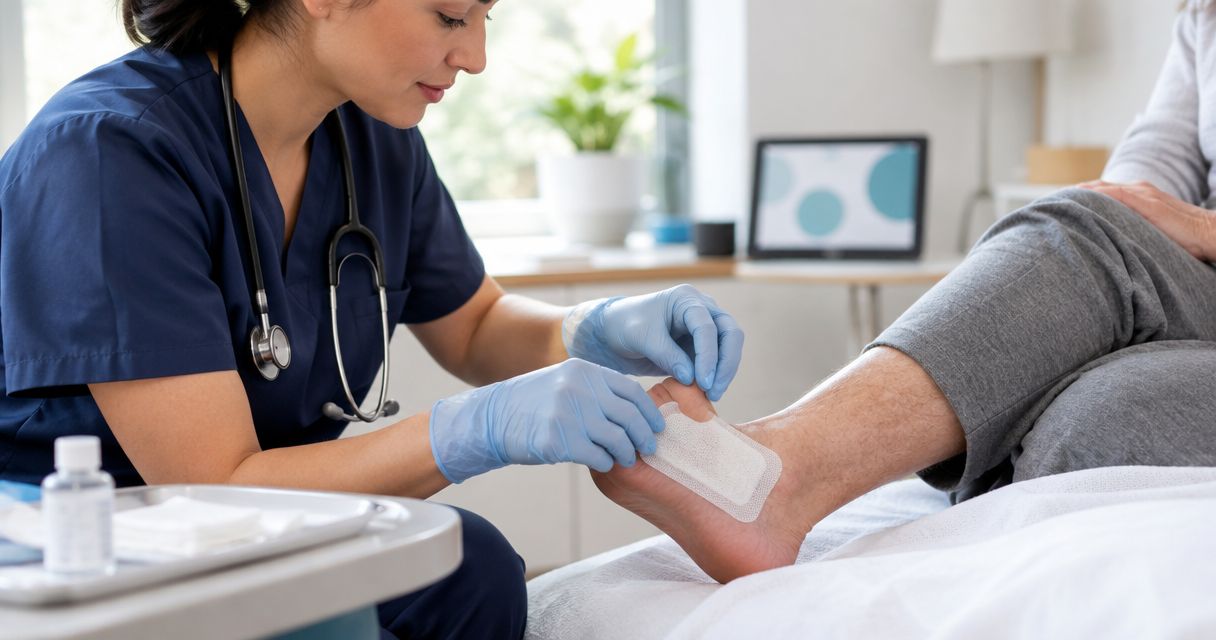

Yes, a foot wound can get infected quickly, and worsening redness, warmth, swelling, pain, or drainage needs prompt attention. There is no single safe waiting period: the wound’s depth, contamination, blood supply, and your health affect how infection develops. Seek same-day medical assessment for signs of infection, and emergency care for rapidly spreading changes or serious illness—even if the wound looks small.
- Can a foot wound get infected quickly? Yes—worsening symptoms matter more than how long the wound has been there.
- Diabetes, reduced sensation, and poor circulation lower the threshold for prompt foot wound assessment.
- Rapidly spreading redness, confusion, or blackening skin needs emergency care, not continued home treatment.
- Achilles Foot and Ankle Center provides foot care for Richmond-area patients; emergency warning signs require emergency services.
Why this matters
A blister from a shoe, a cut beside a toenail, or a puncture through the sole creates an opening in your skin. Bacteria can enter that opening, and the visible surface does not always show how deeply an injury extends. Your decision should follow the symptoms and your risk factors, not a countdown.
Achilles Foot and Ankle Center is a local option for Richmond-area patients who need a foot wound evaluated. You can find the practice through Achilles Foot and Ankle Center, but do not delay urgent treatment while arranging a routine appointment.
This 2026 guide separates minor wound care from signs that need medical attention. It also explains why a painless wound deserves attention when you have diabetes or reduced feeling in your feet.
Can a foot wound get infected quickly?
Yes. Bacteria can enter broken skin immediately, but entry alone does not establish that an infection has developed. Infection is assessed through symptoms, examination, and sometimes additional testing—not simply the number of hours since an injury.
A little tenderness or redness immediately after a scrape can reflect the injury itself. Redness that expands, increasing warmth, new swelling, pus, or worsening pain is more concerning than a small area that steadily improves. Do not wait for every warning sign to appear.
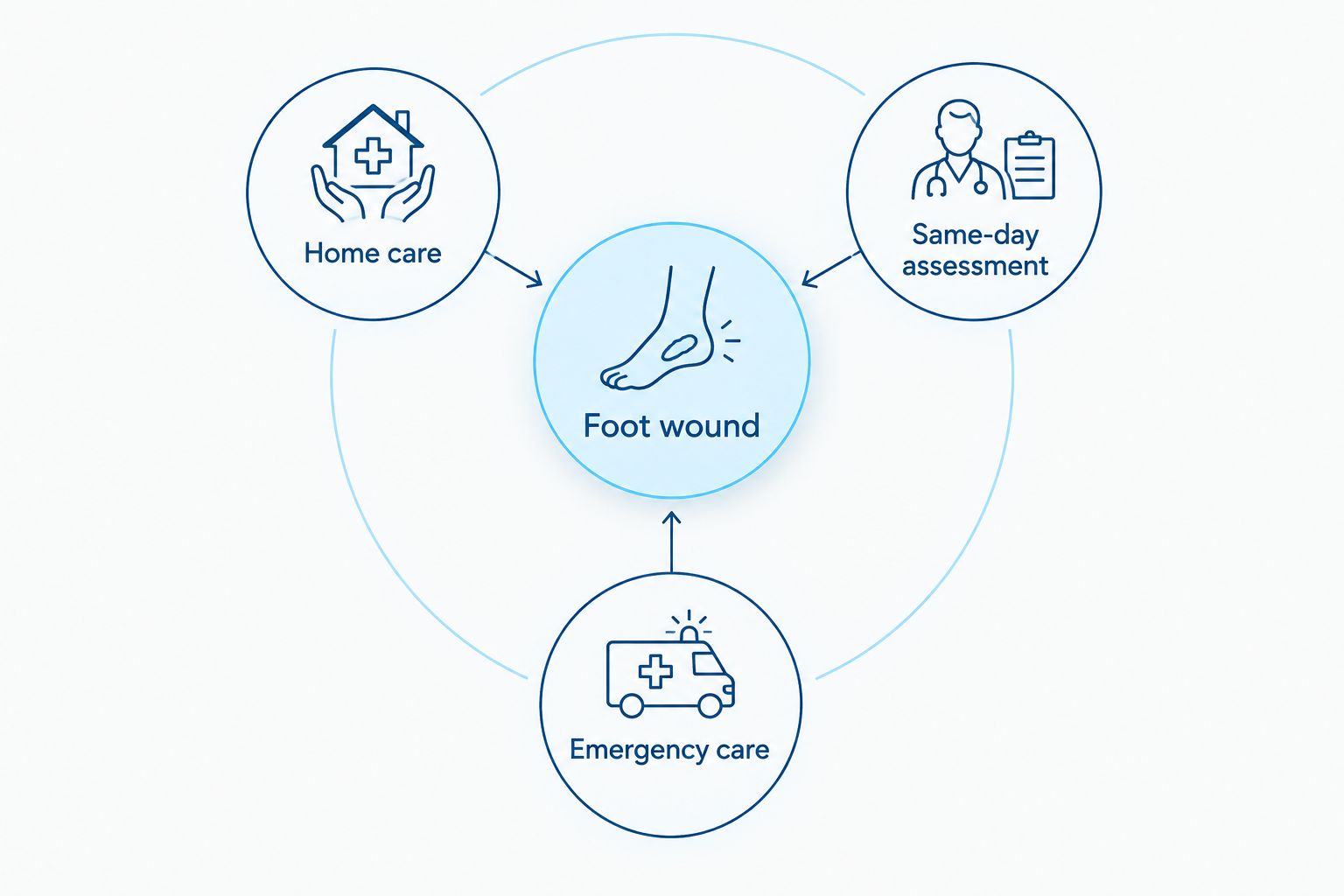
Use this foot wound checklist in 2026 to choose your next step:
| Care route | Best for | What it offers | Important limit |
|---|---|---|---|
| Home care | A small, superficial, clean injury without infection signs or high-risk conditions | Cleaning, protection, and close observation | Cannot rule out a deep injury or treat an established infection |
| Same-day assessment | Increasing redness, warmth, swelling, drainage, or a new wound with diabetes or poor circulation | Examination and a treatment plan based on the wound | A routine office visit is not a substitute for emergency care when symptoms are severe |
| Emergency care | Rapidly spreading changes, serious illness, blackening skin, or a cold, pale foot | Urgent assessment for serious infection or a blood-flow problem | Do not postpone this care to try another dressing or home remedy |
A foot wound needs a different response when symptoms spread or your overall health changes. The care route should change with those findings, even if you already cleaned and covered the injury.
Which changes mean you need emergency care?
Go to an emergency department for rapidly spreading redness or swelling, severe pain that seems out of proportion to the injury, new black or dusky skin, or a foot that becomes cold and pale. Fever with a worsening wound, shaking chills, or feeling seriously unwell also needs urgent assessment.
Call emergency services if you have confusion, difficulty breathing, fainting, or severe weakness with a suspected infection. These symptoms can signal a serious illness that cannot wait for an office appointment.
People with diabetes should also understand when a diabetic foot ulcer is a medical emergency. A chronic sore is not automatically stable just because it has been present for a while.
Why the speed and seriousness of infection vary
The same-looking wound can carry different risks in different people. These factors help explain why waiting for a fixed deadline is unreliable:
- Wound depth: A puncture can reach deeper tissue through a small opening. A surface inspection cannot reliably establish its full depth.
- Contamination or retained material: Dirt, a splinter, or another embedded object can complicate healing. Do not dig into the wound to remove something deeply lodged.
- Blood supply: Poor circulation limits delivery of oxygen and nutrients needed for healing. A wound with reduced blood flow needs medical assessment.
- Reduced sensation: Neuropathy means nerve damage that reduces feeling. You can miss an injury or keep putting pressure on it because it does not hurt.
- Diabetes or weakened immune defenses: These conditions can make wounds harder to heal or infections harder to control. Tell the clinician about your conditions and medicines.
- Repeated pressure and friction: Walking on a sore or wearing a rubbing shoe can keep damaging the area. A dressing alone does not remove that pressure.
These factors explain risk; they do not let you predict an exact infection timeline. A small opening, mild pain, or the absence of fever does not prove that a wound is safe.
What should you do while arranging an assessment?
For a minor superficial wound, basic first aid protects the area while you watch for changes. For a deep puncture, spreading symptoms, or a high-risk foot, these steps support care but do not replace an examination.
- Wash your hands. Use soap and running water, scrubbing for at least 20 seconds before handling the wound or dressing.
- Control bleeding. Apply steady pressure with clean gauze or a clean cloth. Get urgent help if bleeding is heavy or does not stop with pressure.
- Rinse gently. Use clean running water for a small surface wound. Do not probe a puncture or pull out a deeply embedded object.
- Cover the area. Use a clean, nonstick dressing. Replace it when wet or dirty, and follow any wound-specific instructions already provided by your clinician.
- Reduce rubbing and pressure. Stop the activity or footwear that caused the injury. Ask how to protect the area if walking puts pressure directly on the wound.
- Watch for worsening. Note changes in redness, swelling, drainage, pain, or how you feel overall. Escalate care when those changes appear.
Avoid pouring rubbing alcohol or hydrogen peroxide into the wound; these products can irritate healing tissue. Do not cut away skin, squeeze drainage, or use leftover antibiotics. The wrong treatment can delay an appropriate assessment without addressing the cause.
Does a foot wound need a tetanus check?
A puncture or dirty wound is a reason to review your tetanus vaccination history. Under CDC wound-management guidance, someone who completed the primary vaccine series generally needs a booster for a dirty or major wound if the last dose was at least 5 years ago; for a clean, minor wound, the interval is 10 years.
For wound care in 2026, tell the treating clinician if your vaccination history is unknown or incomplete. Additional protection can be needed depending on the wound and your health. A tetanus booster does not treat a bacterial wound infection.
How does diabetes change the next step?
Contact your diabetes or foot-care clinician promptly about a new open foot wound, even when it is painless. Seek same-day assessment if you see redness, warmth, swelling, drainage, discoloration, or another change suggesting infection. Do not wait for pain to tell you that the problem is worsening.
Diabetes can damage nerves and affect circulation. Reduced feeling makes injuries easier to miss, while poor blood flow can interfere with healing. Infection can also be present without the strong pain or fever you expected.
Check the entire foot, including the sole, heel, and spaces between the toes. Use a mirror or ask someone to help if you cannot see those areas. Avoid soaking the wound, walking barefoot, or applying corn-removal acids to nearby skin.
If you already have a wound-care plan, follow its dressing and pressure-relief instructions. A new change still warrants contact with the treating team; an existing appointment does not mean you should wait through worsening symptoms.
What happens during a foot wound evaluation?
A clinician asks how the wound happened, when it appeared, and what has changed. Bring your medication list, relevant medical history, and tetanus information if available. Mention diabetes, poor circulation, numbness, previous ulcers, and any object that might remain inside the wound.
The examination can include wound depth, surrounding skin, sensation, and blood flow. Depending on the findings, the clinician determines whether you need wound cleaning, pressure relief, antibiotics, imaging, or referral for additional treatment. Not every wound needs every test.
Antibiotics are not automatically needed for every open wound. They treat bacterial infection when indicated, but do not remove trapped material, restore circulation, or stop shoe pressure. Some wounds require procedures or hospital care rather than a prescription alone.
For Richmond-area patients considering Achilles Foot and Ankle Center for foot wound care in 2026, describe the wound and any infection signs when requesting an evaluation. Patients in Mechanicsville and West End should follow the same urgency guidance: emergency symptoms take priority over finding a convenient appointment.
Arrange a foot wound evaluation
Discuss a new or changing foot wound. Use emergency services for severe or rapidly worsening symptoms.
Can a foot wound be infected without pus?
Yes, a foot wound can be infected without pus. Increasing redness, warmth, swelling, tenderness, or spreading skin changes can signal infection even when the wound looks dry.
Can a painless foot wound still be serious?
Yes, a painless foot wound can still be serious, particularly with neuropathy or poor circulation. Reduced sensation removes a warning signal; it does not protect the tissue from injury or infection.
Should you wait overnight to see whether redness improves?
Do not wait overnight when redness is spreading, the foot is becoming more swollen or painful, or you feel unwell. With diabetes, poor circulation, or reduced sensation, seek prompt advice about a new wound rather than relying on observation alone.
FAQ
Can a foot wound get infected quickly after a small cut?
Yes, a small foot cut can become infected, and its size does not establish a safe waiting period. Increasing redness, warmth, swelling, pain, or drainage needs prompt assessment.
How can I tell whether redness is normal healing or infection?
Redness that expands or comes with increasing warmth, swelling, pain, or pus is more concerning for infection. An examination is needed when the pattern is worsening or you have diabetes or poor circulation.
Can I have a foot infection without a fever?
Yes, a foot infection can occur without fever. Do not use a normal temperature as a reason to ignore spreading skin changes or a worsening wound.
Should I put antibiotic cream on an infected foot wound?
Do not rely on antibiotic cream to treat a suspected foot wound infection. A clinician should assess the wound because deeper infection, retained material, or poor circulation needs more than a surface treatment.
What should I do if I step on a nail?
Get prompt medical assessment for a nail puncture, especially if it went through a shoe, seems deep, or left material behind. The clinician can assess the injury and review your tetanus protection.
Should I keep walking on an open foot wound?
Avoid pressure and friction directly over an open foot wound. Ask your clinician how to protect it, because the right activity limits depend on its location, depth, and your circulation.
Where can I get a foot wound checked near Richmond?
Achilles Foot and Ankle Center offers podiatry care in the Richmond area. Request an appropriate evaluation for a new or changing wound, but use emergency care for rapidly spreading changes or serious illness.
One last thing
A scab is not proof that the tissue underneath is healthy. Do not pick at it to investigate; seek assessment if the surrounding skin becomes warmer, more swollen, discolored, or increasingly tender.
Keep one practical rule from this 2026 guide: judge a wound by its changes and your health risks, not by whether you can tolerate the pain. Getting the right assessment is more useful than repeatedly changing home remedies.
Related guides
- Home diabetic wound care to office treatment
- How often should people with diabetes check their feet?
- Diabetic foot exams and endocrinologist visits