Yes, a swollen ankle can mean a blood clot, especially when swelling is new, affects one leg, and comes with calf pain, warmth, or skin discoloration. Symptoms alone cannot confirm or rule out a clot, so unexplained one-sided swelling needs prompt medical assessment. Call 911 immediately if swelling occurs with sudden shortness of breath, chest pain, coughing up blood, or fainting.
- Can a swollen ankle mean a blood clot? Yes; unexplained one-sided swelling needs prompt assessment for deep vein thrombosis.
- Call 911 for sudden breathlessness, chest pain, coughing up blood, or fainting; these can signal pulmonary embolism.
- A sprain, gout, or infection can also cause ankle swelling; appearance alone cannot identify the cause.
- Achilles Foot and Ankle Center offers foot and ankle evaluation; suspected blood clots require urgent medical assessment.
Can a swollen ankle mean a blood clot?
A swollen ankle can be a sign of deep vein thrombosis, or DVT—a clot in a deep vein, usually in the leg. Swelling can extend into the ankle or foot even when the clot is higher in the leg. The ankle does not have to be the location of the clot.
New swelling in one leg deserves attention even without severe pain. DVT does not always produce the full combination of swelling, pain, warmth, and discoloration. Having no redness or being able to walk does not exclude it.
Other conditions overlap with these symptoms. For example, gout in the ankle can be mistaken for a sprain, but neither explanation should be assumed without considering the history and examination.
| Possible cause | Pattern that can occur | Important limitation | Appropriate next move |
|---|---|---|---|
| Deep vein thrombosis | New swelling in one leg, sometimes with calf tenderness, warmth, or discoloration | Symptoms can be mild or incomplete | Seek prompt assessment for a possible clot |
| Ankle sprain | Swelling after a twist, often with bruising and movement-related pain | An injury does not automatically exclude a clot or fracture | Have significant pain or difficulty bearing weight assessed |
| Gout | Sudden joint pain with warmth, redness, and swelling | Gout and infection can look similar | Seek assessment, particularly for a first episode |
| Skin or joint infection | Warmth, redness, tenderness, sometimes fever or a wound | Fever is not always present | Obtain urgent medical assessment |
| Fluid buildup or vein problems | Swelling in both ankles, sometimes worse after standing | Heart, kidney, medication, and vein-related causes need different care | Arrange assessment for new or worsening swelling |
These patterns guide urgency; they are not a home diagnostic test.
Why this matters
The concern with DVT is that part of a clot can travel to the lungs and cause a pulmonary embolism, which can be life-threatening. Prompt assessment helps clinicians identify a clot and decide whether treatment is needed.
For this 2026 guide, the practical distinction is emergency symptoms versus swelling that needs prompt evaluation, not whether the ankle looks dramatically swollen. A modest change can still deserve attention when it is unexplained or follows a clot-related risk factor.
When should you get emergency help?
Call 911 for sudden breathing difficulty, chest pain, coughing up blood, or collapse. Do not wait for an office appointment or drive yourself if you are faint, severely breathless, or having chest pain.
A pulmonary embolism can occur without obvious leg symptoms. You do not need to have every warning sign before calling for help.
Seek emergency care for a suddenly cold, pale, blue, or numb foot, particularly with severe pain. Those symptoms can indicate a separate problem with blood flow and also need immediate attention.
What should you do about new one-sided swelling?
If one ankle or leg becomes swollen without a clear explanation, seek medical assessment the same day. Tell the clinician that you are concerned about a possible blood clot, especially if swelling follows surgery, immobilization, or prolonged travel.
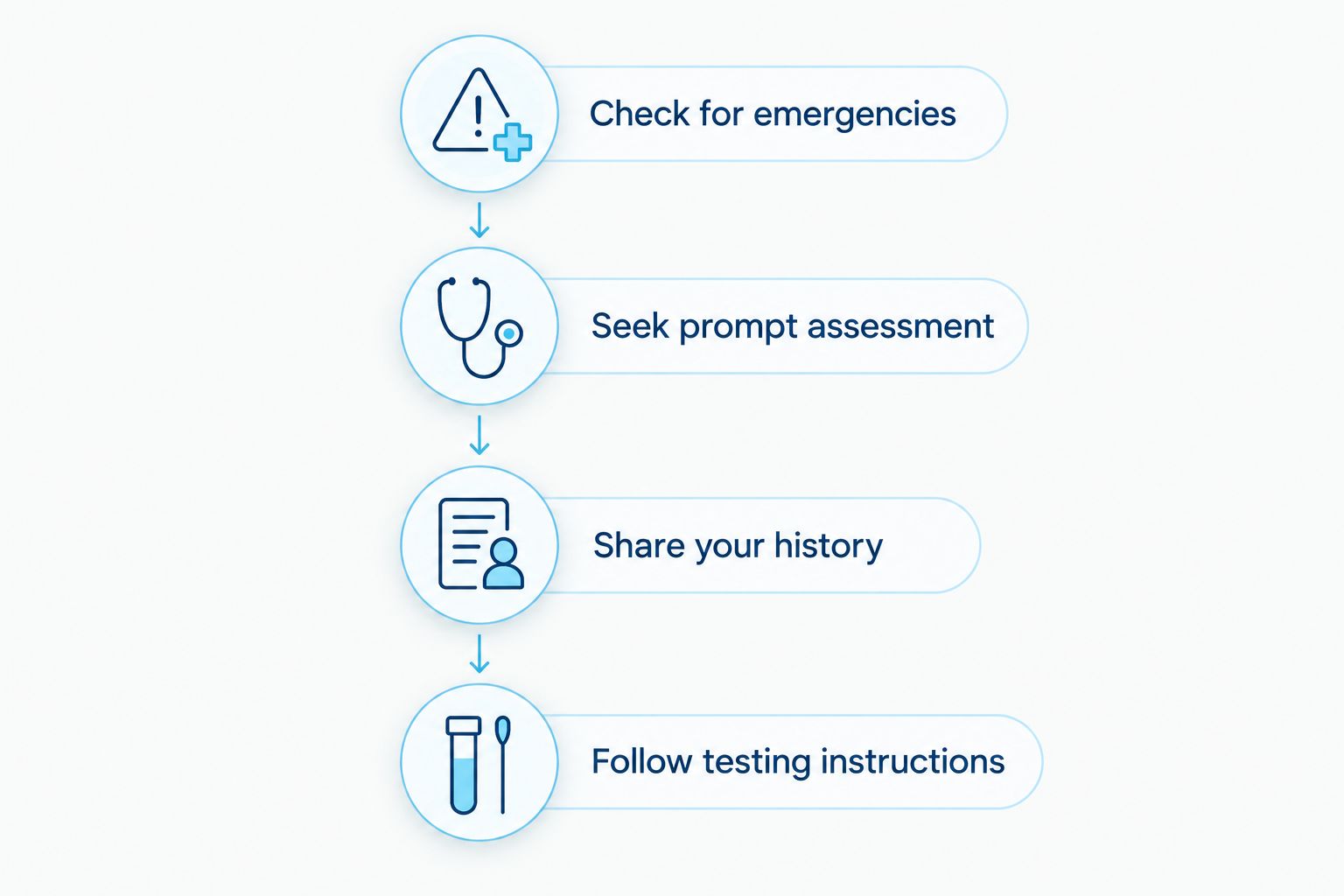
Use this 2026 safety checklist to choose your next step:
- Check for emergencies. Sudden breathlessness, chest pain, coughing up blood, or fainting means call 911.
- Seek prompt assessment. New unexplained one-sided swelling needs timely clinical evaluation, even if you can walk.
- Share your history. Describe when swelling started and any injury, operation, travel, pregnancy, medications, or previous clot.
- Follow testing instructions. If your clinician directs you to an emergency department or an imaging service, do not substitute a routine appointment.
While arranging care, avoid deep massage of the swollen leg or trying to exercise the swelling away. Do not start aspirin, leftover blood thinners, or someone else's medication to treat a suspected clot. These are not substitutes for diagnosis and can cause harm.
Why ankle swelling and clot risk vary
Ankle swelling has several causes because fluid can collect after tissue injury, joint inflammation, infection, or changes in circulation. A clinician considers the whole pattern rather than treating swelling as a diagnosis.
These factors help explain why the same-looking ankle needs different evaluation in different people:
- Recent injury: A twist or impact supports an injury-related explanation, but examination still matters.
- Reduced movement: A cast, bed rest, hospitalization, or prolonged sitting can increase clot risk by slowing blood flow.
- Previous clots: A personal history of DVT or pulmonary embolism changes the level of concern.
- Pregnancy or estrogen use: Pregnancy, the period after delivery, and estrogen-containing medications can increase clot risk.
- Other health conditions: Cancer, inherited clotting disorders, infection, and heart or kidney problems affect the possible causes.
- Timing and distribution: Sudden versus longstanding swelling, and one leg versus both legs, help guide testing without proving a diagnosis.
Long-distance travel lasting more than 4 hours is a recognized setting for travel-related blood clots, particularly when other risk factors are present. The CDC's travel guidance identifies prolonged immobility as a concern; it does not mean every swollen ankle after travel is a clot.
How do clinicians check for a blood clot?
A clinician reviews your symptoms and risk factors, examines your legs, and decides which tests are appropriate. An examination alone cannot reliably rule out DVT.
A compression ultrasound is commonly used to look for a clot in the leg veins. This is different from an ankle X-ray, which assesses bones and cannot rule out a vein clot.
A D-dimer blood test is useful in selected patients when interpreted alongside the clinical assessment. An elevated result does not prove a clot because other conditions can also raise D-dimer levels. Some patients need ultrasound directly rather than a blood test first.
If initial testing is negative but concern remains, the clinician can recommend additional or repeat testing. Follow those instructions and seek urgent reassessment if symptoms worsen or emergency symptoms develop.
Can a blood clot cause ankle swelling without pain?
Yes, a blood clot can cause swelling without noticeable pain. The absence of calf tenderness, warmth, or redness does not establish that the swelling is harmless.
Do not rely on squeezing your calf or flexing your foot to check for a clot. Those home maneuvers cannot safely confirm or exclude DVT and can delay appropriate testing.
Does swelling in both ankles rule out a blood clot?
No, swelling in both ankles does not completely rule out a blood clot. Bilateral swelling often prompts clinicians to consider fluid retention, medication effects, or vein problems, but the pattern alone is not conclusive.
Seek prompt assessment when swelling is new, rapidly worsening, or accompanied by breathlessness. If breathing difficulty is sudden or severe, call 911 rather than waiting for a routine visit.
Can you wait overnight to see whether swelling improves?
Do not wait overnight for new unexplained one-sided swelling when a clot is a concern. Contact a medical professional for same-day guidance, and use emergency services for chest pain, sudden breathlessness, or fainting.
Improvement with elevation does not rule out DVT. Neither does a comfortable shoe, normal walking, or a history of ankle sprains.
When is a podiatry appointment appropriate?
Achilles Foot and Ankle Center is best suited to patients seeking evaluation of nonemergency foot and ankle problems, not emergency clot assessment. Once urgent causes have been addressed, podiatry care can help evaluate persistent ankle pain, an injury, or another foot-related problem.
For patients in Mechanicsville and West End, the same safety distinction applies: possible DVT needs prompt medical assessment, while ongoing nonemergency symptoms can be discussed at a foot and ankle visit. Do not let the convenience of a nearby appointment delay time-sensitive care.
You can contact the practice about an appropriate nonemergency evaluation. Mention unexplained swelling when arranging care so it is not treated as a routine concern without triage.
Arrange a nonemergency ankle evaluation
Discuss persistent ankle symptoms after urgent causes have been addressed.
What should you bring to an ankle swelling assessment?
Use this 2026 appointment checklist to give your clinician a clear history. Details about when symptoms began are more useful than trying to name the diagnosis yourself.
- Note whether swelling appeared suddenly or gradually and whether it affects one leg or both.
- Describe pain in the calf, ankle, or foot, along with warmth, redness, or skin changes.
- List recent travel, surgery, hospitalization, injuries, casts, and changes in activity.
- Bring your medication list, including hormones and any prescribed blood thinner.
- Mention past clots, known clotting disorders, cancer treatment, pregnancy, or recent delivery.
If you have diabetes or reduced sensation, explain that too. Less pain does not necessarily mean a less serious problem, especially when swelling occurs with a wound or skin changes.
FAQ
Can a swollen ankle mean a blood clot even if I didn’t injure it?
Yes, unexplained ankle swelling can be a sign of a blood clot, particularly when it affects one leg. Seek prompt medical assessment rather than assuming the swelling is from overuse.
What blood clot warning signs should I know in 2026?
New one-sided leg swelling, tenderness, warmth, and discoloration are possible DVT warning signs. Sudden shortness of breath, chest pain, coughing up blood, or fainting means call 911 immediately.
Can I still walk if I have a blood clot in my leg?
Yes, being able to walk does not rule out a blood clot. Do not use walking ability or a low pain level to decide whether unexplained swelling needs assessment.
Should I put on compression socks for a swollen ankle?
Do not use compression socks as a substitute for assessment of new unexplained swelling. Compression is appropriate for some diagnosed conditions, but the cause of swelling and your circulation should guide its use.
Will an ankle X-ray show a blood clot?
No, an ankle X-ray does not rule out a blood clot in a vein. Clinicians commonly use compression ultrasound when evaluating suspected leg DVT.
Should I take aspirin if I think my swollen ankle is a clot?
Do not start aspirin to self-treat a suspected blood clot. Seek medical assessment; confirmed DVT requires a clinician-directed treatment plan.
Can Achilles Foot and Ankle Center evaluate a swollen ankle?
Achilles Foot and Ankle Center provides foot and ankle evaluation. Suspected blood clots need prompt medical assessment, and chest pain or sudden breathing difficulty requires emergency services rather than a routine podiatry appointment.
One last thing
The most useful detail is often what changed, not how swollen the ankle looks. A newly swollen leg after immobilization deserves a different response from longstanding, unchanged ankle puffiness—and neither should be diagnosed from appearance alone.
Keep the central advice from this 2026 guide simple: get unexplained one-sided swelling assessed promptly, and call 911 for sudden breathing difficulty, chest pain, coughing up blood, or fainting. The goal is the right care at the right urgency, so you can return to activity safely.
Related guides
- Can a foot wound get infected quickly?
- Foot and ankle care for pregnant women
- Primary care referral to a podiatrist