Best overall: oral terbinafine for confirmed toenail fungus when oral treatment is medically appropriate. Best for limited infection without pills: prescription efinaconazole. Best for thick nails that hurt in shoes: professional nail thinning alongside antifungal treatment. This 2026 guide compares the best toenail fungus treatment options and explains when you need an examination before choosing one.
- Oral terbinafine is the best toenail fungus treatment for many patients with confirmed infection who can safely take it.
- Prescription nail solutions suit selected limited infections but require consistent application over many months.
- Professional nail thinning relieves thickness; it does not replace antifungal treatment.
- Achillesfootandankle offers podiatry evaluation for patients seeking help with fungal toenails.
Why this matters
A thick, yellow, or crumbly toenail is not automatically fungal. Injury, psoriasis, and other nail conditions can look similar, so treating the appearance alone can send you down the wrong path.
Confirm the cause before committing to months of treatment. Achillesfootandankle provides foot and ankle diagnosis and treatment in the Richmond area. Patients in Mechanicsville and the West End can seek an appropriate evaluation rather than choosing a medicine from a photograph.
For your 2026 treatment decision, separate two goals: clearing the infection and growing a healthier-looking nail. Even effective treatment does not immediately replace the damaged nail already attached to your toe.
What makes the best toenail fungus treatment?
The strongest treatment is the one that fits your confirmed diagnosis, health history, and ability to follow the plan. Use these criteria before comparing options:
- Diagnostic certainty: Nail sampling can establish whether fungus is responsible before an oral prescription.
- Extent of infection: The affected nail area, number of nails, and involvement near the nail base influence treatment choice.
- Evidence of effectiveness: Oral terbinafine generally achieves better clearance than topical treatment for dermatophyte infections, the common fungal cause.
- Medical suitability: Liver disease, pregnancy, other conditions, and medication interactions can change the safest choice.
- Treatment commitment: A daily nail solution requires a different routine from a course of tablets.
- Comfort and function: A thick nail pressing into a shoe needs attention even while infection treatment continues.
Do not rank treatments by how quickly they make the nail look polished. Cosmetic improvement and fungal clearance are different outcomes.
Toenail fungus treatments at a glance
This 2026 comparison assigns each option a different role. The ranking is not a prescription: your examination and, when appropriate, nail testing determine which role fits your situation.
| Treatment | Best for | Standout feature | Key limitation |
|---|---|---|---|
| Oral terbinafine | Confirmed dermatophyte infection suitable for oral treatment | Generally more effective than topical medicines | Requires liver-risk and medication review |
| Efinaconazole nail solution | Limited infection when avoiding oral medicine | Prescription antifungal applied directly to the nail | Long daily application course |
| Tavaborole nail solution | Selected limited infections needing another topical option | Different antifungal mechanism from efinaconazole | Lower clearance than oral treatment overall |
| Ciclopirox nail lacquer | Patients able to follow a lacquer-and-removal routine | Established prescription topical option | Requires regular lacquer removal and nail care |
| Oral itraconazole | Confirmed infection requiring an alternative oral medicine | Activity against several fungal organisms | Important heart-related warnings and drug interactions |
| Professional nail debridement | Thick, uncomfortable nails needing supportive care | Reduces excess nail thickness | Does not eradicate fungus by itself |
1. Oral terbinafine: best for confirmed infection suitable for pills
Oral terbinafine treats susceptible fungal infection through medication taken by mouth. It is generally the first-choice oral treatment for dermatophyte toenail fungus because it is more effective than topical medicines.
The standard adult toenail course is 12 weeks, according to FDA prescribing information. That is the medication period, not a promise that your nail will look normal when the tablets end.
Oral terbinafine pros:
- Strong evidence for treating dermatophyte toenail infection.
- A shorter treatment course than prescription nail solutions.
- Does not depend on medicine passing through a thick nail surface.
Oral terbinafine cons:
- Not appropriate for people with chronic or active liver disease.
- Can interact with other medicines and cause side effects, including taste changes and rare serious liver injury.
Your prescriber should confirm the diagnosis, review your medicines, and assess liver function before treatment. Monitoring during treatment depends on your circumstances and the prescribing plan.
Best for: Patients with confirmed dermatophyte infection whose medical history supports oral treatment.
Verdict: Choose oral terbinafine after diagnostic confirmation and a safety review; skip self-treatment with someone else's prescription.
2. Efinaconazole: best for limited infection without oral medicine
Efinaconazole is a prescription antifungal solution applied to affected toenails. It offers a topical route for selected infections when an oral medicine is unsuitable or you prefer to avoid tablets.
FDA prescribing information specifies daily application for 48 weeks. Consistency matters: occasional application is not the prescribed treatment schedule.
Efinaconazole pros:
- Treats the nail directly without an oral course.
- Avoids the systemic exposure associated with tablets.
- Uses a solution rather than a removable lacquer layer.
Efinaconazole cons:
- Requires sustained daily application.
- Complete nail clearance is less likely than with oral terbinafine overall, and local irritation can occur.
A topical medicine is not automatically the right choice for extensive disease. Infection involving the nail's growth area, substantial thickening, or several affected nails deserves a discussion about whether a topical-only plan is sufficient.
Best for: Selected limited infections when avoiding oral treatment is a priority.
Verdict: Choose efinaconazole when a clinician recommends topical treatment and you can maintain the application routine.
3. Tavaborole: best for a clinician-selected topical alternative
Tavaborole is another prescription antifungal solution for toenails. It acts differently from efinaconazole, giving clinicians another topical option for susceptible infections.
The prescribed course also requires daily application for 48 weeks. A different mechanism does not mean faster visible recovery or guaranteed success after another treatment fails.
Tavaborole pros:
- Provides a non-oral treatment route.
- Applies directly to affected nails as a solution.
- Offers an alternative antifungal mechanism for treatment planning.
Tavaborole cons:
- Needs a long, consistent daily routine.
- Can cause application-site irritation and has limited complete-clearance results compared with oral treatment.
Selection should follow the diagnosis and the extent of nail involvement. Do not switch between prescription solutions simply because a nail still looks discolored early in treatment.
Best for: Patients whose clinician selects a topical alternative after reviewing the infection and treatment history.
Verdict: Hold until your clinician confirms tavaborole fits the infection; do not assume it is stronger because it is different.
4. Ciclopirox: best for patients who can manage a lacquer routine
Ciclopirox is a prescription antifungal nail lacquer. Its treatment routine involves repeated application, regular removal of accumulated lacquer, and nail care as directed.
Treatment can continue for up to 48 weeks. The routine is more involved than simply painting the nail and leaving it untouched.
Ciclopirox pros:
- Provides an established topical treatment option.
- Avoids an oral antifungal course.
- Fits a structured plan that includes professional nail care when needed.
Ciclopirox cons:
- Complete clearance rates are low compared with oral terbinafine.
- Lacquer removal and nail maintenance add steps to the routine.
Discuss physical limitations before choosing ciclopirox. If reaching your toes, seeing the nail clearly, or removing lacquer is difficult, the treatment schedule needs practical planning.
Best for: Selected limited infections in patients who can follow the application, removal, and nail-care instructions.
Verdict: Choose ciclopirox only when its maintenance routine is realistic for you.
5. Oral itraconazole: best for an alternative oral treatment plan
Itraconazole is an oral antifungal with activity against several fungal organisms. A clinician can consider it when the organism or your treatment history calls for an alternative to terbinafine.
It is not a simple substitute that you can select on your own. Its prescribing information includes important warnings about heart failure and interactions with other medicines.
Oral itraconazole pros:
- Provides an alternative oral antifungal route.
- Treats a range of susceptible fungal organisms.
- Does not rely on daily application to the nail surface.
Oral itraconazole cons:
- Has substantial medication-interaction considerations.
- Is unsuitable for toenail treatment in patients with certain heart conditions and requires liver-risk review.
Bring a complete medication list, including supplements, to your appointment. Your clinician also needs to know about heart disease, liver disease, pregnancy, or plans for pregnancy before selecting an oral antifungal.
Best for: Confirmed infections for which a clinician recommends an alternative oral medicine after reviewing organism and safety factors.
Verdict: Hold for a clinician-directed plan; skip itraconazole without a full medication and health review.
6. Professional nail debridement: best for thick, uncomfortable nails
Debridement means carefully trimming or thinning damaged nail material. It can reduce pressure from a thick nail and support an antifungal treatment plan.
It does not kill the infection by itself. A thinner, smoother nail after an appointment is a comfort improvement, not proof that fungus has cleared.
Professional nail debridement pros:
- Reduces thickness that can press against footwear.
- Makes difficult nail care more manageable.
- Can complement medication when included in a treatment plan.
Professional nail debridement cons:
- Does not replace antifungal treatment when infection needs treatment.
- Requires repeat care if the nail continues growing thick.
Avoid aggressive filing, cutting, or digging beneath the nail at home. This is especially important if you have diabetes, reduced sensation, or poor circulation, because a small injury can become a more serious foot problem.
Best for: Thick, uncomfortable nails needing professional supportive care alongside diagnosis and treatment.
Verdict: Choose professional debridement for thickness and comfort; skip it as a stand-alone fungal cure.
How to choose your next step
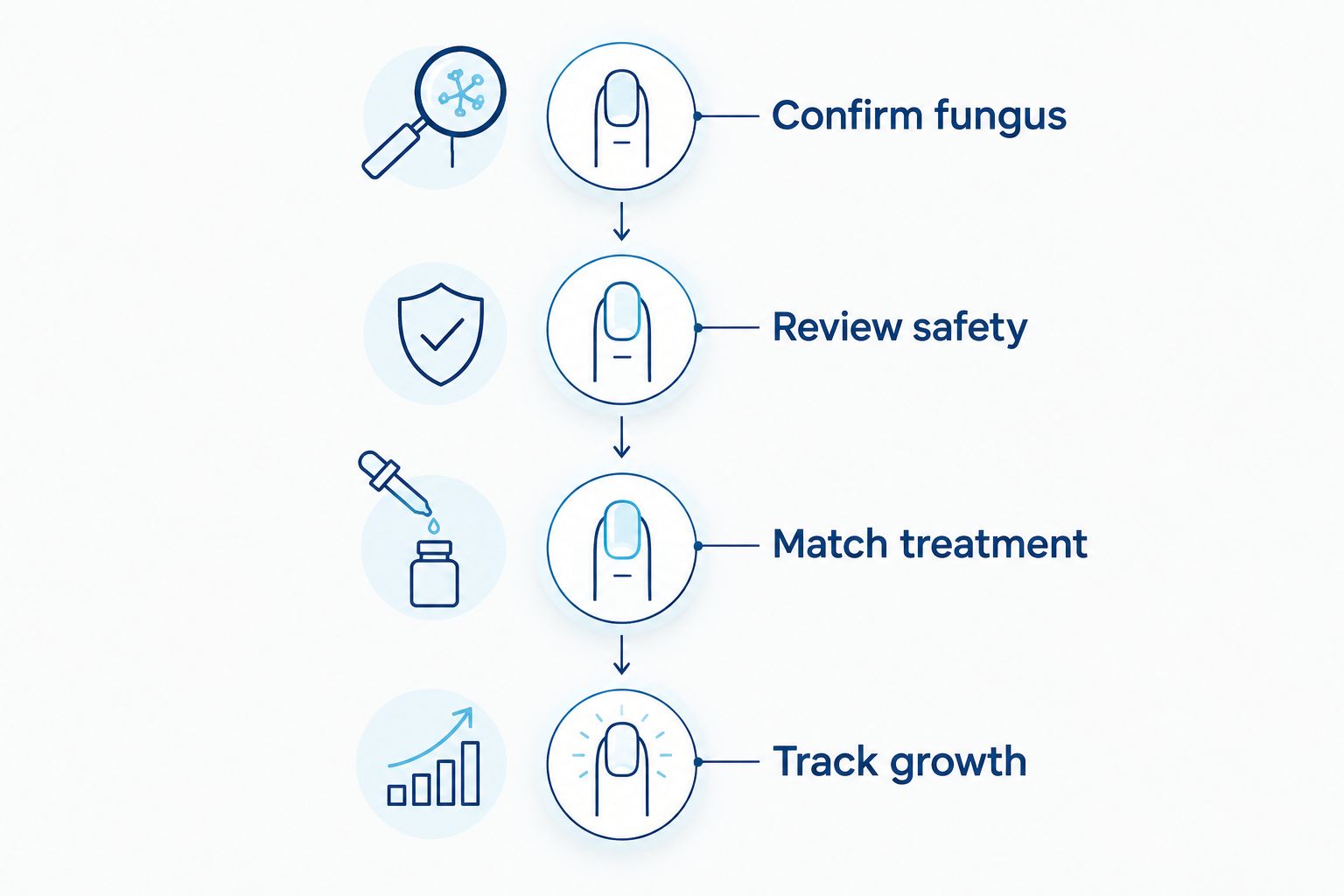
For a 2026 treatment plan, work through these decisions in order. The aim is to match treatment to the problem, not to collect more products.
- Confirm fungus: Ask whether nail sampling is appropriate, especially before oral treatment or after a failed course.
- Review safety: Share your medicines, health conditions, allergies, and previous treatment experience.
- Match treatment: Discuss oral medicine, topical medicine, and supportive nail care based on the extent of infection.
- Track growth: Look for healthier new nail growing from the base rather than expecting the old damaged nail to recover overnight.
Achillesfootandankle is an appropriate starting point for patients seeking toenail fungus evaluation in the Richmond area. Bring the names of treatments you have used and describe any pain, drainage, skin changes, or difficulty trimming your nails.
Get your toenails evaluated
Discuss nail changes, discomfort, and an appropriate treatment plan with a podiatry practice.
How these treatments were ranked
This ranking prioritizes established effectiveness, safety requirements, disease extent, and treatment burden. It follows the treatment distinctions described in FDA prescribing information and the American Academy of Family Physicians' clinical review of onychomycosis, the medical term for fungal nail infection.
The 2026 ranking places oral terbinafine first for suitable confirmed dermatophyte infections—not for every discolored toenail. Topical medicines occupy narrower roles, and debridement ranks as supportive care rather than an infection-clearing medicine.
Which toenail fungus treatment should you choose?
Start with confirmation; choose oral terbinafine when the infection and your health history support it. If oral medicine is unsuitable, discuss whether a prescription topical treatment fits the extent of your infection and your daily routine.
Toenails can take 12 to 18 months to grow out fully. That slow replacement explains why the appearance can lag behind treatment, but persistent symptoms or worsening changes still need reassessment.
Treat athlete's foot when present, keep feet dry, and avoid sharing nail tools. These steps address sources of reinfection; they do not replace treatment of an established fungal nail infection.
FAQ
What’s the best toenail fungus treatment in 2026?
Oral terbinafine is generally the first-choice treatment for confirmed dermatophyte toenail fungus when oral medicine is medically appropriate. A clinician should confirm the diagnosis and review liver health and medication interactions before prescribing it.
Is a prescription nail solution better than tablets?
Prescription nail solutions are generally less effective than oral terbinafine, but they suit selected limited infections and patients who need to avoid oral medicine. The best choice depends on infection extent, medical history, and your ability to follow the application schedule.
How long does toenail fungus treatment take?
A standard adult oral terbinafine course lasts 12 weeks, while several prescription topical treatments require 48 weeks of application. A toenail can take 12 to 18 months to grow out fully, so appearance improves more slowly than the medication schedule.
Can an over-the-counter athlete’s foot cream cure fungal toenails?
Ordinary athlete’s foot creams do not reliably treat fungus inside a toenail. They treat skin infection, which can coexist with nail infection and contribute to reinfection.
Does laser treatment cure toenail fungus?
Laser treatment is not an established first-choice replacement for antifungal medicine. Some devices have FDA clearance for a temporary increase in clear nail, which is different from evidence that they eradicate the infection.
Should I cut away a thick fungal toenail myself?
Do not cut deeply, dig beneath the nail, or aggressively file a thick toenail. Professional nail care is particularly important if you have diabetes, reduced sensation, poor circulation, or trouble seeing or reaching your feet.
When should I get a discolored toenail checked?
Arrange an evaluation for persistent discoloration, thickening, pain, or changes that do not respond to treatment. Seek prompt care for spreading redness, warmth, swelling, drainage, or a wound, especially if you have diabetes.
Can Achillesfootandankle help with fungal toenails?
Achillesfootandankle offers podiatry diagnosis and treatment for foot and ankle conditions, including fungal toenail concerns. An evaluation can help distinguish fungus from other nail problems and guide an appropriate treatment discussion.
One last thing
A clear strip growing from the nail base is more useful to track than the color of the old nail tip. Take a clear photograph before treatment and compare the same nail during follow-up; bring those photographs to your appointment instead of changing medicines based on appearance alone.
For your 2026 plan, focus on confirmed diagnosis, a routine you can follow, and reassessment when progress stalls. A healthier-looking nail takes time, and comfort deserves attention throughout treatment.
Related guides