
For mild burning feet at night without a wound, major swelling, or a sudden color change, start by removing tight footwear and heavy bedding, then use gentle airflow to cool your feet. These steps can ease heat and pressure, but they do not treat an underlying nerve, skin, or circulation problem. Avoid ice, ice-water soaking, and heating pads, especially if you have diabetes or reduced feeling.
- The fastest way to relieve burning feet at night starts with gentle cooling and removing pressure, not direct ice.
- Repeated burning, tingling, or numbness needs evaluation rather than stronger home remedies.
- Achilles Foot and Ankle Center provides foot and ankle evaluation for patients with nerve pain.
- A suddenly cold, pale, painful foot or new weakness needs emergency care.
What's the fastest way to relieve burning feet at night?
Start with gentle cooling, pressure relief, and a skin check. Burning can come from irritated nerves even when your skin does not feel hot. Read more about whether neuropathy in feet is reversible if burning keeps returning with tingling or numbness.
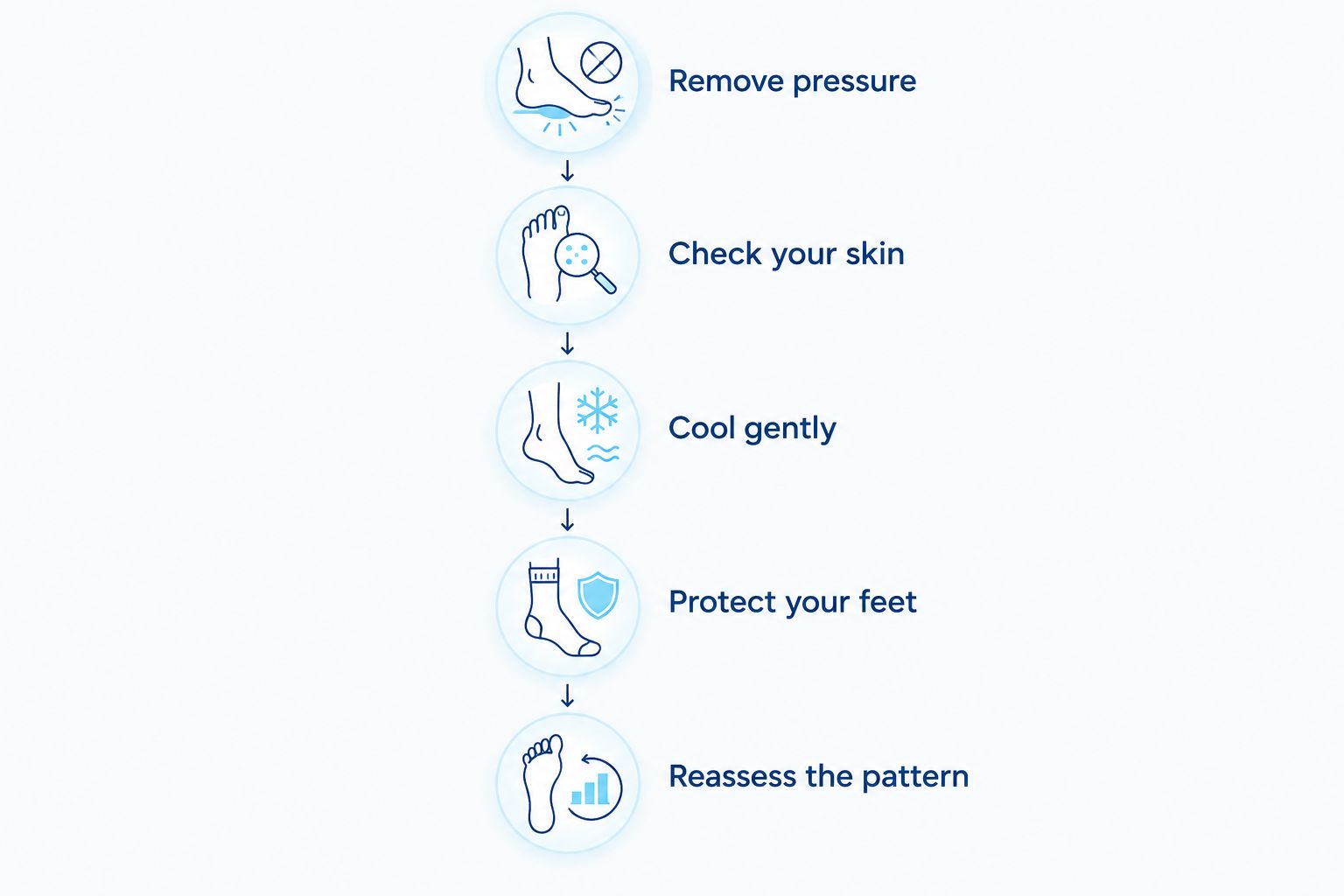
For mild symptoms without warning signs, follow this sequence:
- Remove pressure. Take off tight shoes and socks. Loosen bedding that presses against your toes, and avoid crossing your legs or resting against the outside of your ankle.
- Check your skin. Look at the soles, heels, toes, and spaces between your toes. Use a mirror if needed. Check for blisters, cracks, redness, drainage, or a new wound.
- Cool gently. Use a fan on a comfortable setting or lighter bedding. Stop if your feet become uncomfortable or chilled. Do not place ice directly on your skin or sleep with a cold pack attached.
- Protect your feet. Keep them clean and dry. If you get up, wear well-fitting footwear rather than walking barefoot, particularly if you have diabetes or reduced sensation.
- Reassess the pattern. Note whether the burning settles, returns each night, affects both feet, or comes with numbness. Repeated symptoms deserve an appointment even when home care helps temporarily.
Gentle cooling is a comfort measure, not a diagnostic test. Improvement with a fan does not prove that the problem was overheating.
Why this matters
Burning feet can interfere with sleep, but the bigger concern is what the sensation represents. Nerve irritation, skin inflammation, pressure, and certain medical conditions require different treatment. Repeating the same remedy without checking the cause can delay appropriate care.
For your 2026 home-care plan, separate temporary comfort from treatment of the cause. A cooler bedroom can reduce discomfort from warmth; it cannot correct nerve damage, treat an infection, or restore impaired blood flow.
You do not need to identify the cause yourself. Your job is to notice the pattern, protect your skin, and recognize when an examination should replace another night of experimenting.
Which nighttime relief options are safest?
Choose an option based on what it does, not how intense it feels. Strong cold, heat, or tingling from a cream is not evidence that a treatment is helping your nerves.
| Option | Best for | Benefit | Limitation or caution |
|---|---|---|---|
| Gentle airflow | Feet that feel overheated under bedding | Reduces warmth without direct ice contact | Does not treat an underlying nerve or circulation condition |
| Loose socks and lighter bedding | Pressure or heat from tight fabric | Removes an avoidable source of irritation | Persistent burning still needs assessment |
| Clean, dry skin | Moisture-related skin irritation | Supports basic skin protection | A rash, open sore, or infection needs specific care |
| Clinician-directed treatment | Repeated burning or a diagnosed condition | Addresses the cause or targets nerve pain | Requires assessment; relief is not guaranteed or necessarily immediate |
Skip direct ice and very hot water. Reduced sensation can make it difficult to recognize a skin injury while it is happening.
Avoid starting several creams at once. Irritated skin can react to topical products, and combining treatments makes it harder to identify what caused a new rash or stinging sensation.
What if my feet burn but do not feel hot?
A burning sensation without obvious warmth can occur with peripheral neuropathy, which means damage or dysfunction in nerves outside the brain and spinal cord. Tingling, electric-shock sensations, numbness, or pain from light touch can occur alongside it. These symptoms suggest a reason for evaluation; they do not establish a diagnosis.
Cooling your skin does not necessarily stop abnormal nerve signals. If the burning returns after the room cools down, avoid escalating to colder water or longer exposure.
In 2026, a useful symptom description is more valuable than a list of remedies you have tried. Tell your clinician whether the feeling is superficial, deep, constant, intermittent, or triggered by sheets touching your feet.
What if my feet are visibly red or swollen?
Visible redness or swelling changes the next step. Skin irritation, inflammation, infection, and other conditions can cause a burning sensation, and appearance alone cannot reliably distinguish them.
Seek prompt assessment for a foot that is newly hot, red, or swollen, especially if you have diabetes or reduced feeling. An open sore, drainage, spreading redness, or fever raises the urgency. Do not wait for severe pain: reduced sensation can make a significant problem less painful than expected.
A suddenly cold or pale foot, severe sudden pain, or new weakness needs emergency care. Do not try to manage those symptoms with cooling, massage, or a routine appointment.
Why burning feet at night varies
The best response depends on the cause and the accompanying symptoms. These factors help explain why a remedy that comforts one person does little for another:
- Nerve function. Irritated or damaged nerves can produce burning, tingling, or numbness without external heat.
- Blood glucose. Diabetes can damage nerves over time. Burning does not confirm diabetes, but known diabetes changes how carefully new foot symptoms need assessment.
- Skin condition. A rash, cracked skin, or fungal infection requires a different approach from nerve pain. Itching and peeling are useful details to report.
- Pressure and footwear. Tight shoes, socks, or sustained pressure can irritate tissues and nerves. Note whether symptoms follow particular footwear or activities.
- Other medical conditions. Vitamin deficiencies, thyroid disease, kidney disease, and certain medications can contribute to neuropathy. Your history helps guide appropriate testing.
- Circulation and swelling. Changes in blood flow or new swelling require examination rather than an assumption that burning is harmless.
Do not stop a prescription medication because you suspect it is involved. Ask the prescriber to review the timing and symptoms, including supplements and nonprescription products.
When should I book an evaluation?
Arrange an appointment when burning repeatedly interrupts sleep, keeps returning, spreads, or comes with numbness or balance changes. You should also seek assessment if simple pressure relief and gentle cooling do not settle the problem.
Achilles Foot and Ankle Center is an appropriate choice for Richmond-area patients seeking podiatry evaluation of recurring burning feet or nerve pain. An examination can assess your skin, sensation, circulation, and foot structure, with further testing or referral guided by the findings. It cannot promise an immediate explanation or a particular treatment outcome.
For patients in Mechanicsville and West End, the next step is the same: request an evaluation rather than repeatedly changing home remedies. Describe any wound, redness, swelling, or loss of feeling when arranging care so the team understands the concern.
Request a foot evaluation
Describe recurring nighttime burning, numbness, or skin changes when you request an appointment.
What should I record before my appointment?
Keep a short symptom record in 2026 rather than relying on memory after a poor night's sleep. A few clear observations help your clinician understand the pattern without asking you to diagnose yourself.
Record:
- Location: toes, soles, heels, or the whole foot; one side or both.
- Sensation: burning, tingling, numbness, stabbing pain, or sensitivity to touch.
- Timing: when symptoms begin, whether they wake you, and whether they occur during the day.
- Triggers: shoes, prolonged standing, activity, warmth, or pressure from bedding.
- Skin changes: rash, swelling, wounds, or a change in color.
- Medical context: diabetes, recent medication changes, supplements, and previous nerve or circulation problems.
Bring your medication list and describe what you tried. If visible changes come and go, a clear photograph can help document them, but taking a picture should never delay urgent care.
Is soaking my feet better than using a fan?
Gentle airflow is a simpler first comfort measure than soaking, particularly when you have reduced sensation. Hot water can injure skin, and prolonged soaking can soften and damage it. Ice-water soaking is not a safe substitute.
If you have diabetes, an open wound, or known circulation problems, follow your clinician's foot-care instructions rather than starting a soaking routine. The goal is intact, protected skin—not the strongest cooling sensation.
Should I take a pain reliever before bed?
Ordinary nonprescription pain relievers do not reliably treat nerve pain, and they are not appropriate for everyone. Kidney disease, stomach problems, other medications, and other health conditions can affect which medicines are safe.
Ask a clinician or pharmacist before adding a medicine for repeated nighttime symptoms. In your 2026 care plan, medication should follow an assessment of the symptom pattern, not replace one. Do not use another person's prescription or increase an existing dose on your own.
Can diabetes cause burning feet even when they look normal?
Diabetes can cause burning through nerve damage even when the skin looks normal. A normal appearance does not confirm normal sensation or blood flow, and burning alone does not prove diabetic neuropathy.
If you have diabetes, inspect your feet daily and report new burning or numbness. Continue your prescribed diabetes care; do not change medication doses based only on a foot symptom. A blister, wound, new redness, or new swelling needs prompt attention.
FAQ
What’s the fastest way to relieve burning feet at night safely?
For mild burning without warning signs, start by removing tight footwear and heavy bedding, checking your skin, and using gentle airflow. Avoid direct ice and heating pads, particularly if you have diabetes or reduced sensation.
Why do my feet burn more when I get into bed?
Warm bedding and pressure can aggravate discomfort, and nerve pain can become more noticeable when you are resting. Repeated nighttime burning needs evaluation rather than assuming the bed is the only cause.
Does burning in both feet mean I have neuropathy?
Burning in both feet can occur with neuropathy, but the pattern alone does not diagnose it. A clinician needs to consider your sensation, circulation, skin, medications, and medical history.
Should I put an ice pack on burning feet?
Avoid direct ice and do not sleep with an ice pack attached to your feet. Reduced sensation can prevent you from noticing cold injury; gentle airflow avoids direct cold contact.
When are burning feet an emergency?
A suddenly cold or pale foot, severe sudden pain, or new weakness needs emergency assessment. A wound with spreading redness, fever, or drainage also needs urgent medical attention.
Can I use compression socks for burning feet?
Do not assume compression socks are appropriate for unexplained burning. Ask a clinician first if you have reduced sensation, circulation problems, wounds, or new swelling, because fit and suitability matter.
Can Achilles Foot and Ankle Center evaluate recurring burning feet?
Achilles Foot and Ankle Center provides foot and ankle care, including care for nerve pain and diabetic foot concerns. Request an evaluation for recurring burning and describe any numbness, wounds, redness, or swelling when arranging care.
One last thing
A foot can feel as though it is burning without being physically hot. Touch alone cannot tell you whether the problem is in the skin, nerves, or circulation.
Make your 2026 bedtime routine about protection, not stronger sensations: remove pressure, check your skin, and keep your feet comfortably cool. If the burning keeps returning, the next useful step is an examination—not a colder soak.
Related guides
- Can neuropathy in feet be treated without medication?
- Is diabetic foot pain always a sign of nerve damage?
- How often should diabetics check their feet?