
Instead of repeatedly chasing prescriptions, foot-exam notes, and supplier forms, coordinate Medicare coverage for diabetic shoes through a documented sequence: eligibility review, diabetes-care certification, prescription, and fitting. Medicare Part B covers therapeutic shoes and inserts for people with diabetes who meet its medical and documentation requirements—not everyone with diabetes qualifies.
- Medicare coverage for diabetic shoes requires diabetes, a qualifying foot condition, certification, and a prescription.
- Complete the diabetic foot exam and coordinate diabetes-care records before the supplier dispenses therapeutic shoes.
- Achilles Foot and Ankle Center is best for Richmond-area patients seeking a diabetic foot evaluation before pursuing coverage.
- A shoe prescription alone does not establish Medicare eligibility; supplier documentation and fitting requirements also apply.
Why this matters
The foot evaluation, certification, and shoe fitting serve different purposes. Your podiatrist identifies foot risks and treatment needs. The clinician managing your diabetes supplies the required diabetes-care documentation, while the shoe supplier verifies the records and fits the footwear.
For your 2026 coverage review, distinguish Medicare's therapeutic-shoe benefit from ordinary footwear or general arch supports. Medicare's public guidance, Therapeutic shoes & inserts, and the Centers for Medicare & Medicaid Services' Therapeutic Shoes for Persons with Diabetes coverage policy describe the benefit and documentation requirements.
Start with the diabetic foot exams and endocrinologist visits workflow if your foot care and diabetes care happen in separate offices. Connecting those records matters more than choosing a shoe first.
Before you start
Bring these materials together before arranging a fitting:
- Coverage information: Your Medicare card, any Medicare Advantage plan information, and the name of the supplier you intend to use. Ask about Medicare enrollment, assignment, network requirements, and any required authorization.
- Clinical records: Your diabetes clinician's contact information, medication list, recent diabetes-care records, and information about previous ulcers, amputations, circulation problems, numbness, or shoe-related skin damage.
- The documentation gotcha: A podiatrist's prescription does not replace diabetes-care certification. Ask the supplier which records, signatures, and visit dates must be complete before delivery; an otherwise appropriate shoe can fail coverage requirements when the paperwork is incomplete.
For a 2026 request, ask the supplier to check current documentation timing before you schedule repeat appointments. Do not assume last year's records are sufficient.
Eligibility and foot-exam documentation
Establish the medical reason
- Schedule a diabetic foot evaluation. Ask the clinician to assess skin, circulation, sensation, foot shape, and areas exposed to pressure. Describe previous wounds even when the skin has healed.
- Confirm the qualifying finding. Medicare requires diabetes plus at least one qualifying condition: previous amputation of the other foot or part of either foot; previous foot ulceration; pre-ulcerative calluses; peripheral neuropathy with evidence of callus formation; foot deformity; or poor circulation.
- Describe function, not just discomfort. Explain where shoes rub, whether your toes crowd together, and whether numbness makes pressure difficult to notice. Bring your usual shoes so the clinician can inspect their fit and wear.
- Request a clear record-sharing plan. Identify who sends the foot-exam findings to the diabetes-care clinician and supplier. Keep copies when available rather than relying on a verbal message between offices.
Expected result: Your record identifies diabetes, the documented qualifying foot condition, and the clinical reason therapeutic footwear is being considered. A diagnosis of diabetes alone is not enough.
Achilles Foot and Ankle Center provides diabetic foot care for Richmond-area patients. For patients in Mechanicsville and the West End, the useful starting point is the same: an appropriate evaluation, followed by coordination with the clinician managing diabetes.
Separate shoe needs from urgent treatment
Therapeutic footwear supports a broader care plan; it does not replace wound treatment. If you have an open sore, drainage, increasing redness, warmth, or swelling, contact a clinician promptly rather than waiting for shoe paperwork.
Seek urgent medical care for rapidly spreading redness, fever with a foot wound, blackened tissue, or a suddenly hot, swollen foot. New swelling and warmth deserve attention even when neuropathy makes the foot painless.
Certification, prescription, and supplier coordination
Complete the records before delivery
- Confirm who will certify the benefit. Medicare's therapeutic-shoe rules require certification through the physician responsible for managing your systemic diabetes. Ask the supplier to verify the certifying clinician's eligibility, including how care involving a nurse practitioner or physician assistant must be documented.
- Complete the diabetes-care documentation. The certification must support that you have diabetes, have a qualifying foot condition, are being treated under a diabetes-care plan, and need therapeutic shoes. A signature without supporting medical records is not a substitute for those records.
- Obtain the footwear prescription. The prescribing clinician specifies the medically appropriate shoes and inserts. A podiatrist can prescribe therapeutic footwear, but the prescription and diabetes-care certification remain separate requirements.
- Have the supplier reconcile the packet. Ask the supplier to check the prescription, certification, supporting notes, and applicable timing requirements before dispensing anything. Resolve inconsistent diagnoses or missing signatures with the office responsible for the original record.
Expected result: The supplier has a complete, consistent documentation packet and can explain the next fitting step. This establishes readiness to proceed, not a guarantee that Medicare will pay a claim.
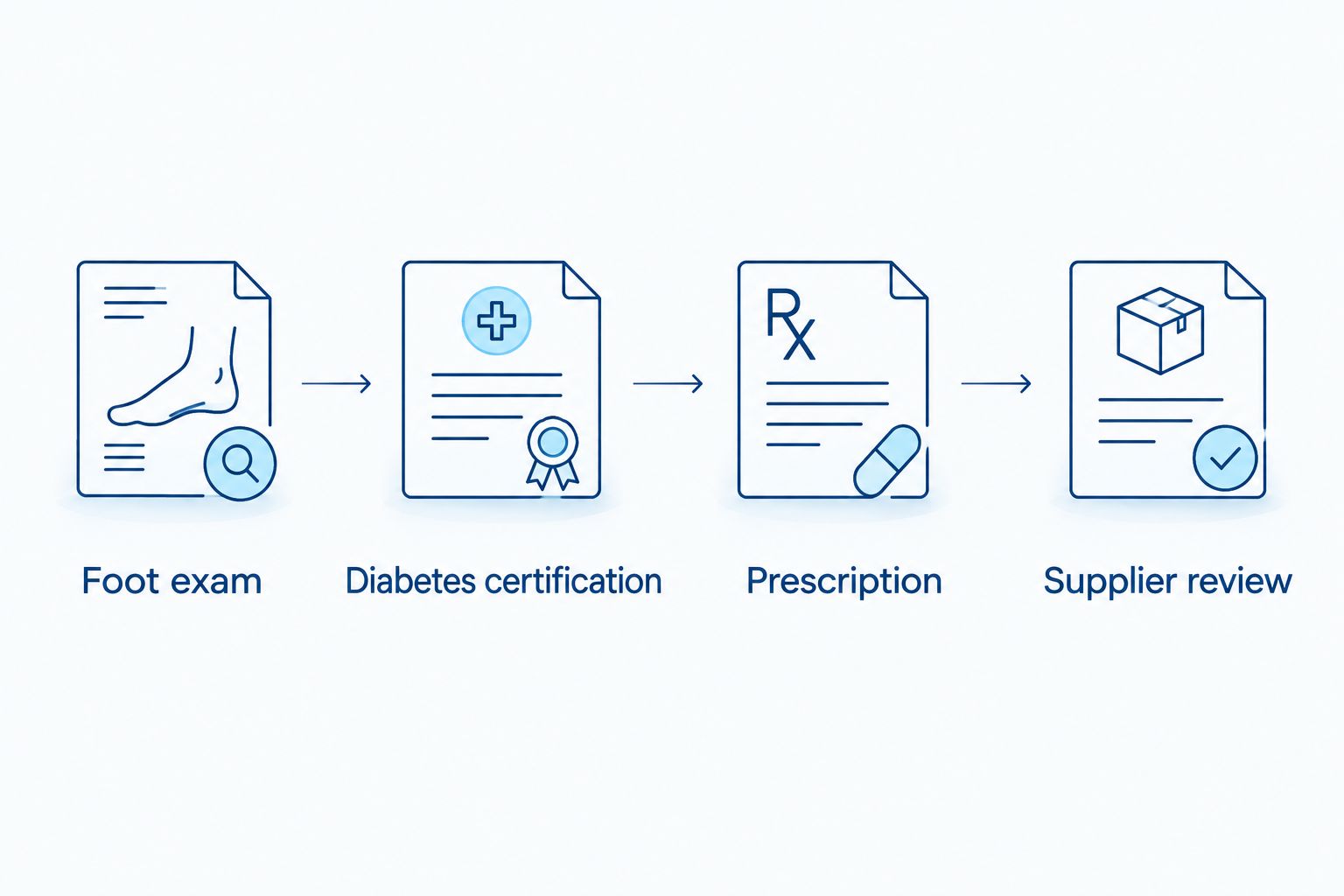
A practical handoff is Foot exam, Diabetes certification, Prescription, then Supplier review. Keep one contact name for each part so a missing document has an owner.
Match the benefit to the prescribed footwear
Medicare's annual benefit generally covers either 1 pair of extra-depth shoes and 3 pairs of inserts, or 1 pair of custom-molded shoes and 2 additional pairs of inserts. These are calendar-year limits, subject to medical necessity and coverage requirements; certain shoe modifications can substitute for inserts under the benefit rules.
The following comparison concerns clinical footwear categories, not specific brands or a recommendation to choose custom shoes automatically.
| Footwear option | Best for | Benefit | Limitation |
|---|---|---|---|
| Extra-depth shoes with prescribed inserts | Feet whose shape and pressure-relief needs can be accommodated in extra-depth footwear | Provides room for the prescribed inserts and foot shape | Requires individual fitting; an extra-depth label alone does not establish coverage |
| Custom-molded shoes with prescribed inserts | A foot deformity that cannot be accommodated in extra-depth shoes | Can accommodate a shape that standard therapeutic footwear cannot | Requires documentation supporting why extra-depth shoes are inadequate |
Choose the footwear category supported by the examination, not the category that sounds more advanced. Custom-molded shoes are not automatically the better choice.
Fitting, delivery, and skin checks
Verify fit with the actual shoes and inserts
- Bring your usual socks and walking aid. Tell the fitter about swelling patterns and any recent wound, surgery, or change in foot shape. Do not conceal a new skin problem to keep the appointment moving.
- Check both feet. The supplier should assess your feet and footwear needs before selection, then evaluate the actual shoes and inserts at delivery. Foot shape and fit can differ between sides.
- Walk in the complete setup. Use the prescribed inserts inside the shoes. Check toe room, heel security, pressure over bony areas, and stability rather than judging comfort while seated alone.
- Get a specific wear-and-check plan. Ask how to introduce the shoes, when to inspect your skin, and whom to contact for adjustments. Reduced sensation makes pain an unreliable warning sign.
- Keep the delivery record. Save the supplier's instructions and paperwork. Ask how to report fit problems and how any claim-related notices will reach you.
Expected result: The delivered footwear matches the prescription, receives an in-person fit assessment, and comes with clear instructions. Do not accept persistent rubbing as something you must tolerate until the shoe softens.
Inspect both feet at least 1 time each day, including the soles and spaces between toes. Use a mirror or ask for help if you cannot see them. If new shoes cause a blister, broken skin, or persistent redness, stop wearing that pair and contact the fitting professional or clinician.
For a diabetic foot assessment, contact Achilles Foot and Ankle Center. Patients in Mechanicsville and the West End should ask about an evaluation and care coordination; confirm shoe-supplier arrangements and insurance participation separately.
Repeat the workflow for an annual replacement
An annual benefit does not mean automatic replacement. For a 2026 replacement request, confirm what footwear has already been supplied during the calendar year and whether current records support the new request.
- Review the previous pair. Bring worn shoes and inserts to the evaluation. Point out rubbing, instability, new calluses, or changes in walking.
- Update the medical record. Report new ulcers, procedures, swelling, or changes in sensation. The next prescription should reflect your current feet, not simply copy the previous order.
- Reconfirm certification and supplier requirements. Ask which new visits and documents are required, then repeat the fitting and delivery assessment.
Best for annual renewals: Start with the clinical review, not a reorder request. Repeating a familiar shoe can simplify selection, but familiarity does not prove the fit is still appropriate.
For Medicare Advantage coverage, add a plan-verification step before arranging delivery. Confirm the supplier network and any authorization or referral requirements directly with the plan and supplier.
Troubleshooting
The supplier has a prescription but cannot proceed
Ask exactly which document is missing: diabetes-care notes, certification, qualifying foot findings, or an order detail. Send the request to the responsible office rather than asking every office to resend everything.
The record says neuropathy but no qualifying finding is clear
Medicare's listed neuropathy criterion includes evidence of callus formation. Ask the clinician to review the actual findings and document them accurately; do not request a diagnosis merely to obtain coverage. Another qualifying condition must also be supported by the examination.
A clinician signed the form, but the packet remains incomplete
Ask the supplier whether the problem concerns the certifying clinician, supporting visit notes, signature, date, or medical necessity. Correct the specific gap before delivery rather than assuming a signed form resolves every requirement.
The shoes feel comfortable but leave a mark
Reduced sensation can hide excessive pressure. Remove the shoes, inspect the skin, and arrange a fit review for persistent redness or rubbing. Seek prompt clinical advice for a blister or open area.
A claim is denied after delivery
Read the stated denial reason and ask the supplier to explain the submitted documentation. Follow the instructions and deadlines on the Medicare or plan notice if you pursue a review; do not assume a replacement order fixes the original claim.
Customize your workflow
Achilles Foot and Ankle Center is best for Richmond-area patients seeking a diabetic foot evaluation before pursuing therapeutic-shoe coverage. The practice's role in your care begins with assessing your feet; verify any dispensing or billing arrangements rather than assuming the evaluating practice also supplies the shoes.
Build your ongoing plan around your main risk. Numbness calls for consistent skin checks, pressure areas need fit review, and an active wound needs a treatment plan rather than a routine shoe-selection appointment.
For your 2026 paperwork, keep a simple record of the examining clinician, diabetes-care clinician, supplier, documents requested, and next appointment. Record who is waiting for what. That makes the next action clear without turning coverage into a second job.
FAQ
Does Medicare cover diabetic shoes for everyone with diabetes?
No. Medicare coverage for diabetic shoes requires diabetes, at least one qualifying foot condition, medical necessity, certification, a prescription, and the required supplier documentation. Diabetes alone does not establish eligibility.
How many pairs of diabetic shoes does Medicare cover in 2026?
The Medicare therapeutic-shoe benefit generally covers 1 pair of extra-depth shoes with 3 pairs of inserts, or 1 pair of custom-molded shoes with 2 additional pairs of inserts, per calendar year. Medical necessity and documentation requirements still apply.
Can my podiatrist prescribe Medicare diabetic shoes?
Yes, a podiatrist can prescribe therapeutic shoes. The prescription does not replace the separate certification and diabetes-care documentation required under Medicare’s benefit rules.
Do I need custom-molded shoes if I have diabetic neuropathy?
Neuropathy alone does not establish a need for custom-molded shoes. The examination must determine whether extra-depth footwear can accommodate your feet and whether you meet Medicare’s qualifying-condition requirements.
Does Medicare Advantage follow the same shoe-ordering process?
Medicare Advantage must cover Medicare-covered benefits, but the plan can have its own network and administrative requirements. Confirm the supplier, authorization requirements, and documentation process before delivery.
What should I do if my diabetic shoes cause a blister?
Stop wearing the pair causing the blister and contact your clinician promptly. Do not keep walking in the shoes to break them in; reduced sensation can hide worsening skin damage.
One last thing
Comfort is not a reliable fit test when you have reduced sensation. A shoe can feel fine while creating pressure you cannot detect. Check your skin as well as your shoes, and report a new mark before it becomes a wound.
Related guides
- Best diabetic shoes covered by Medicare
- How often should people with diabetes check their feet?
- Home diabetic wound care to office treatment workflow