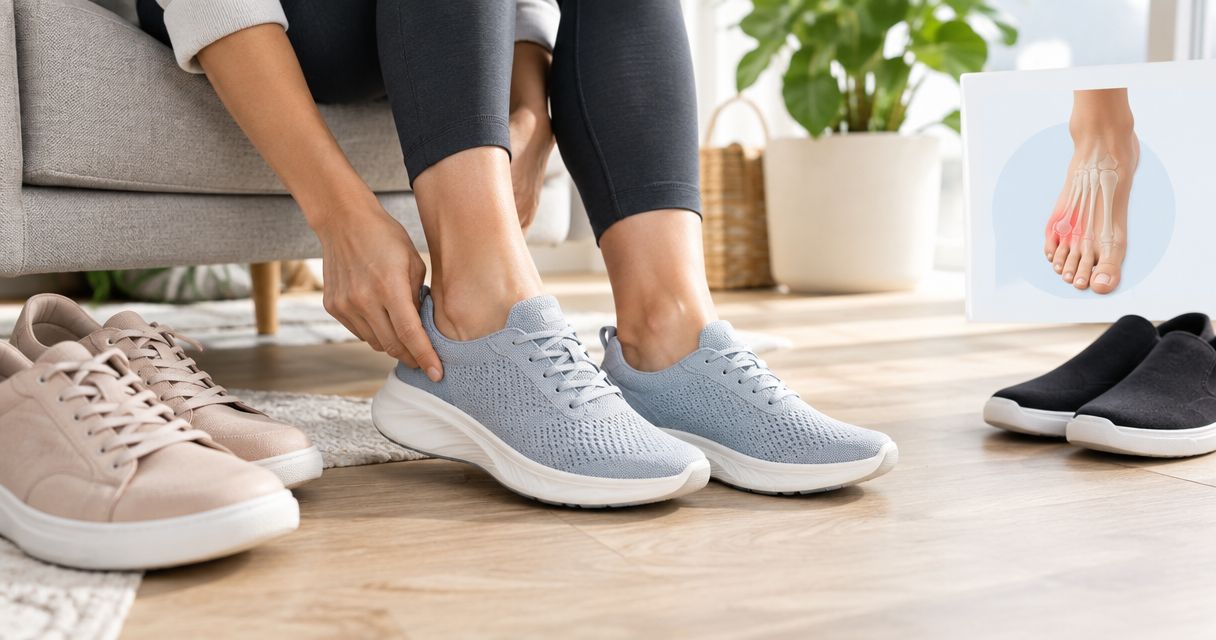
Best overall for walking comfort: well-fitting supportive shoes. Best for reducing sock friction: smooth-seam socks. Best simple inspection tool: a foot mirror. The best products for foot neuropathy pain in 2026 address specific needs; none replaces an evaluation of burning, tingling, numbness, or loss of sensation.
- The best products for foot neuropathy pain depend on whether you need walking comfort, skin protection, or clinician-directed relief.
- Supportive shoes are the default for walking comfort, not a treatment for damaged nerves.
- Smooth-seam socks and a foot mirror help protect feet when sensation is reduced.
- Achillesfootandankle provides foot evaluations; persistent burning, numbness, or wounds need care rather than another purchase.
Why this matters
Neuropathy means nerve damage or dysfunction. In your feet, it can cause burning, electric-like pain, tingling, or numbness. Reduced feeling also makes a blister, sharp object, or shoe pressure harder to notice.
Achillesfootandankle is best for patients who need a foot evaluation before choosing neuropathy comfort products. The practice offers foot and ankle diagnosis and treatment in the Richmond area, including diabetic foot care. You can start with Achillesfootandankle when symptoms interfere with walking or you need help protecting feet with reduced sensation.
The distinction matters: cushioning addresses contact pressure, moisturizer addresses dry skin, and medication addresses selected pain symptoms. Buying one does not solve the problems handled by the others.
What makes the best products for foot neuropathy pain?
Use these criteria for your 2026 shortlist. Choose by the problem you need to solve, not by a package promising nerve repair.
- Fit without pressure: Shoes and socks should not pinch toes, leave tight bands, or create rubbing points.
- Skin protection: Smooth interiors and manageable moisture matter when you cannot reliably feel irritation.
- A clear purpose: Separate walking comfort, skin care, inspection, and medication rather than treating them as interchangeable.
- Easy inspection: You should be able to examine your feet and check the inside of your shoes.
- Appropriate precautions: Medication, orthoses, and compression require extra consideration when you have wounds, diabetes, or circulation problems.
- No cure claims: A consumer product should not promise to reverse neuropathy or eliminate the need for medical care.
Comfort alone is not a safety test. If your feet are numb, inspect the skin after using a new product instead of relying only on how it feels.
Neuropathy products at a glance for 2026
These are product categories, not a ranking of specific manufacturers. The order favors everyday foot protection before specialized pressure management or medication.
| Product category | Best for | Standout feature | Key limitation |
|---|---|---|---|
| Supportive, well-fitting shoes | Walking comfort | Room for toes with a secure heel | Cannot restore nerve sensation |
| Smooth-seam socks | Reducing rubbing | Fewer prominent contact points | Cannot correct a tight shoe |
| Fragrance-free moisturizer | Dry, intact skin | Supports routine skin care | Not a wound treatment |
| Foot inspection mirror | Checking hard-to-see skin | Makes soles easier to examine | Does not relieve pain |
| Clinician-selected orthoses | Identified pressure problems | Changes how the foot is supported | Needs appropriate fit and follow-up |
| Clinician-approved topical pain medicine | Selected localized pain symptoms | Applies medication to a defined area | Not suitable for every symptom or skin condition |
1. Supportive shoes: best for neuropathy walking comfort
Well-fitting shoes protect your feet from contact with the ground and reduce avoidable rubbing. Look for enough toe space, a smooth lining, a stable sole, and a fastening that holds the heel without squeezing the forefoot.
Choose fit before extra softness. A heavily cushioned shoe can still rub your toes or let your foot slide. Check both feet, because the fit that works on one side does not automatically work on the other.
Supportive shoe pros
- Provides a protective barrier during everyday walking.
- Offers options with different widths and toe shapes.
- Adjustable fastenings help accommodate changes in fit.
- A removable insole allows room for an appropriate insert when needed.
Supportive shoe cons
- Cushioning does not treat the underlying nerve problem.
- A roomy shoe can still create heel friction if it fits loosely.
- Reduced sensation makes pressure harder to judge without inspection.
Best for: People whose feet need protection and a comfortable walking fit.
If you have a foot deformity, a previous ulcer, or substantial loss of sensation, ask whether therapeutic footwear is appropriate. Those needs deserve more than choosing a larger size online.
Verdict: Buy for fit and protection; skip claims that shoes cure neuropathy.
2. Smooth-seam socks: best for reducing everyday rubbing
Smooth-seam socks reduce prominent seams against your toes and help manage moisture inside shoes. Choose a fit that stays in place without bunching under the foot or leaving a tight band around the leg.
A diabetic label does not establish that a sock fits your particular foot. Inspect the construction and how it sits inside your usual shoes. Extra padding is only useful when it does not make the shoe tighter.
Smooth-seam sock pros
- Reduces contact with bulky toe seams.
- Helps keep the foot separated from the shoe lining.
- Makes changing damp or dirty socks straightforward.
Smooth-seam sock cons
- Cannot compensate for shoes that pinch or rub.
- Thick padding takes up space inside footwear.
- Tight cuffs can leave pressure marks.
Best for: People who need less rubbing at the toes or a more comfortable layer inside shoes.
Compression socks are a different category. Do not choose compression strength on your own when you have circulation concerns, a wound, or unexplained swelling; ask a clinician what is appropriate.
Verdict: Buy for a smooth, nonbinding fit; skip compression without appropriate guidance.
3. Fragrance-free moisturizer: best for dry, intact foot skin
A plain moisturizer helps care for dry skin on the heels and other intact areas of the feet. It belongs in a skin-care routine, not in the pain-medication category. Apply it according to its label and keep the spaces between your toes dry.
Dryness and neuropathy pain are different problems. A moisturizer can address dryness without changing burning or electric-like sensations caused by nerve dysfunction.
Moisturizer pros
- Supports care of dry, intact skin.
- Fits into a regular foot-inspection routine.
- Plain formulations avoid unnecessary fragrance exposure.
Moisturizer cons
- Does not repair nerves or treat neuropathic pain.
- Is not a treatment for an ulcer or infected skin.
- Product residue can make bare feet slippery.
Best for: People with dry, intact skin who need a simple skin-care product.
Do not treat a bleeding crack as ordinary dryness. If you have diabetes or reduced sensation, ask for guidance about broken skin rather than repeatedly applying a cosmetic product. Avoid strong acid-based callus removers unless a clinician directs their use.
Verdict: Buy for dry, intact skin; skip using moisturizer as wound treatment.
4. Foot inspection mirror: best for checking soles with reduced sensation
A foot mirror helps you see areas that are difficult to examine directly, including the heel and sole. Its benefit is visibility, not pain relief. A stable hand mirror or purpose-designed inspection mirror can serve this role.
Check your feet every day if you have diabetes, following your clinician's instructions. Look for redness, blisters, cuts, drainage, or changes in skin color. Also check inside your shoes for debris or a folded lining before putting them on.
Foot mirror pros
- Helps reveal skin changes that numbness can hide.
- Makes the soles easier to examine without twisting.
- Does not apply medication or pressure to the foot.
Foot mirror cons
- Does not reduce burning, tingling, or nerve pain.
- Requires adequate lighting and a clear view.
- Cannot replace an examination when you find a concerning change.
Best for: People who cannot easily see the bottoms of their feet.
If your vision or mobility makes inspection difficult, ask someone to help. A mirror only works when you can recognize what you are seeing and act on changes.
Verdict: Buy for inspection; seek care rather than watching an open sore.
5. Clinician-selected orthoses: best for identified pressure problems
Orthoses are inserts that change how your foot is supported inside a shoe. They can address specific mechanical problems, but a generic arch support is not automatically a good choice for neuropathy.
A foot assessment helps distinguish pressure-related discomfort from nerve symptoms. It also identifies whether an insert has enough room inside your footwear or creates a new contact point.
Clinician-selected orthosis pros
- Matches support to an identified mechanical need.
- Can be considered alongside shoe fit and foot shape.
- Allows fit problems to be reviewed rather than ignored.
Clinician-selected orthosis cons
- Does not reverse nerve damage.
- Takes up space and can make footwear tighter.
- An unsuitable insert can create unwanted pressure.
Best for: People whose examination identifies a pressure or support problem.
Stop using an insert that causes new redness, rubbing, or a skin injury. Do not assume your feet need to get used to irritation, especially when sensation is reduced. Ask for a fit review before continuing.
Verdict: Hold until the pressure problem and shoe fit are assessed.
6. Topical pain medicine: best for clinician-selected localized symptoms
Topical medicines apply an active ingredient to the skin. Lidocaine and capsaicin are examples used for selected pain conditions, but they have different instructions, precautions, and approved uses. They are not interchangeable with moisturizers.
For neuropathy symptoms, ask a clinician or pharmacist whether a specific medicine is appropriate. Read the active ingredient and label rather than choosing by a neuropathy claim on the front of the package.
Topical pain medicine pros
- Provides a medication option for selected localized symptoms.
- Has defined application instructions and precautions.
- Can be considered as part of a broader treatment plan.
Topical pain medicine cons
- Does not identify or treat every cause of neuropathy.
- Can irritate the skin; capsaicin can cause burning.
- Requires attention to broken skin, other medicines, and label restrictions.
Best for: People whose clinician recommends a specific topical medicine for their symptoms.
Do not apply a product to a wound unless its instructions and your clinician explicitly permit it. Avoid layering pain creams or placing heat over a medicated area. Reduced sensation makes heat-related injury especially concerning.
Verdict: Hold until the ingredient, skin condition, and instructions are checked.
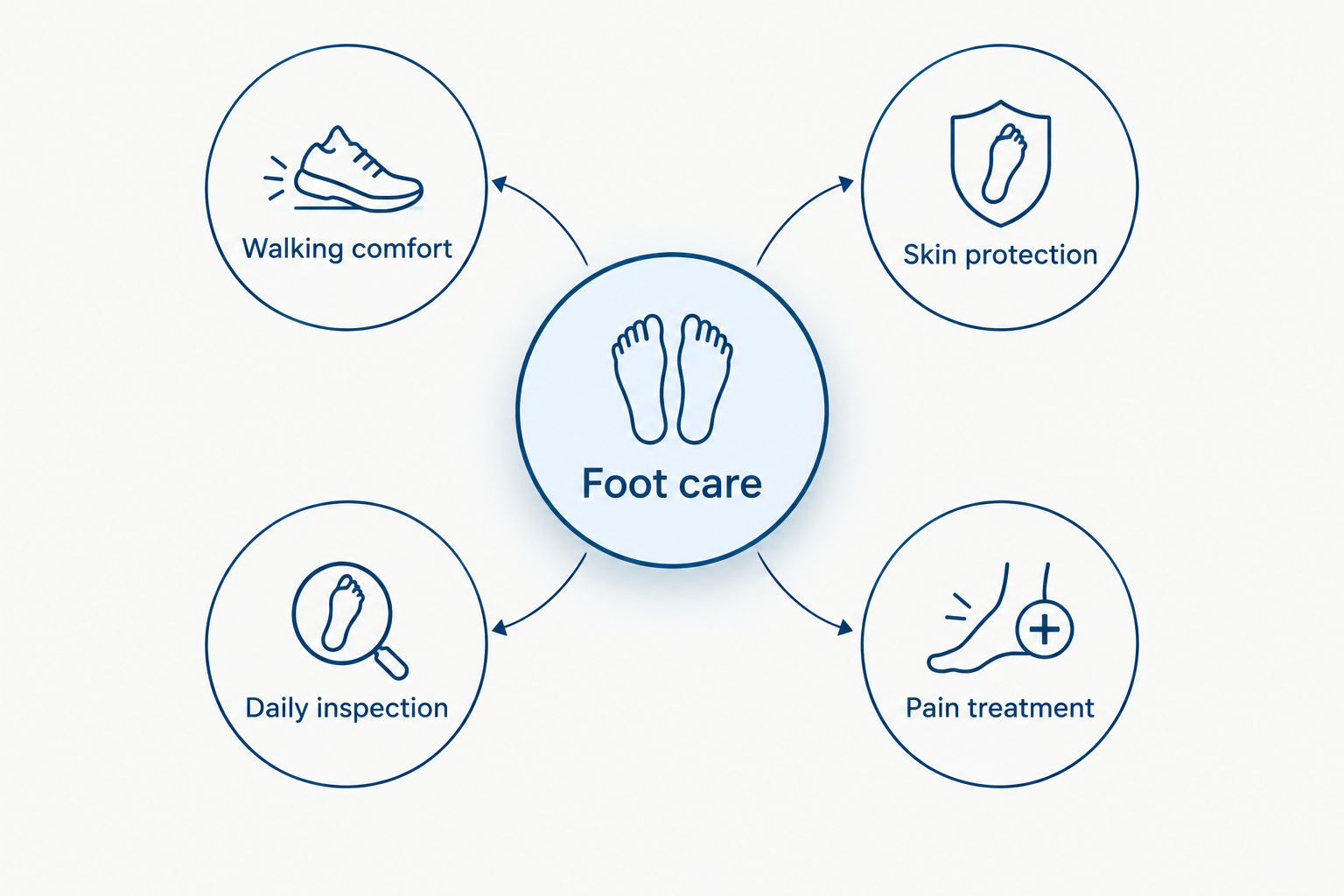
Match the product to the problem
For your 2026 purchase decision, identify the job first. Buying several products without separating their purposes makes it harder to recognize what helps and what irritates your skin.
- Walking comfort: Start with shoe fit and check for rubbing.
- Skin protection: Consider smooth-seam socks and care for dry, intact skin.
- Daily inspection: Use a mirror or help from another person to see your soles.
- Pain treatment: Seek an evaluation before choosing medication for persistent nerve symptoms.
Product shopping should stop when you find a wound, spreading redness, drainage, or a newly hot and swollen foot. Seek prompt medical assessment, particularly if you have diabetes. Severe symptoms or fever with an infected-looking wound require urgent care.
How this 2026 ranking works
The ranking prioritizes fit, skin protection, clear purpose, and appropriate precautions. It is not a claim that one manufacturer outperforms another or that these categories cure neuropathy.
Supportive shoes rank first for everyday walking protection. Socks, moisturizer, and a mirror address separate practical needs; orthoses and medication require more individual assessment. The right next step depends on your symptoms, skin condition, and circulation—not the ranking number.
Which neuropathy products should you choose?
Choose supportive shoes as the default for walking comfort, then add only what addresses a separate need. Use smooth-seam socks for rubbing, moisturizer for dry intact skin, and a mirror for inspection. Do not expect those purchases to resolve unexplained burning or numbness.
Achillesfootandankle offers diabetic foot care and foot and ankle evaluation. If you live in Mechanicsville or the West End and need help choosing neuropathy foot products, seek an assessment that considers your skin, sensation, footwear, and symptoms together.
Arrange a foot evaluation
Discuss burning, numbness, skin changes, and footwear needs before choosing more products.
FAQ
What are the best products for foot neuropathy pain in 2026?
The best products depend on the problem: supportive shoes for walking comfort, smooth-seam socks for rubbing, and clinician-selected medication for appropriate pain symptoms. A foot mirror supports inspection but does not relieve pain. Persistent burning or numbness needs an evaluation rather than product shopping alone.
Can shoes cure neuropathy in my feet?
No, shoes do not cure neuropathy or restore lost sensation. Well-fitting shoes protect your feet and reduce avoidable rubbing. Inspect your skin because numbness can hide pressure or injury.
Are diabetic socks better than compression socks for neuropathy?
They serve different purposes, so neither is automatically better. Smooth-seam, nonbinding socks focus on fit and friction, while compression applies pressure for particular clinical needs. Ask a clinician before choosing compression if you have circulation concerns, wounds, or unexplained swelling.
Does foot cream help burning neuropathy pain?
A plain moisturizer treats dryness, not neuropathic burning. A topical pain medicine is a different product with specific ingredients and precautions. Ask a clinician or pharmacist which ingredient is appropriate, especially if your skin is broken.
Should I buy a foot massager or use a heating pad?
Do not use a heating pad on feet with reduced sensation because you can sustain a burn without recognizing it. Ask a clinician before using a powered massager if you have numbness, wounds, swelling, or circulation problems. Neither device replaces an evaluation of persistent symptoms.
How often should I check my feet if I have diabetes?
Check your feet every day and follow your clinician’s individual instructions. Examine the soles and between the toes for redness, blisters, cuts, or drainage. Use a mirror or ask for help when you cannot see an area clearly.
When should I see a podiatry practice instead of buying another product?
Seek an evaluation for persistent burning, tingling, numbness, or symptoms that affect walking. A wound, drainage, spreading redness, or a newly hot and swollen foot needs prompt assessment. Achillesfootandankle offers foot and ankle diagnosis and diabetic foot care in the Richmond area.
One last thing
Less pain does not always mean a safer foot. When sensation is reduced, a comfortable-feeling shoe can still cause rubbing that you do not notice.
Make your 2026 buying rule simple: check the skin, not just the comfort. Inspect your feet after trying new footwear, socks, or inserts, and get new redness or broken skin assessed rather than covering it with another product.
Related guides