
Yes—Baxter’s nerve entrapment can improve without surgery when treatment reduces pressure on the nerve and addresses contributing foot mechanics. Improvement does not always mean the underlying compression has fully resolved, so persistent heel pain, worsening symptoms, or weakness needs a clinical evaluation rather than an open-ended trial of home treatment.
- Can Baxter’s nerve entrapment heal without surgery? Yes, nonsurgical care can help, but recovery is not guaranteed.
- Baxter’s nerve entrapment and plantar fasciitis can cause overlapping heel pain and sometimes occur together.
- Treatment focuses on reducing nerve pressure, adjusting activity, and addressing contributing foot mechanics.
- Persistent pain or weakness needs an examination before you continue stretching or change treatments.
Can Baxter’s nerve entrapment heal without surgery?
Nonsurgical treatment is an appropriate starting point for many people with Baxter’s nerve entrapment. The aim is to reduce irritation of a small nerve branch near the inner heel, not simply to cover up pain while the same pressure continues.
Baxter’s nerve is also called the first branch of the lateral plantar nerve. Compression along its course can cause heel pain that resembles plantar fasciitis, which affects the band of tissue supporting the arch.
The right plan depends on confirming what is causing your symptoms. Achilles Foot and Ankle Center provides foot and ankle care, including evaluation of heel pain and nerve pain.
A typical nonsurgical pathway includes:
- Confirm the pain source. An examination helps distinguish nerve compression from plantar fasciitis, a stress injury, or another heel problem.
- Reduce aggravating pressure. Change activities and footwear that repeatedly trigger symptoms.
- Address contributing mechanics. A clinician can recommend appropriate support, rehabilitation, or other targeted treatment.
- Reassess the response. Persistent symptoms require another look at the diagnosis and treatment plan.
Avoiding surgery is a treatment goal—not a reason to delay reassessment when your symptoms worsen.
Why this matters
Heel pain does not identify its own cause. Treating every painful heel as plantar fasciitis can leave a nerve problem unaddressed, while assuming every burning sensation is nerve entrapment can miss other conditions.
For readers using this guide in 2026, the practical decision is whether symptoms are improving with an appropriate plan—not whether you have tried every available insert or stretching routine. A clear diagnosis helps you choose useful treatment and stop repeating measures that aggravate your foot.
Pain can also change how you walk. If you are limping, cutting back normal activities, or struggling through work, an evaluation is appropriate even if you would prefer to avoid surgery.
Which nonsurgical treatments help Baxter’s nerve entrapment?
Nonsurgical care usually combines pressure reduction with treatment of contributing problems. No single shoe, exercise, or injection is right for every painful heel.
The options below are treatment categories to discuss with a clinician, not a shopping list to complete on your own.
| Treatment option | Best for | Potential benefit | Limitation or caution |
|---|---|---|---|
| Activity modification | Symptoms aggravated by running, impact, or prolonged standing | Reduces repeated irritation while treatment begins | Rest alone does not identify or correct the cause |
| Footwear changes | Shoes that increase heel pressure or provide inadequate support | Changes how force is distributed through the foot | Extra cushioning alone does not necessarily relieve nerve compression |
| Orthotic support | Foot mechanics that contribute to symptoms | Helps redistribute load and support the foot | An unsuitable device can create uncomfortable pressure |
| Physical therapy | Contributing tightness, weakness, or movement problems | Addresses impairments identified during examination | Aggressive exercises can aggravate an irritated nerve |
| Clinician-directed medication or injection | Selected patients needing symptom control or diagnostic clarification | Can reduce symptoms or help assess the pain source | Requires individual risk assessment and does not guarantee lasting relief |
Activity modification: reduce the trigger without guessing
If impact activity or extended standing aggravates your heel, reduce that exposure while you arrange care. Substituting an activity that does not provoke symptoms is different from pushing through pain and hoping the nerve adapts.
Complete inactivity is not automatically necessary. Ask what you can continue safely, particularly if walking is essential to your job or daily responsibilities.
Footwear and orthotics: fit matters more than softness
Choose footwear that feels supportive without pressing painfully into the inner heel or arch. A thick, soft sole is not proof that a shoe addresses your particular problem.
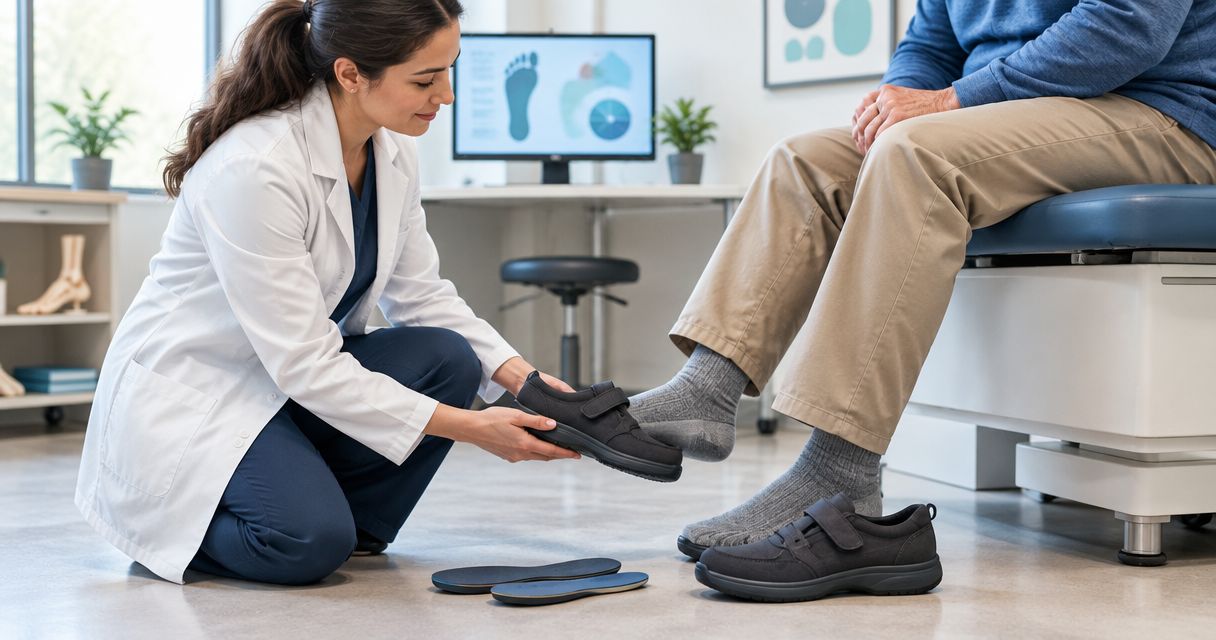
Orthotics are inserts designed to change support and loading. Whether an over-the-counter insert or a custom device is appropriate depends on your examination, footwear, and response—not simply the label on the product.
If an insert increases burning, focal pressure, or heel pain, have the fit reassessed. The guide to whether custom orthotics are worth it explains considerations to discuss before choosing a device.
Physical therapy: match the exercise to the examination
Rehabilitation can address calf tightness, foot strength, and movement patterns when those findings contribute to symptoms. Exercises should reflect the diagnosis rather than a generic heel-pain routine.
Do not force a stretch that causes sharp, burning, or spreading pain. Tell your clinician which movement provokes it so the plan can be adjusted.
Medication and injections: useful tools with limits
A clinician may consider medication or a targeted injection based on the suspected pain source and your medical history. An injection can sometimes serve a diagnostic role as well as a treatment role.
Temporary relief does not prove the nerve has healed. Before an injection, ask what structure is being targeted, what the risks are, and how the response will guide the next decision.
Why recovery from Baxter’s nerve entrapment varies
There is no reliable recovery deadline that applies to every person with suspected Baxter’s nerve entrapment. A treatment plan in 2026 should follow your examination and progress rather than a calendar promise.
Factors that affect the plan include:
- Diagnostic accuracy. Plantar fasciitis, nerve compression, and other heel conditions need different management.
- Ongoing loading. Work demands, running, or repeated impact can keep provoking symptoms.
- Contributing mechanics. Foot position, footwear, and tightness can influence loading around the heel.
- Coexisting conditions. Plantar fasciitis or broader nerve problems can complicate the picture.
- Treatment tolerance. A support or exercise that aggravates symptoms needs adjustment rather than persistence at all costs.
- Signs of nerve dysfunction. Weakness or evidence of muscle changes warrants closer assessment.
Track what you can do more comfortably, not just whether pain disappears briefly after treatment. Easier walking, less limping, and better tolerance of ordinary activities give your clinician useful information.
How do you know whether it is Baxter’s nerve or plantar fasciitis?
You cannot reliably distinguish Baxter’s nerve entrapment from plantar fasciitis using a home symptom checklist alone. Both can cause pain around the heel, and both can occur in the same foot.
Plantar fasciitis commonly causes pain with the first steps after rest. Baxter’s nerve entrapment can produce persistent heel pain, including pain aggravated by activity, but symptom patterns overlap enough that they are clues rather than a diagnosis.
Burning pain can suggest nerve involvement, but its absence does not rule out Baxter’s nerve entrapment. Likewise, a heel spur on an X-ray does not establish which tissue is causing the pain.
During an examination, a clinician considers the location of tenderness, your walking pattern, foot mechanics, strength, and symptom history. Imaging or other tests are selected when they can clarify the diagnosis or change treatment.
MRI can show changes in a muscle supplied by Baxter’s nerve. That finding needs to be interpreted alongside your symptoms and examination; an imaging report alone should not determine whether you need surgery.
What should you do if heel pain is not improving?
Arrange a reassessment instead of repeatedly adding new treatments. A stalled response can mean the original diagnosis needs review, the treatment needs adjustment, or another condition is contributing.
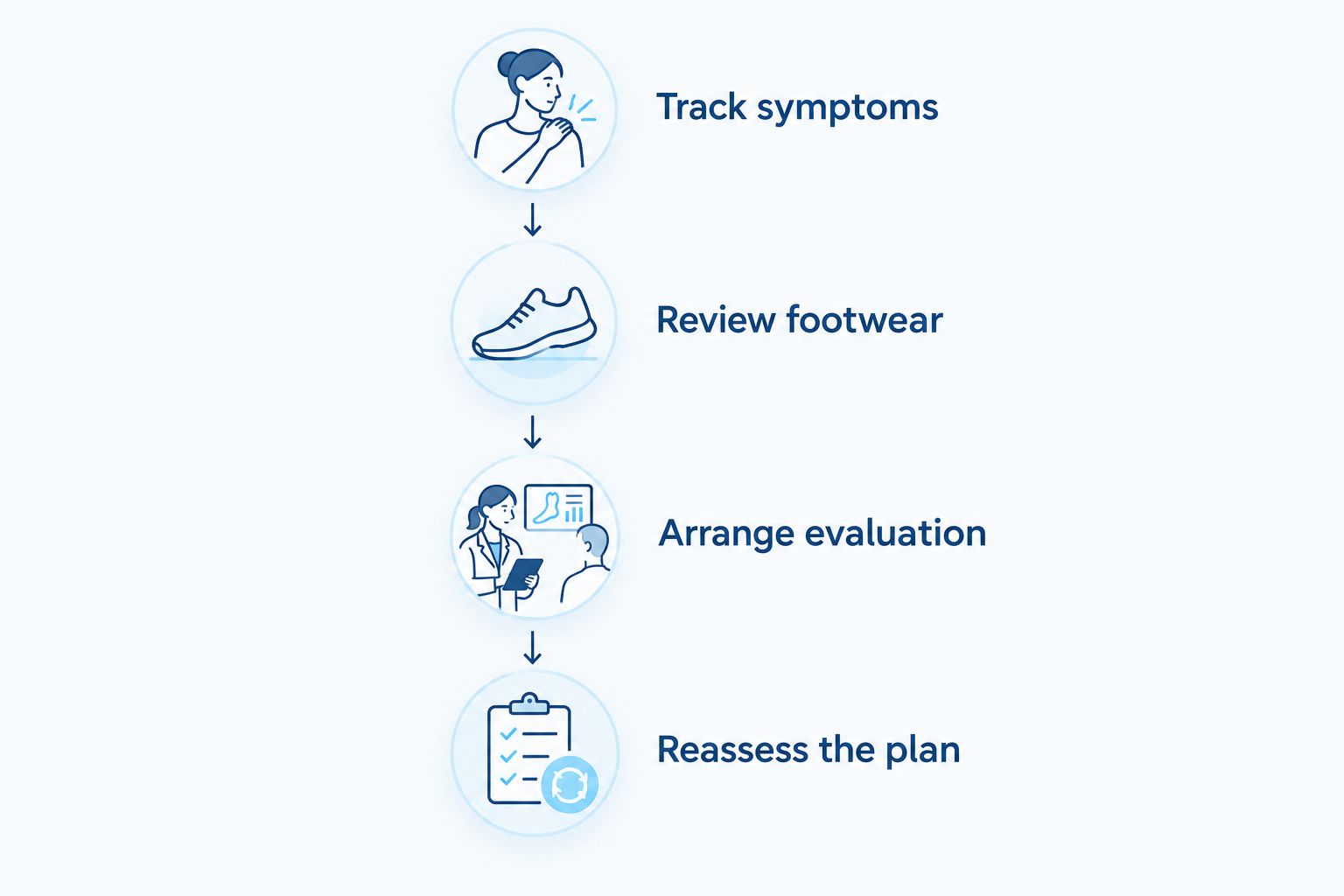
Use this sequence to prepare:
- Track symptoms. Note where it hurts, what triggers it, and whether pain occurs during activity or afterward.
- Review footwear. Bring the shoes and inserts you use most often.
- Arrange evaluation. Explain what you have tried and which measures helped or worsened symptoms.
- Reassess the plan. Agree on what improvement should look like and when to return if it does not happen.
The goal is not to arrive with a perfect self-diagnosis. A clear account of your symptoms is more useful than choosing a treatment before the examination.
Achilles Foot and Ankle Center is best suited to patients seeking a foot-focused evaluation of persistent heel pain. Patients in Mechanicsville and the West End can bring the same practical questions: what is causing the pain, what can be treated without surgery, and what findings would change that plan?
Arrange a heel-pain evaluation
Discuss persistent heel pain, possible nerve involvement, and appropriate next steps.
When is surgery considered for Baxter’s nerve entrapment?
Surgery is considered when symptoms remain troublesome despite appropriate nonsurgical treatment and the clinical findings support nerve entrapment. The decision should connect your symptoms, examination, and any relevant testing—not rest on pain duration alone.
Decompression surgery aims to release structures pressing on the nerve. It is not a guarantee of complete pain relief, particularly when another heel condition also contributes.
Before considering an operation, ask:
- What evidence supports Baxter’s nerve entrapment as the pain source?
- Have other causes of heel pain been considered?
- Which nonsurgical treatments remain appropriate?
- What are the procedure’s risks, limitations, and recovery requirements?
- What symptoms might remain afterward?
An evaluation at Achilles Foot and Ankle Center does not commit you to surgery. It gives you a setting to discuss diagnosis, nonsurgical care, and surgical options when appropriate.
When should you seek care sooner?
Seek prompt assessment for new weakness, rapidly worsening symptoms, or increasing difficulty walking. Do not wait for a routine follow-up if the foot becomes red, hot, or markedly swollen, or if you develop an open wound or fever.
Severe pain after an injury or an inability to bear weight also needs timely evaluation. A suddenly cold, pale, or blue foot requires emergency care.
If you have diabetes, reduced sensation can make pain an unreliable warning sign. Check for skin changes and seek care for a new wound rather than assuming all discomfort comes from an irritated nerve.
Questions to bring to your heel-pain appointment in 2026
Bring a short symptom history, your usual shoes, and a list of treatments you have already tried. Include relevant medical conditions and medications so your clinician can assess treatment risks.
Ask what activities you should modify and which symptoms mean you should stop an exercise. Before leaving, make sure you understand the working diagnosis, the purpose of each treatment, and the follow-up plan.
A useful plan explains what happens next if you do not improve. That is more helpful than an unqualified promise that surgery will never be necessary.
FAQ
Can Baxter’s nerve entrapment heal without surgery in 2026?
Yes, Baxter’s nerve entrapment can improve with nonsurgical care that reduces nerve pressure and addresses contributing factors. Recovery is not guaranteed, and persistent symptoms need reassessment.
How long does Baxter’s nerve entrapment take to heal?
There is no single healing timeline for Baxter’s nerve entrapment. Your diagnosis, ongoing activity demands, nerve findings, and response to treatment determine the follow-up plan.
Is walking good for Baxter’s nerve entrapment?
Walking should be adjusted if it increases heel pain or makes you limp. Ask your clinician how to maintain activity without repeatedly aggravating the affected area.
Can stretching make Baxter’s nerve pain worse?
Yes, stretching that provokes sharp, burning, or spreading pain can aggravate symptoms. Stop the provoking movement and have the exercise reviewed rather than forcing it.
Can Baxter’s nerve entrapment happen with plantar fasciitis?
Yes, Baxter’s nerve entrapment and plantar fasciitis can occur together. An examination helps determine whether the nerve, plantar fascia, or both need treatment.
Does an MRI prove I need surgery for Baxter’s nerve entrapment?
No, an MRI finding alone does not establish that surgery is necessary. The findings must be considered alongside your symptoms, examination, and response to nonsurgical care.
Should I see a podiatrist before trying more heel-pain inserts?
Yes, persistent heel pain deserves an evaluation before you keep changing inserts. A podiatrist can assess the pain source and whether support is appropriate for your foot.
One last thing
A softer shoe and a more supportive shoe are not necessarily the same thing. If cushioning feels pleasant but you still limp or develop the same focal heel pain, comfort alone is not evidence that the underlying problem is improving.
For your next step in 2026, bring your most-used footwear to the examination. Seeing what your foot experiences each day helps make the conversation about treatment more practical.
Related guides
- Is neuropathy in feet reversible?
- Can plantar fasciitis go away on its own?
- Is plantar fasciitis surgery worth it?