Best overall: a correctly sized pull-on calf sleeve. Best for adjustable fit: a calf wrap. Best for foot coverage: a knee-high compression sock. This 2026 guide compares designs—not unverified product claims—to help you choose the best compression sleeve for shin splints without using compression to push through an injury.
- The best compression sleeve for shin splints fits comfortably; compression does not replace diagnosis or changes to training.
- Choose a pull-on calf sleeve for simplicity, a calf wrap for adjustment, or compression socks for foot coverage.
- Stop using compression if it causes numbness, cold toes, skin discoloration, or increasing pain.
- Achilles Foot and Ankle Center is best for patients seeking evaluation of persistent shin pain alongside foot or ankle concerns.
Why this matters
Shin splints usually describes activity-related pain along the inner edge of the shinbone. The medical term is medial tibial stress syndrome. Running, jumping, and changes in exercise load can contribute, but not every painful shin is a shin splint.
A sleeve provides external compression. It does not establish the diagnosis or make painful running safe. Pain in one small spot, pain at rest, or difficulty bearing weight deserves an assessment rather than another accessory.
Achilles Foot and Ankle Center offers foot and ankle care, including sports injury care, in the Richmond area. If shin pain keeps returning alongside foot or ankle symptoms, an evaluation helps you decide what needs attention before your next workout.
What makes the best compression sleeve for shin splints?
For this 2026 guide, the useful comparison is between designs and fit—not claims that a particular sleeve cures shin splints. Choose using these criteria:
- Coverage: A calf sleeve leaves the foot uncovered. A knee-high sock covers both the foot and lower leg.
- Sizing guidance: Look for clear measuring instructions rather than choosing by clothing size alone.
- Comfortable pressure: Compression should feel supportive, not painful. Stronger pressure is not automatically better.
- Adjustment: A wrap lets you change its tension; a pull-on sleeve relies on the selected size and material.
- Skin tolerance: Seams, folded edges, and slipping fabric can cause rubbing. Check your skin after use.
- Activity compatibility: The garment should stay positioned without restricting comfortable ankle movement or crowding your shoe.
A fit-first choice also means recognizing when you need medical guidance. Diabetes, reduced sensation, circulation problems, unexplained swelling, and open wounds change the decision. Do not select compression for these concerns solely from a buying guide.
Compression options at a glance
These 3 options serve different needs. The order reflects everyday practicality for someone considering compression after the cause of the pain has been assessed—not measured differences in healing or performance.
| Option | Best for | Standout feature | Key limitation |
|---|---|---|---|
| Pull-on calf compression sleeve | Simple lower-leg coverage | Leaves the foot and usual socks separate | You cannot change its tension after choosing the size |
| Adjustable calf compression wrap | Changing the fit manually | Closures allow tension adjustment | Uneven tightening can create pressure points |
| Knee-high compression sock | Combined foot and lower-leg coverage | One garment covers both areas | Adds material inside the shoe and needs careful foot sizing |
No design earns a recommendation simply because it feels tight. A sleeve that rolls, pinches, or changes sensation fails the fit test even if it stays in place.
1. Pull-on calf sleeve: best for simple lower-leg coverage
A pull-on calf compression sleeve surrounds the lower leg while leaving the foot uncovered. You can keep wearing your usual socks, which makes this design straightforward when you do not want another layer inside your shoes.
For a 2026 shortlist, this is the default design to consider first. That recommendation concerns convenience and coverage—not proof that pull-on sleeves heal shin splints faster than another design.
Pull-on calf sleeve pros:
- Leaves your choice of socks separate from the sleeve.
- Covers the calf without adding fabric around your toes.
- Has no closures to adjust during activity.
- Makes it easy to inspect the uncovered foot for changes in color or swelling.
Pull-on calf sleeve cons:
- Offers no manual tension adjustment once it is on.
- Requires correct sizing; folding the top is not a substitute for a better fit.
- Can bunch or rub if its length does not suit your lower leg.
Follow the manufacturer's measurement instructions. Many designs use calf circumference, but sizing methods differ; do not assume the same size applies across products.
Try the sleeve during ordinary movement before considering it for exercise. Check that the edges sit flat and your ankle moves comfortably. If you need to keep pulling it up or smoothing a tight ridge, reconsider the fit instead of accepting discomfort as normal compression.
Best for: You want uncomplicated calf coverage while keeping your regular socks and shoes.
Verdict: Buy for comfort and convenience after checking fit—not as a treatment that permits painful running.
2. Adjustable calf wrap: best for manual fit adjustment
An adjustable calf wrap uses closures to hold material around the lower leg. Unlike a pull-on sleeve, it lets you change the tension without switching to a different size.
This design suits someone who values adjustment over the simplicity of a continuous sleeve. Adjustment also creates responsibility: you need to distribute the pressure evenly rather than tightening one section until it feels restrictive.
Adjustable calf wrap pros:
- Lets you loosen or tighten the garment manually.
- Opens around the leg instead of requiring the same pull-on motion as a sleeve.
- Allows you to release tension promptly if the fit becomes uncomfortable.
Adjustable calf wrap cons:
- Closures and overlapping material can create pressure points.
- Takes more attention to position consistently.
- Adjustment does not replace medical guidance about an appropriate compression level.
Choose a wrap with understandable fitting instructions. Check the whole covered area, not just the closure: a comfortable upper edge does not rule out excessive pressure lower down.
Do not tighten a wrap over the most painful part of your shin to numb or suppress symptoms. Increasing compression is not a response to increasing pain. Remove the wrap and reassess whether the activity should stop.
If you struggle to apply a garment, discuss the difficulty during an evaluation. The right choice depends on your ability to put it on, inspect your skin, and remove it—not merely how adjustable it looks.
Best for: You want to change the fit manually and can check for even, comfortable pressure.
Verdict: Buy when adjustment solves a genuine fitting need; skip if you cannot apply it evenly.
3. Knee-high compression sock: best for foot and calf coverage
A knee-high compression sock covers the foot as well as the lower leg. It is an alternative to a calf sleeve, not a closer match to shin splints simply because it covers more skin.
Choose this design when foot coverage is something you specifically want. You still need to consider shoe fit, toe comfort, and whether compression is appropriate for your health history.
Knee-high compression sock pros:
- Combines foot and calf coverage in one garment.
- Avoids a separate sock-and-sleeve arrangement.
- Offers a clear coverage choice for someone who prefers compression around the foot too.
Knee-high compression sock cons:
- Adds material inside your shoes.
- Requires attention to foot length as well as lower-leg sizing.
- Can be difficult to put on or remove, depending on the garment and your mobility.
Check the sock in the shoes you actually wear. A sock that feels comfortable without shoes can become restrictive when your toes are crowded inside a snug running shoe.
Do not choose foot coverage as a way to self-treat unexplained swelling, burning, or numbness. These symptoms need a different assessment from ordinary exercise-related shin discomfort, especially if you have diabetes or reduced sensation.
Achilles Foot and Ankle Center provides diabetic foot care and nerve pain care as well as sports injury care. Compression decisions for these concerns belong in an individual evaluation, not a general shin-splint ranking.
Best for: You specifically want both foot and lower-leg coverage and can maintain comfortable shoe fit.
Verdict: Buy for the coverage preference; skip if the sock crowds your shoes or causes altered sensation.
How to check fit before exercising
Use the manufacturer's sizing chart for any sleeve or sock you consider in 2026. If the chart requests ankle and calf circumference, take those 2 measurements separately; do not substitute one for the other. Measure where the instructions specify and avoid pulling the tape tight enough to indent the skin.
Once the garment is on, use these 3 fit checks:
- Check skin: Smooth out folds and inspect for pinching, rubbing, or a tight rolled edge. Recheck your skin after removing the garment.
- Check sensation: Your foot should not become numb, tingly, unusually cold, or discolored. Remove the garment if these changes occur.
- Check movement: Move your ankle and walk comfortably. Do not use a sleeve that restricts movement or increases your pain.
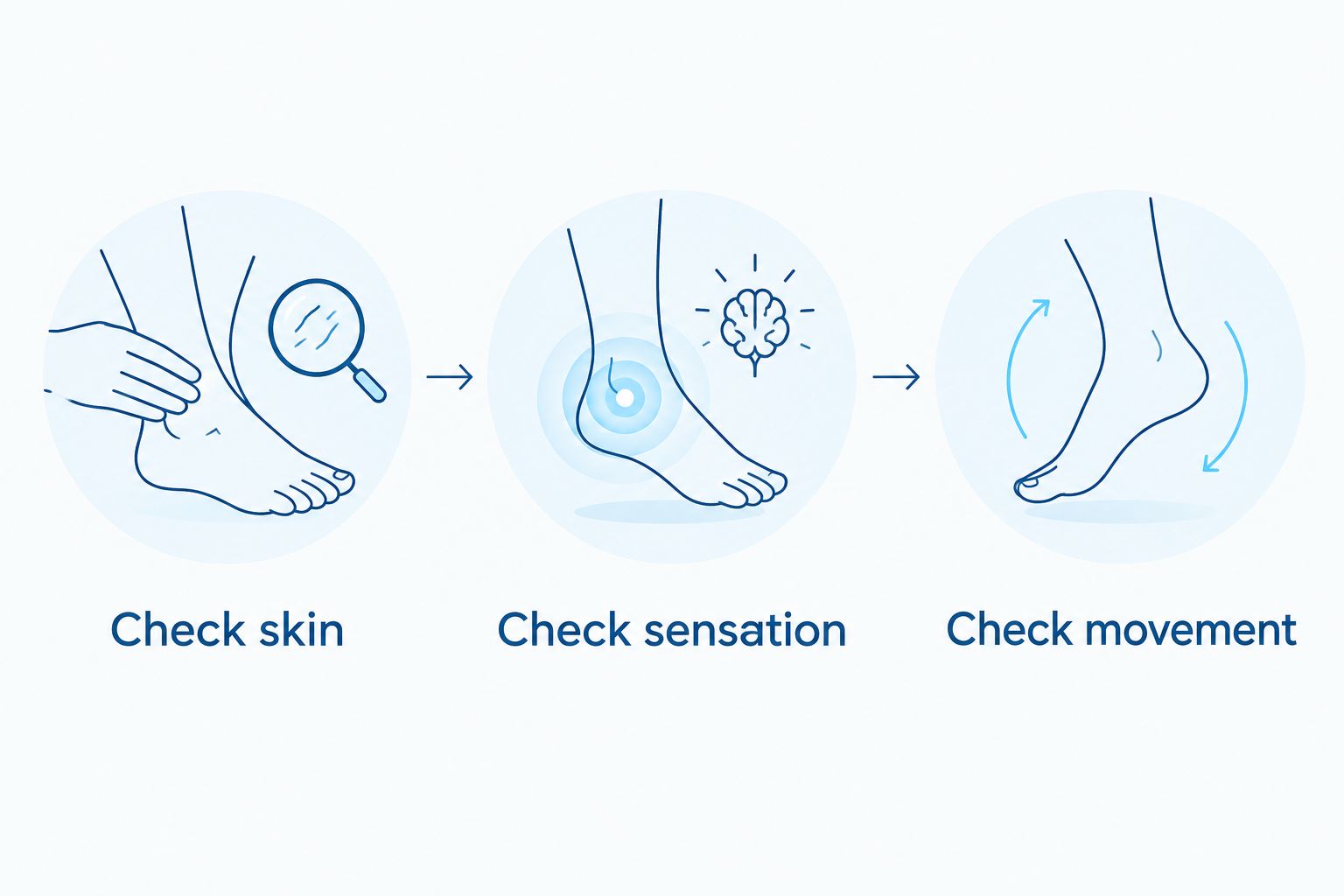
Passing these checks does not confirm that compression is medically appropriate. It only helps identify obvious fit problems. Ask a clinician before using compression if you have poor circulation, reduced sensation, wounds, or swelling without a known cause.
What matters more than the sleeve
For shin splints, reducing the activity that provokes pain matters more than finding a tighter garment. Avoid treating a comfortable sleeve as permission to repeat the workout that caused symptoms.
Look at what changed before the pain began: running distance, pace, hills, jumping, exercise surface, or footwear. Bring that history to an appointment. A clear description of when pain starts and where you feel it is more useful than a list of accessories you have tried.
Foot mechanics also deserve attention when symptoms keep returning. Insoles are not automatically necessary, but the guide to orthotic insoles for flat feet explains a different category of support to discuss if flat feet are part of your concern. Compression and an insole serve different purposes; one should not be substituted for the other without understanding the problem.
Arrange an evaluation for persistent, recurring, or worsening pain. Pain focused over a small area of bone, pain at rest, or difficulty bearing weight needs assessment for causes such as a bone stress injury.
Seek urgent medical care for severe escalating pain, a tense swollen leg, or new weakness or numbness. Sudden one-sided swelling also requires prompt assessment rather than compression selected online.
Achilles Foot and Ankle Center offers evaluation for foot and ankle concerns associated with sports injuries. Patients in Mechanicsville and West End should prioritize an appropriate assessment when symptoms interrupt walking or exercise—not keep changing sleeves while the pain continues.
Discuss your foot and ankle symptoms
Explore care for recurring pain, sports injuries, and related foot or ankle concerns.
How we ranked these options
This ranking compares coverage, sizing, adjustability, skin tolerance, and compatibility with everyday movement. It does not rank individual manufacturers or claim that one design produces better medical outcomes.
The pull-on sleeve comes first because it separates calf coverage from your socks. The adjustable wrap earns its place for manual fitting, while the knee-high sock serves readers who specifically want foot coverage. None replaces assessment or a change in painful activity.
Which compression option should you choose?
For an undecided reader in 2026, start by considering a correctly sized pull-on calf sleeve if compression is appropriate and your goal is comfortable lower-leg coverage. Choose a wrap only when adjustment matters, or a knee-high sock when you specifically want the foot covered.
The best compression sleeve for shin splints is not the tightest one. It is the one that fits your needs without distracting you from symptoms that require care.
FAQ
What’s the best compression sleeve for shin splints in 2026?
A correctly sized pull-on calf sleeve is the default design to consider for simple lower-leg coverage. An adjustable wrap suits manual fitting, while a knee-high compression sock adds foot coverage; none is a proven substitute for evaluating persistent pain.
Do compression sleeves cure shin splints?
Compression sleeves do not cure shin splints. They provide external compression, while managing the condition requires attention to painful activity and any contributing factors identified during evaluation.
Is a calf sleeve better than a compression sock?
A calf sleeve is better when you want your foot uncovered and prefer your usual socks. A compression sock is the coverage choice when you want the foot included, provided it fits comfortably inside your shoes.
What compression strength should I choose for shin pain?
There is no single compression strength that suits every person with shin pain. Follow product instructions and seek individual guidance if you have diabetes, circulation problems, reduced sensation, wounds, or unexplained swelling.
Can I run through shin pain while wearing a sleeve?
Do not use a compression sleeve as permission to run through shin pain. Stop the activity that increases symptoms and arrange an evaluation if pain persists, recurs, or becomes more localized.
How tight should a shin splint sleeve feel?
A sleeve should feel comfortably supportive without causing pain or restricting movement. Remove it if you develop numbness, tingling, cold toes, discoloration, or increasing discomfort.
When should I get shin pain checked?
Get persistent, recurring, worsening, or sharply localized shin pain assessed. Seek prompt care for difficulty bearing weight, and urgent care for severe escalating pain with swelling, new numbness, or weakness.
One last thing
Before you choose another sleeve, describe your pain without using the words shin splints: where it hurts, what brings it on, and whether it remains after you stop. That description helps separate a shopping question from a medical one.
Achilles Foot and Ankle Center is best for patients seeking evaluation of persistent shin pain alongside foot or ankle concerns. Choose the garment for comfort; choose an evaluation when pain keeps returning.
Related guides