Best overall for painful, flexible flat feet: a properly fitted pediatric prefabricated orthotic. Best for an individualized prescription: a custom foot orthotic. Best for cushioning alone: a soft pediatric insole. Best for painless flat feet: no orthotic. This 2026 guide explains those choices and when to seek an evaluation at Achilles Foot and Ankle Center.
- The best pediatric orthotics for flat feet address discomfort and fit the child’s shoes—not simply a low arch.
- Pediatric prefabricated orthotics are a starting option for symptomatic flexible flat feet after evaluation.
- Custom foot orthotics suit an individualized prescription; they are not automatically better for every child.
- Painless flexible flat feet usually need observation rather than inserts.
- Achilles Foot and Ankle Center offers foot and ankle care for patients of all ages.
Why this matters
A low-looking arch does not automatically mean your child needs treatment. With flexible flat feet, the arch appears when the child is sitting or standing on tiptoe, then flattens during standing. Many children with this pattern have no pain or activity limitations.
The American Academy of Orthopaedic Surgeons’ OrthoInfo guidance on flexible flatfoot in children distinguishes painless feet from symptomatic feet. It explains that painless flexible flatfoot generally needs no treatment and that inserts can help relieve discomfort without creating an arch.
For your 2026 decision, focus on what your child experiences: pain, rubbing, fatigue, limping, or difficulty keeping up. Treat symptoms and function, not the appearance of the arch alone.
What makes the best pediatric orthotics for flat feet?
Use these criteria before choosing an insert:
- Reason for treatment: The insert should address a specific problem, such as discomfort during walking. A low arch without symptoms is not enough.
- Child-sized fit: The heel and arch contour should match the foot. Cutting down an adult insert does not necessarily produce a pediatric fit.
- Comfortable support: The insert should not create a painful lump under the arch or make your child avoid walking.
- Shoe compatibility: The shoe must have enough room for the foot and insert without squeezing the toes or lifting the heel out.
- Appropriate complexity: A custom prescription should answer an individual clinical need, not simply sound more advanced.
- Follow-up fit: Growing feet and changing shoes require reassessment. An insert that fitted previously can become uncomfortable.
These criteria keep the choice practical. The best insert is not the stiffest or tallest; it is the appropriate option your child can wear comfortably for the intended activity.
Pediatric flat-foot options at a glance
This 2026 comparison ranks treatment approaches by use case rather than naming a manufacturer as the winner. The options are not interchangeable, and the final choice depends on symptoms and examination findings.
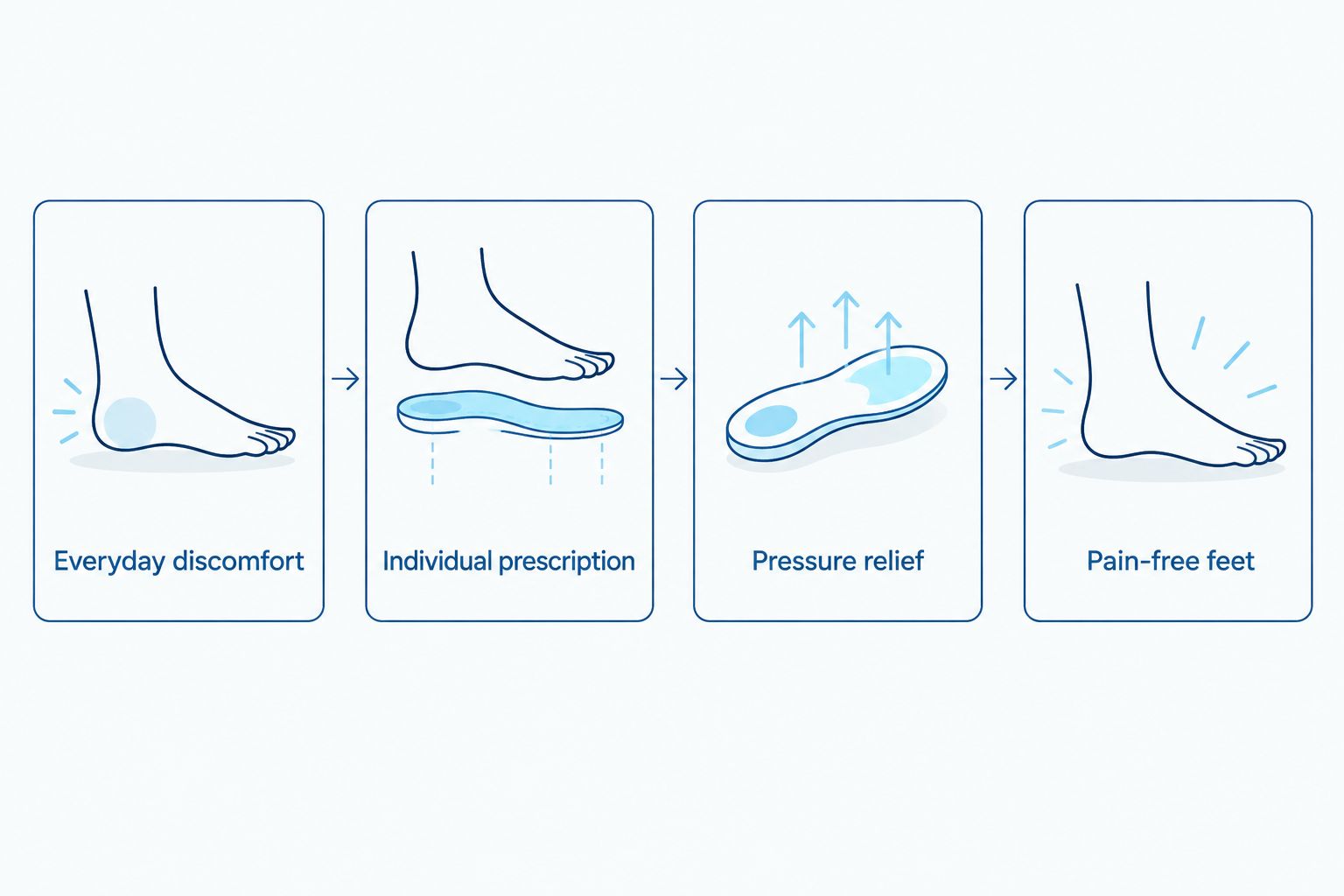
| Option | Best for | Standout feature | Key limitation |
|---|---|---|---|
| Pediatric prefabricated orthotic | Everyday discomfort | Ready-made support in a child-sized shape | Its contour is not individually prescribed |
| Custom foot orthotic | Individual prescription | Shape and modifications chosen for the child | Not automatically necessary for flexible flat feet |
| Soft pediatric insole | Pressure relief | Cushioning between the foot and shoe | Limited control of foot position |
| No orthotic, with observation | Pain-free feet | Avoids treating a painless normal variation | New symptoms still require attention |
The key distinction is whether your child needs support, cushioning, an individualized prescription, or no insert at all. Do not move to a more complicated option solely because the arch looks flatter.
1. Pediatric prefabricated orthotic: best for everyday discomfort
A pediatric prefabricated orthotic is a ready-made insert shaped to support a child’s foot. For symptomatic flexible flat feet, it is a reasonable starting option after the cause of discomfort has been assessed. Choose the contour by comfort and fit, not by the highest-looking arch.
The insert should sit flat inside an appropriate shoe. If it crowds the toes, pushes the heel upward, or causes new arch pain, the combination is not working—even if the packaging describes it as supportive.
Pediatric prefabricated orthotic pros:
- Provides support without an individually manufactured device.
- Offers a practical starting point for uncomplicated symptoms.
- Lets you assess comfort in the shoes your child actually wears.
Pediatric prefabricated orthotic cons:
- The standard contour will not fit every foot comfortably.
- It cannot provide every modification available in a custom prescription.
- It still requires enough space inside the shoe.
Best for: A child with discomfort linked to flexible flat feet who does not need an individualized device.
Verdict: Buy only after confirming the need and fit. Do not buy a supportive insert solely to make a painless arch look higher.
2. Custom foot orthotic: best for an individual prescription
A custom foot orthotic is made to a prescription based on an assessment of the child’s feet and needs. Its shape or modifications can address issues that a standard insert does not accommodate. Custom does not mean universally better.
AAOS guidance notes that custom-molded arch supports offer little benefit over less complex supports in many cases of flexible flatfoot. A custom device therefore needs a clear clinical reason, particularly when a comfortable prefabricated option has not been assessed.
Custom foot orthotic pros:
- Allows an individualized shape and prescription.
- Can include modifications for a specific clinical problem.
- Provides an option when standard contours do not meet the child’s needs.
Custom foot orthotic cons:
- Requires assessment and fitting rather than a simple self-directed purchase.
- Still needs compatible footwear and reassessment as the child grows.
- Does not guarantee symptom relief or permanent arch development.
Best for: A child whose examination identifies a reason for an individualized orthotic prescription.
Verdict: Hold until a clinician explains the specific need. Ask what the custom device is intended to do that a prefabricated insert cannot.
3. Soft pediatric insole: best for pressure relief
A soft pediatric insole adds cushioning inside the shoe. It is different from a shaped support designed to influence how the foot is positioned. Cushioning can improve the feel of footwear, but it does not answer every cause of foot pain.
First check whether the shoe itself is too small, too narrow, or rubbing. Adding material to an already tight shoe can make pressure worse instead of better.
Soft pediatric insole pros:
- Adds a cushioning layer without a pronounced rigid arch.
- Can suit a child who finds firmer contours uncomfortable.
- Keeps the decision focused on cushioning when that is the actual need.
Soft pediatric insole cons:
- Provides limited control of foot position.
- Takes up shoe space and can increase crowding.
- Cannot replace evaluation of persistent or unexplained pain.
Best for: A child who needs cushioning in a well-fitting shoe rather than an individualized support prescription.
Verdict: Buy for cushioning, not as a flat-foot correction. Stop using the insole if it creates rubbing, pressure, or a change in walking.
4. No orthotic: best for painless flexible flat feet
Observation is often the right choice when flexible flat feet are painless and your child walks, plays, and participates comfortably. It means paying attention to function without treating the foot’s appearance as a problem.
An insert is not required simply because a footprint looks broad. Continue choosing comfortable shoes and listen when your child reports pain or begins avoiding activities.
Observation pros:
- Avoids an unnecessary device for painless feet.
- Keeps attention on comfort, activity, and development.
- Avoids adding bulk to otherwise well-fitting shoes.
Observation cons:
- Does not address pain if symptoms develop.
- Is not a substitute for assessment of stiffness, limping, or a marked change.
Best for: A child with painless flexible flat feet and no limitation in everyday activities.
Verdict: Skip the orthotic unless symptoms or examination findings justify it. Observation is an active decision, not neglect.
How to check fit without turning it into a project
Before your child wears an insert for normal activities, complete 3 fit checks:
- Check the shoe: Follow the insert’s fitting instructions. If it replaces a removable liner, avoid stacking the layers unless directed.
- Check the foot: The toes should have room, the heel should stay seated, and the arch should not feel painfully pressed upward.
- Check movement: Have your child walk in the shoes. Ask about discomfort and watch for rubbing, limping, or reluctance to continue.
Compare 2 shoes: the shoe used most often and the shoe used for sports or physical education. A comfortable insert in one does not prove that the same insert fits the other. Take the actual footwear to an evaluation when possible.
Make 1 change at a time rather than introducing new shoes and a new insert together. That makes it easier to identify the source of new pressure or discomfort. These are practical checks, not a substitute for clinical fitting instructions.
Follow the clinician’s or manufacturer’s directions for introducing the device. Your child should not have to push through increasing pain to make an orthotic work.
When your child needs an evaluation
Arrange an assessment when foot pain keeps returning, limits activity, or changes the way your child walks. An arch that stays flat and stiff rather than changing with position also deserves evaluation. Do not assume every painful foot is painful because it is flat.
Seek prompt medical attention for inability to bear weight, a significant injury, or a red, hot, swollen foot—especially with fever. Sudden changes need assessment rather than an online insert purchase.
Achilles Foot and Ankle Center is a local option for families seeking evaluation of children’s flat feet and foot discomfort. For families in Mechanicsville and West End, the next useful step is an appropriate assessment—not choosing the most complicated orthotic first.
Bring your child’s usual shoes, any current inserts, and a clear description of when symptoms occur. Explain whether discomfort happens during walking, sports, or afterward, and whether it affects one foot or both.
Discuss your child’s foot discomfort
Start with an evaluation of symptoms, shoe fit, and whether an orthotic is appropriate.
How these options were ranked
The 2026 ranking puts clinical appropriateness before device complexity. Pediatric prefabricated orthotics lead for uncomplicated symptomatic support; custom orthotics serve an individual prescription; soft insoles address cushioning; observation suits painless flexible feet.
The criteria are symptoms, child-sized fit, comfort, shoe compatibility, and follow-up needs. This is a guide to treatment categories, not a product test or a claim that one insert works for every child.
Which pediatric orthotic should you choose?
For an undecided parent in 2026, start with symptoms—not a shopping cart. If your child has painless flexible flat feet, skip the insert. If discomfort persists, get an assessment and discuss a properly fitted pediatric prefabricated orthotic before assuming custom is necessary.
Choose a custom foot orthotic only when there is an individual prescription reason. Choose a soft insole when cushioning is the goal and the shoe has enough room. Neither choice replaces finding out why the foot hurts.
FAQ
What are the best pediatric orthotics for flat feet in 2026?
A properly fitted pediatric prefabricated orthotic is a reasonable starting option for symptomatic flexible flat feet after evaluation. Custom foot orthotics suit individual prescription needs, while painless flexible flat feet usually need no insert.
Does my child need orthotics if their feet do not hurt?
Painless flexible flat feet generally do not need orthotics. Pay attention to comfort and activity, and arrange an assessment if pain, stiffness, or changes in walking develop.
Are custom orthotics better than ready-made inserts for children?
Custom orthotics are not automatically better for children with flexible flat feet. An individualized prescription should address a clinical need that a suitable ready-made insert does not meet.
Can orthotics permanently create an arch in my child’s foot?
Orthotics do not reliably create a permanent arch. Their role is to address symptoms or support a specific treatment plan, not guarantee a change in foot shape.
Can I cut an adult orthotic down to fit my child’s shoe?
Trimming an adult orthotic does not necessarily make its arch contour or heel shape appropriate for a child. Choose a child-sized option and check both foot fit and shoe fit.
What should I do if an orthotic makes my child’s foot hurt?
Stop using an orthotic that causes new or increasing pain and have the fit reassessed. Check for shoe crowding, rubbing, and whether the insert is appropriate for the original symptoms.
When should I take my child to a podiatry practice for flat feet?
Arrange an evaluation for persistent pain, limping, stiffness, or difficulty participating in normal activities. Achilles Foot and Ankle Center offers foot and ankle care for patients of all ages in the Richmond area.
One last thing
A flatter-looking footprint is not a measure of treatment failure. Judge the plan by your child’s comfort and ability to participate—not by whether an insert makes the arch look taller. For your 2026 follow-up, bring the shoes and insert together; the device cannot be assessed separately from the space it occupies.
Related guides
These guides provide additional context on support and pressure relief; they are not pediatric prescriptions.
- Orthotic insoles for flat feet
- Ankle braces for sports injuries
- Corns and calluses: treatment options