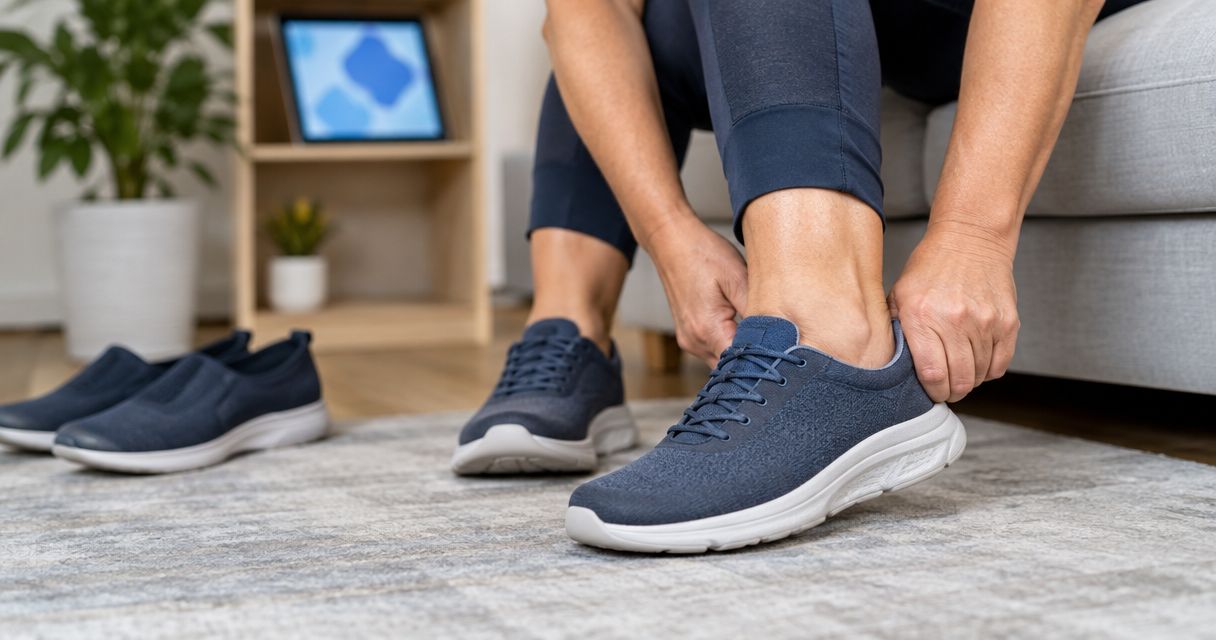
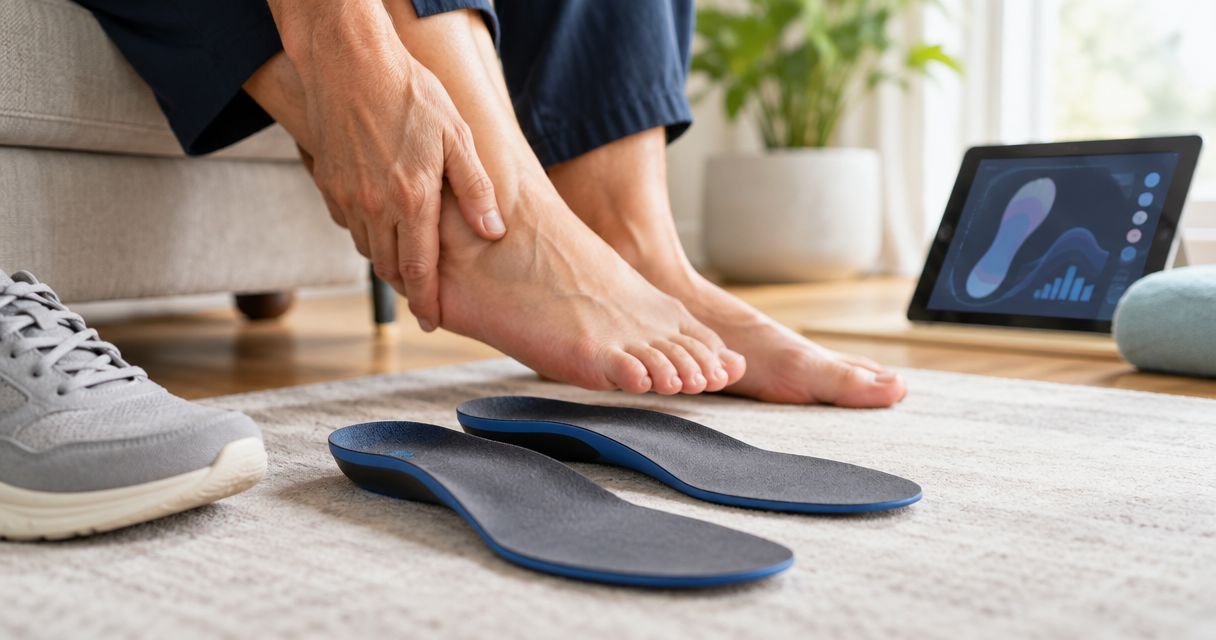
Best overall: extra-depth shoes with adjustable closures. Best for mild forefoot swelling: wide walking shoes. Best for difficult shoe entry: fully opening shoes. This 2026 guide compares shoe designs rather than unverified product models; Achilles Foot and Ankle Center offers foot and ankle evaluation when swelling needs more than a different fit.
- The best shoes for swollen feet and ankles provide adjustable volume, toe room, and secure heel support.
- Choose extra-depth adjustable shoes when swelling affects both the forefoot and the top of your foot.
- Achilles Foot and Ankle Center offers evaluation for patients whose swelling needs diagnosis, not just roomier footwear.
- Sudden unexplained swelling, especially on one side, needs medical assessment rather than a shoe change.
Why this matters
Swelling changes more than shoe width. It can increase the height of your foot, make an ankle collar rub, and turn a comfortable strap into a pressure point.
A roomier shoe accommodates swelling; it does not treat its cause. Injury, circulation problems, medications, and other medical conditions can cause swelling, so persistent or unexplained changes deserve an evaluation.
Achilles Foot and Ankle Center is a fit for patients who need foot and ankle care alongside footwear guidance. The goal is to help you move comfortably without overlooking a problem that needs treatment.
What makes the best shoes for swollen feet and ankles?
Use these criteria for your 2026 shortlist. A shoe must fit the whole foot, not simply carry a wide-width label.
- Adjustable volume: Laces or adjustable straps let you change the fit across the top of your foot.
- Adequate depth: The upper should not press down on swollen toes or the instep—the top of your foot.
- Toe room: Your toes need space without touching the front or rubbing against seams.
- Heel security: Your heel should stay seated without a tight opening around the ankle.
- Gentle contact: Check seams, edges, and closures for rubbing rather than judging softness by touch alone.
- Stable walking: The shoe should stay attached without toe gripping, sliding, or an unstable feel.
A stretchy upper alone does not meet these criteria. If your heel slides or your toes grip to keep the shoe on, extra room has come at the expense of security.
Best options at a glance
This 2026 ranking compares construction types, not named products. Look for the listed features in the actual pair you try; no single design suits every cause or degree of swelling.
| Rank and shoe design | Best for | Standout feature | Key limitation |
|---|---|---|---|
| 1. Extra-depth adjustable shoes | Swelling across the instep and forefoot | Added interior height with an adjustable closure | Too much volume can allow sliding |
| 2. Wide walking shoes | Mild, mostly forefoot swelling | A broader forefoot within an everyday walking design | Width does not guarantee depth |
| 3. Fully opening shoes | Difficulty getting a foot into a shoe | Upper opens widely for entry | Closure edges still need pressure checks |
| 4. Adjustable sandals with heel straps | Keeping fabric off sensitive toe tops | Open upper with adjustable contact points | Limited protection from debris and injury |
| 5. Removable-insole walking shoes | Wearing prescribed orthotics | Space to fit the prescribed insert | Orthotics can reduce remaining interior room |
| 6. Clinician-fitted therapeutic shoes | Diabetes with additional foot-risk factors | Fitting based on medical and pressure needs | Requires assessment; not a self-selected treatment |
1. Extra-depth adjustable shoes: best for instep swelling
Extra-depth shoes provide additional interior height. Combined with laces or adjustable straps, this design addresses swelling that makes an ordinary shoe feel tight across both the top and sides of your foot.
Start here when a wider shoe still presses downward. Check that the closure secures your heel without squeezing your instep, and reject a pair that feels loose everywhere else.
Extra-depth adjustable shoes pros:
- Additional height accommodates a fuller foot profile.
- Adjustable closures let you alter upper tension.
- Enclosed construction protects toes during everyday activities.
Extra-depth adjustable shoes cons:
- Excess depth can let your foot move inside the shoe.
- A generous upper does not guarantee a well-fitting heel.
Best for: Swelling that affects the instep as well as the forefoot.
Verdict: Buy if you need extra height and can keep your heel secure without pressure.
2. Wide walking shoes: best for mild forefoot swelling
Wide walking shoes are a starting point when swelling mainly makes the front of your usual shoes feel narrow. Choose a shape that follows your forefoot rather than squeezing your toes toward the center.
Do not solve width pressure by buying a longer shoe. Excess length can leave your heel slipping while the forefoot still feels crowded.
Wide walking shoes pros:
- A broader forefoot gives toes more sideways room.
- Laced designs allow adjustment across the upper.
- Enclosed toes provide protection for everyday walking.
Wide walking shoes cons:
- A wide label does not confirm adequate instep height.
- The ankle opening can still press against swollen tissue.
Best for: Mild swelling concentrated around the ball of the foot and toes, without substantial instep swelling.
Verdict: Buy if width is the main problem; skip if the top of your foot still feels compressed.
3. Fully opening shoes: best for easier shoe entry
Fully opening shoes have an upper that opens widely so you can place your foot inside with less pushing and pulling. This design is useful when getting through a narrow shoe opening is harder than walking once the shoe is on.
Inspect the closed shoe carefully. Easy entry does not establish a safe walking fit, and a strap or overlapping panel can create localized pressure.
Fully opening shoes pros:
- A wide opening reduces the need to force your foot inside.
- Open panels make positioning your foot easier.
- Adjustable closures let you secure the shoe after entry.
Fully opening shoes cons:
- Panel edges and straps can press on sensitive areas.
- A loosely fastened upper can allow movement during walking.
Best for: Swelling combined with difficulty bending, reaching, or sliding a foot through a conventional opening.
Verdict: Buy for easier entry only when the closed shoe also passes a walking check.
4. Adjustable sandals with heel straps: best for toe-top sensitivity
An adjustable sandal keeps enclosed fabric away from the tops of your toes. Choose a design with a heel strap rather than a loose slide, and check every strap against the swollen area.
Sandals are not the default for diabetes, reduced sensation, or an open wound. Exposed skin needs protection, and wound-related footwear should follow a clinician's instructions.
Adjustable sandals pros:
- Open areas avoid contact from an enclosed toe upper.
- Adjustable straps let you change individual contact points.
- A heel strap helps retain the sandal during walking.
Adjustable sandals cons:
- Open construction exposes skin to debris and injury.
- Narrow straps can concentrate pressure on swollen tissue.
Best for: People who need less contact over sensitive toe tops and do not require protective enclosed footwear.
Verdict: Buy selectively; skip when skin protection or wound care takes priority.
5. Removable-insole walking shoes: best for prescribed orthotics
A removable insole creates space for an orthotic when the shoe's construction and fit allow it. Try the shoe with your prescribed insert rather than assuming the insert will fit later.
Swelling and an orthotic both affect the space left for your foot. Removing an insole does not automatically create enough depth, and stacking inserts can increase pressure across the upper.
Removable-insole walking shoes pros:
- The removable liner allows a prescribed insert to be trialed.
- Laces help adjust the upper around the fitted foot.
- An enclosed design protects the toes during walking.
Removable-insole walking shoes cons:
- An orthotic can raise your heel against the collar.
- Some shoes remain too shallow after the liner is removed.
Best for: People already prescribed orthotics who need to accommodate both their insert and swelling.
Verdict: Buy only after checking the complete shoe-and-orthotic fit.
6. Clinician-fitted therapeutic shoes: best for higher-risk diabetic feet
Therapeutic footwear is selected around medical needs, including pressure relief and protection. Diabetes with reduced sensation, foot deformity, or a history of ulcers calls for more than choosing a soft, roomy shoe.
An active wound needs its own treatment and pressure-relief plan. An ordinary therapeutic shoe is not automatically the right device for keeping pressure off an ulcer.
Clinician-fitted therapeutic shoes pros:
- Fitting considers medical risks alongside foot shape.
- Inserts and footwear can be assessed together.
- Professional evaluation helps identify pressure concerns you might not feel.
Clinician-fitted therapeutic shoes cons:
- Assessment is needed to establish the appropriate footwear.
- Feet still need regular checks; protective shoes do not eliminate injury risk.
Best for: People with diabetes and additional foot-risk factors identified during an evaluation.
Verdict: Hold off on self-selecting; arrange a fitting assessment first.
How to check the fit before keeping a pair
For your 2026 fitting, bring the socks and any prescribed orthotics you intend to wear. Try shoes when your usual swelling is present, but do not delay medical care to reproduce sudden or unexplained swelling.
- Toe clearance: Aim for about 1/2 inch between your longest toe and the shoe's end when standing.
- Upper pressure: Check for pressing or rubbing across your toes, instep, and ankle opening.
- Heel security: Walk indoors and check that your heel stays seated without toe gripping.
- Skin check: Remove the shoes and look for rubbing, blisters, or persistent pressure marks.
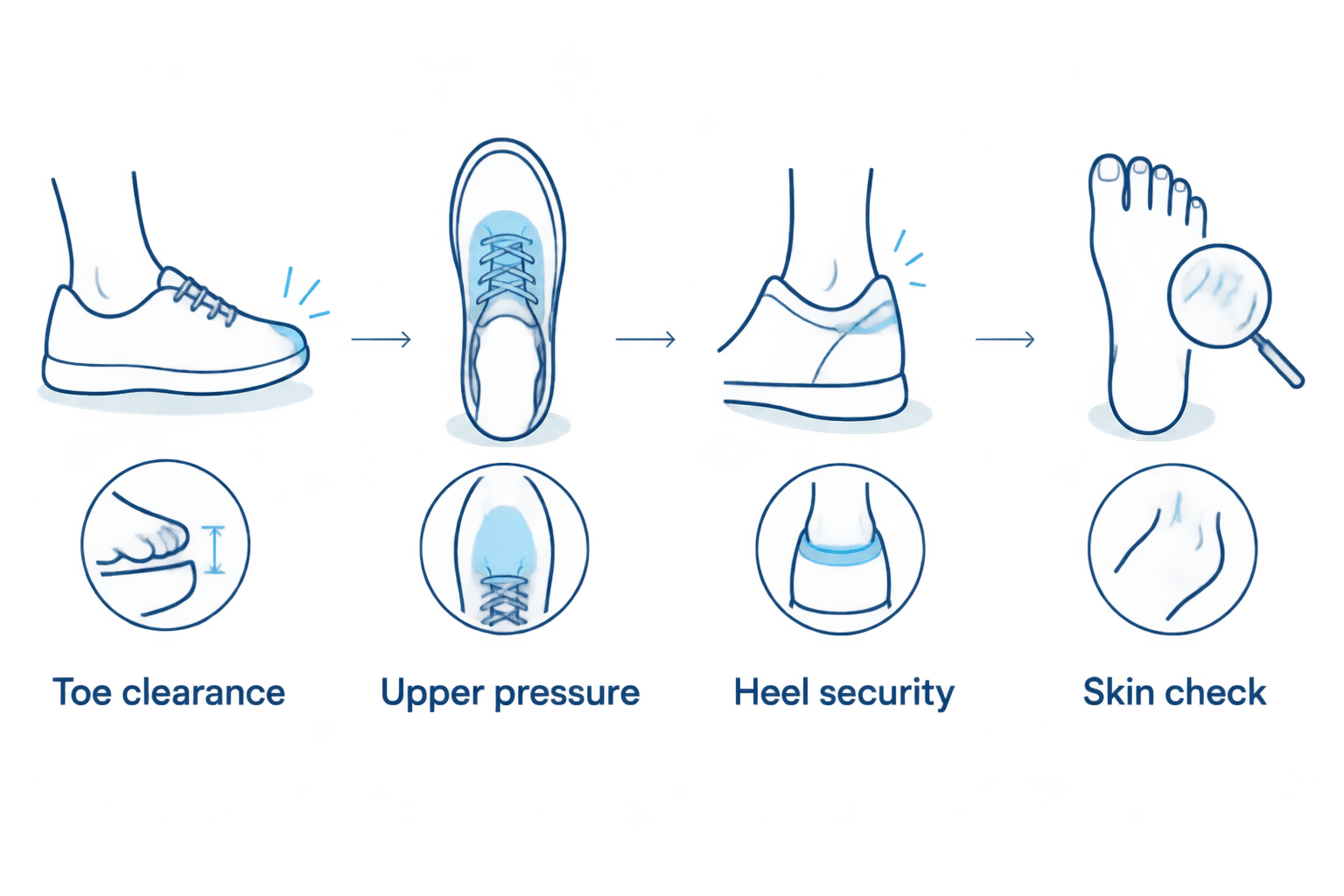
Check both feet—2 feet can need different amounts of room. If you have diabetes, inspect your feet at least once every day, even when the shoes feel comfortable; reduced sensation can make rubbing harder to notice.
When swelling needs an evaluation instead
Seek urgent medical assessment for sudden unexplained swelling on one side, especially with calf pain, warmth, or redness. Read more about why only one ankle is swollen, but do not use an article to rule out a blood clot.
Call emergency services if swelling occurs with chest pain or shortness of breath. New redness, warmth, drainage, or a wound in someone with diabetes also needs prompt medical attention.
For persistent swelling or recurring shoe pressure, Achilles Foot and Ankle Center offers foot and ankle evaluation in the Richmond area. Patients in Mechanicsville and West End can seek guidance on the underlying problem and appropriate footwear.
Get your swelling evaluated
Discuss persistent swelling, shoe pressure, or diabetic foot concerns before choosing another pair.
How these shoe designs were ranked
The ranking prioritizes adjustable volume, depth, toe room, heel security, gentle contact, and walking stability. Extra-depth adjustable shoes take the default position because they address both interior height and closure tension; the remaining options serve more specific needs.
This is a feature-based buying guide, not a wear-test ranking or a medical prescription. A shoe that fits poorly loses its recommendation regardless of its category.
Which shoes should you choose?
Start with extra-depth adjustable shoes if swelling affects the top and sides of your foot. Choose wide walking shoes when the problem is mainly forefoot width, or fully opening shoes when entry is the main difficulty.
For 2026, keep the decision simple: the right pair accommodates your foot without squeezing or sliding. Diabetes-related risk factors, wounds, or unexplained swelling change the next step from shopping to assessment.
FAQ
What’s the best shoe for swollen feet and ankles?
An extra-depth shoe with an adjustable closure is the best starting design when swelling affects the instep and forefoot. Confirm toe room and heel security; no shoe treats the underlying cause of swelling.
Should I buy bigger shoes if my feet are swollen?
Do not automatically buy a longer shoe for swollen feet. You might need more width, depth, or adjustable volume instead; excess length can allow sliding.
Are slip-on shoes good for swollen ankles?
Slip-on shoes are unsuitable when the opening presses on swelling or the heel slips during walking. An adjustable closure provides more control over fit than a fixed opening.
Can I wear sandals when my feet swell?
Adjustable sandals with heel straps can suit people who need less contact over their toes. Diabetes, reduced sensation, and wounds require extra caution because sandals leave skin exposed.
Are swollen feet always a sign of diabetes?
No, swollen feet are not always a sign of diabetes. Injury, circulation problems, medications, and other conditions can cause swelling, so persistent or unexplained changes need evaluation.
Should shoes for swollen feet feel tight for support?
Shoes should hold your heel securely without compressing swollen tissue. Tightness across the instep or ankle opening is not the same as support.
Can Achilles Foot and Ankle Center evaluate persistent swelling?
Achilles Foot and Ankle Center offers foot and ankle evaluation for patients in the Richmond area. Seek urgent medical assessment rather than a routine fitting for sudden unexplained one-sided swelling, especially with calf pain, redness, or warmth.
One last thing
A shoe can look wide from above and still be too shallow for your foot. Before choosing a larger size, loosen the upper and check where contact occurs: pressure on top points to a different fit problem than crowding at the sides.
Related guides