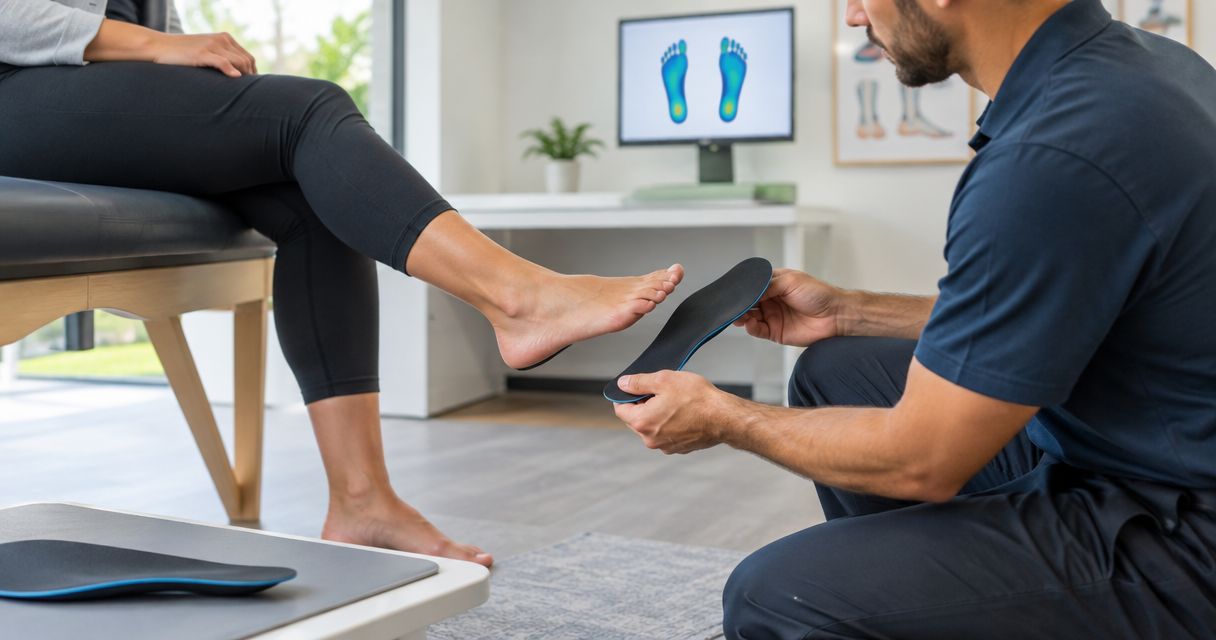
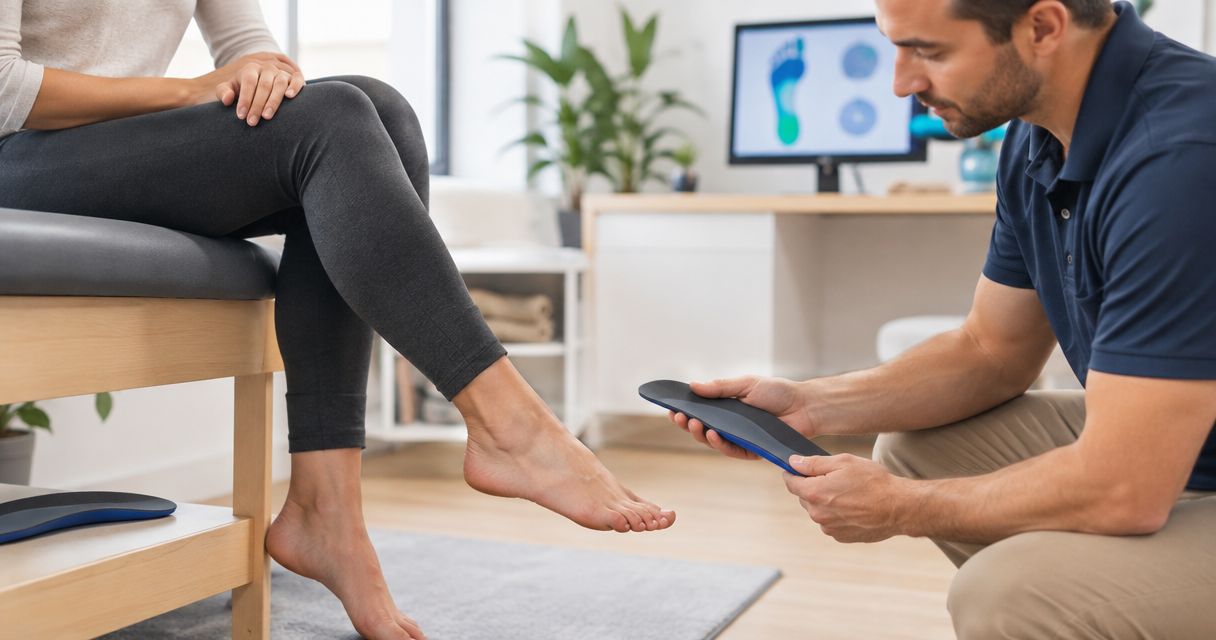
Custom orthotics usually take a few weeks to break in, with wear time increasing gradually rather than starting with all-day use. The important distinction for your 2026 break-in plan is that unfamiliar support can be normal, but sharp pain, blisters, numbness, or worsening symptoms mean you should stop wearing the inserts and contact the prescribing clinician.
- How long does it take to break in custom orthotics? Usually a few weeks, with gradual increases in wear.
- Check shoe fit before extending wear time; crowded shoes can create pressure even with a correctly prescribed orthotic.
- Sharp pain, blisters, and numbness are reasons to stop, not signs to push through.
- Achilles Foot and Ankle Center provides podiatry care for heel pain, nerve pain, and diabetic foot concerns.
How long does it take to break in custom orthotics?
Expect gradual adjustment over a few weeks, not an instant switch to full-time wear. Your prescribing clinician’s instructions take priority because the device, your diagnosis, and your skin health affect the plan. The custom orthotics evaluation workflow explains the broader process around assessment and fitting.
Use comfort and skin condition to guide each step rather than treating a calendar date as permission to continue:
- Check the fit. Seat the orthotic flat in the intended shoe and confirm that your toes and heel have room.
- Start briefly. Begin with a short period of ordinary walking, following the instructions supplied with your devices.
- Check your feet. Remove your shoes and look for rubbing, blisters, pressure marks, or irritated skin.
- Increase gradually. Add wear time only when the previous amount feels comfortable and your skin remains healthy.
- Review problems. Contact the prescribing clinician if the same discomfort returns or prevents you from increasing wear.
Breaking in an orthotic means getting used to a different pattern of support and pressure. It does not mean forcing your foot to tolerate a painful device or waiting for a rigid shell to become soft.
Why this matters
A useful 2026 break-in plan separates adjustment from injury. Mild awareness beneath the arch is different from a hot spot that turns into a blister, and neither should be judged solely by how long you have worn the insert.
Starting with a full work shift makes it harder to identify the problem. A short trial lets you notice whether discomfort comes from the support itself, the shoe pressing on your toes, or the heel moving inside the shoe.
Also separate tolerating the orthotic from improvement in the original condition. Comfortable wear does not prove that heel pain or another foot problem has finished healing. Treatment progress needs its own assessment.
What should custom orthotics feel like at first?
You can notice support beneath an area that previously had little contact with your shoe. That unfamiliar feeling should remain tolerable, not become increasingly painful as you walk.
Use the following distinctions to decide whether to continue, reduce wear, or seek advice. They are guides for action, not a way to diagnose the cause yourself.
| What you notice | What it means for your next step | What not to do |
|---|---|---|
| Unfamiliar support without pain or skin irritation | Keep the trial brief and increase gradually as directed | Jump straight to an all-day shift |
| Mild aching that settles after removing the device | Reduce wear and ask for advice if it keeps returning | Assume every ache proves the orthotic is working |
| Repeated rubbing or a persistent pressure mark | Stop the trial and have the shoe-and-orthotic fit checked | Add more layers to an already crowded shoe |
| Sharp pain, blistering, or new numbness | Stop wearing the orthotic and contact the prescribing clinician | Push through to meet a break-in deadline |
| Open skin, drainage, spreading redness, or warmth | Seek prompt medical assessment, especially with diabetes | Continue wearing a device that presses on the area |
Pain is feedback, not a break-in requirement. If you start limping, change how you walk to avoid pressure, or develop pain elsewhere, the next step is reassessment rather than longer wear.
How should you increase wear without overdoing it?
Choose an ordinary, low-demand part of your day for the first trials. Stay close enough to home that you can remove the orthotics if discomfort starts, rather than testing them during a long commute or an outing without alternatives.
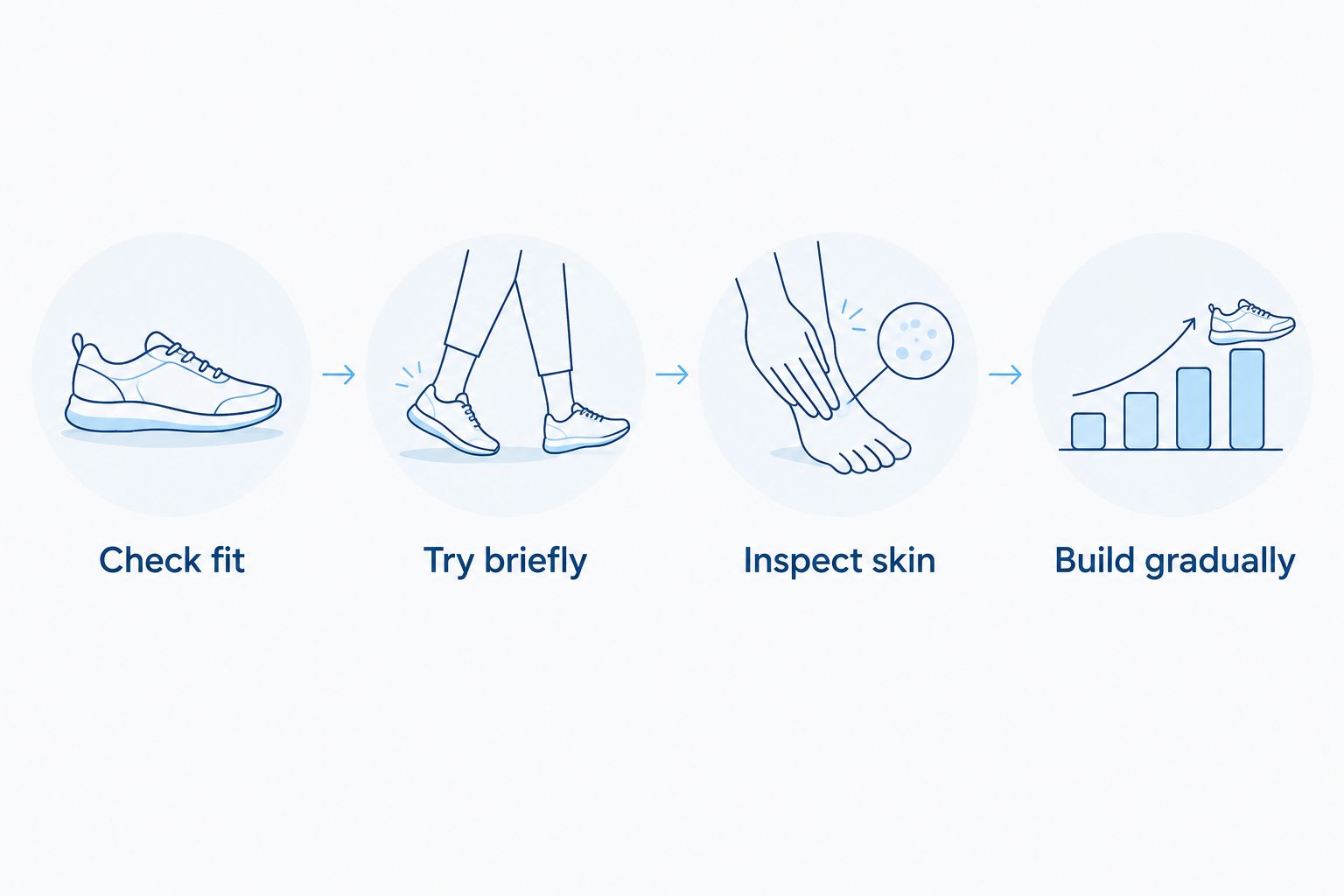
A simple sequence keeps the process manageable:
- Check fit: Confirm that the insert sits securely and the shoe closes comfortably.
- Try briefly: Walk on a familiar, level surface before attempting demanding activity.
- Inspect skin: Look at your heels, arches, toes, and the edges of your feet after wear.
- Build gradually: Increase use only when the previous trial caused no concerning symptoms.
Keep a brief note of which shoes you wore, what activity you did, and where discomfort appeared. A description such as pressure under the inner arch during walking is more useful at follow-up than saying the inserts feel wrong.
Do not increase walking distance and orthotic wear at the same time. Keeping your activity familiar helps you judge the effect of the new support without adding a separate increase in workload.
Why custom orthotic break-in time varies
The right pace depends on the foot, the device, and the activity. These factors explain why another person’s schedule is not automatically appropriate for you:
- The prescription: Orthotics redistribute pressure and support particular areas; the amount and location of that support affect what you notice.
- Your footwear: Shoe depth, fastening, heel fit, and space around the toes influence comfort.
- Your starting symptoms: An already painful heel or irritated tendon needs attention alongside the new device.
- Your daily workload: Standing at work places different demands on your feet than a brief walk at home.
- Your skin and sensation: Diabetes, reduced feeling, or a history of wounds calls for an individualized plan and closer skin checks.
- Changes in activity: Returning to running or longer walks adds demands beyond simply getting used to the orthotic.
For your 2026 plan, keep the focus on a comfortable progression rather than comparing your progress with someone else’s. Repeated difficulty increasing wear is a reason to review the fit and instructions.
Can the wrong shoes make orthotics feel uncomfortable?
Yes. A shoe that becomes too tight after you add an orthotic can create pressure even when the device itself is appropriate. Check the whole combination, not just the insert.
Your heel should sit securely rather than lift out with each step. Your toes should have room, and the upper should not press firmly across the top of your foot. Fasten the shoe as you normally would when assessing fit.
Ask whether the shoe’s original removable liner should come out. Do not stack inserts or remove a prescribed component without checking the instructions. Some devices replace a liner; others require a different arrangement.
| Approach | Best for | Benefit | Limitation |
|---|---|---|---|
| Gradual wear in a suitable shoe | Building everyday tolerance | Lets you monitor pressure and skin response | Does not replace treatment of the underlying condition |
| Checking another suitable shoe | Investigating shoe-related crowding or heel slip | Helps identify whether footwear contributes to discomfort | Cannot correct an orthotic that needs adjustment |
| Prescriber review | Recurring pain, rubbing, or difficulty progressing | Allows assessment of the device, shoe, and foot together | Requires evaluation rather than another home workaround |
Avoid trimming, heating, bending, or grinding a custom device yourself. Altering its shape can change the support or damage it, and it makes a proper fit review more difficult.
When should you ask for an orthotic adjustment?
Ask for a review when the same pressure point keeps returning, symptoms worsen, or you cannot progress despite shorter trials and suitable footwear. You do not need to finish a predetermined break-in period before reporting a problem.
Achilles Foot and Ankle Center is a fit for Richmond-area patients who need podiatry evaluation for persistent heel pain, nerve pain, or diabetic foot concerns. For custom orthotics discomfort, bring the devices, the shoes you wear with them, and any fitting instructions to your appointment.
Patients in Mechanicsville and the West End can contact the practice to arrange an appropriate evaluation. Explain whether the problem is discomfort from an existing orthotic, a new foot symptom, or a skin concern so the team understands why you need care.
This 2026 guide supports general decision-making; your examination determines whether the issue involves footwear, the orthotic, or a separate condition. No break-in schedule guarantees a particular result.
Can I wear custom orthotics all day right away?
A few weeks of gradual adjustment is the usual expectation, so do not start with all-day wear unless your prescribing clinician specifically directs it. Your first test should not be a full standing shift or a long day when you cannot change footwear.
If your job makes short trials difficult, discuss the work schedule before starting. A plan that fits your responsibilities is more useful than attempting a schedule you cannot follow safely.
Can I run while breaking in custom orthotics?
Comfortable everyday walking should come before testing new orthotics during running, unless your clinician provides different instructions. Running adds repeated loading and makes it harder to separate a fit problem from an activity-related symptom.
Keep the return gradual and follow any restrictions related to your original injury. Orthotics are not permission to run through sharp pain, an altered stride, or worsening symptoms.
Does diabetes change how I should break in orthotics?
Diabetes can change the break-in plan, particularly if you have reduced sensation, poor circulation, or a previous foot ulcer. Do not rely on pain alone to warn you about pressure. A spot can be irritated even when it does not hurt.
Inspect your feet after wear and follow your clinician’s monitoring instructions. If you cannot see the bottoms of your feet, use a mirror or ask someone to help. New blisters, open skin, or concerning color changes need prompt advice rather than another trial.
For your 2026 routine, treat skin checks as part of wearing the device, not an optional extra. Orthotics used to protect a vulnerable foot need individualized supervision.
FAQ
How long does it take to break in custom orthotics?
Custom orthotics usually take a few weeks to break in through gradually increased wear. Follow your prescribing clinician’s instructions, and stop for sharp pain, blistering, new numbness, or worsening symptoms.
Should custom orthotics hurt my arches at first?
Custom orthotics can feel unfamiliar under your arches, but significant or worsening pain is not something to push through. Reduce wear and contact the prescribing clinician if discomfort keeps returning.
What if my custom orthotics still feel uncomfortable after several weeks?
Persistent discomfort after several weeks needs a fit review rather than indefinite break-in attempts. Bring the orthotics and the shoes you use so the clinician can assess them together.
Should I remove my shoe’s original insole before adding orthotics?
Whether you should remove the original insole depends on the orthotic and shoe. Follow the fitting instructions and ask before stacking inserts or changing the prescribed setup.
Can I switch my custom orthotics between different shoes?
Switching shoes is appropriate only when the orthotics fit securely and the footwear suits their intended use. Check toe room, heel position, and pressure each time rather than assuming every pair will work.
What should I do if custom orthotics cause a blister?
Stop wearing the orthotics and contact the prescribing clinician about the pressure point. Seek prompt medical advice for a blister if you have diabetes, reduced sensation, poor circulation, or signs of infection.
Can Achilles Foot and Ankle Center evaluate pain while I use orthotics?
Achilles Foot and Ankle Center provides podiatry evaluation for foot and ankle concerns, including heel pain and nerve pain. Bring your orthotics and usual shoes so you can explain when and where symptoms occur.
One last thing
The most useful item to bring to an orthotic follow-up is the shoe that causes the problem. An insert can sit differently in a roomy walking shoe than in a shallow work shoe, so reviewing the device alone leaves out part of the picture.
Bring your usual footwear, describe the activity that triggers discomfort, and point to the exact location. That gives your clinician practical information for helping you move comfortably and confidently again.
Related guides
- How long does plantar fasciitis take to heal?
- Shoes for standing all day at work
- How often should people with diabetes check their feet?