
Yes—neuropathy in your feet can be managed without pain medication through treatment of the cause, protective foot care, appropriate exercise, and selected rehabilitation approaches. A 2026 treatment plan should separate symptom relief from nerve recovery: non-drug care does not reliably reverse established nerve damage, and avoiding pain medicine does not mean stopping treatment for diabetes or another underlying condition.
- Can neuropathy in feet be treated without medication? Yes, but symptom relief and nerve recovery are different goals.
- Daily foot checks and properly fitting shoes protect numb feet; they do not repair damaged nerves.
- Exercise and physical therapy support function, while treatment of the underlying cause remains essential.
- Achilles Foot and Ankle Center offers Richmond-area patients podiatry care for nerve pain and diabetic foot concerns.
Why this matters
Burning pain can interfere with sleep, while numbness can hide a blister or cut. Treating only the discomfort leaves another problem unaddressed: protecting skin you cannot reliably feel.
Achilles Foot and Ankle Center provides foot and ankle care for Richmond-area patients with nerve pain. An evaluation at Achilles Foot and Ankle Center is an appropriate starting point when tingling, burning, or reduced sensation affects your feet. The goal is to identify the problem before choosing a treatment.
Can neuropathy in feet be treated without medication?
Yes. Non-medication treatment can address contributing factors, improve walking and balance, reduce pressure, and help prevent injuries. Whether it also improves nerve symptoms depends on the cause and extent of nerve damage.
The strongest starting point is a diagnosis, not a device or supplement. Diabetes, vitamin deficiencies, alcohol exposure, nerve compression, and other conditions require different approaches. Burning feet alone do not establish which problem you have.
| Approach | Best for | Potential benefit | Important limitation |
|---|---|---|---|
| Treating the underlying cause | People with an identifiable contributor | Addresses what is injuring the nerves | Some causes require medication or medical procedures |
| Protective shoes and foot checks | People with reduced sensation | Reduces unnoticed rubbing and helps identify injuries | Does not restore nerve sensation |
| Exercise and physical therapy | People with balance, strength, or walking difficulties | Supports mobility and safer movement | Requires adjustment for wounds, weakness, or fall risk |
| Pressure-relieving insoles or orthotics | People with specific pressure or fit problems | Redistributes pressure when appropriately selected | Does not treat every cause of neuropathy |
| Transcutaneous electrical nerve stimulation | Selected people seeking additional symptom relief | Can provide pain relief for some people | Results vary; it does not establish nerve recovery |
These options often work together. A protective shoe addresses a different need from balance training, and neither replaces treatment of an underlying illness.
Treat the cause before choosing symptom relief
A useful evaluation starts with your symptom pattern. Tell the clinician whether one foot or both feet are affected, whether symptoms began suddenly or gradually, and whether you also have weakness, back pain, or balance changes.
The examination can include skin inspection, circulation assessment, and checks of sensation and strength. Depending on the findings, your clinician can recommend blood tests, nerve testing, or coordination with another medical professional. Not everyone needs every test.
Diabetes-related neuropathy
Managing blood glucose and other diabetes-related risk factors remains important even when you prefer to avoid nerve-pain medication. Food choices, activity, and prescribed diabetes treatment belong in the same plan—not competing plans.
Do not stop diabetes medicine because you are trying a non-drug approach to foot pain. Less pain does not prove that glucose control or protective sensation has improved.
Deficiencies and nerve compression
A confirmed vitamin B12 deficiency needs appropriate replacement and investigation of its cause. Taking vitamins without evidence of deficiency is different; excessive vitamin B6 can itself cause neuropathy.
A compressed nerve also requires a different approach from widespread diabetic nerve damage. Footwear changes or other targeted treatment can help selected compression problems, but a clinician needs to establish where the nerve is affected.
Protect numb feet every day
For your 2026 foot-care routine, make 1 complete foot check per day a minimum habit. Look at the soles, heels, toes, and spaces between the toes; use a mirror or ask someone to help if you cannot see clearly.
A daily inspection is best for people whose reduced sensation makes pain an unreliable warning. It helps detect problems but cannot assess circulation or replace a professional examination.
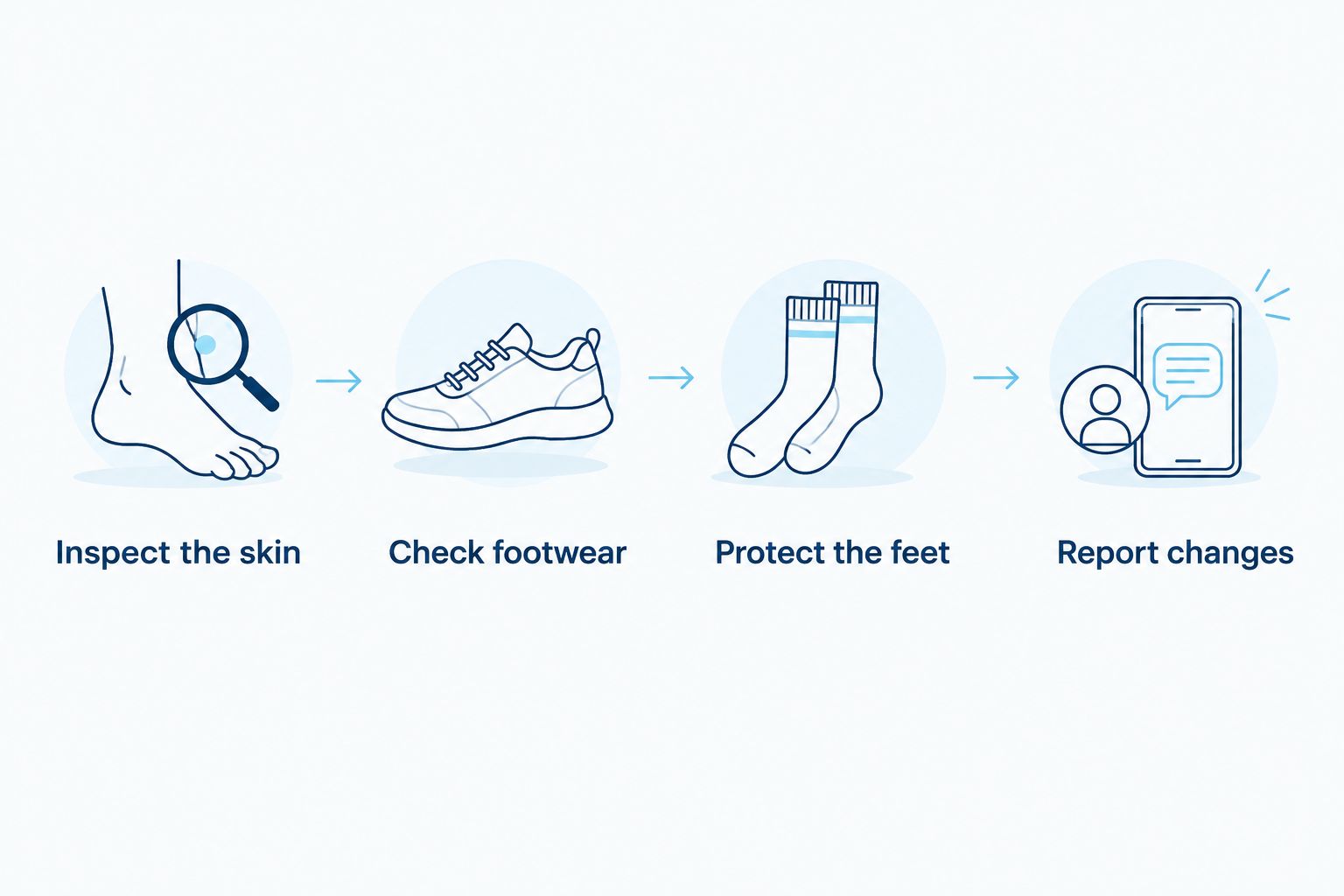
- Inspect the skin. Look for blisters, cuts, cracks, drainage, swelling, or a new color change.
- Check footwear. Feel inside shoes for rough seams, folded insoles, or foreign objects before putting them on.
- Protect the feet. Wear properly fitting shoes and socks rather than walking barefoot, including indoors.
- Report changes. Contact a clinician about a new wound or concerning change instead of waiting for pain.
Avoid heating pads, hot-water bottles, and direct ice on areas with reduced sensation. Your skin can be injured before you recognize the temperature is unsafe. Use lukewarm washing water and dry carefully, including between the toes.
If diabetes is part of your history, the guide to how often to check diabetic feet explains why home checks and professional examinations serve different purposes.
Use exercise to support function, not to test your tolerance
Exercise and physical therapy are best for maintaining strength, improving balance, and supporting everyday movement. They are not a challenge to push through numbness or worsening pain. Choose activity according to your skin condition, sensation, circulation, and stability.
For a 2026 activity plan, CDC guidance gives most adults a general goal of 150 minutes of moderate-intensity activity per week, plus muscle-strengthening activity on 2 days per week. These are general adult targets, not a starting prescription for someone with an ulcer, significant weakness, or an unstable gait.
A physical therapist can assess walking and recommend balance or strengthening exercises suited to your limitations. A stationary bicycle or other lower-impact activity can be an alternative when walking creates excessive pressure, but an active wound requires specific advice about weight-bearing.
Stop an activity if it produces a new blister, skin breakdown, marked swelling, or worsening weakness. Check your feet afterward rather than using pain alone to decide whether the activity was safe.
Match shoes and insoles to the pressure problem
Protective footwear is best for people who develop rubbing or concentrated pressure. Look for enough toe room, a secure fit, and an interior that does not irritate your skin. A shoe that feels soft is not automatically protective.
Insoles and custom orthotics can redistribute pressure for selected foot shapes and walking patterns. Their limitation is equally important: an insert cannot diagnose neuropathy or guarantee that damaged nerves will recover.
Reduced sensation makes fit checks especially important. Inspect your skin after wearing different shoes, and ask for assessment of recurring redness, calluses, or pressure marks. Do not keep wearing a shoe simply because it does not hurt.
Compression socks serve a different purpose from pressure-relieving footwear. They are not a general treatment for nerve damage, and circulation problems require assessment before compression is selected.
Consider electrical stimulation with clear expectations
Transcutaneous electrical nerve stimulation, usually called TENS, delivers electrical stimulation through electrodes placed on the skin. It is best considered an additional symptom-management option for selected patients, not a replacement for identifying the cause.
Some people obtain pain relief, but research results vary. Evidence of less pain does not establish that the treatment repairs nerves or prevents ulcers.
Before adding a device to a 2026 treatment plan, ask whether it is suitable for your sensation, skin condition, and medical history. Reduced sensation makes unsupervised electrode use harder to monitor. People with implanted electronic devices should seek medical advice before use.
Why non-medication treatment results vary
The same burning sensation can come from different problems. These factors help explain why one person's approach does not necessarily fit another person's feet:
- Underlying cause: A correctable deficiency differs from long-standing diabetes-related nerve damage.
- Extent of damage: Pain relief and return of normal sensation are separate outcomes.
- Circulation: Reduced blood flow changes wound risk and treatment decisions.
- Skin condition: An open sore changes which shoes, activities, and devices are appropriate.
- Strength and balance: Weakness or falls call for a different rehabilitation plan.
- Ongoing exposure: Continued heavy alcohol use or an unresolved pressure problem can keep contributing to nerve injury.
Tracking symptoms helps, but include function and skin changes too. Record whether sleep, walking, balance, and footwear tolerance improve; do not judge the entire plan by pain intensity alone.
Can numbness improve even if I do not take pain medicine?
Numbness can improve when a treatable cause is addressed, but recovery is not guaranteed. Pain medicines generally target discomfort rather than restore normal sensation, so declining them does not by itself determine whether feeling returns.
Is it reasonable to combine medication with non-drug care?
Yes—medication and non-drug care address different needs. If symptoms prevent sleep or daily activity, discuss symptom relief while continuing foot protection, appropriate movement, and treatment of the underlying cause.
When to arrange an evaluation
Arrange an appointment for persistent burning, tingling, numbness, or changes in balance. Bring your medication and supplement list, relevant diabetes history, and the shoes you wear most often. Explain which activities or times of day make symptoms worse.
For patients in Mechanicsville and the West End, Achilles Foot and Ankle Center offers podiatry care for foot nerve symptoms and diabetic foot concerns. An evaluation can help distinguish nerve symptoms from pressure, joint, or circulation problems and identify when coordination with another clinician is appropriate.
Seek same-day medical assessment for an open sore, spreading redness, drainage, or a newly hot and swollen foot—especially if you have diabetes. Fever, rapidly worsening infection signs, or feeling seriously unwell require urgent medical care. Sudden weakness or a cold, pale foot also needs urgent assessment rather than a home-treatment trial.
Arrange a foot evaluation
Discuss burning, tingling, numbness, or diabetic foot concerns and the next appropriate step.
FAQ
Can neuropathy in feet be treated without medication at home?
Home care can support treatment through daily skin checks, protective footwear, and clinician-approved activity, but it cannot establish the cause. Persistent numbness, burning, or tingling needs evaluation, and a new wound needs prompt attention.
What is the best non-drug treatment for foot neuropathy?
The best starting point is identifying and treating the cause while protecting your feet. Exercise, physical therapy, footwear changes, or selected symptom-relief approaches then depend on your examination.
Does walking help neuropathy in the feet?
Walking can support activity and function when your feet are protected and weight-bearing is appropriate. An open wound, marked weakness, or balance problems requires an individualized activity plan rather than a walking target.
Can massage reverse nerve damage in my feet?
Massage has not been established as a way to reverse peripheral nerve damage. Avoid deep pressure over numb skin or wounds, and seek advice before massage if you have circulation concerns.
Should I take vitamins for tingling feet?
Take vitamins for a confirmed deficiency or another clinician-directed reason, not simply because your feet tingle. Excess vitamin B6 can cause neuropathy, so bring all supplements to your evaluation.
Can I stop nerve-pain medicine when I feel better?
Do not stop prescribed nerve-pain medicine without discussing how to change it safely with the prescriber. Some medicines require a gradual reduction, and reduced pain does not prove the underlying condition has resolved.
Where can I get foot nerve symptoms evaluated near Richmond?
Achilles Foot and Ankle Center offers podiatry care for Richmond-area patients with nerve pain and diabetic foot concerns. Describe your symptoms and request an appropriate evaluation rather than choosing a treatment before the cause is assessed.
One last thing
A painless foot is not necessarily a protected foot. If treatment reduces burning but numbness remains, keep checking the skin and monitoring footwear pressure. For your 2026 follow-up, ask about both goals: how to feel more comfortable and how to prevent an unnoticed injury.
Related guides
- Can diabetic neuropathy be reversed?
- Diabetic foot exams and endocrinologist visits
- Can a foot wound get infected quickly?