

No—diabetic foot pain is not always a sign of nerve damage; pressure from shoes, plantar fasciitis, arthritis, poor circulation, infection, and injuries can also cause pain. Burning, tingling, or numbness suggests a nerve problem, but symptoms alone cannot establish the cause, and serious diabetic foot problems sometimes cause little or no pain.
- Is diabetic foot pain a sign of nerve damage? Sometimes, but circulation problems, injuries, and infection also cause pain.
- Burning and tingling suggest neuropathy; a foot examination checks sensation, circulation, skin, and pressure points.
- Seek same-day care for a new wound or a red, hot, swollen foot—even without significant pain.
- Achilles Foot and Ankle Center offers diabetic foot care for Richmond-area patients who need an evaluation.
Why this matters
Pain intensity does not tell you how safe your foot is. Diabetes can damage the nerves that normally warn you about a blister, burn, or wound. At the same time, a painful foot can have a treatable cause unrelated to diabetic nerve damage.
Your practical priority in 2026 is to identify new changes rather than decide on a diagnosis at home. The guide to diabetic foot exams and endocrinologist visits explains how foot checks fit alongside your diabetes care.
Is diabetic foot pain always a sign of nerve damage?
No. Diabetic peripheral neuropathy—damage to nerves outside the brain and spinal cord—is one possible explanation, not an automatic diagnosis. The location, timing, and character of your symptoms help a clinician distinguish nerve pain from other problems.
These patterns are clues, not a home diagnostic test:
| Possible cause | Typical clues | Why an examination matters |
|---|---|---|
| Peripheral neuropathy | Burning, tingling, electric sensations, numbness; often affects both feet | Other nerve disorders can produce similar symptoms |
| Pressure or friction | Tenderness beneath a callus, near a bunion, or where a shoe rubs | Skin damage can hide beneath thickened skin |
| Plantar fasciitis | Pain under the heel, often with the first steps after rest | Heel pain also has other causes |
| Arthritis or tendon problems | Pain around a joint or tendon, sometimes with stiffness or activity | Treatment depends on the affected structure |
| Poor circulation | Discomfort with walking, a cool foot, color changes, or a slow-healing wound | Blood supply needs assessment before assuming a muscle or nerve problem |
| Infection or injury | New redness, warmth, swelling, drainage, or a break in the skin | Reduced sensation can conceal the severity |
More than one condition can exist at the same time. A person with neuropathy can also develop an ingrown toenail, a pressure wound, or an injured tendon. A familiar nerve-pain diagnosis does not explain every new symptom.
What does diabetic nerve pain feel like?
Diabetic nerve pain often feels like burning, pins and needles, shooting pain, or electric shocks. Light contact from socks or bedding can feel uncomfortable, and symptoms can be more noticeable at night.
The common pattern starts in the toes and feet and often affects both sides. However, symptoms do not have to follow that pattern exactly, and pain in only one foot still deserves assessment.
Neuropathy also causes changes that are not painful. You might notice reduced temperature awareness, numb toes, altered balance, or difficulty feeling where your feet contact the floor.
Do not test sensation with a needle, very hot water, or ice against your skin. These checks can injure a foot with reduced feeling and do not replace clinical testing.
Why diabetic foot pain varies
The following factors help explain why people with diabetes describe very different foot symptoms:
- Nerve function: Irritated nerves can produce pain, while damaged sensory nerves can reduce your ability to feel an injury.
- Blood supply: Reduced circulation changes how tissues tolerate activity and how well a wound heals.
- Pressure and footwear: A tight toe box, rubbing seam, or concentrated pressure beneath a callus can injure skin.
- Bones, joints, and tendons: Arthritis, plantar fasciitis, and tendon injuries cause pain independently of neuropathy.
- Skin and nail changes: Blisters, ingrown toenails, and infected skin create local problems that need their own treatment.
- Previous foot problems: A history of ulcers, amputation, or foot deformity affects risk and follow-up needs.
These factors guide the examination; they do not let you rule out a serious problem yourself. A shoe change might reduce pressure, for example, without addressing an underlying wound or circulation problem.
When should diabetic foot pain get urgent attention?
Seek same-day medical assessment for a new wound, drainage, spreading redness, or a newly hot and swollen foot. Do not wait for severe pain or fever. Reduced sensation can make an important problem feel surprisingly mild.
A hot, swollen foot can sometimes signal Charcot foot, a condition in which bones and joints become damaged in a person with neuropathy. Infection and injury can look similar, so avoid unnecessary weight-bearing while arranging urgent assessment.
Use this guide to decide what to do next:
| Situation | Next step | What not to assume |
|---|---|---|
| Sudden coldness, paleness or blue discoloration, especially with new pain or numbness | Seek emergency care | That it is your usual neuropathy |
| Rapidly spreading redness, severe illness, confusion, or an infected-looking foot with fever | Seek emergency care | That home wound care is enough |
| New wound, drainage, localized redness, or a hot, swollen foot | Obtain same-day medical assessment | That little pain means little risk |
| New burning, tingling, numbness, or recurring pain without urgent signs | Arrange a prompt foot examination | That every symptom comes from diabetes |
If your usual clinician cannot assess an urgent problem, use an appropriate urgent or emergency service. Do not delay because you are waiting for a routine appointment.
What happens during a diabetic foot examination?
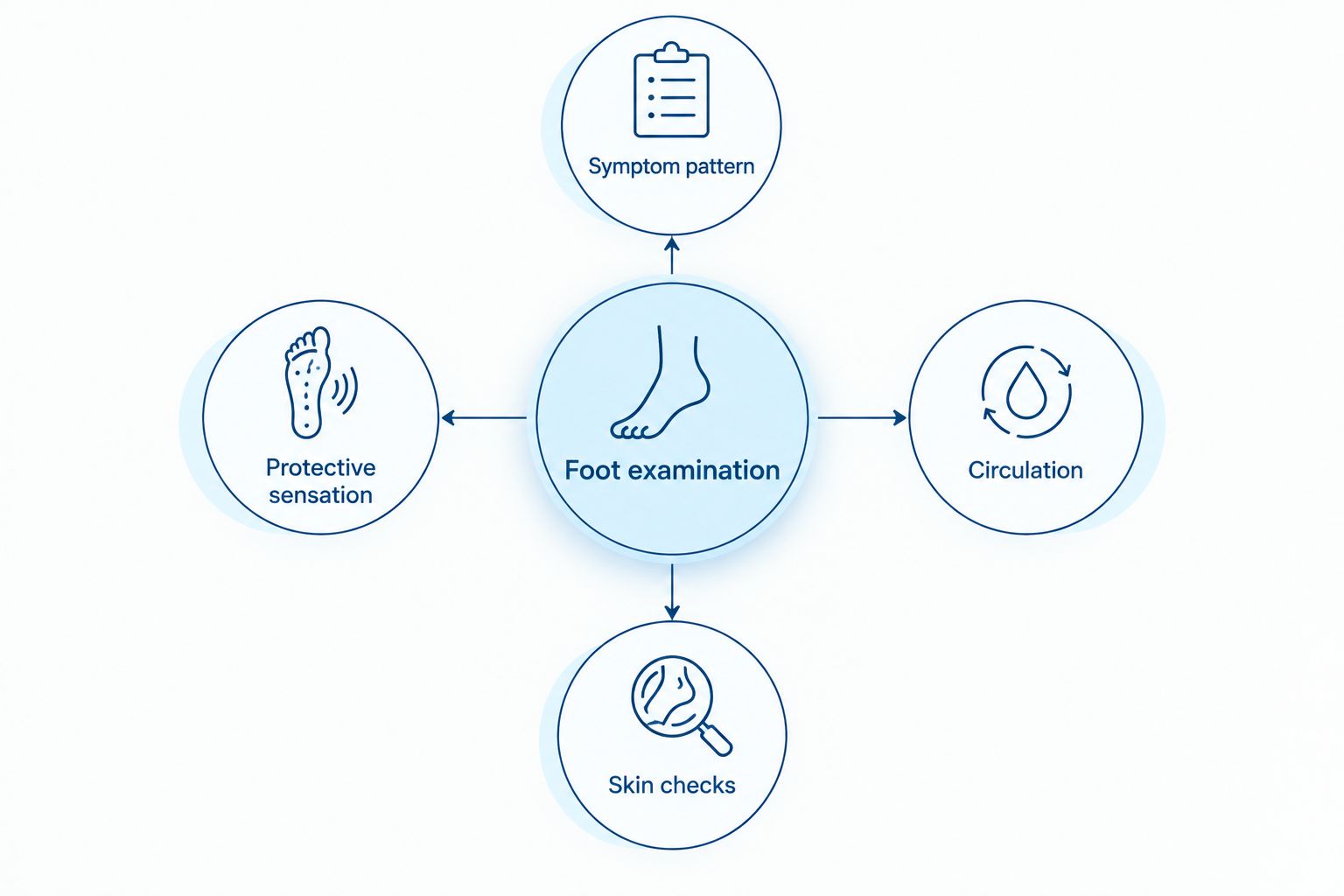
A foot examination checks more than whether you can feel touch. The clinician considers your symptoms alongside your skin, circulation, footwear, foot shape, and medical history.
The American Diabetes Association's Standards of Care in Diabetes—2026, in its foot-care recommendations, supports a comprehensive foot evaluation at least once a year. People with sensory loss or a previous ulcer or amputation need foot inspection at every visit.
Describe the pattern
Explain where the discomfort starts, whether both feet are involved, and what makes it better or worse. Mention night symptoms, numbness, changes in walking, recent injuries, and any new shoes.
Bring your current medication list and the shoes you wear most. A photograph of an intermittent color change or swelling can also help you describe what happened.
Check protective sensation
A clinician can use a 10-gram monofilament, a small flexible strand, to assess protective sensation. Additional testing checks another aspect of nerve function, such as vibration or temperature sensation.
The ADA's 2026 recommendations include monofilament testing alongside another neurological assessment. A single sensation test does not explain every kind of pain or exclude every nerve disorder.
Assess circulation and skin
The examination includes foot pulses and checks for wounds, calluses, nail problems, pressure areas, and changes in foot shape. Symptoms or findings suggesting reduced blood flow can lead to additional circulation testing.
Imaging or nerve studies depend on the findings; they are not automatic for every painful foot. The purpose is to identify the cause and choose an appropriate next step.
What can you safely do before your appointment?
For your 2026 daily foot-care routine, inspect both feet once a day, including the soles and between the toes. Use a mirror or ask someone to help if you cannot see the entire foot.
- Look before treating. Check for blisters, cracks, redness, drainage, swelling, and objects inside your shoes.
- Protect the skin. Wear properly fitting shoes and socks rather than walking barefoot, including indoors.
- Wash gently. Use warm—not hot—water, dry carefully, and avoid soaking your feet.
- Avoid heat and sharp tools. Do not use heating pads, cut calluses yourself, or apply medicated corn removers.
- Escalate new changes. Contact a clinician about a wound, color change, or new swelling instead of watching it indefinitely.
If you find an open area, gently protect it with a clean dressing while seeking medical advice. Do not dig into it, cut away tissue, or try to drain it.
Keep following your prescribed diabetes plan. Blood glucose management matters for nerve health, but it does not replace treatment for an infection, a circulation problem, or a wound.
Does treatment change when pain is not from nerve damage?
Yes. Treatment should address the cause, not just the sensation. Medication aimed at nerve pain does not remove pressure from a wound or restore blood flow through a narrowed artery.
| Approach | Best for | Benefit and limitation |
|---|---|---|
| Clinician-selected nerve-pain treatment | Pain attributed to neuropathy | Can reduce symptoms; does not establish the diagnosis or guarantee restored sensation |
| Footwear adjustment or prescribed pressure relief | Rubbing or concentrated pressure | Reduces stress on the affected area; does not treat infection |
| Wound assessment and treatment | Broken skin or an ulcer | Addresses wound needs; healing also depends on circulation and pressure control |
| Circulation assessment | Findings suggesting reduced blood flow | Helps identify a vascular problem; requires further care when an abnormality is found |
Do not start compression socks simply because your feet hurt or swell. When arterial circulation is impaired, compression needs clinical guidance.
Achilles Foot and Ankle Center is a local option for Richmond-area patients seeking diabetic foot evaluation. An in-person assessment can examine sensation, skin, and pressure points; an online article cannot determine which treatment your foot needs.
Arrange a diabetic foot evaluation
Ask Achilles Foot and Ankle Center about an evaluation for new pain, numbness, or skin changes.
Can you have diabetic nerve damage without foot pain?
Yes—diabetic nerve damage can cause numbness without pain. Losing protective sensation makes it easier to miss a blister, burn, or foreign object in your shoe, which is why daily checks matter even when your feet feel comfortable.
Does burning in both feet prove diabetic neuropathy?
No—burning in both feet suggests a nerve problem but does not prove diabetes is the cause. Other conditions, including vitamin deficiencies and some medication effects, can also affect nerves; your clinician decides whether further investigation is needed.
Should you wait for your annual diabetes visit?
No—new pain, numbness, swelling, or a wound should not wait for an annual visit. Annual screening is routine prevention, not a waiting period for new symptoms.
FAQ
Can diabetic foot pain come and go?
Yes, diabetic foot pain can come and go, whether the cause is neuropathy, pressure, or an activity-related problem. An intermittent pattern does not establish the diagnosis or rule out a problem needing treatment.
Is pain in just one foot still related to diabetes?
Pain in one foot can occur in someone with diabetes, but it should not automatically be labeled diabetic neuropathy. Local injuries, pressure, infection, and other nerve problems need consideration.
Can I check for neuropathy at home?
You can notice changes, but you cannot reliably diagnose neuropathy at home. Inspect your feet daily and report numbness or unusual sensations; avoid testing with sharp objects or extreme temperatures.
Will pain medicine make a diabetic foot wound safe?
No, pain medicine does not make a diabetic foot wound safe. A wound needs assessment for infection, circulation, and pressure even if the discomfort improves.
Should I keep walking if my diabetic foot is red and swollen?
Avoid unnecessary weight-bearing and seek same-day assessment for a newly red, hot, swollen foot. Infection, injury, and Charcot foot require different care and cannot be distinguished safely from pain alone.
Where can I get diabetic foot pain evaluated near Richmond?
Achilles Foot and Ankle Center offers diabetic foot care in the Richmond, Virginia area. Ask about an appropriate evaluation for new pain or numbness; urgent warning signs require same-day or emergency care rather than a routine appointment.
One last thing
Pain relief is not proof that sensation or circulation has recovered. Keep checking your feet even when treatment makes them feel better. Make that your 2026 rule: judge foot health by skin changes, examination findings, and function—not comfort alone.
Related guides
- How often should people with diabetes check their feet?
- Can diabetic neuropathy be reversed?
- Home diabetic wound care and office treatment