Ingrown toenail removal does not have a single standard cost in 2026: your out-of-pocket bill depends on the procedure, the services included, and your insurance benefits. An estimate for removing the nail edge does not necessarily include the examination, treatment to prevent regrowth, or follow-up care, so ask for an itemized estimate before treatment.
- How much does ingrown toenail removal cost? Your procedure, insurance benefits, and included services determine your bill.
- Compare estimates for the same treatment: partial nail removal and nail-root treatment are different procedures.
- Achilles Foot and Ankle Center provides podiatry care for Richmond-area patients seeking evaluation of painful foot conditions.
- Spreading redness, fever, or a draining toe needs prompt medical attention, not a longer search for estimates.
How much does ingrown toenail removal cost in 2026?
The useful number is your estimated patient responsibility for the recommended procedure—not an advertised removal fee by itself. Ask the office to separate the examination, procedure, and any additional services, then confirm how your insurance applies.
For local evaluation, Achilles Foot and Ankle Center provides foot and ankle care in the Richmond area. Describe whether your toe is painful, draining, or repeatedly becoming ingrown when you contact the practice.
Use this breakdown when comparing estimates:
| Potential part of the bill | What it covers | What to ask |
|---|---|---|
| Examination | Assessing the nail, surrounding skin, and relevant health conditions | Is the examination included or billed separately? |
| Nail procedure | Removing the portion of nail causing the problem, or more nail when appropriate | Exactly what procedure does this estimate cover? |
| Nail-root treatment | Treating the growth area to reduce regrowth of the troublesome edge | Is this recommended, and is it included? |
| Additional care | Services or supplies needed for your particular condition | What additional charges are anticipated? |
| Follow-up | Checking healing or addressing concerns after treatment | Is routine follow-up included? |
Not every visit involves every item. Ask which items apply to your toe rather than assuming that a longer list means better care.
Why this matters
A painful nail edge and a repeatedly ingrown nail do not always need the same treatment. Comparing their removal fees without comparing the procedures can leave you choosing between estimates that cover different care.
Your medical needs come first. Diabetes, reduced circulation, and loss of feeling in your feet can change how safely you can manage a nail problem at home and how closely a wound needs monitoring.
Choose an appropriate evaluation before choosing a procedure by its fee. That gives you a treatment plan to price accurately instead of paying for an intervention that does not address the problem.
What are you actually paying to have done?
The word removal can describe different procedures. Your clinician should explain how much nail needs treatment, whether the troublesome edge is expected to grow back, and why that approach fits your symptoms.
| Approach | Best for | Main benefit | Limitation or trade-off |
|---|---|---|---|
| Conservative care | Selected mild cases without concerning complications | Avoids creating a nail-removal wound | Does not resolve every embedded or recurring nail edge |
| Partial nail removal | A painful ingrown edge when removal is clinically appropriate | Removes the offending section while preserving the rest of the nail | The edge can grow back if its growth area is not treated |
| Partial removal with nail-root treatment | Selected recurring cases or cases where preventing edge regrowth is appropriate | Aims to stop the treated edge from growing back | Creates a healing wound and permanently changes the treated growth area |
| Total nail removal | Cases where the clinician determines that treating only an edge is insufficient | Addresses a problem involving more of the nail | Removes more nail and is not automatically necessary for an ingrown edge |
These are treatment categories, not a menu to select without an examination. Infection, nail shape, previous procedures, and your health history all inform the decision.
Partial nail removal
Partial nail removal takes away the troublesome section rather than the entire nail. The clinician generally numbs the toe with local anesthetic before removing the affected edge.
Ask whether the estimate covers removal alone or also includes treatment of the nail’s growth area. Removing the edge and preventing that edge from regrowing are different treatment goals.
Nail-root treatment
The nail matrix is the tissue that produces the nail. Treating the relevant part of the matrix aims to prevent the ingrown edge from growing back; clinicians also call this a matrixectomy.
This approach can be appropriate for recurrent ingrown nails, but it does not guarantee that a nail problem will never return. Ask about wound care, the expected change in nail appearance, and the possibility of recurrence.
Total nail removal
Total nail removal takes off the entire nail plate. It does not automatically mean that the whole nail’s growth area is treated or that the removal is permanent.
Ask why total removal is recommended instead of partial removal. A larger procedure is not automatically a better solution, and the estimate should identify what is actually planned.
Why ingrown toenail removal costs vary
For a useful 2026 comparison, keep the procedure and billing assumptions consistent. These factors explain why your estimate can differ from someone else’s:
- Extent of treatment: Removing a nail edge differs from removing the full nail or treating additional affected edges.
- Nail-root treatment: A procedure intended to prevent regrowth differs from removal alone.
- Examination and associated care: The visit can involve assessment or treatment beyond the nail procedure itself.
- Insurance network: Your plan’s rules determine how it handles care from an in-network or out-of-network clinician.
- Remaining deductible and cost sharing: Covered care can still leave you responsible for a deductible, copayment, or coinsurance.
- Follow-up arrangements: An estimate should explain whether routine postoperative care is included and how additional concerns are billed.
An estimate remains an estimate. If the examination changes the recommended treatment, ask the office to explain the revised plan and financial responsibility before proceeding when circumstances allow.
How to get an estimate you can use
Start with the procedure name, not a general request for a toenail-removal fee. The office and your insurer need to be discussing the same service for their answers to be useful.
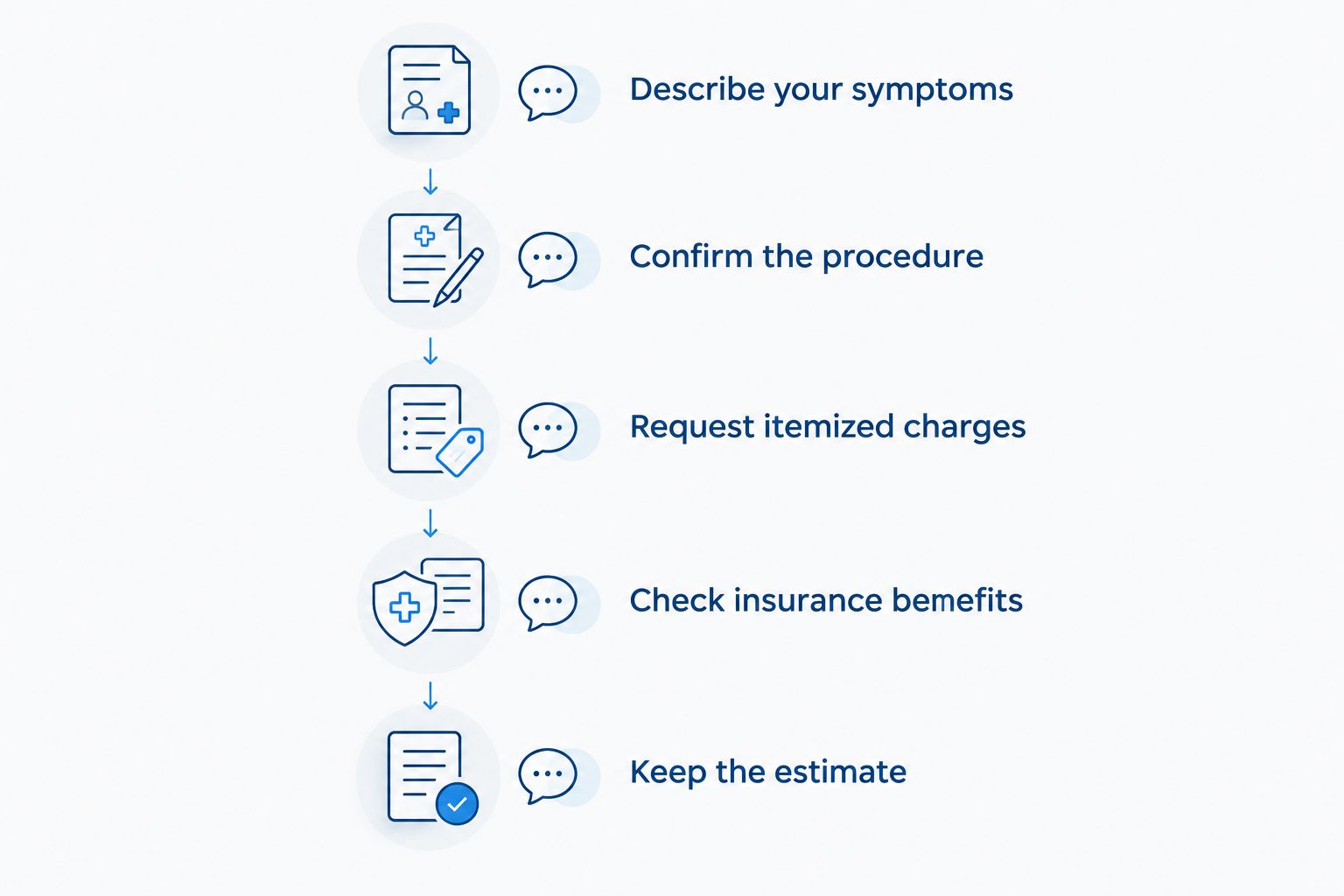
- Describe your symptoms. Explain which toe hurts, which edge is affected, whether there is drainage, and whether the problem has happened before. Mention diabetes, circulation problems, numbness, and previous nail procedures.
- Confirm the procedure. Ask whether the likely plan is partial removal, total removal, or removal with nail-root treatment. The final recommendation follows an examination.
- Request itemized charges. Ask what the estimate includes and excludes, including the visit, anesthetic, supplies, and follow-up when applicable.
- Check insurance benefits. Give your insurer the clinician and procedure information supplied by the office. Confirm network status, deductible responsibility, and any referral or authorization requirements.
- Keep the estimate. Request the written estimate and note any assumptions that could change it. Ask whom to contact if your insurer’s explanation differs from the office’s estimate.
For your 2026 benefits check, use your current insurance information rather than an older explanation of benefits. A previous visit’s patient responsibility does not establish what a different procedure will require.
Does insurance cover ingrown toenail removal?
Insurance coverage depends on your plan, the medical reason for treatment, and applicable billing requirements. Covered does not mean you owe nothing. Your deductible and other cost sharing can still apply.
Ask the office for the procedure information your insurer needs, then ask your insurer to explain your estimated responsibility. Also confirm whether your plan requires a referral or prior authorization; do not assume the rules match those for another specialist visit.
If you are paying without insurance, request a written self-pay estimate and ask which services it covers. You can also ask whether you qualify for a good faith estimate under federal billing rules for uninsured or self-pay patients.
Is permanent ingrown toenail treatment better than removal alone?
Nail-root treatment addresses regrowth; removal alone addresses the nail that is currently causing trouble. The better choice depends on whether the problem is recurring, the condition of your toe, and your clinician’s assessment.
If the same edge repeatedly becomes painful after growing back, ask whether treating the growth area is appropriate. If this is your first episode, do not assume a permanent change is necessary without discussing alternatives.
The ingrown toenail home-care-to-office treatment guide explains the transition from symptom management to an in-office procedure. Use it to prepare questions, not to diagnose which procedure your toe needs.
When should you stop comparing estimates and seek care?
Seek prompt medical advice for increasing pain, pus, spreading redness, or a toe that is becoming more swollen. Fever, feeling unwell, or rapidly spreading redness warrants urgent medical assessment.
If you have diabetes, poor circulation, or reduced feeling in your feet, contact a clinician promptly about an ingrown nail, broken skin, or a new wound. Reduced pain does not reliably show that a foot problem is minor when sensation is impaired.
Do not dig down the nail edge, cut into the surrounding skin, or try to drain an infection yourself. Avoid tight shoes that press on the toe while arranging care.
What should you ask about recovery before agreeing to treatment?
Ask for written instructions on cleaning, dressings, bathing, footwear, and activity. Your procedure and health history determine the instructions; a generic recovery schedule is not a substitute.
Discuss work demands before treatment, particularly if you stand for long periods or must wear restrictive footwear. Ask which changes require a call and who handles concerns outside regular office hours.
Include aftercare in your decision, not just the procedure estimate. Dressing supplies, transportation, or changes to work arrangements can matter even when they are not part of the medical bill.
Arrange an evaluation for a painful or recurring nail
Achilles Foot and Ankle Center is a local podiatry option for Richmond-area patients who need a painful or recurring ingrown toenail evaluated. An evaluation helps distinguish nail-edge irritation from problems that need different care.
If you are seeking care near Mechanicsville or the West End, explain your location preference when contacting the practice. Ask about the evaluation process and what information is needed for an estimate; do not assume that a procedure is necessary before your toe is assessed.
Get your painful toenail evaluated
Discuss your symptoms, treatment options, and questions about an itemized estimate.
FAQ
How much does ingrown toenail removal cost without insurance in 2026?
Your self-pay cost depends on the recommended procedure and the services included. Request a written, itemized estimate that distinguishes the examination, nail removal, nail-root treatment, and follow-up when applicable.
Will insurance pay for my ingrown toenail removal?
Your plan determines coverage and your share of the bill. Confirm the procedure, network status, remaining deductible, and any referral or authorization requirements before treatment when possible.
Is permanent ingrown toenail removal the same as pulling the nail off?
No. Removing the nail does not necessarily stop regrowth; treating the relevant nail matrix, or growth area, is what aims to prevent the treated portion from returning.
Do I need antibiotics before having an ingrown toenail removed?
Antibiotics are not automatically needed for every ingrown toenail. A clinician assesses whether an infection is present and whether it requires antibiotics or other treatment.
Can I cut out an ingrown toenail myself to avoid a medical bill?
Do not dig out an embedded nail edge or cut into the skin yourself. Seek professional advice for persistent pain, drainage, or redness, and especially if you have diabetes, poor circulation, or reduced feeling.
Does ingrown toenail removal hurt?
The toe is generally numbed with local anesthetic before a nail-removal procedure. The injection can sting, and discomfort can occur afterward; ask your clinician what to expect and how to manage it.
Where can I get an ingrown toenail evaluated near Richmond?
Achilles Foot and Ankle Center provides foot and ankle care in the Richmond area. Describe your symptoms and mention whether you prefer care near Mechanicsville or the West End when contacting the practice.
One last thing
Before accepting a 2026 estimate, ask: Does this cover removing the painful edge, preventing its regrowth, or both? That distinction tells you more about what you are comparing than the word removal alone.
Related guides
- Is it safe to cut out an ingrown toenail at home?
- Can a foot wound get infected quickly?
- Diabetic foot care for seniors