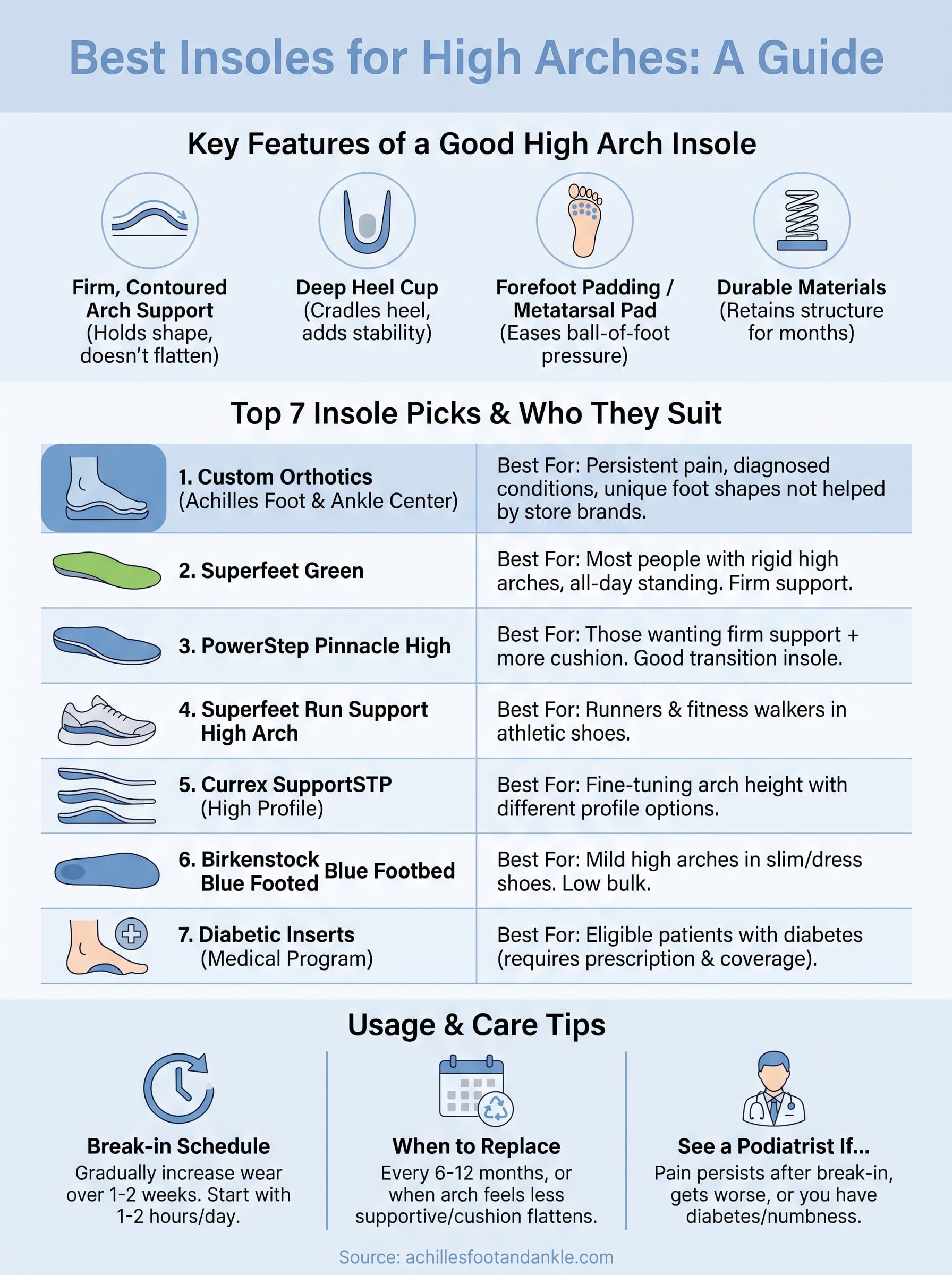
The best insoles for high arches combine a firm, contoured arch, a deep heel cup, and cushioning under the heel and ball of the foot. Of the seven options below, Superfeet Green suits most people with rigid high arches, PowerStep Pinnacle High suits you if you want more cushion, Superfeet Run Support High Arch suits runners, and custom orthotics suit you if store-bought pairs have not eased your pain.
A high arch leaves less of your foot touching the ground, so your heel and the ball of your foot absorb most of every step. Soft, flat inserts do little about that, and a pair with the wrong arch height can make things worse. This list ranks seven options, shows you how to judge any insole yourself, and explains break-in, replacement, and when to see a doctor.
We are a podiatry practice, and heel and arch pain is part of our daily work at Achilles Foot & Ankle Center in the Richmond area. The picks below rest on insole design and on what podiatrists look for, not on a lab test of every model, so check each product page for current sizing and prices.
What makes an insole right for high arches
Four things separate a good high arch insole from a cushioned liner: a firm contoured arch, a deep heel cup, padding where pressure builds, and materials that hold their shape. Every pick in this list was chosen against those four features.
Firm, contoured arch support
High arches do not flatten much when you stand. The foot stays stiff and passes more shock into the heel and the ball of the foot, so the insole should match the shape of your arch instead of just padding underneath it. Soft foam feels pleasant in the store, but it collapses under your body weight within minutes and leaves the arch unsupported.
More support is not always better. High arches often come with supination, a tendency to roll outward, and a very aggressive arch can push the foot further in that direction. If the arch feels like a lump under your foot, or your ankles roll outward more than before, step down to a lower profile or a less rigid model.
A good high arch insole holds your arch up instead of just sitting under it.
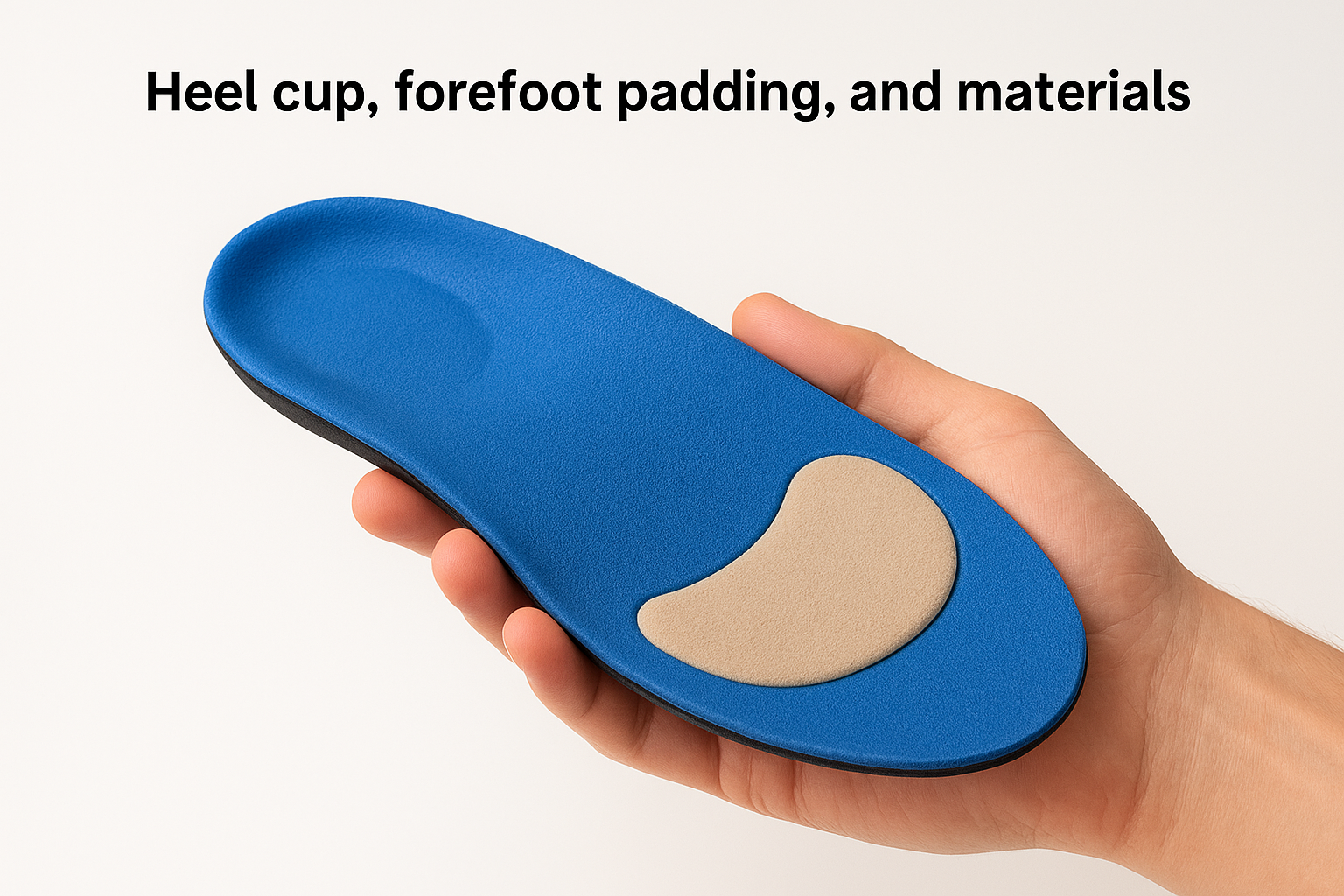
Heel cup, forefoot padding, and materials
The rest of the checklist is about where pressure lands and how long the insole keeps its shape. Use the table to compare any insole you are considering, including ones not on this list.
| Feature | What it does | What to check |
|---|---|---|
| Deep heel cup | Cradles the heel’s natural fat pad and steadies the foot, which reduces ankle rolling | Raised walls around the heel, not a flat heel |
| Metatarsal pad | Lifts and spreads the bones behind the toes, which eases ball-of-foot pressure | A small raised pad that sits just behind the ball of your foot |
| Shock-absorbing top layer | Softens heel strike on hard floors | Dense EVA or memory foam, not thin gel |
| Firm base or shell | Keeps the arch shape for months | Resists bending when you press on the arch |
Volume, sizing, and fit
Volume is how much space an insole takes up in the shoe. High-volume insoles fit hiking boots and running shoes, while dress shoes and flats need a thinner, low-profile design. Always remove the factory liner before you insert a new pair, or the shoe will feel tight.
Most makers size insoles by ranges of shoe size, so read each size chart instead of assuming your shoe size matches. This applies to the best insoles for high arches for women too, because men’s and women’s sizes map onto insole sizes differently by brand. If you fall between sizes, size up and trim the toe end.
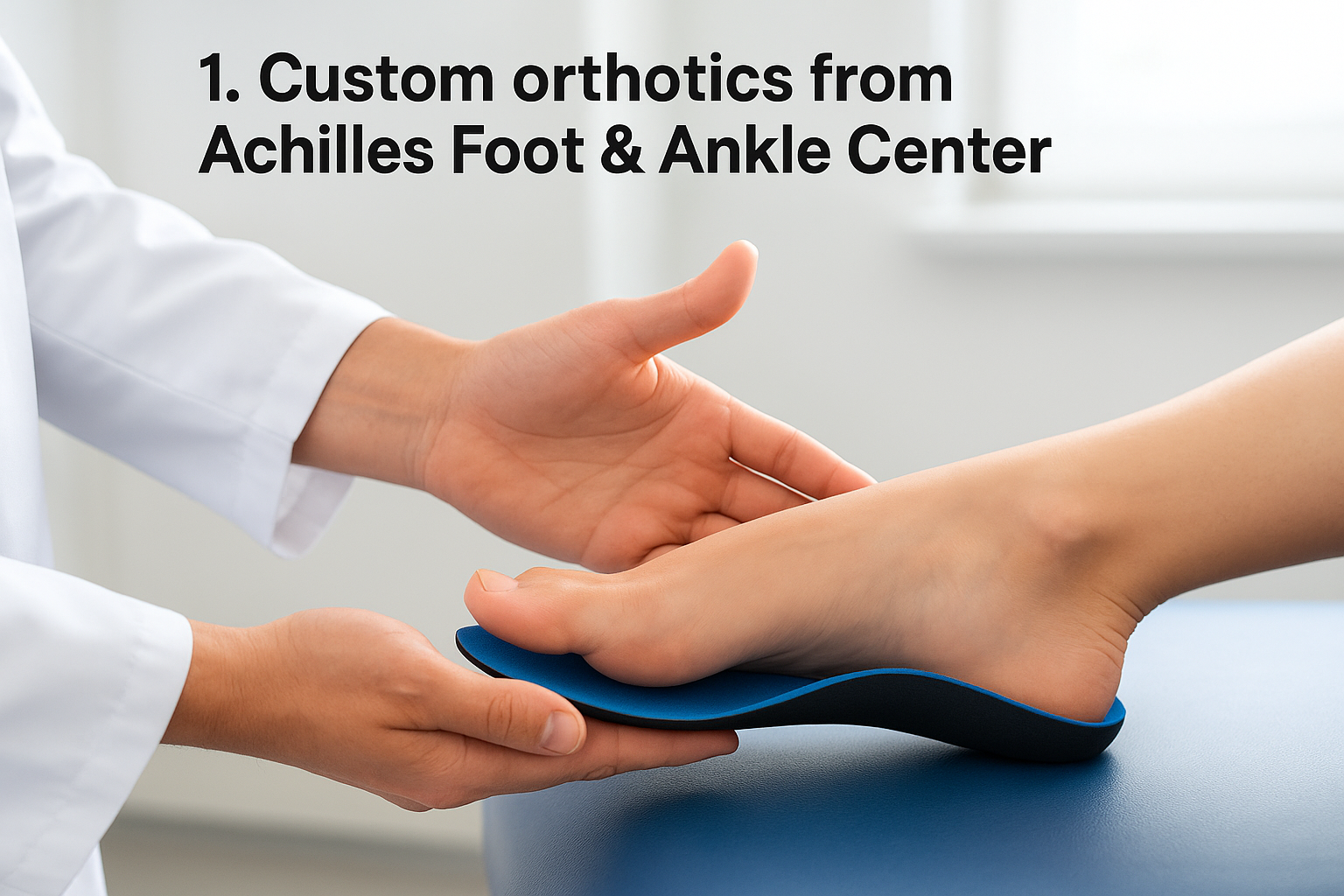
1. Custom orthotics from Achilles Foot & Ankle Center
Custom orthotics are the most precise answer to high arch pain, because they are made from your foot instead of an average one. They rank first here because they solve the problem that store-bought insoles cannot: a foot that is not average.
How it works
Custom orthotics are prescription devices built around the structure of your own foot. At Achilles Foot & Ankle Center, a podiatrist examines your feet first, and we capture their shape with a state-of-the-art 3D imaging system.
The device is then designed to improve support, comfort, balance, and pressure distribution. That matters with high arches. A podiatrist can decide how much lift your arch tolerates and how to offload the heel and the ball of the foot, without pushing a supinating foot further outward.
Who it suits
Custom orthotics make the most sense when a store-bought pair has not worked, or when your pain has a diagnosis behind it. They fit you well if any of these describe you:
- You have worn a firm, well-fitted over-the-counter insole for several weeks and still hurt.
- Your pain comes from plantar fasciitis, Achilles tendinitis, or another source of heel and arch pain.
- Your ankles roll outward or you sprain them repeatedly.
- Your two feet differ noticeably, or one arch changed recently.
- You have diabetes or nerve pain, where pressure points carry more risk.
If a good pair from the shelf has not helped after a few weeks, the next step is an exam, not a third pair of insoles.
Cost and trade-offs
Custom orthotics cost more than any store-bought pair, and the final price depends on the device and your coverage. We accept all major insurance plans and offer flexible payment options, so call the office to check what your plan covers before you commit.
The trade-off is time. You need a visit first, and the device is made after it, so ask at your appointment when your pair will be ready. You can book a same-day appointment online or by phone at our Mechanicsville and West End offices.
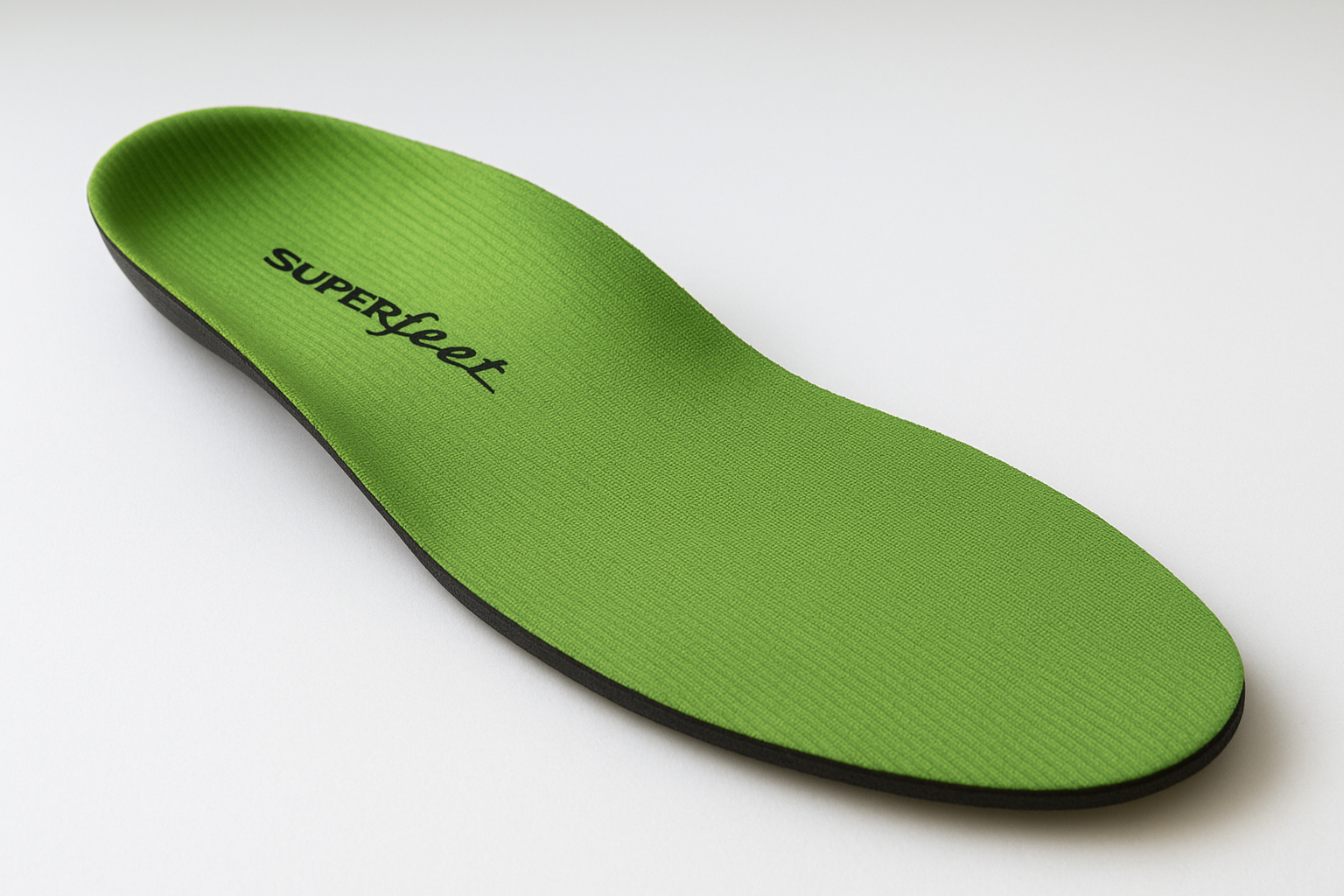
2. Superfeet Green All-Purpose Support High Arch
Superfeet Green is the best all-round store-bought insole for high arches. It is firm, deep-heeled, and built for exactly this foot type.
How it works
Superfeet sells this model as All-Purpose Support High Arch. It has a deep heel cup and a high-volume profile, with a contoured shape that spreads load across the whole foot. That cuts stress on the heel and forefoot, the usual trouble spots in a high-arched foot.
A foam top layer adds comfort, but the structure underneath does the real work. It is one of the most supportive over-the-counter insoles you can buy, which is why it is our first store-bought pick.
Who it suits
Choose this one if you have rigid high arches or spend most of the day standing or walking. Heel pressure by midday and fatigue under the arch are the classic signs that you need this level of structure.
| Good fit | Poor fit |
|---|---|
| Stiff, high arches that need correction | Slim dress shoes with little room |
| Long shifts on your feet | People who want a soft, pillowy feel |
| Roomy shoes and boots with removable liners | Mild arches that need only light support |
If you try only one store-bought insole, make it a firm one with a deep heel cup.
Price and trade-offs
One online insole retailer lists it at $59.95, and prices vary by seller. The firm feel takes a few days to get used to, so follow the break-in schedule later in this article. Because the volume is high, check that your shoe has room and take out the factory liner.
3. PowerStep Pinnacle High
PowerStep Pinnacle High is the best pick if you want real arch support with a more forgiving, cushioned feel. It is a good first insole for people who find rigid models harsh.
How it works
This insert pairs firm arch support with dual-layer EVA cushioning. The firm part holds the arch in place and the softer layers absorb impact, so you get control and comfort through the whole step. PowerStep describes its insoles as podiatrist-designed and aimed at supination and high arch pain.
The result is a gradual transition into structured support. If you are moving from flat factory liners, it asks less of your foot than the firmest models.
Who it suits
It works for walking, running, or standing for long hours, especially if your heels or the balls of your feet feel beaten up at the end of the day. It also suits you if you have heel pain with high arches and want cushion alongside structure.
People with very rigid arches or ankles that roll outward may find it less corrective than Superfeet Green. If that sounds like you, compare the two side by side on the basis of how firm each feels under your arch.
Cushion is a bonus on top of support, so pick the insole’s structure first and its softness second.
Price and trade-offs
The same retailer lists the Pinnacle High at $54.95, a little under Superfeet Green. The trade-off with any cushioned top layer is that soft materials compress faster than a firm base. Watch for flattened heel foam and a weaker arch feel as signs it is time to replace them.
4. Superfeet Run Support High Arch
Superfeet Run Support High Arch is the best insole for high arches if you run. It is built for athletic shoes instead of everyday boots.
How it works
Running multiplies the load on a stiff, high-arched foot, because every stride lands with several times your body weight. This model is designed for running shoes and similar athletic footwear, so it fits their volume while still giving the arch a firm contour.
It also replaces the flat, soft liner that ships with most running shoes. That liner often has little structure, which is part of why runners with high arches feel their feet take a beating.
Who it suits
It suits runners and fitness walkers with high arches, and anyone who wears trainers for most of the day. If you also have supination, pair it with a neutral, cushioned shoe, since stability shoes can push a supinating foot further outward.
Not every runner needs it. If you run only occasionally, an all-purpose insole you can move between shoes may serve you better.
Match the insole to the shoe you spend the most miles in.
Price and trade-offs
Check the maker’s site for the current price, since it varies by seller and season. The trade-off is flexibility. A running-specific insole can feel bulky in work shoes or dress shoes, so consider buying a second, lower-profile pair for those.
5. Currex SupportSTP high profile
Currex SupportSTP is the best choice if you want to choose the insole’s height to match your arch. The same insole comes in different profiles, so you can pick one for your foot.
How it works
Currex sells SupportSTP in low, medium, and high profiles. A high arch calls for the high profile, which gives more lift under the arch than the lower versions. This approach prevents the most common mistake with insoles, which is buying a profile that is too low for the arch.
Use the maker’s profile guide to confirm the match, and do not guess from shoe size alone.
Who it suits
It suits people who want a supportive, general-purpose insole and who like to fine-tune arch height. It also works for sport and everyday wear, so one pair can cover several pairs of shoes if they have similar volume.
If your arches differ between feet or you feel torn between profiles, a podiatrist can tell you which height your foot tolerates. That is a quick conversation, and it can save you buying two pairs.
Price and trade-offs
Retailers list SupportSTP insoles at different prices, so compare current listings before you buy. The trade-off is the extra decision. A wrong profile choice means a return, so buy from a seller with an easy return policy and keep the packaging until you have tested the fit at home.
6. Birkenstock Blue Footbed
Birkenstock Blue Footbed is the best option for mild high arches in slimmer shoes. It gives structure without much bulk.
How it works
The Blue Footbed is built on a medium arch height instead of a true high arch, with support for all four arches of the foot and a built-in metatarsal pad under the forefoot. That pad helps spread pressure behind the toes, which is a common trouble spot with high arches.
Because it is slimmer than the high-volume models above, it fits in a wider range of shoes.
Who it suits
It suits high arches that tolerate moderate rigidity and need better pressure distribution, especially if you wear slim-fitting shoes. If your arches are very high or very stiff, the support may feel too low and you will likely do better with Superfeet Green or custom orthotics.
A slimmer insole you wear every day beats a perfect one that does not fit your shoes.
Price and trade-offs
Check the current price on the maker’s site, since it varies by size and seller. The main trade-off is that the arch is lower than on a true high arch insole, so it gives less correction. Think of it as the gentle option, and step up to a firmer pair if your symptoms persist.
7. Diabetic inserts through our shoe program
If you have diabetes and high arches, the right insert is a medical decision, not a shopping one. Our Diabetic Shoe Program exists for that reason.
How it works
The Diabetic Shoe Program provides therapeutic footwear for eligible patients who need added protection, accommodation, and support. Inserts are part of that package, built to take pressure off the areas of the foot that carry the most load.
High arches concentrate pressure on the heel and the ball of the foot. With diabetes, that can lead to calluses and, if you have reduced sensation, to sores you do not feel until they are serious.
Who it suits
It suits eligible patients with diabetes, particularly those with nerve damage, calluses, or a history of foot wounds. If you have neuropathy, talk to a podiatrist before you buy any over-the-counter insole, because a pair that rubs or presses can cause a wound you will not feel.
With diabetes, the right insert is part of your care plan, not a purchase from the shelf.
Coverage and trade-offs
The program covers 80 percent of the cost of one pair of shoes and three pairs of inserts per year. A secondary insurance plan may cover the remaining costs totally. You need to be eligible, which means a visit with us to confirm, but the savings can be substantial compared with paying out of pocket.
Which insole fits your situation
Match the insole to your biggest problem: rigid arch, cushion, running, slim shoes, or pain that does not settle. Here is the short route to the right pick.
Best pick by situation
| Your situation | Best pick | Why |
|---|---|---|
| Rigid arches, on your feet all day | Superfeet Green | Firm structure and a deep heel cup |
| Want cushion along with support | PowerStep Pinnacle High | Firm arch plus dual-layer EVA cushioning |
| Running or fitness walking | Superfeet Run Support High Arch | Made for athletic shoes |
| Want to match height to your arch | Currex SupportSTP, high profile | Offered in three profiles |
| Mild high arch, slim shoes | Birkenstock Blue Footbed | Structure without bulk, with a metatarsal pad |
| Heel pain worst on first steps in the morning | Superfeet Green or PowerStep first | Firm support, then a podiatrist if no change |
| Pain that persists, ankle rolling, diagnosed condition | Custom orthotics | Built from your foot |
| Diabetes | Diabetic Shoe Program | Therapeutic inserts with insurance coverage |
For high arches with plantar fasciitis, the sharp heel pain that is worst first thing in the morning, conservative treatment is often successful. Start with a firm insole, and see a podiatrist if the pain does not improve.
What an insole costs over a year
Insoles wear out, so judge cost per month, not sticker price. Take Superfeet Green at $59.95. If it lasts 6 months, that is about $9.99 a month, and if it lasts 12 months, it is about $5.00 a month. PowerStep Pinnacle High at $54.95 works out to about $9.16 a month over 6 months and $4.58 over 12.
Either way, a good pair costs roughly the price of a coffee or two a month. That is a small cost compared with months of foot pain, so do not choose a worse insole to save a few dollars.
How to break in insoles and know when to replace them
Break in new insoles over one to two weeks, replace them every 6 to 12 months, and see a podiatrist if pain does not improve. Skipping the break-in is the most common reason people give up on a good insole.
A simple break-in schedule
Your feet and calves are used to a certain alignment, so new support can feel strange at first. Follow this schedule:
- Take out the shoe’s factory liner and fit the insole.
- Wear the new insoles for one to two hours on day one.
- Add about an hour each day if your feet feel fine.
- Expect to wear them all day within a week or two.
- If you feel sharp or lingering pain, remove them for a day and restart at a shorter time.
Mild awareness of your arch is normal during break-in, but sharp pain is not.
When to replace your insoles
Most insoles last 6 to 12 months depending on how active you are. Replace them sooner if the cushioning looks flattened, the foam cracks, or the arch feels less supportive than it did. Dense materials last longer than thin gel or soft foam.
When to see a podiatrist
See a podiatrist if pain is not improving after several weeks in a well-fitted insole, or if it is getting worse. Numbness, swelling, a wound, or diabetes also mean you should be examined instead of experimenting.
Pay particular attention if a high arch appears suddenly or in only one foot. Most high arches are inherited, but a sudden change can point to a nerve or muscle condition that needs a proper diagnosis.
Choose support first, then fit
The best insoles for high arches share the same core: a firm contoured arch, a deep heel cup, padding under the heel and ball of the foot, and materials that last. Superfeet Green is the strongest all-round store-bought pick, PowerStep Pinnacle High adds cushion, Superfeet Run Support High Arch serves runners, and custom orthotics are the answer when a good pair from the shelf does not settle your pain.
Buy for your arch and your shoes, break the insoles in slowly, and replace them when they flatten. If your pain lingers, you have diabetes, or one foot looks different from the other, a podiatrist can tell you what is going on faster than trial and error.
If you want an exam and a plan, book a same-day appointment with Achilles Foot & Ankle Center.