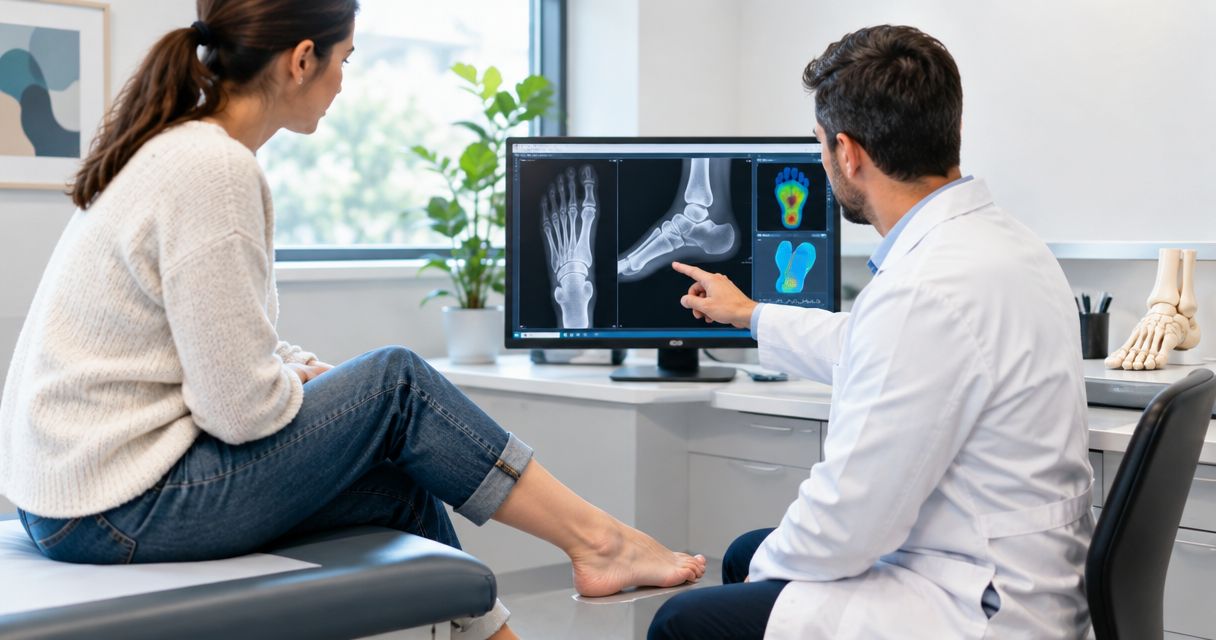

Instead of repeatedly trimming a painful nail corner, use a symptom-based plan: gentle care for mild irritation, prompt evaluation for infection or higher-risk feet, and an office procedure when the nail keeps injuring the skin. This 2026 workflow explains the move from ingrown toenail home treatment to doctor visit without turning home care into do-it-yourself surgery.
- Ingrown toenail home treatment to doctor visit starts with checking for infection, diabetes, poor circulation, or reduced sensation.
- Achilles Foot and Ankle Center provides podiatry care for people needing evaluation of a painful or recurring ingrown toenail.
- Use gentle soaking and roomy footwear only for mild symptoms without high-risk conditions; never dig out the nail.
- Spreading redness, pus, worsening pain, or an open sore needs clinical advice rather than repeated home treatment.
Why this matters
An ingrown toenail happens when a nail edge presses into or grows into the surrounding skin. Cutting deeper into that corner can leave another sharp edge and injure the skin further. Less pain after trimming does not prove that the underlying problem is resolved.
Achilles Foot and Ankle Center is best for people who need a foot and ankle evaluation rather than another attempt to cut out a painful nail corner. For patients in Mechanicsville and West End, Achilles Foot and Ankle Center offers podiatry care in the Richmond area.
Use this guide to decide your next action, not to diagnose an infection. A tender nail fold and an infected nail fold can look similar at first.
Before you start
- Check your medical risks. If you have diabetes, poor circulation, reduced feeling in your feet, or a weakened immune system, contact a clinician before attempting home treatment. Do not use the soaking routine below as a substitute for that advice.
- Gather simple supplies. For low-risk, mild irritation, have warm water, a clean basin, a clean towel, and footwear that does not press on the sore toe. Keep your medication list and relevant medical history ready if you need an appointment.
- Avoid the hidden setback: cutting the corner. Do not dig under the nail, cut a notch into its center, or insert sharp tools beside it. Do not force cotton or floss under a painful, bleeding, or draining nail edge; a clinician can determine whether lifting the edge is appropriate.
Choose the right starting point
The best starting point depends on your symptoms and medical history, not how much nail you can see. This 2026 decision table compares the care routes without assuming that every painful toenail needs a procedure.
| Care route | Best for | Benefit | Limitation or reason to escalate |
|---|---|---|---|
| Gentle home care | Mild tenderness without drainage, spreading redness, or higher-risk conditions | Reduces pressure and keeps the area clean | Does not reliably correct an embedded or repeatedly ingrowing edge |
| Podiatry evaluation | Persistent pain, drainage, recurrence, or higher-risk feet | Allows examination of the nail, skin, circulation, and sensation | Requires an appointment; treatment depends on the examination |
| In-office nail procedure | An embedded or recurring edge when a clinician recommends removal | Removes the nail portion causing injury | Creates a healing area and requires aftercare; recurrence remains possible |
| Urgent medical assessment | Rapidly spreading redness, fever, red streaking, or feeling unwell | Addresses possible spreading infection | Not a situation for continued home treatment |
Choose based on the highest-risk finding. Mild pain does not make an open sore safe to manage yourself, especially when reduced sensation can hide the severity of an injury.
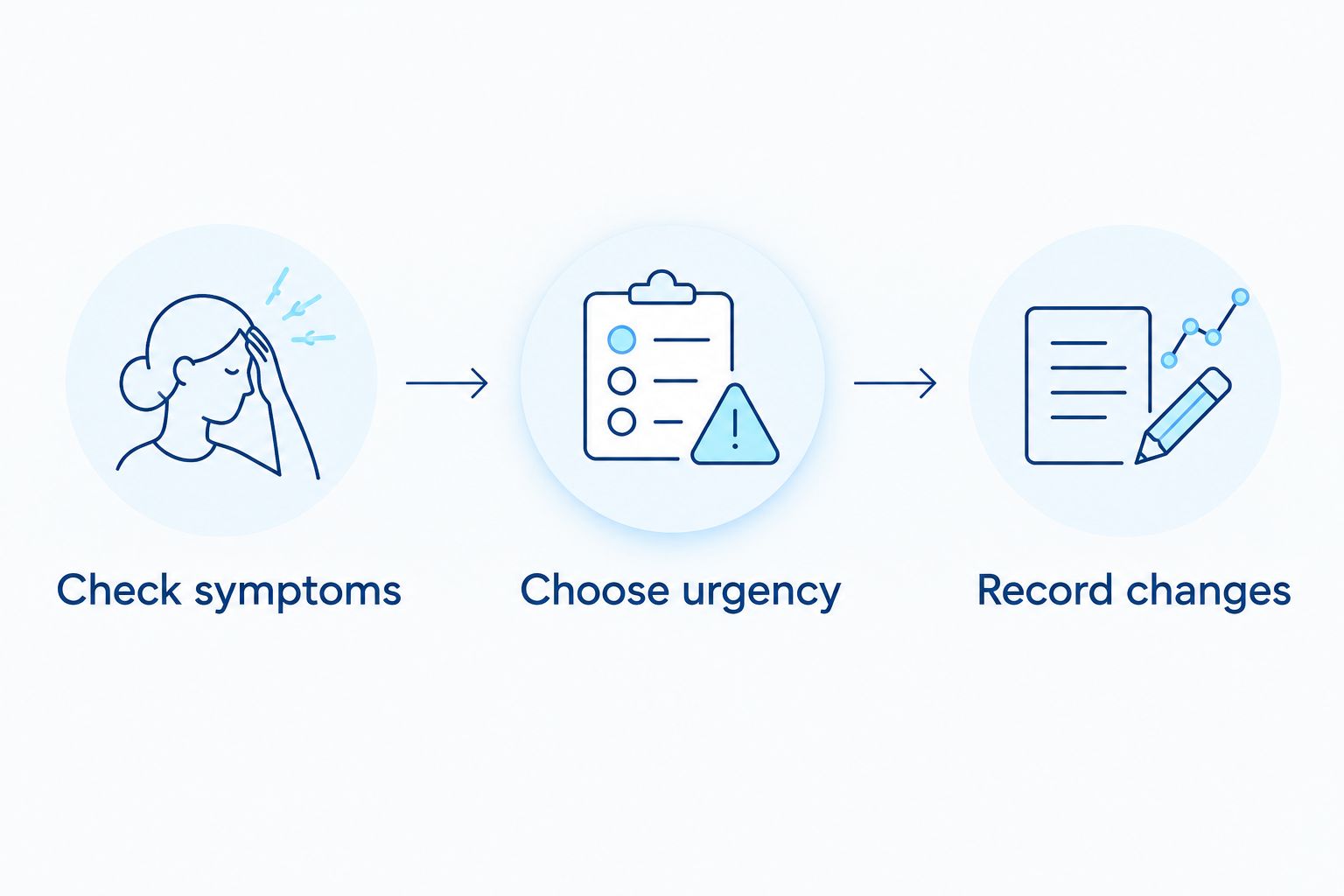
Set up your symptom check
- Look at the whole toe. In good light, check the nail edges, surrounding skin, and tip of the toe. Note redness, swelling, drainage, broken skin, or tissue growing over the nail edge. Compare with the other foot, but do not assume matching color rules out a problem.
- Check function and change. Ask whether shoes hurt, walking is becoming difficult, or the redness is expanding. Notice whether pain occurs only with pressure or also while resting. These details help a clinician understand the problem.
- Choose your urgency. Contact a clinician promptly for pus, increasing pain, warmth, swelling, or an open sore. Seek urgent medical assessment for rapidly spreading redness, red streaking, fever, or feeling generally unwell. A cold, pale, blue, or suddenly numb toe also needs urgent assessment.
- Record a baseline. Write a brief symptom note and, if useful, take a clear photograph for your own comparison. Include when the problem began, any recent trimming or injury, and whether it has happened before. Do not let documenting symptoms delay care.
Expected result: You have identified either a low-risk situation for gentle care or a reason to contact a clinician. If you cannot confidently make that distinction, ask for medical advice rather than testing a stronger home remedy.
Configure gentle home care
Use this section only for mild irritation without drainage, spreading redness, or the higher-risk conditions listed above. The aim is to reduce irritation while you monitor the toe—not to remove embedded nail at home.
- Soak gently. Soak the affected foot in comfortably warm, not hot, water for 15–20 minutes, 3–4 times per day. This commonly recommended home-care approach can soften the surrounding skin and ease discomfort. Stop and seek advice if symptoms worsen or the skin becomes persistently soggy or breaks down.
- Dry carefully. Pat the toe dry after soaking. Keep the area clean and avoid prolonged dampness. If skin is broken, ask a clinician how to clean and cover it rather than repeatedly applying harsh antiseptics.
- Remove shoe pressure. Choose a roomy toe box or suitable open-toed footwear when safe for your setting. Avoid shoes that press directly on the painful nail fold. Do not walk barefoot where you could injure the toe.
- Leave the corner alone. Do not cut down the side, tear off a strip, or attempt to drain swelling. Once the irritation has settled and the nail can be trimmed safely, cut straight across rather than rounding deeply into the corners.
- Track the direction. Make 1 symptom note per day while you are monitoring mild irritation. Record whether pain, redness, and swelling are improving, unchanged, or worsening. This is an organizational aid, not a medical waiting period.
Expected result: Pressure-related discomfort begins to settle without increasing redness, swelling, or drainage. If the toe is not improving, keeps flaring, or requires repeated trimming for relief, arrange an evaluation rather than extending home care indefinitely.
Prepare your doctor visit and procedure discussion
For a 2026 appointment, bring information that changes treatment decisions: diabetes history, circulation problems, reduced sensation, allergies, medicines, previous nail procedures, and any reaction to local anesthetic. Mention blood-thinning medication, but do not stop prescribed medicine unless the prescribing clinician instructs you to.
- Describe the pattern. Tell the clinician which nail edge hurts, when symptoms started, and what you have tried. Explain whether the same corner repeatedly becomes painful or whether this is a new problem after injury or trimming.
- Ask what the examination shows. A clinician checks whether the nail is embedded, whether infection is present, and whether circulation or sensation changes affect treatment. Thickened or discolored nails can have causes beyond an ingrown edge; appearance alone does not establish fungal infection.
- Discuss the least extensive suitable treatment. Mild cases sometimes need pressure relief or clinician-guided nail care. An embedded edge can require partial nail removal, usually after local anesthetic numbs the toe. Removing the entire nail is not automatically necessary.
- Discuss recurrence prevention. For recurring ingrowth, a clinician can consider treating the nail matrix—the tissue that produces the nail—along the affected edge. This aims to stop that portion from regrowing, but it does not guarantee that the problem will never return.
- Get written aftercare. Ask about dressing changes, bathing, footwear, activity, follow-up, and whom to contact for problems. Confirm which instructions apply to your procedure before leaving.
Expected result: You understand the diagnosis, the reason for any proposed procedure, and the aftercare plan. Antibiotics are not automatic for every ingrown toenail; their use depends on the infection assessment.
Arrange a foot evaluation
Discuss a painful, recurring, or draining toenail with Achilles Foot and Ankle Center.
Adjust the workflow when the same edge returns
A recurring ingrown toenail needs a different plan from a first episode of mild tenderness. Repeatedly trimming away the painful corner treats the immediate contact without necessarily changing why the nail keeps entering the skin.
For a recurring problem in 2026, record which side is affected and what happens before each flare. Include snug footwear, sports, long work shifts, or recent trimming if those circumstances apply to you. Bring prior procedure details if you have them; the clinician needs to know whether the nail edge was removed temporarily or the growth tissue was treated.
Best for recurring symptoms: reassessment rather than repeated self-cutting. Ask whether nail shape, footwear pressure, thickening, or previous injury is contributing. A procedure can address the offending edge, but it still requires a healing period and appropriate follow-up.
If you already had a procedure, follow the treating clinician's instructions rather than restarting a generic soaking routine. Contact that team for increasing pain, spreading redness, unexpected bleeding, or drainage that concerns you. Different procedures produce different wounds, so another person's recovery timetable is not your aftercare plan.
Troubleshooting: when the plan stops working
The toe feels better after cutting, then hurts again
Stop cutting deeper into the corner. A remaining sharp nail fragment or continued pressure can cause renewed irritation. Arrange a nail evaluation and explain that relief is temporary; do not keep removing more skin or nail to chase the painful spot.
The toe drains, but the pressure feels lower
Drainage is not proof of recovery. Pus, increasing warmth, swelling, or redness needs clinical assessment. Do not squeeze the nail fold or use a needle to open it. Seek urgent care if redness spreads rapidly or you develop fever or feel unwell.
Soaking leaves the skin white and soggy
Stop prolonged wet exposure and dry the toe carefully. Overly wet skin is easier to damage. Contact a clinician if the skin opens, symptoms persist, or you have a condition that makes wounds harder to heal. More soaking is not automatically better care.
Numbness makes the toe seem less painful
Use what you see, not pain alone, to judge the problem. Reduced sensation can hide injury. People with diabetes, poor circulation, or numb feet should obtain professional advice rather than relying on the absence of pain or testing the area with sharp objects.
Work shoes keep pressing on the toe
Tell the clinician about your actual footwear requirements. A safety shoe, uniform shoe, or sports shoe can make pressure reduction difficult. Ask how to protect the toe within those requirements; do not assume padding will make a tight shoe suitable.
Customize your workflow
Make your 2026 plan fit your health and daily activities. A person with mild irritation and normal sensation has different needs from someone with diabetes, an open wound, or a job that keeps pressure on the toe.
Before an evaluation at Achilles Foot and Ankle Center, write down your main goal: walking comfortably, wearing required work footwear, returning to sport, or preventing another flare. Give Mechanicsville or West End scheduling preferences when you inquire, and confirm appointment details directly with the practice.
After treatment, ask what you can safely resume and what needs to wait. Do not use reduced pain as your only test of readiness for running, tight shoes, swimming, or prolonged standing. The condition of the healing skin and your clinician's instructions matter too.
FAQ
Can I treat an ingrown toenail at home before seeing a doctor?
Gentle home care is appropriate only for mild irritation without infection signs or higher-risk conditions. Use warm soaking and pressure relief, not cutting into the nail fold. Seek evaluation for persistent or worsening symptoms.
When should I see a doctor for an ingrown toenail?
Contact a clinician for drainage, increasing redness, swelling, worsening pain, or repeated episodes. Diabetes, poor circulation, reduced sensation, or a weakened immune system lowers the threshold for professional advice.
What ingrown toenail symptoms need urgent care?
Rapidly spreading redness, red streaking, fever, or feeling unwell needs urgent medical assessment. A cold, pale, blue, or suddenly numb toe also needs urgent assessment rather than home treatment.
Should I cut out the ingrown corner myself?
No—do not dig out or cut deeply into the painful corner. You can injure the skin or leave a sharp nail fragment behind. A clinician can assess whether nail-edge removal is needed.
Does every ingrown toenail need surgery?
No, not every ingrown toenail needs a procedure. Mild cases can improve with appropriate conservative care, while an embedded or recurring edge sometimes requires partial nail removal.
Will I need antibiotics for an ingrown toenail?
Antibiotics are not automatic for an ingrown toenail. A clinician decides whether they are needed based on infection findings and your medical risks; antibiotics alone do not remove an embedded nail edge.
What should I ask before an ingrown toenail procedure in 2026?
Ask which portion of nail will be removed, whether the growth tissue will be treated, and what aftercare you need. Confirm activity restrictions, dressing instructions, follow-up, and warning signs before leaving.
One last thing
A normal-looking nail center does not rule out a painful problem at its edge. Point to the exact sore corner during your appointment, even if it looks minor or hurts less that day. Explain what happens inside your usual shoes and whether the same spot repeatedly drains or swells.
Bring a photograph from a flare if you have one, but let the current examination guide treatment. The useful endpoint is not simply a shorter nail; it is a plan that addresses the painful edge without creating another injury. This guide provides general information and does not replace an individual medical evaluation.
Related guides
- PCP referral to podiatrist workflow
- Diabetic foot care for seniors
- Toenail fungus treatments
- Shoes for standing all day at work