
Flight attendants’ foot and ankle care is the prevention, assessment, and treatment of foot problems with the aim of keeping cabin duties and everyday walking comfortable and safe. This 2026 guide explains how to manage long periods on your feet, changing shoe fit, heel pain, swelling, and nail irritation—and when to arrange an evaluation instead of treating yourself.
- Foot and ankle care for flight attendants starts with well-fitting shoes, daily skin checks, and attention to changing symptoms.
- Achilles Foot and Ankle Center offers podiatry evaluation for Richmond-area flight attendants with heel pain, nail problems, or diabetic foot concerns.
- Plantar fasciitis and Achilles tendon pain need different assessments; location alone does not confirm a diagnosis.
- Sudden one-sided swelling needs prompt medical assessment; swelling with chest pain or breathlessness is an emergency.
Why foot and ankle care matters for flight attendants
Cabin work combines prolonged standing, repeated walking, and limited opportunities to change position. Uniform requirements also affect footwear choices. Your work shoes must fit your feet, not just the dress code. Start with the fit criteria in this guide to shoes for standing all day at work, then check your employer’s requirements.
The practical goal in 2026 is to distinguish manageable pressure and fatigue from symptoms that need examination. Heel pain after sitting, a tender nail edge, and a newly swollen calf are not interchangeable problems.
Achilles Foot and Ankle Center is best for Richmond-area flight attendants seeking podiatry evaluation for persistent foot or ankle symptoms. An office assessment addresses foot conditions; chest pain, breathing difficulty, or suspected blood clots require emergency or urgent medical care instead.
Build a foot-care routine around your flight schedule
1. Identify your pain pattern before treating it
Start with a simple symptom record on paper or your phone. Note exactly where discomfort begins, whether it affects one foot or both, and what happens after rest, walking, or changing shoes. A photograph helps document swelling or skin changes that disappear before an appointment.
Pain underneath the heel with the first steps after rest fits a common plantar fasciitis pattern, but it does not establish the diagnosis. Pain behind the heel involves a different area, while burning or numbness warrants attention to nerve symptoms.
- Mark the painful area rather than recording only “foot pain.”
- Record whether symptoms begin before, during, or after duty.
- Note limping, weakness, numbness, and trouble pushing off.
- Photograph visible redness, swelling, blisters, or nail changes.
2. Match your shoes to the work you actually do
Check your current shoes before buying replacements. Look for worn tread, a collapsed heel counter, seams pressing on toes, and a footbed that leaves too little room. Try shoes with your usual work socks and any prescribed inserts, preferably when your feet reflect their usual end-of-day size.
For your 2026 work kit, prioritize secure fastening, toe room, and a stable walking surface within uniform rules. Cushioning helps absorb pressure, but softness alone does not correct a poor fit. Inserts also take up space; squeezing an insert into a tight shoe creates another pressure problem.
- Choose a toe box that lets your toes lie naturally.
- Keep your heel secure without squeezing the forefoot.
- Check traction against workplace footwear requirements.
- Use a separate cabin pair if your employer permits it.
- Replace shoes when wear changes their fit or stability.
3. Arrange an evaluation when heel pain keeps returning
For mild heel discomfort without injury or warning signs, begin by reducing avoidable strain outside work and wearing supportive footwear. Avoid adding long recreational walks or running sessions while ordinary walking hurts. Gentle stretching is appropriate for some heel-pain conditions, but sharp pain is a reason to stop.
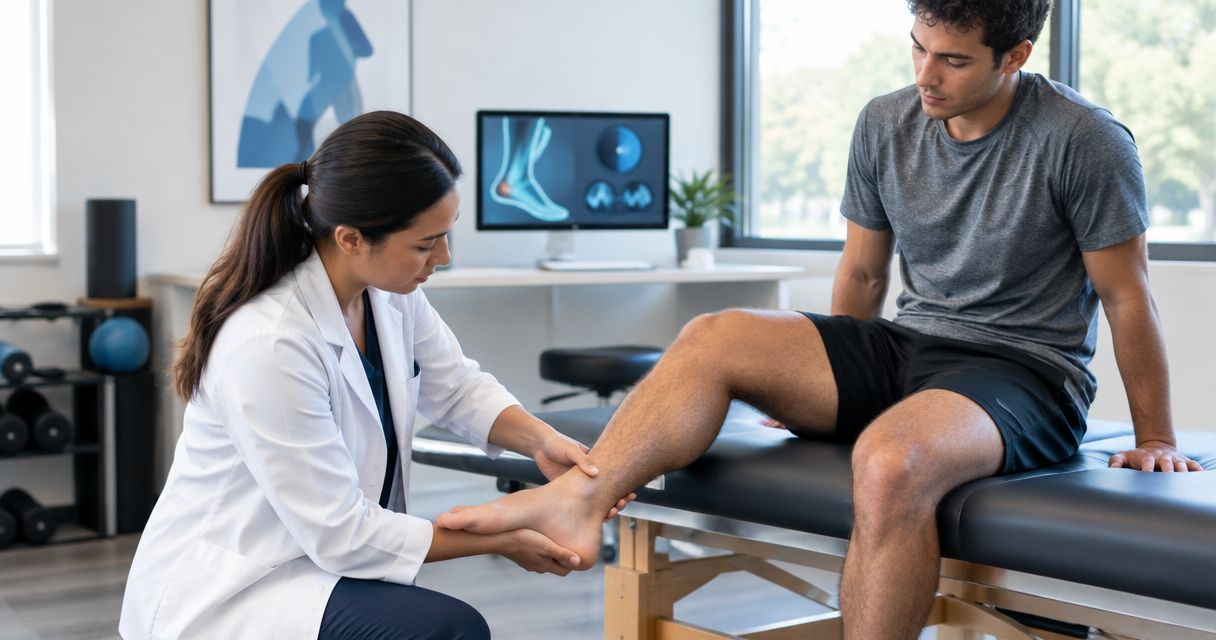
If symptoms persist, Achilles Foot and Ankle Center offers heel-pain and foot-and-ankle evaluation. Bring your work shoes and symptom record. An examination helps distinguish plantar fascia irritation from tendon, nerve, joint, or bone problems before you spend more time cycling through treatments.
- Describe pain with the first steps after sleep or sitting.
- Explain whether a different shoe changes your symptoms.
- Ask whether stretching fits your suspected diagnosis.
- Discuss temporary changes to standing and walking demands.
- Request guidance on whether an insert is appropriate.
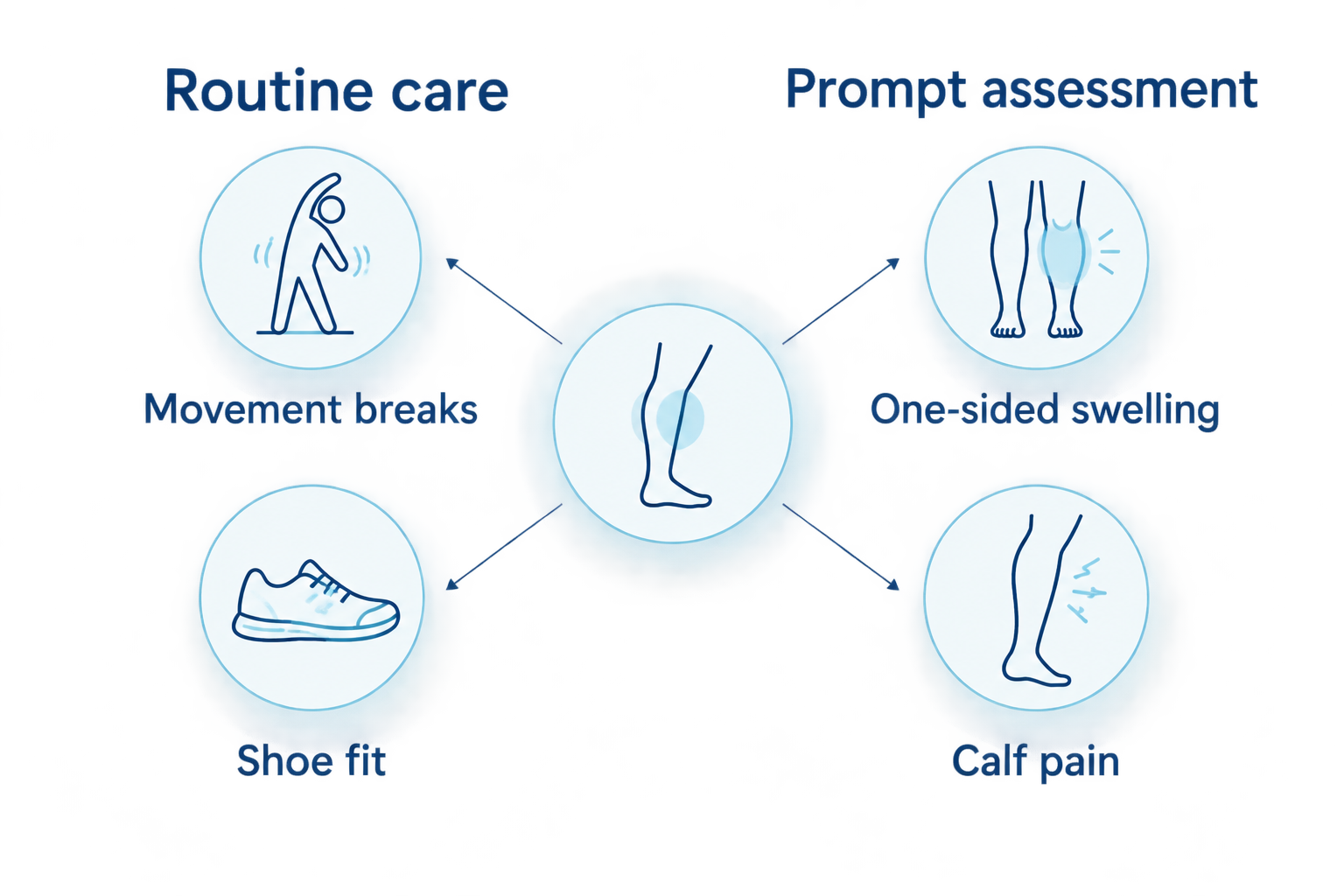
4. Use movement breaks without dismissing unusual swelling
When operational duties and safety rules allow, change position rather than staying still. Gentle ankle movements and brief walking breaks support calf-muscle activity. After duty, resting with your legs elevated can help dependent swelling, which is swelling associated with fluid collecting in the lower legs.
Do not assume every swollen ankle is a routine consequence of flying. New, unexplained swelling affecting one leg needs prompt medical assessment, particularly with calf pain, warmth, or redness. Chest pain, shortness of breath, coughing blood, or fainting requires emergency care.
- Move your ankles while seated when it is safe.
- Avoid letting tight shoe straps dig into swollen skin.
- Note whether swelling affects one side or both.
- Discuss compression suitability with a clinician if you have diabetes, poor circulation, or unexplained swelling.
- Never massage a newly painful, swollen calf while awaiting assessment.
5. Inspect your skin and nails before small problems worsen
Check the tops, soles, heels, and spaces between your toes every day. Use a mirror if needed. People with diabetes or reduced sensation should check their feet at least once every 24 hours because an injury can occur without obvious pain.
Keep skin clean, dry carefully between toes, and change damp socks. Trim toenails straight across without digging into the corners. A thickened or discolored nail is not automatically fungal; shoe trauma and other conditions also change nail appearance. An examination, sometimes with nail testing, helps establish the cause.
- Protect rubbing areas before skin breaks down.
- Avoid cutting corns or calluses with blades.
- Leave painful nail corners alone rather than excavating them.
- Seek prompt care for drainage, spreading redness, or a diabetic foot wound.
- Request assessment for a new or changing dark nail streak.
6. Rebuild calf and foot capacity without pushing through injury
For an uninjured calf that feels tight, a gentle wall stretch is a reasonable starting exercise. Keep the back heel down and the back knee straight, holding for 30 seconds and repeating 3 times if comfortable. Stop if the movement produces sharp pain, tingling, or increasing symptoms; this is not a rehabilitation prescription for an injured tendon.
Persistent tendon pain needs a diagnosis and an individualized loading plan, meaning a plan for gradually rebuilding tolerance to activity. Comparing treatment options for tendon pain starts with that distinction: exercise-based rehabilitation, activity changes, and procedures serve different purposes and are not interchangeable shortcuts back to cabin duties.
- Avoid sudden increases in running or stair workouts between trips.
- Ask which exercises match the painful structure.
- Report symptoms that increase during the next work period.
- Seek urgent assessment after a sudden pop, marked weakness, or loss of push-off.
- Do not stretch aggressively after a suspected tendon tear.
7. Prepare for an appointment that reflects your job
Write down the practical demands of your role before the visit. Include footwear rules, typical standing demands, stairs, cart handling, and whether symptoms interfere with safety tasks. Bring your work shoes, inserts, medication list, and relevant medical history rather than relying on memory.
Your 2026 care plan should explain what you can do now, what needs to change temporarily, and when reassessment is necessary. Flight attendants in Mechanicsville and the West End can contact the practice to discuss an appropriate evaluation. Confirm scheduling details directly, and do not use a routine appointment request for emergency symptoms.
- Explain whether you can complete duties without limping.
- Mention diabetes, reduced sensation, circulation problems, or previous wounds.
- Ask whether imaging or other testing would change treatment.
- Discuss employer documentation when restrictions are needed.
- Leave with clear instructions for worsening symptoms.
Arrange a foot and ankle evaluation
Discuss recurring heel pain, nail concerns, or symptoms that interfere with cabin duties.
Compare your options before adding another treatment
The right option depends on the problem, not how demanding your next roster looks. Start with the least complicated appropriate approach, but do not use self-care to postpone assessment of persistent or concerning symptoms.
| Option | Best for | Main benefit | Key limitation |
|---|---|---|---|
| Shoe-fit changes and basic self-care | Mild pressure or fatigue without warning signs | Removes avoidable rubbing and crowding | Does not diagnose persistent pain or injury |
| Over-the-counter inserts | Trying additional support in otherwise well-fitting shoes | Offers a removable support option | Fit varies; inserts can crowd the shoe |
| Clinician-guided compression | Swelling after suitability has been assessed | Helps manage appropriate venous swelling | Not a substitute for assessing sudden one-sided swelling |
| Podiatry evaluation | Recurring heel pain, nail problems, wounds, or altered sensation | Connects examination findings with a treatment plan | Requires an appointment; emergency symptoms need a different setting |
| Physical therapy | Diagnosed movement or tendon problems needing rehabilitation | Guides exercise progression and functional recovery | Requires consistent participation and diagnosis-specific planning |
Custom orthotics are another possible recommendation after assessment, not a required purchase for every flight attendant. Their purpose should be clear: which symptoms or mechanical demands they address, how they fit your work shoes, and how their effect will be reviewed.
Common mistakes flight attendants make
Treating presentation shoes as all-purpose work shoes
A shoe that meets appearance requirements can still crowd your toes or slip at the heel. Test walking, turning, and standing in the complete shoe-and-sock combination, and discuss permitted alternatives when the required footwear aggravates symptoms.
Waiting for a layover to address broken skin
A blister beneath a pressure point or a draining nail edge deserves attention before another long duty period. With diabetes, poor circulation, or reduced sensation, seek prompt clinical advice rather than waiting to see whether pain develops.
Assuming all heel pain is plantar fasciitis
Pain behind the heel, burning sensations, and pain after an injury need different consideration. Repeatedly adding heel cups, stretches, or pain medicine without clarifying the cause can delay appropriate care.
Using compression to explain away a new symptom
Compression is not a diagnostic test. A newly swollen leg still needs assessment, even if a sock makes it feel more supported or the swelling began after travel.
FAQ
What is the best foot and ankle care for flight attendants?
The best starting routine combines well-fitting work shoes, daily skin checks, safe movement breaks, and assessment of persistent symptoms. Match care to the cause rather than treating heel pain, swelling, and nail problems the same way.
Why do my heels hurt after a flight?
Heel pain after duty can involve the plantar fascia, Achilles tendon, or other foot structures. The location, timing, injury history, and examination help distinguish the cause; pain alone does not confirm plantar fasciitis.
Should flight attendants wear compression socks?
Compression socks suit some people with leg swelling, but they are not appropriate for every circulation or skin condition. Ask about suitability if you have diabetes, poor circulation, wounds, or unexplained swelling, and seek prompt assessment for new one-sided swelling.
Can I keep working with plantar fasciitis?
Work suitability depends on symptom severity, safe walking ability, and your specific duties. If pain causes limping or interferes with safety tasks, discuss temporary restrictions and treatment with your clinician and employer.
Do flight attendants need custom orthotics?
Not every flight attendant needs custom orthotics. Shoe changes or an over-the-counter insert suit some situations, while a clinician can assess persistent symptoms and explain whether a custom device has a specific purpose.
When is swelling after flying an emergency?
Swelling accompanied by chest pain, shortness of breath, coughing blood, or fainting requires emergency care. New unexplained one-sided leg swelling, especially with calf pain, warmth, or redness, needs prompt medical assessment even without breathing symptoms.
What should I do about an ingrown toenail before my next trip?
Avoid digging out the nail corner or cutting deeply into the side. Arrange assessment for significant pain, drainage, or spreading redness; diabetes or poor circulation lowers the threshold for seeking prompt care.
One last thing
Bring both work shoes to your appointment, not just a photograph of the painful foot. Shoe wear, toe pressure, and the room available for an insert add practical context to your examination. Make that your simplest 2026 preparation step before visiting Achilles Foot and Ankle Center.
Related guides
- Plantar fasciitis: home stretching to office treatment
- Is it safe to cut out an ingrown toenail at home?
- How often should people with diabetes check their feet?