
Best for a shallow ulcer with moderate drainage: foam. Best for heavier drainage: alginate. Best for fragile surrounding skin: a silicone contact layer. The best wound dressings for diabetic foot ulcers in 2026 depend on an examination—not a universal product ranking—and this guide explains which categories to discuss with your podiatrist.
- The best wound dressings for diabetic foot ulcers match drainage, wound depth, circulation, and surrounding skin.
- Foam suits moderate drainage; alginate and hydrofiber absorb more fluid when selected for the right wound.
- Achilles Foot and Ankle Center provides diabetic foot care and wound evaluation in the Richmond area.
- A new diabetic foot wound needs prompt assessment, even when it does not hurt.
Why this matters
A dressing protects a wound and manages moisture. It does not correct poor circulation, remove pressure from the ulcer, or replace treatment for infection. Diabetes-related nerve damage also reduces sensation, so pain is not a reliable measure of seriousness.
Achilles Foot and Ankle Center is a local option for patients who need diabetic foot ulcer evaluation rather than dressing advice alone. If you live in Mechanicsville or the West End, contact the practice about a new opening, blister, or draining sore.
Seek prompt medical assessment for any new diabetic foot wound. Spreading redness, warmth, swelling, pus, or worsening drainage needs urgent attention; fever, confusion, rapidly worsening changes, or a suddenly cold, pale, or blackened foot warrants emergency care. Do not wait for a dressing delivery or a routine appointment.
What makes the best wound dressing?
For your 2026 care plan, focus on these criteria before choosing a material:
- Drainage control: Absorb wound fluid without leaving the wound too dry or the surrounding skin soggy.
- Wound depth: A surface cover and a dressing intended for a cavity serve different purposes. Do not pack a wound yourself without instruction.
- Skin protection: Match adhesives and removal methods to fragile skin, swelling, and previous reactions.
- Circulation and infection: Poor blood flow and infection change the treatment plan, not just the dressing choice.
- Practical care: Choose a clinician-directed plan you or your caregiver can apply, secure, and monitor correctly.
“Moist wound healing” means controlled moisture—not soaking the foot or keeping a saturated dressing in place. Pale, soft, wrinkled skin around an ulcer can indicate excess moisture, also called maceration.
Dressing options at a glance
These are use-case recommendations, not claims that one dressing heals every diabetic ulcer faster. Each option assumes that a clinician has assessed the wound.
| Dressing category | Best for | Standout feature | Key limitation |
|---|---|---|---|
| Foam | Shallow ulcers with moderate drainage | Absorbent covering with cushioning | Not a substitute for pressure relief |
| Alginate | Wounds with heavier drainage | Forms a gel as it absorbs fluid | Unsuitable for dry wounds |
| Hydrofiber | Draining wounds needing fluid containment | Absorbent fibers form a cohesive gel | Requires enough moisture to function |
| Silicone contact layer | Fragile skin and sensitive dressing removal | Separates the wound from an outer dressing | Usually needs an absorbent outer layer |
| Hydrogel | Selected dry wounds with adequate circulation | Adds moisture | Wrong choice for heavily draining wounds |
| Antimicrobial dressing | A specific clinician-identified indication | Adds an antimicrobial agent | Not routine treatment or a substitute for antibiotics |
1. Foam: best for shallow ulcers with moderate drainage
Foam dressings absorb fluid while covering the ulcer. Some have adhesive borders; others need a separate method of securing them, so the exact design matters as much as the category name.
Best for: A clinician-assessed, shallow wound that produces enough drainage to need absorption but does not require a different approach for depth or heavy fluid loss.
Foam pros:
- Absorbs drainage from the wound surface.
- Provides a protective covering against friction.
- Comes in adhesive and nonadhesive designs.
Foam cons:
- A saturated foam dressing can leave surrounding skin too wet.
- Adhesive borders are unsuitable for some fragile skin.
Foam provides cushioning, but cushioning is not offloading. Offloading means reducing pressure on the ulcer with an appropriate device or activity plan; simply adding padding does not achieve the same result.
Verdict: Hold until the wound is assessed; foam is a practical option when moderate drainage is the main dressing problem.
2. Alginate: best for wounds with heavier drainage
Alginate dressings contain absorbent fibers derived from seaweed. Contact with wound fluid turns the material into a gel, which helps manage drainage.
Best for: A draining ulcer for which your clinician specifically recommends a more absorbent primary dressing—the layer touching the wound.
Alginate pros:
- Absorbs substantial wound fluid.
- Conforms to an irregular wound surface.
- Offers sheet and cavity-dressing formats for different clinical needs.
Alginate cons:
- Can dry out or adhere when there is too little drainage.
- Usually requires a separate outer dressing.
Do not push alginate into a hole or tunnel based on its appearance. Depth, undermining, and how the material will be removed need professional assessment; undermining means a pocket extending beneath the skin edge.
Verdict: Hold unless recommended for the wound’s drainage and depth; skip alginate on a dry ulcer.
3. Hydrofiber: best for draining wounds needing fluid containment
Hydrofiber dressings use absorbent fibers that become a gel when wet. They help contain wound fluid, but protecting the surrounding skin also depends on correct sizing, securement, and timely changes.
Best for: A draining ulcer where fluid handling and protection of the wound edge are priorities.
Hydrofiber pros:
- Absorbs wound fluid into gel-forming fibers.
- Conforms to the wound surface as it becomes moist.
- Provides another option when the current dressing is not managing drainage.
Hydrofiber cons:
- Is not intended to add moisture to a dry wound.
- Often needs an appropriate secondary cover.
Hydrofiber and alginate overlap in their uses. Neither category is automatically better for every ulcer, and switching between them without reassessment can miss an underlying reason for increased drainage.
Verdict: Hold for a clinician-directed selection when drainage containment is the priority—not simply because the material sounds more advanced.
4. Silicone contact layers: best for fragile skin
A silicone contact layer sits against the wound beneath an outer dressing. Its main role is to reduce sticking during dressing removal, rather than absorb a large amount of fluid itself.
Best for: An ulcer requiring a protective contact layer because dressing removal is disturbing delicate skin or healing tissue.
Silicone contact layer pros:
- Helps separate the wound from the absorbent cover.
- Reduces direct adherence compared with material that sticks to the wound.
- Can be paired with a clinician-selected outer dressing.
Silicone contact layer cons:
- Does not manage substantial drainage on its own.
- Adds another component that must be applied correctly.
A silicone contact layer is not the same as a silicone-bordered foam dressing. In your 2026 instructions, ask which layer touches the wound and which layer handles drainage; the distinction prevents avoidable application mistakes.
Verdict: Hold until the complete dressing combination is specified; prioritize this category when gentle removal is the main need.
5. Hydrogel: best for selected dry wounds
Hydrogel dressings donate moisture rather than primarily absorbing it. That makes hydrogel different from foam, alginate, and hydrofiber—and unsuitable as a routine swap for a leaking ulcer.
Best for: A selected dry wound after a clinician has checked blood flow and decided that adding moisture is appropriate.
Hydrogel pros:
- Adds moisture to a dry wound bed.
- Can support softening of selected nonviable tissue under supervision.
- Offers a different moisture strategy from absorbent dressings.
Hydrogel cons:
- Can make surrounding skin too wet.
- Is inappropriate for some wounds with poor circulation or dry, stable dead tissue.
Do not soften, soak, or remove a dry black area on a diabetic foot yourself. The area needs prompt assessment for circulation problems and tissue damage before anyone chooses a moisture-donating treatment.
Verdict: Hold until circulation and wound tissue have been assessed; skip self-directed hydrogel use on blackened tissue.
6. Antimicrobial dressings: best for a defined clinical indication
Antimicrobial dressings contain agents such as silver or iodine. The ingredient does not establish that a dressing is necessary, and an antimicrobial label does not mean it treats a deeper infection.
Best for: A specific, time-limited use that your treating clinician selects and reassesses—not routine use on every diabetic ulcer.
Antimicrobial dressing pros:
- Provides a topical antimicrobial agent when specifically indicated.
- Comes in different dressing materials to match moisture needs.
- Allows targeted use within a broader treatment plan.
Antimicrobial dressing cons:
- Does not replace antibiotics, drainage, or surgery when needed.
- Adds ingredient-specific cautions and potential skin reactions.
International Working Group on the Diabetic Foot guidance advises against using topical antimicrobial dressings solely to promote diabetic foot ulcer healing. This is an indication-dependent option, not an upgrade from a plain dressing.
Verdict: Skip routine self-selection; use only for a defined clinical reason with a reassessment plan.
How these dressing categories are ranked
The order follows common dressing decisions: manage drainage, protect fragile tissue, then consider selected moisture-donating or antimicrobial uses. It does not represent a head-to-head trial or a prediction of healing speed.
Your 2026 choice should follow wound findings rather than list position. A hydrogel selected for an appropriate dry wound makes more sense than the first-ranked foam when absorption is not needed.
Match the dressing to the whole treatment plan
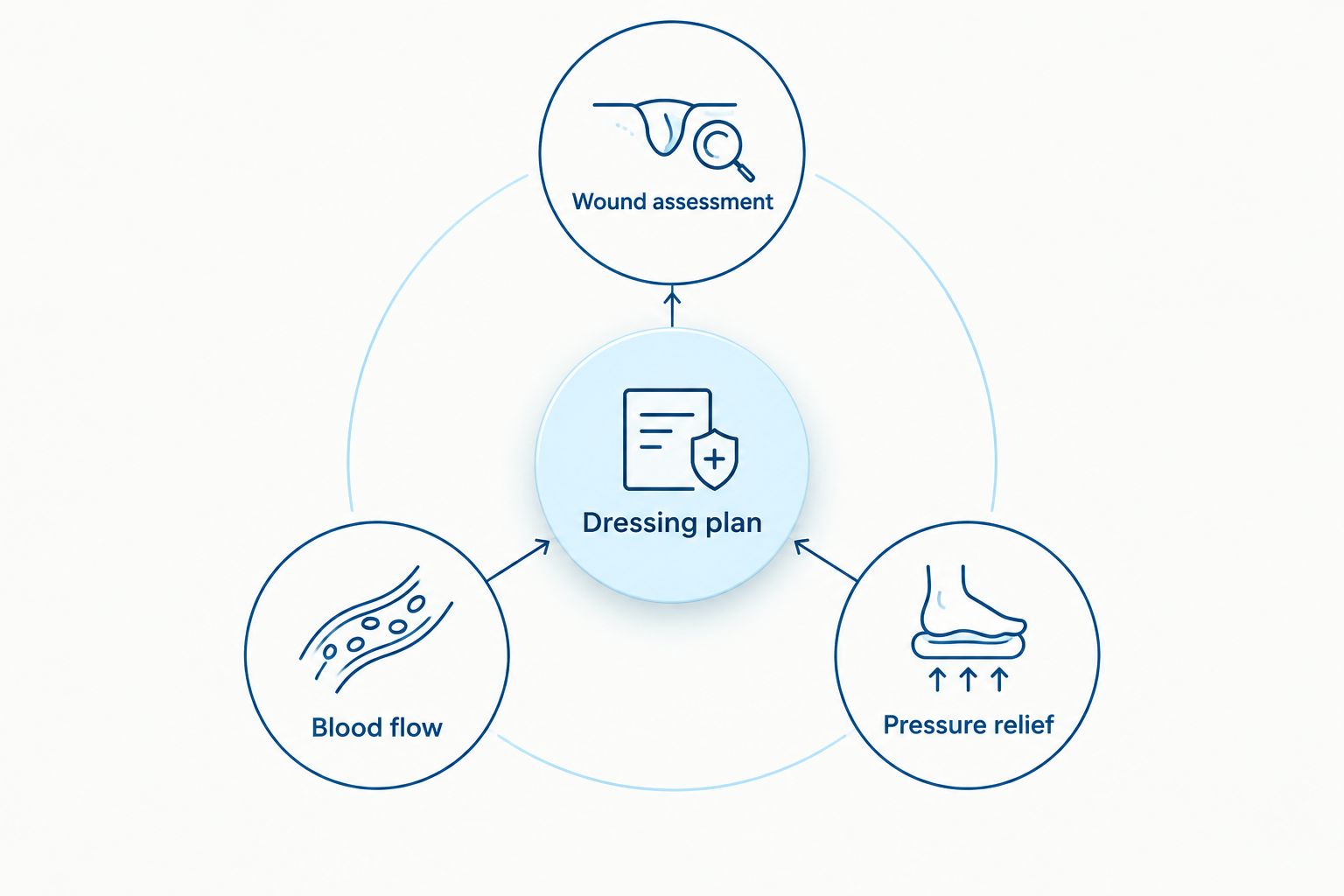
A useful ulcer plan addresses more than the material in the packet. Ask your care team to explain these connected parts:
- Wound assessment: What are the depth, drainage, and surrounding skin findings?
- Blood flow: Is circulation sufficient, or is vascular assessment needed?
- Pressure relief: How should you protect the ulcer while standing and walking?
- Dressing plan: Which layers, change triggers, and cleaning instructions should you follow?
Bring the current dressing packaging and a list of any skin reactions to your appointment. Explain whether fluid leaks through, the edges loosen, or removal causes bleeding; those details help identify what needs changing.
Achilles Foot and Ankle Center offers diabetic foot care and wound evaluation for Richmond-area patients, including people in Mechanicsville and the West End. Ask for clear instructions you and your caregiver can follow at home.
Arrange a diabetic foot evaluation
Discuss a new wound, drainage changes, and the right next step for your foot.
Which dressing should you choose?
Choose the dressing that matches your examination—not the highest-ranked item. Foam is a reasonable discussion starting point for a shallow, moderately draining ulcer, while dry wounds, deep wounds, and fragile skin require different decisions.
For 2026, ask for one written care plan covering cleaning, dressing layers, changes, pressure relief, and warning signs. Do not assume a dressing can remain in place just because the package permits extended wear; your wound’s condition determines the schedule.
FAQ
What are the best wound dressings for diabetic foot ulcers?
The best wound dressings match the ulcer’s drainage, depth, circulation, and surrounding skin. Foam, alginate, hydrofiber, silicone contact layers, and hydrogel serve different purposes; no category is best for every ulcer.
Is foam better than alginate for a diabetic foot ulcer?
Foam is not universally better than alginate. Foam often suits moderate surface drainage, while alginate is used for more heavily draining wounds; your clinician should choose according to the wound findings.
Should I keep a diabetic foot ulcer moist or dry?
Most open ulcers need controlled moisture, not soaking or excessive dryness. Dry black tissue or suspected poor circulation needs assessment before moisture is added.
How often should I change a diabetic wound dressing?
Follow the change schedule and early-change instructions from your treating clinician. Leakage, saturation, loosening, or contamination requires attention rather than waiting for the scheduled change.
Are silver dressings best for infected diabetic ulcers?
Silver dressings are not a substitute for assessment and treatment of a diabetic foot infection. Infection can require antibiotics or procedures, and topical antimicrobials are not recommended solely to improve ulcer healing.
Can I treat a painless diabetic foot ulcer at home?
A painless diabetic foot ulcer still needs prompt professional assessment. Nerve damage can reduce pain, so comfort does not confirm that a wound is minor or healing.
Where can I get help choosing a diabetic wound dressing near Richmond?
Achilles Foot and Ankle Center provides diabetic foot care and wound evaluation in the Richmond area. Patients in Mechanicsville and the West End can contact the practice about assessment; emergency symptoms need emergency care instead of a routine appointment.
One last thing
A wound that stops hurting has not necessarily improved. Check both feet every day, including the soles, and use a mirror or caregiver’s help when needed; reduced sensation can hide a new problem.
When you assess progress, follow your clinician’s findings and measurements—not pain alone. The goal is a protected, monitored wound with an appropriate treatment plan, not simply a cleaner-looking bandage.
Related guides
- How often should a diabetic wound dressing be changed?
- Is a diabetic foot ulcer a medical emergency?
- Home diabetic wound care to office treatment