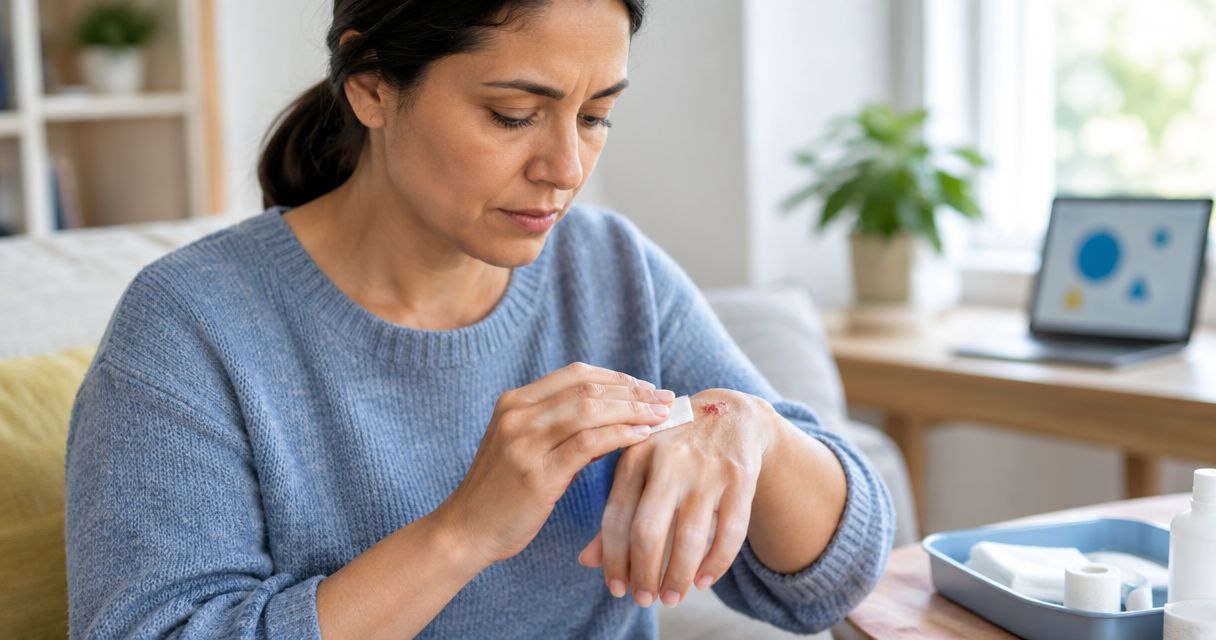
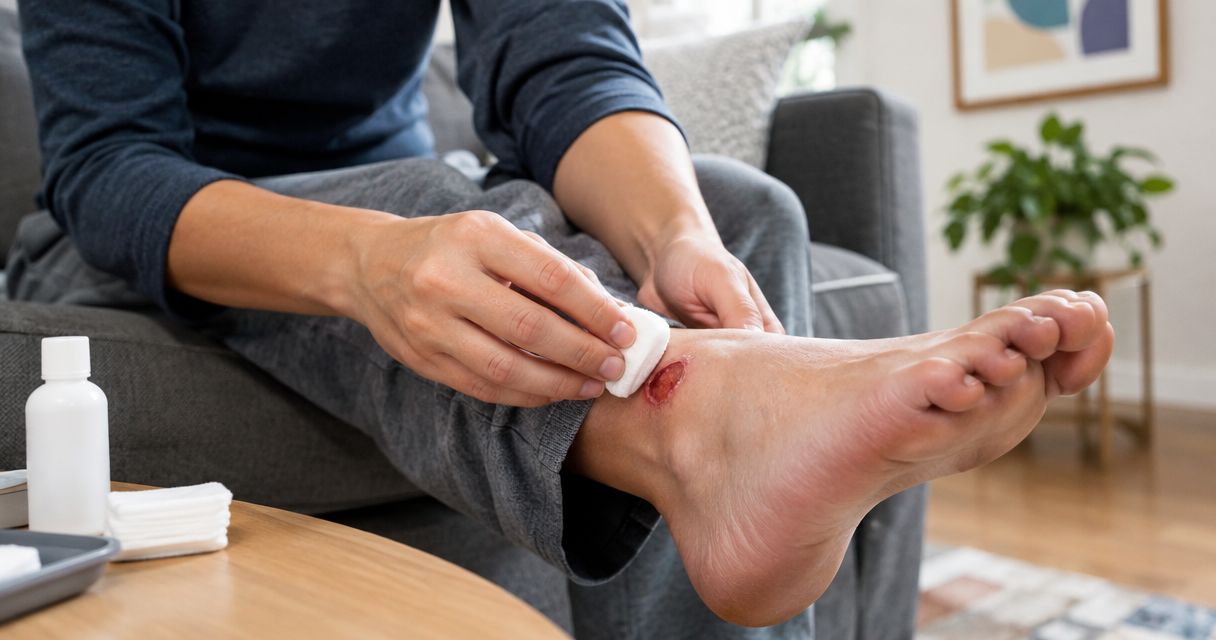
A diabetic wound dressing should be changed on the schedule your treating clinician gives you, not on a single timetable that applies to every wound. Change it sooner if the outer dressing becomes wet, dirty, loose, or soaked through, following your wound-care instructions. Special dressings, packing, and wound-vac systems need their own instructions; new redness, swelling, drainage, or illness calls for medical advice rather than just another bandage.
- How often should a diabetic wound dressing be changed? Follow the prescribed schedule and respond sooner to wetness or leakage.
- Diabetic foot care includes pressure relief, infection checks, and circulation assessment—not dressing changes alone.
- Achilles Foot and Ankle Center offers diabetic foot care for patients in the Richmond area.
- Seek prompt medical advice for worsening redness, swelling, drainage, or a new open foot wound.
Why this matters
A dressing protects a wound and helps manage moisture, but changing it is only part of diabetic foot care. Nerve damage can reduce warning pain, while poor circulation can interfere with healing. A painless wound still needs attention.
If you are managing an open sore at home in 2026, start with a written care plan rather than a dressing timetable found online. This guide to home diabetic wound care and office treatment explains the connection between home care and clinical evaluation.
How often should a diabetic wound dressing be changed?
Change a diabetic wound dressing at the prescribed interval, or sooner when its condition requires it. The schedule depends on the wound, its drainage, the dressing material, and whether a clinician needs to perform the change.
The table below compares common dressing approaches. It is a discussion guide for your appointment, not a substitute for instructions for your particular wound.
| Dressing approach | Best suited to | What determines the change schedule | Main limitation |
|---|---|---|---|
| Nonadherent contact layer with an absorbent cover | Wounds needing protection from sticking and management of drainage | Drainage, the condition of the outer cover, and the prescribed plan | A wet outer layer needs attention; not every layer is changed together |
| Absorbent foam dressing | Wounds where cushioning and fluid absorption are appropriate | Absorption capacity, leakage, surrounding skin, and product instructions | Foam does not replace pressure relief or treat infection by itself |
| Hydrofiber or alginate dressing | Wounds with drainage that a clinician wants absorbed | Amount of drainage, wound depth, and the selected material | These materials are not suitable for every dry wound |
| Negative-pressure wound therapy | Selected wounds managed with a prescribed suction system | The wound-care team's schedule and device instructions | Pump alarms, loss of suction, or bleeding require specific action |
A dressing's advertised wear time is not automatically your wound's safe wear time. Your clinician can prescribe a shorter interval because of drainage, fragile skin, or concern about infection.
Ask which layer you should replace. Some plans distinguish between the material touching the wound and the outer protective cover; removing both without instructions can disrupt care.
When should you change it before the scheduled time?
A calendar reminder does not override a dressing that has stopped protecting the wound. Look at the outside of the dressing and the visible surrounding skin without repeatedly lifting the wound-contact layer.
Contact your care team for instructions when you notice:
- Wetness: Shower water, sweat, or another liquid has soaked the dressing.
- Leakage: Wound fluid has reached the outside or escaped around the edges.
- Looseness: The dressing has slipped, rolled, or exposed the wound.
- Contamination: Dirt or another contaminant has reached the dressing or wound.
- Skin changes: The surrounding skin looks increasingly red, swollen, irritated, or soggy.
If you have been taught to replace a simple dressing, follow that plan when it becomes compromised. If the wound contains packing, a graft, a special contact layer, or a suction dressing, call the treating team rather than improvising.
A dressing that repeatedly soaks through needs reassessment. Simply adding more layers can conceal drainage without addressing why it has increased.
Why dressing-change frequency varies
The right interval balances protection, moisture control, and opportunities to assess the wound. More frequent changes are not automatically better; unnecessary removal can disturb fragile tissue or irritate surrounding skin.
These factors help determine your schedule:
- Drainage amount: A wound producing more fluid can overwhelm a dressing sooner.
- Dressing material: Different materials handle moisture differently and have different removal instructions.
- Wound depth: A deeper wound or one containing packing requires a plan beyond replacing a surface bandage.
- Surrounding skin: Skin softened by excess moisture or irritated by adhesive can require a different approach.
- Infection concerns: New clinical findings can change both the treatment and monitoring schedule.
- Ability to manage care: Limited vision, difficulty reaching the foot, or reduced hand strength can make caregiver or nursing support necessary.
Blood flow and pressure on the wound also matter, although changing the dressing more often does not correct those problems. An ulcer under a weight-bearing area needs a pressure-relief plan alongside wound care.
How do you follow a dressing plan safely at home?
Only perform dressing changes that your clinician has taught you to do. A new foot wound, an unfamiliar deep opening, or unclear discharge instructions is a reason to ask for help—not to experiment with supplies.
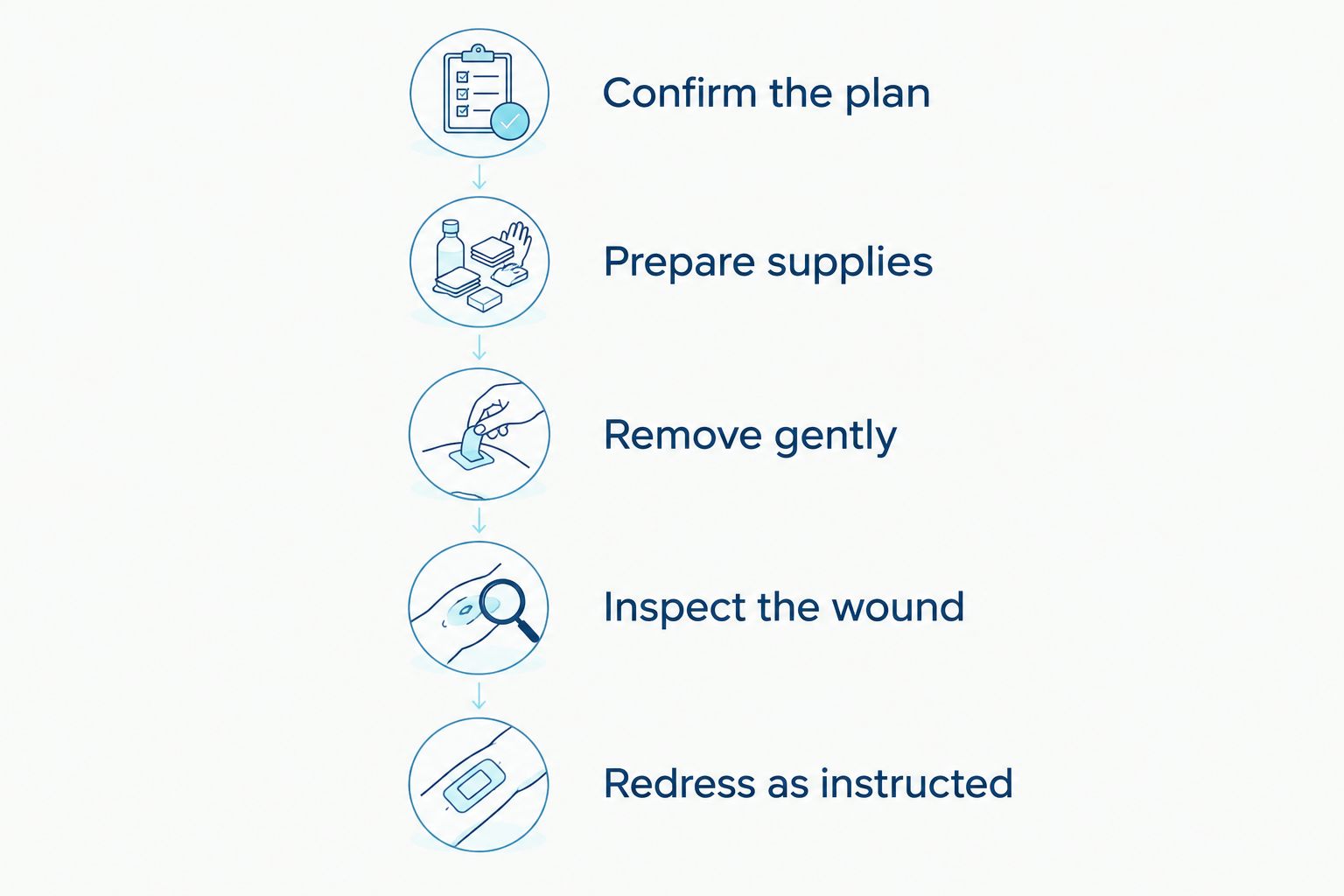
Use this sequence to organize an approved home-care routine:
- Confirm the plan. Check which dressing to use, which layers to remove, and when the next change is due. Keep the care team's contact details with your supplies.
- Prepare supplies. Wash your hands and use a clean work surface. Follow instructions about gloves, cleanser, and how to keep wound-contact materials clean.
- Remove gently. Do not pull forcefully on material stuck to the wound. Ask for instructions if removal causes bleeding or if you are unsure whether a layer should stay in place.
- Inspect the wound. Look for changes in drainage, surrounding redness, swelling, odor, or skin color. Report a meaningful change instead of treating it with an unprescribed product.
- Redress as instructed. Apply only the prescribed materials and secure them without tight wrapping. Resume the pressure-relief measures your clinician recommended.
Do not soak a diabetic foot wound or apply peroxide, alcohol, powders, or home remedies unless your treating clinician specifically instructs you to use them. These choices can irritate tissue or interfere with the intended wound environment.
At your next 2026 wound appointment, ask to demonstrate the routine back to the care team. That makes unclear steps easier to identify before you are doing them alone.
When is a dressing change not enough?
New or worsening signs around a diabetic foot wound need assessment, not just a fresh dressing. Contact your treating team promptly for increasing redness, warmth, swelling, drainage, odor, or new pain. Pain is not a reliable safety check when sensation is reduced.
Seek emergency care for severe illness, confusion, rapidly spreading redness, uncontrolled bleeding, or a foot that suddenly becomes cold, pale, or blue. Blackening tissue also needs urgent medical attention. Do not wait for the next scheduled dressing change.
A newly discovered open foot wound deserves prompt clinical contact even if it looks small. The visible opening does not tell you everything about depth, circulation, or infection.
The guide Is a diabetic foot ulcer a medical emergency? explains why symptoms and overall health matter when deciding how urgently to seek care. If you feel seriously unwell, seek care rather than spending time comparing symptoms online.
What should you record between dressing changes?
A short record helps you explain what has changed without relying on memory. Note the date of the change, whether drainage reached the outer layer, any new symptoms, and whether the prescribed dressing stayed in place.
If your clinician requests photographs, ask how to take and send them securely. Consistent lighting and angle make wound photo documentation easier to compare, but photographs cannot establish wound depth, blood flow, or the absence of infection.
Do not remove a dressing early solely to get another picture unless your care team requests it. Taking a photo during an already scheduled change avoids an unnecessary disturbance to the wound.
For a 2026 follow-up, bring your record and the names or packaging of the dressings you actually use. A description such as a white pad can leave uncertainty about the material and intended wear instructions.
Also record practical problems. If you cannot reach the wound, keep the dressing dry, or use the prescribed pressure-relief device safely, tell the team so the plan can address those barriers.
What else helps protect a diabetic foot wound?
A clean dressing cannot compensate for repeated pressure on an ulcer. Follow the prescribed instructions for walking, footwear, and pressure relief; do not assume a thick bandage makes ordinary activity safe.
Keep the dressing protected from water using the method your clinician recommends. If it gets wet, follow your replacement instructions rather than leaving moisture trapped against the skin.
Continue your diabetes treatment plan and tell your clinician about glucose readings outside your usual target. Wound care and diabetes management need to work together, but you should not change medication doses based on a wound article.
Avoid cutting callus, probing the opening, or removing tissue yourself. Those tasks can cause injury, particularly when sensation or circulation is reduced.
If a caregiver helps you, make sure that person receives the same instructions. Shared care works better when everyone knows which materials to use, what changes to report, and who to contact outside routine office hours.
How can you get a clear dressing schedule?
Ask for written instructions that answer practical questions: when to change the dressing, what requires an earlier change, which materials to use, and whether anyone else must perform part of the care. The plan should also explain your follow-up and pressure-relief instructions.
Achilles Foot and Ankle Center is best suited to Richmond-area patients seeking local podiatry evaluation for diabetic foot concerns. An evaluation can address the wound alongside sensation, circulation, and pressure; an online timetable cannot provide that examination.
Whether you are seeking care near Mechanicsville or the West End, request evaluation for an open wound rather than choosing supplies by appearance alone. Ask about scheduling and the appropriate care setting for your symptoms.
Before leaving a 2026 visit, finish this sentence with your clinician: My next dressing change is due when ____, and I should call sooner if ____. A clear answer is more useful than a generic instruction to keep it covered.
Can you leave a dressing on if the wound does not hurt?
No—lack of pain does not establish that a diabetic wound dressing is safe to leave in place. Follow the prescribed schedule because reduced sensation can hide irritation, pressure injury, or worsening infection.
Should you change a dressing more often to speed healing?
No—extra dressing changes do not automatically speed healing. Unnecessary removal can irritate skin or disturb healing tissue, while an overloaded dressing also needs attention; the aim is the right interval for the wound.
FAQ
How often should a diabetic wound dressing be changed in 2026?
A diabetic wound dressing should be changed according to the treating clinician’s schedule, with earlier attention if it becomes wet, dirty, loose, or soaked through. There is no single safe interval for every diabetic wound and dressing.
Should I change a diabetic wound dressing every day?
Change a diabetic wound dressing every day only when that is the prescribed plan. Some dressings and wound treatments require a different schedule or changes performed by a clinician.
What if my diabetic wound dressing gets wet in the shower?
A wet diabetic wound dressing needs attention because it no longer provides the intended dry outer protection. Follow your replacement instructions, or contact your care team if the dressing contains special materials you have not been taught to change.
Is drainage through the bandage normal?
Drainage reaching the outside means the dressing needs attention. Contact your care team if drainage increases, repeatedly soaks the dressing, or accompanies redness, swelling, odor, or illness.
Can I leave a painless diabetic foot wound covered until next week?
Do not use absence of pain to decide how long to leave a diabetic foot wound covered. Reduced sensation can hide problems, so follow the prescribed schedule and arrange prompt assessment for a new wound.
Can a photo replace an appointment for a diabetic foot wound?
A photo cannot replace every part of a diabetic foot wound examination. Your clinician can use images to support follow-up, but assessing circulation, wound depth, and possible infection can require in-person care.
Can Achilles Foot and Ankle Center help with diabetic foot wounds?
Achilles Foot and Ankle Center offers diabetic foot care in the Richmond, Virginia area. Contact the practice about evaluation, and seek urgent or emergency care when symptoms require it rather than waiting for a routine appointment.
One last thing
The most useful question is not just when to change the dressing, but what should make you call sooner. Write those warning signs beside the schedule and keep both with your supplies. For your 2026 care plan, that small step makes the instructions easier for you and any caregiver to follow.
Related guides
- Diabetic foot exams and endocrinologist visits
- Diabetic foot care for seniors
- How often should diabetics check their feet?