Instead of repeatedly switching shoes or resting without a diagnosis, follow a Morton's neuroma treatment workflow: confirm the source of pain, reduce pressure on the nerve, and reassess before considering an injection or surgery. Each step should leave you with a clear next action—not an automatic move toward an operation.
- Morton’s neuroma treatment starts with diagnosis, then pressure relief; injections and surgery require an individualized discussion.
- Achilles Foot and Ankle Center offers Richmond-area podiatry evaluations for persistent forefoot pain.
- Wide toe boxes and correctly positioned metatarsal pads reduce pressure but do not guarantee symptom relief.
- Nerve-removal surgery causes lasting numbness in the area supplied by that nerve.
Why this matters
Morton's neuroma is thickening of tissue around a nerve in the ball of your foot, usually between the third and fourth toes. It is not a cancerous tumor. Burning, tingling, or a pebble-underfoot feeling can fit this diagnosis, but similar symptoms also occur with joint inflammation, stress injuries, and other nerve problems.
Treating every case of forefoot pain as a neuroma risks treating the wrong problem. Your 2026 care plan should connect examination findings with your symptoms before any procedure is discussed.
Achilles Foot and Ankle Center is best for Richmond-area patients seeking a podiatry evaluation for persistent forefoot pain. The goal is to identify what hurts and choose an appropriate next step, not simply move through treatments in order.
Before you start
- Bring your everyday footwear and treatment history. Include work or exercise shoes, inserts, medication names, previous injection details, and any imaging reports. Tell the clinician about diabetes, poor circulation, reduced sensation, and blood-thinning medication.
- Prepare a 1-page symptom summary. Mark the painful area, describe burning versus aching, and note which activities trigger symptoms. A 0–10 pain scale can help you describe changes, but include what the pain prevents you from doing.
- Know the placement gotcha. A metatarsal pad generally sits behind the ball of the foot, not directly beneath the painful spot. Incorrect placement can increase discomfort; ask a clinician to check the position rather than stacking extra padding.
Seek prompt assessment rather than following a routine workflow if you develop an open wound, spreading redness, fever, or sudden inability to bear weight. A cold, pale foot or sudden major loss of sensation needs urgent medical attention.
Diagnosis and examination
- Describe the pattern. Explain whether pain travels into adjacent toes, worsens in narrow shoes, or improves when you remove footwear. Mention symptoms in both feet or symptoms extending beyond the forefoot.
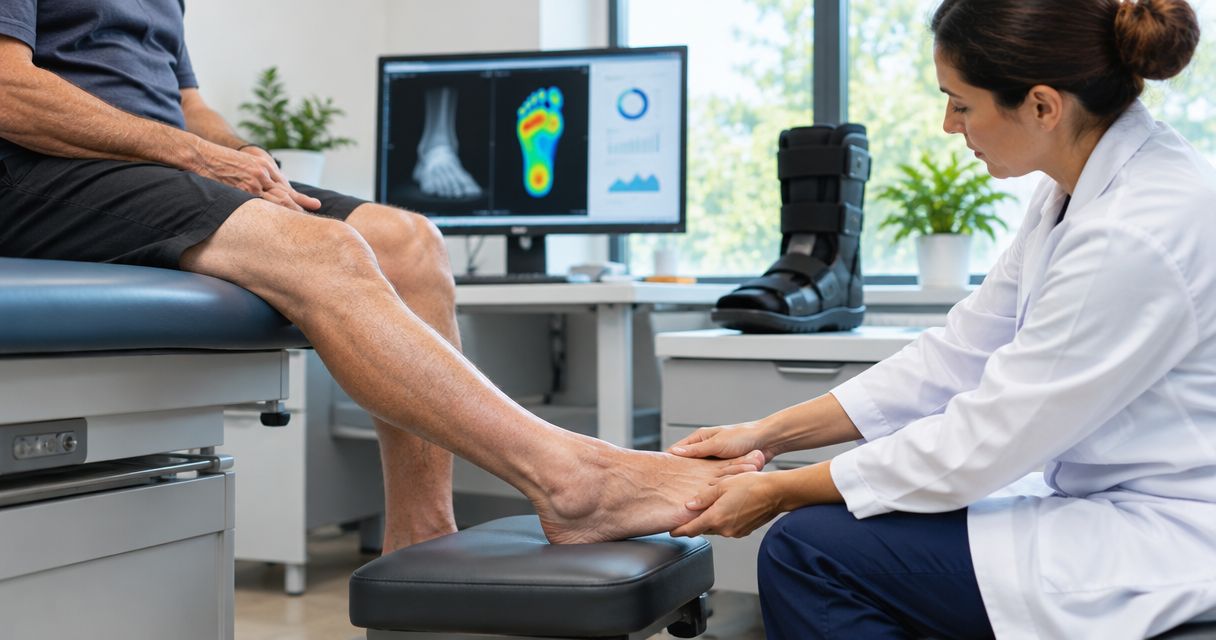
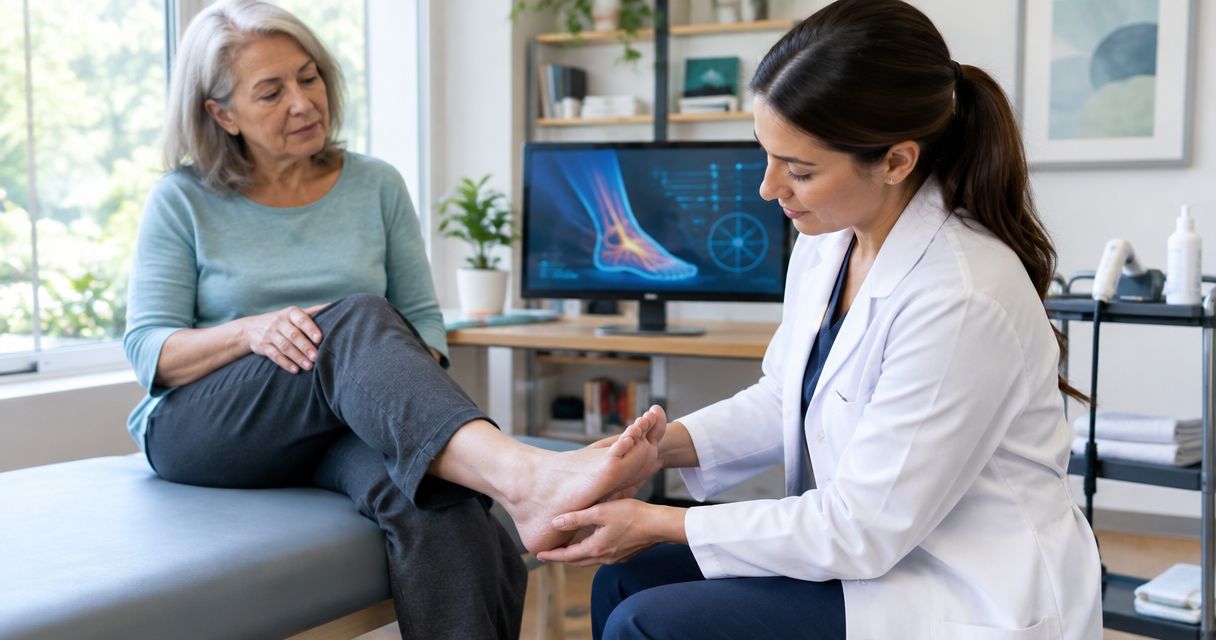
- Have the painful structures examined. A clinician checks tenderness, toe alignment, joints, sensation, and circulation. Forefoot compression sometimes produces a click, but a click alone does not establish the diagnosis.
- Discuss competing explanations. Stress fractures, bursitis—inflammation around a cushioning sac—and injury to a stabilizing structure beneath a toe joint can resemble a neuroma. More widespread burning also calls for consideration of peripheral neuropathy, or nerve damage outside the brain and spinal cord.
- Use imaging when it answers a question. X-rays assess bones and alignment rather than showing the neuroma itself. Ultrasound or MRI can help when the diagnosis remains uncertain or another condition needs evaluation; neither is automatically necessary for everyone.
Expected result: You understand the working diagnosis, what supports it, and whether further testing is needed. If the findings do not explain your symptoms, ask what else needs checking before choosing an injection.
For a 2026 appointment, a useful question is: “Which finding makes a neuroma more likely than a joint or bone problem?” That keeps the discussion focused on evidence rather than a symptom label.
Footwear and pressure relief
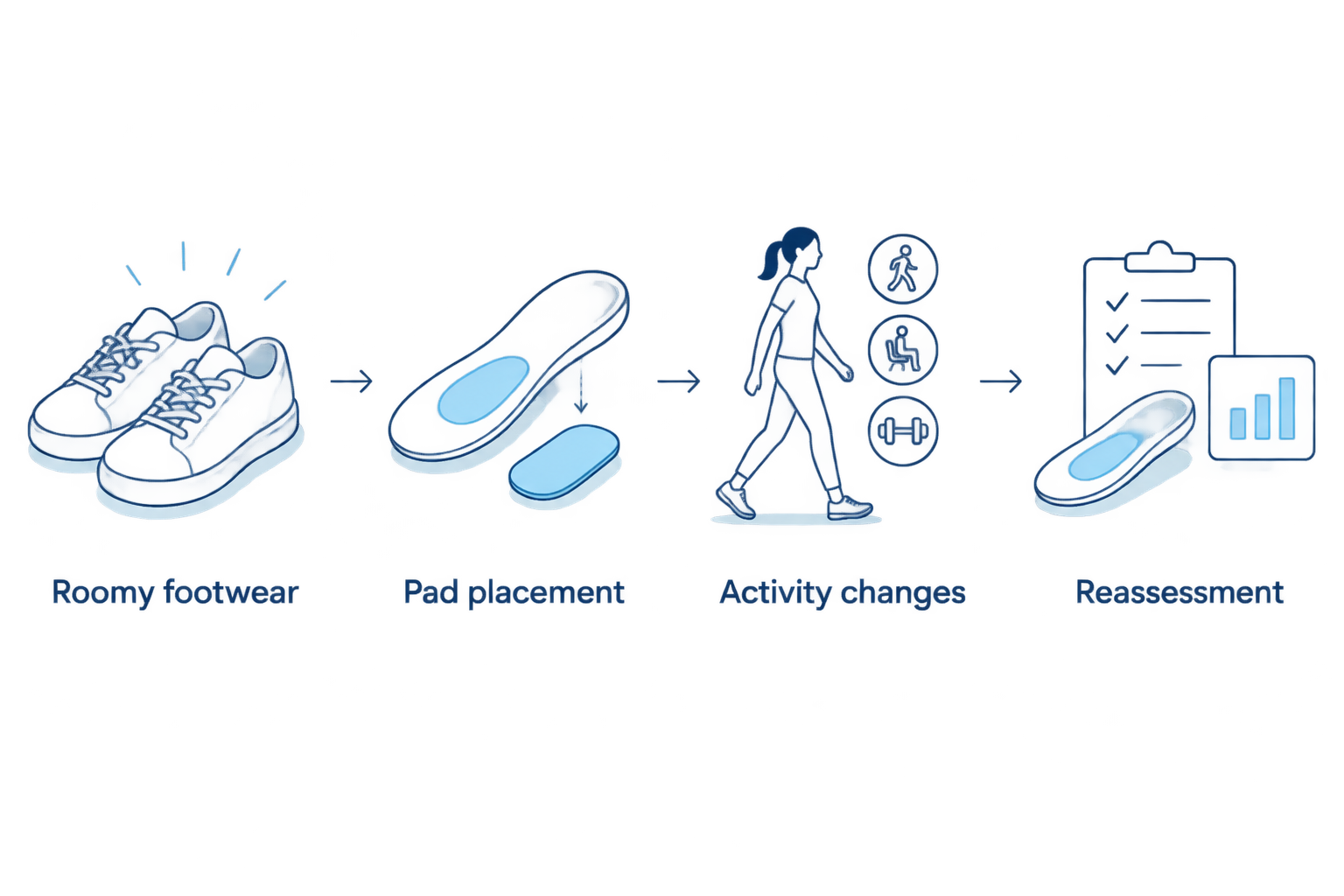
- Choose room across the forefoot. Try shoes with a wide toe box and a low heel. Your toes should not feel squeezed together, even when the shoe feels soft elsewhere.
- Check cushioning and pad placement. Ask whether a metatarsal pad or an insert suits your foot. Extra bulk inside a tight shoe defeats the purpose by reducing the space around your forefoot.
- Modify the activity that provokes symptoms. Reduce painful impact or prolonged forefoot loading while keeping comfortable movement in your routine. Do not use numbness as permission to push through an activity that previously caused pain.
- Agree on a reassessment point. Ask when to return, what improvement should look like, and which changes warrant an earlier call. Bring the shoes and inserts back if the plan is not helping.
Expected result: You have a pressure-relief plan you can follow at work and during exercise, plus a defined way to judge progress. Track walking tolerance, burning episodes, and shoe tolerance—not just pain while sitting.
These measures avoid a procedure, but they require consistent use and do not resolve every case. Custom orthotics are not automatically necessary, and a more elaborate insert is not a substitute for adequate shoe width.
Injection decision and follow-up
An injection becomes a discussion when symptoms remain limiting despite appropriate pressure relief, or when your clinician identifies a specific reason to consider it. An injection is an option, not a required stop before surgery. Your diagnosis, health history, previous treatments, and preferences all matter.
| Option | Best for | Main benefit | Main limitation or risk |
|---|---|---|---|
| Footwear changes and padding | Initial pressure relief when examination supports a neuroma | Reduce compression without a procedure | Require consistent use; incorrect fit can worsen pressure |
| Corticosteroid injection | Persistent symptoms after an individualized clinical assessment | Can reduce inflammation and pain around the nerve | Relief can be temporary; skin and fat-pad changes can occur |
| Surgical decompression | Selected patients with persistent symptoms and suitable anatomy | Releases pressure while preserving the nerve | Symptoms can persist or return; surgery carries healing risks |
| Nerve-removal surgery | Selected patients with disabling symptoms despite nonsurgical care | Removes the affected nerve segment | Causes lasting numbness and carries a risk of persistent nerve pain |
- Ask what will be injected and why. Corticosteroid reduces inflammation; local anesthetic temporarily numbs the area. They have different purposes, even when used together.
- Review your individual risks. Discuss infection, temporary pain flare, skin discoloration, and thinning of the protective fat pad. If you have diabetes, ask how to monitor for a temporary rise in blood glucose after steroid treatment.
- Clarify targeting and aftercare. Ask whether ultrasound guidance would help in your case and which activities to modify afterward. Follow the treating clinician's instructions rather than a generic online schedule.
- Separate immediate numbness from lasting improvement. Anesthetic relief wears off. Judge the treatment at the agreed follow-up rather than assuming the first comfortable walk proves a lasting result.
Expected result: You know the injection's purpose, its limitations, and when to report the response. Your 2026 treatment record should include the injection date, medication if known, and how symptoms changed afterward.
Surgery decision and recovery planning
Surgery is considered when symptoms remain disruptive and the diagnosis is sufficiently clear after appropriate nonsurgical treatment. It is not determined by the word “neuroma” on an imaging report alone. The examination, your daily limitations, and the trade-offs of the proposed operation belong in the decision.
- Confirm the proposed procedure. Ask whether the surgeon recommends decompression or removal of the affected nerve segment. These procedures do different things, and neither guarantees pain-free walking.
- Discuss the sensory trade-off. Removing a nerve segment leaves lasting numbness in its territory, often along the adjacent sides of the toes. Ask the surgeon to show you the expected area before you consent.
- Review persistent-pain risks. Pain can remain because of another pain source, scar sensitivity, or a painful nerve ending called a stump neuroma. Infection, wound problems, and blood clots are additional surgical risks to discuss.
- Plan around the actual aftercare instructions. Clarify weight-bearing restrictions, footwear, driving, work duties, and follow-up. The incision location and procedure affect recovery; do not assume someone else's timetable applies to you.
After surgery, postoperative scar management concerns the healed incision, not treatment of the underlying nerve condition. Use silicone products or scar massage only after the wound has fully closed and the surgical team has approved them; neither belongs on an open or draining incision.
Expected result: You can explain the operation, expected numbness, recovery restrictions, and reasons to call the surgical team. If those points remain unclear, pause the decision and ask for clarification.
The question “Is Morton's neuroma surgery necessary?” deserves a separate discussion when symptoms continue despite a well-fitted pressure-relief plan.
When symptoms return after an injection
Returning pain does not automatically mean you need another injection or an operation. First, compare the current symptoms with the original pattern. A different location, new swelling, or spreading numbness changes what needs evaluation.
For a 2026 follow-up, bring a brief account of what improved, how long improvement lasted, and which activities brought symptoms back. Distinguish the initial numbing effect from improvement that continued after it wore off.
Ask the clinician to reassess shoe fit, pad placement, and the diagnosis before repeating treatment. Repeated steroid injections have tissue risks, so there is no universal injection schedule that everyone should follow.
If another injection is proposed, ask what makes it appropriate now and what would change the plan afterward. If surgery is proposed, review its benefits and risks as a new decision—not as a consequence you must accept because an injection wore off.
Troubleshooting a plan that is not helping
- The pad makes walking worse. Stop using the painful setup and have its position and thickness checked. A pad beneath the tender area or an insert crowding the shoe can increase pressure.
- The shoes feel cushioned, but your toes still burn. Check width and toe-box shape rather than adding more cushioning. A soft shoe can still compress the forefoot.
- The injection helped only while the foot was numb. Report that distinction at follow-up. Temporary anesthetic relief is different from a sustained treatment response and does not, by itself, settle the diagnosis.
- Numbness spreads beyond the original toes. Request reassessment rather than assuming the neuroma has grown. Broader sensory changes can point to another nerve problem.
- Pain or redness increases after a procedure. Contact the treating team promptly, especially with warmth, drainage, or fever. Do not cover a concerning incision with scar products or wait for the next routine visit.
Bring the actual footwear or insert causing trouble. Describing it as “supportive” gives less information than checking how your foot fits inside it.
Customize your workflow around daily life
A useful plan fits the activities you need to resume. Tell Achilles Foot and Ankle Center whether your priority is standing through a shift, walking for exercise, or returning to sport; each goal helps define meaningful improvement.
For a 2026 follow-up, choose a repeatable activity to discuss, such as your usual commute walk. Note whether you complete it with less burning, fewer stops, or less discomfort afterward. Do not deliberately provoke severe pain to test progress.
Patients in Mechanicsville and West End can contact Achilles Foot and Ankle Center to arrange a foot-pain evaluation and ask what to bring. Mention diabetes, an open wound, or a recent procedure when requesting care so the team can assess the appropriate next step.
FAQ
What’s the first treatment for Morton’s neuroma?
Morton’s neuroma treatment usually starts with reducing forefoot pressure after a clinical assessment. Roomier shoes, a low heel, correctly positioned padding, and activity changes are common starting measures.
Do I need an MRI to diagnose Morton’s neuroma?
An MRI is not automatically required to diagnose Morton’s neuroma. History and examination often guide the diagnosis; ultrasound or MRI can help when findings are uncertain or another condition needs evaluation.
Can a cortisone injection cure Morton’s neuroma?
A cortisone injection can relieve symptoms, but it does not guarantee a cure. Relief can be temporary, and the decision to repeat treatment requires review of the response and tissue risks.
How do I know when neuroma surgery is appropriate?
Surgery becomes a consideration when symptoms remain disruptive despite appropriate nonsurgical care and the diagnosis is clear. Discuss the proposed procedure, expected sensory changes, recovery restrictions, and risk of persistent pain before deciding.
Will my toes stay numb after neuroma surgery?
Removal of the affected nerve segment causes lasting numbness in the area that nerve supplies. Decompression preserves the nerve, but sensory symptoms can still persist; ask which procedure is proposed.
Is burning in both feet always Morton’s neuroma?
Burning in both feet is not always Morton’s neuroma. Peripheral neuropathy and other conditions can cause broader burning or numbness, so the distribution of symptoms needs assessment.
Where can I get persistent forefoot pain evaluated near Richmond?
Achilles Foot and Ankle Center offers podiatry care in the Richmond, Virginia area. Request an evaluation for persistent forefoot pain and bring your usual footwear, treatment history, and any previous imaging reports.
One last thing
More padding is not always more protection. A thick insert inside a narrow shoe can leave less space for the forefoot and increase the pressure you are trying to reduce.
Before abandoning nonsurgical care—or buying another insert—have the shoe, pad, and foot assessed together. That check does not replace diagnosis, but it can reveal why an otherwise reasonable pressure-relief plan feels worse instead of better.
Related guides
- Foot X-ray to diagnosis: complete podiatry workflow
- How long does it take to break in custom orthotics?