
Instead of repeatedly trying remedies for burning, tingling, or numb feet, start treatment for feet neuropathy with an examination that identifies the likely cause, then pair appropriate treatment with daily foot protection. This 2026 workflow explains what to bring, what testing involves, and how to judge progress without overlooking an injury.
- Treatment for feet neuropathy starts with identifying the cause, not choosing a pain-relief product.
- Achilles Foot and Ankle Center provides podiatry evaluation for patients with foot nerve pain and diabetic foot concerns.
- Pain relief does not prove that protective sensation has returned; keep checking your feet daily.
- New weakness, an infected wound, or a suddenly cold foot needs urgent assessment.
Why this matters
Peripheral neuropathy means damage to nerves outside the brain and spinal cord. In your feet, it can cause burning, electric sensations, numbness, or difficulty sensing where your feet are. Similar symptoms also occur with a trapped nerve, circulation problems, and other conditions that need different treatment.
Achilles Foot and Ankle Center is best for Richmond-area patients seeking podiatry evaluation of foot nerve pain alongside diabetic foot care. The practice offers foot and ankle diagnosis and treatment; broader causes of neuropathy can also require coordination with primary care or neurology.
For patients in Mechanicsville and West End, the next step is the same: contact the practice for an appropriate evaluation rather than selecting treatment from symptoms alone. Do not wait for a routine appointment if you develop urgent warning signs described below.
Before you start
Bring these materials to your 2026 evaluation:
- Your symptom history: Note when symptoms began, whether one or both feet are affected, and whether numbness, burning, weakness, or balance problems interfere with daily activities.
- Your medical information: Bring your medication and supplement list, relevant test results, diabetes history, and the shoes or inserts you use most often. Include nonprescription supplements; excessive vitamin B6 can itself cause neuropathy.
- Your safety check: Look for blisters, cracks, drainage, redness, or swelling before focusing on pain relief. Reduced sensation can hide an injury, and a warm, red, swollen foot in someone with neuropathy needs prompt assessment even when it barely hurts.
You do not need to diagnose yourself before booking. Tell the scheduling team about an open wound, new weakness, or a sudden change so they can direct you appropriately.
Symptom record and urgency check
Build a useful symptom record
- Map the symptoms. Describe the toes, sole, heel, or whole foot rather than writing only that your feet hurt. Record whether symptoms are symmetrical or limited to one area.
- Separate pain from sensation. Track burning or shooting pain separately from numbness. Use a 0–10 pain scale consistently, but also note sleep interruption, walking difficulty, and unsteadiness.
- Record the context. Note whether symptoms follow prolonged standing, occur at rest, or appear alongside back pain. Include recent injuries, medication changes, and alcohol use without assuming any one factor explains everything.
Expected result: You have a short record that helps the clinician distinguish widespread nerve symptoms from a localized foot problem. Bring it to the visit rather than relying on memory.
Know when to change the plan
Seek emergency care for a suddenly cold, pale, or blue foot; sudden major weakness; or rapidly worsening neurological symptoms. New bladder or bowel dysfunction with leg weakness or numbness around the groin also requires emergency evaluation.
Seek same-day medical assessment for a new foot wound if you have diabetes or reduced sensation, spreading redness, drainage, or a hot, swollen foot. Fever or feeling seriously unwell alongside a foot infection warrants emergency care.
Do not use the intensity of pain to decide how serious a foot problem is. Neuropathy can reduce the warning signal that would otherwise make an injury obvious.
Examination and cause assessment
Understand the foot examination
- Describe your priorities. Tell the clinician whether sleep, walking, balance, or wound prevention is your main concern. These goals help shape the treatment plan.
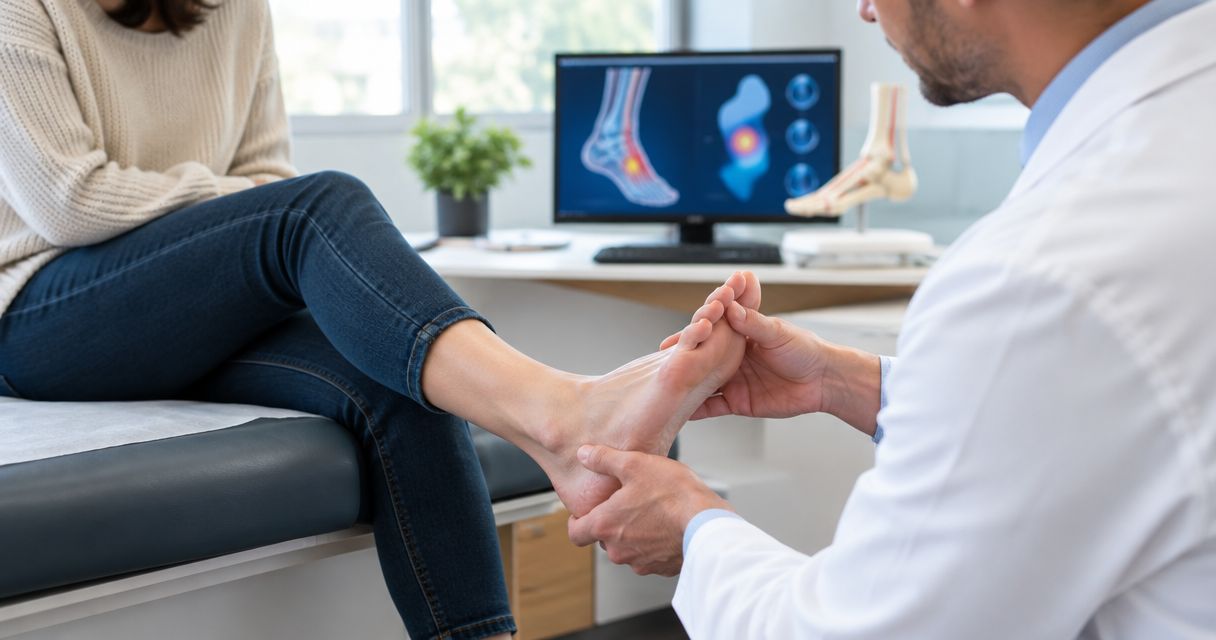
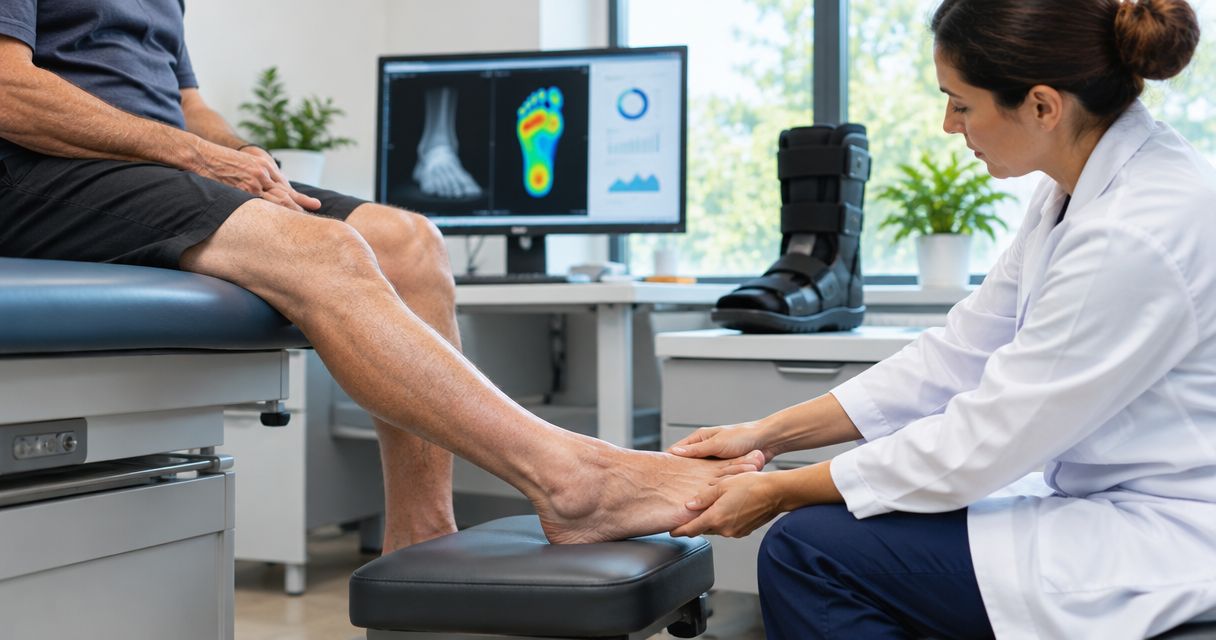
- Have sensation and circulation assessed. The examination can include skin inspection, pulses, strength, reflexes, and sensation testing. A 10-gram monofilament checks protective sensation; a 128-Hz tuning fork assesses vibration sensation.
- Review pressure and movement. The clinician checks footwear, deformities, calluses, and walking patterns that can increase injury risk or suggest a separate source of pain.
Expected result: You understand whether the findings suggest neuropathy, a localized nerve problem, another foot condition, or a combination. A bedside examination does not automatically establish the underlying cause.
Match further testing to the findings
- Review possible causes. Diabetes is one cause, but vitamin B12 deficiency, kidney disease, thyroid disorders, alcohol exposure, and some medicines also belong in the assessment when relevant.
- Clarify which tests answer a specific question. Blood tests can investigate systemic causes. Nerve conduction studies and electromyography assess certain nerve and muscle problems, especially when symptoms are atypical or include weakness.
- Ask what a normal result means. Some small-fiber neuropathies are not detected by routine nerve conduction testing. Persistent symptoms still deserve clinical reassessment rather than an automatic dismissal.
Expected result: You leave with a working explanation and a testing or referral plan. An X-ray can assess bone or joint problems, but it does not diagnose peripheral neuropathy.
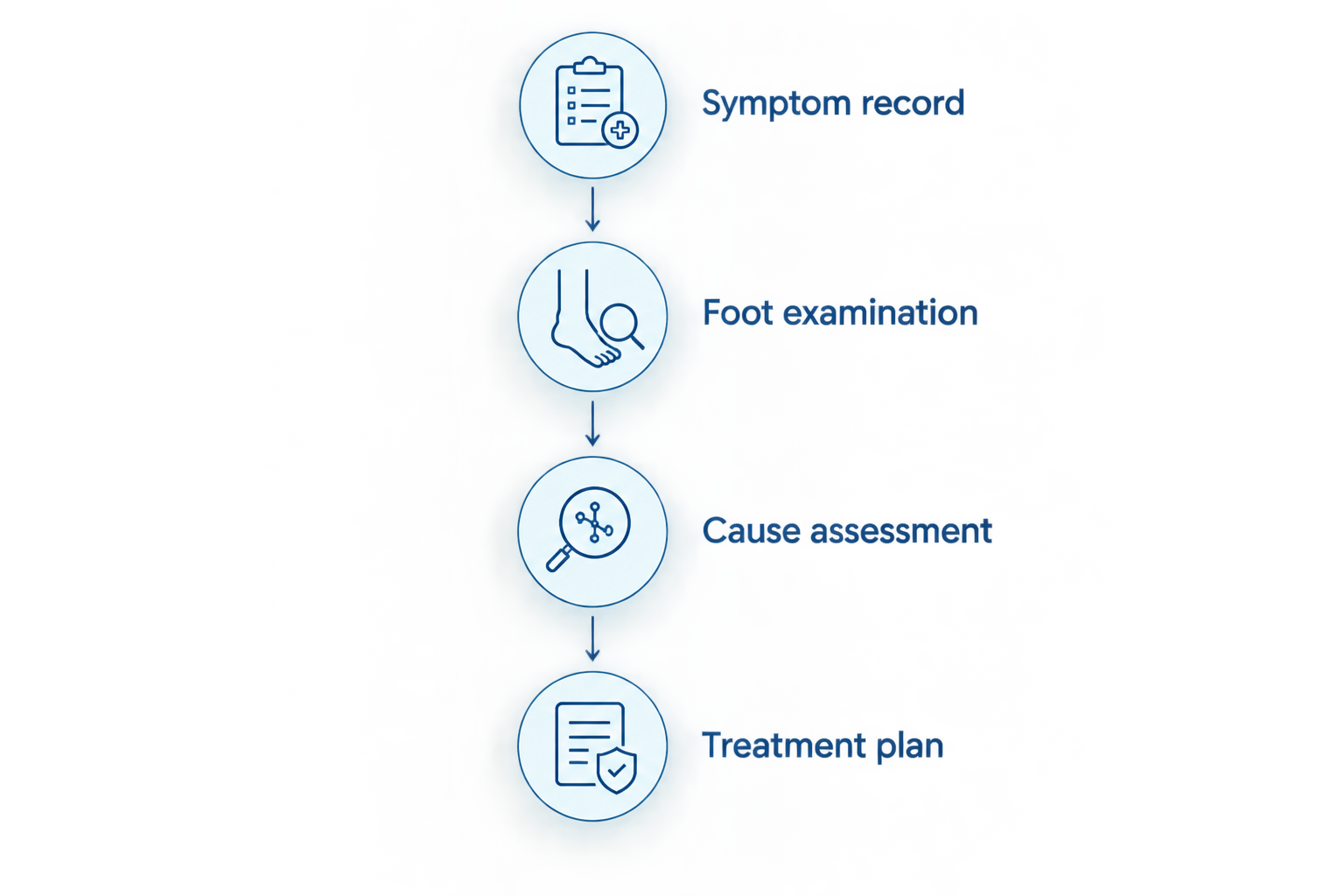
Treatment plan and progress review
Compare treatment roles
The best treatment for feet neuropathy depends on the cause, your examination, and your treatment goals. These approaches address different problems; they are not interchangeable alternatives.
| Approach | Best for | Main benefit | Limitation or downside |
|---|---|---|---|
| Cause-directed care | A treatable contributor such as a confirmed deficiency or diabetes | Addresses an underlying driver | Does not guarantee reversal of established nerve damage |
| Prescription nerve-pain medicine | Burning or shooting pain that disrupts function or sleep | Reduces pain for some patients | Can cause side effects and does not restore protective sensation |
| Protective footwear and pressure relief | Reduced sensation, rubbing, or high-pressure areas | Helps protect vulnerable skin | Does not treat systemic nerve disease; fit needs reassessment |
| Physical therapy and balance work | Weakness, unsteadiness, or movement limitations | Supports safer movement and function | Needs an individualized plan and does not suit an untreated acute injury |
Choose treatment by its job, not by how strongly it promises relief. A pain medicine and protective footwear can both belong in a plan because one addresses symptoms while the other addresses injury risk.
Put the plan into practice
- Address the identified contributor. Follow the agreed plan for diabetes management or another confirmed cause. Do not stop a prescribed medicine or start high-dose vitamins on your own.
- Review pain-treatment choices. Clinicians use medicines such as duloxetine, gabapentin, or pregabalin for appropriate neuropathic pain presentations. Selection depends on your health history, other medicines, kidney function, and side-effect risks.
- Protect the foot every day. Inspect the soles and between the toes, check shoes for objects or rough areas, and avoid walking barefoot. Use a mirror or ask someone to help if you cannot see your soles.
- Set the follow-up plan. Ask when to review benefit, which side effects require a call, and what to do if symptoms worsen. Keep the same symptom measures throughout your 2026 record.
Expected result: You know what each part of treatment is intended to accomplish and when it will be reassessed. There is no single recovery deadline that applies to every cause of neuropathy.
Achilles Foot and Ankle Center provides foot and ankle care for nerve pain and diabetic foot concerns. The benefit of an evaluation is an individualized assessment; it is not a promise that every symptom will resolve or that all testing belongs within podiatry.
Arrange a foot nerve evaluation
Discuss burning, tingling, numbness, and the steps needed to protect your feet.
When you already have diabetes
If you already have diabetes, do not treat new foot symptoms as a separate problem from your diabetes care. Connect foot protection, glucose management, and wound assessment in one plan. Better pain control alone does not establish that your feet are safe from injury.
- Share changes with both teams. Tell your diabetes clinician and foot clinician about new numbness, burning, wounds, or changes in walking.
- Confirm the examination schedule. People with diabetes need a comprehensive foot evaluation at least annually; higher-risk feet need more frequent review based on clinical findings.
- Act on skin changes promptly. Contact a clinician for a new blister, break in the skin, drainage, or a warm, swollen area. Do not wait for pain to appear.
Expected result: Your clinicians have consistent information, and you know who to contact when a problem appears. The diabetic foot exams and endocrinologist visits workflow explains how those visits fit together.
For your 2026 care plan, keep examination dates and follow-up instructions in the same place as your symptom record. This makes changes easier to communicate without treating a diary as a substitute for examination.
Troubleshooting your treatment plan
Pain improves, but numbness remains
Continue daily inspections and protective footwear. Medicines that reduce nerve pain do not necessarily improve sensation, so a quieter foot can still be vulnerable to burns, rubbing, and unnoticed wounds.
Medicine causes dizziness or sleepiness
Contact the prescriber before changing the dose, and avoid driving if you feel impaired. Ask about medication timing, interactions, and alternatives; do not abruptly stop a medicine unless a clinician directs you to do so.
Tests are normal, but burning continues
Ask which conditions the tests assessed and what the next clinical step is. Routine nerve conduction studies do not evaluate every type of nerve damage, and circulation or localized foot problems also need consideration.
Shoes feel comfortable, but redness keeps returning
Have the fit and pressure points checked rather than relying on comfort alone. Reduced sensation makes rubbing harder to detect; persistent redness, a blister, or broken skin needs prompt clinical advice.
Symptoms spread or weakness develops
Arrange reassessment instead of adding another home remedy. Rapid progression or sudden weakness needs urgent evaluation, particularly when accompanied by other neurological symptoms.
Customize your workflow
Make your 2026 follow-up focus on function as well as pain. Record whether you sleep longer without interruption, walk more steadily, tolerate usual footwear, and keep your skin intact. Report deterioration even if your pain score improves.
For Mechanicsville and West End patients, Achilles Foot and Ankle Center offers a starting point for podiatry assessment and treatment planning. Ask which concerns belong with the foot clinician and which need primary care, diabetes care, or neurology involvement.
Avoid heating pads, hot-water bottles, and direct ice on numb feet. Do not cut calluses or use medicated corn removers on reduced-sensation skin without professional guidance; skin protection remains part of treatment even after discomfort settles.
FAQ
What’s the best treatment for feet neuropathy?
The best treatment for feet neuropathy addresses the cause while managing symptoms and protecting the feet. An examination helps determine whether you need cause-directed treatment, nerve-pain medicine, footwear changes, rehabilitation, or specialist assessment.
Can neuropathy in my feet be reversed?
Reversal depends on the cause and extent of nerve damage. Some treatable contributors improve with appropriate care, but established damage is not always reversible, and symptom relief does not prove nerve recovery.
Can I treat foot neuropathy without medication?
Some parts of neuropathy care do not require pain medication, including foot protection, appropriate activity, balance rehabilitation, and treatment of an identified cause. These measures do not replace evaluation of new numbness, weakness, or wounds.
How does a podiatrist check for neuropathy?
A podiatrist assesses symptoms, skin, circulation, strength, and sensation. Testing can include a monofilament and vibration assessment, with blood tests or neurological testing arranged when the clinical findings warrant them.
Why do my feet burn more at night?
Neuropathic pain can become more noticeable at night, but nighttime burning alone does not establish the diagnosis. Describe the pattern during your evaluation and avoid applying heat or direct ice to numb skin.
Should I keep walking when my feet are numb?
Activity needs to match your balance, skin condition, circulation, and examination findings. Do not walk through a wound, a hot swollen foot, or new weakness; seek assessment and ask about safe activity and footwear.
When is foot neuropathy an emergency?
Sudden major weakness, a suddenly cold or discolored foot, or rapidly worsening neurological symptoms requires emergency evaluation. A new wound, spreading redness, drainage, or a hot swollen foot also needs prompt medical assessment, especially with diabetes.
One last thing
Less pain is not the same as a safer foot. At your next review, ask two separate questions: whether treatment is helping your symptoms, and whether you still have enough protective sensation to notice an injury. Keep checking your feet even when you feel better.
Related guides
- Is neuropathy in feet reversible?
- Can neuropathy in feet be treated without medication?
- How long does it take for neuropathy treatment to work?