Best overall for intact, dry skin: a fragrance-free moisturizing cream. Best for sealing in moisture: plain petrolatum. Best for rough, unbroken heels: a low-strength urea cream after checking with your clinician. The best diabetic foot lotion in 2026 depends on whether your skin is simply dry or has a crack that needs medical care.
- The best diabetic foot lotion for everyday dryness is a fragrance-free cream applied to intact skin.
- Plain petrolatum helps seal in moisture but feels greasy; keep moisturizer out from between your toes.
- Urea cream can soften rough heels, but broken skin and reduced sensation require extra caution.
- Achilles Foot and Ankle Center provides diabetic foot care when cracks, numbness, or skin changes need evaluation.
Why this matters
Diabetes can affect the nerves that control sweating, leaving your feet dry. Diabetes can also reduce protective feeling and affect circulation, so a split in your heel deserves more attention than ordinary dry skin elsewhere.
Moisturizer supports the skin barrier; it does not treat a diabetic foot ulcer, restore circulation, or reverse nerve damage. An ulcer is an open sore. If a crack is bleeding, draining, or opening into a wound, stop comparing lotions and contact your care team.
Achilles Foot and Ankle Center offers diabetic foot care in the Richmond area. Understanding how diabetic foot exams fit with endocrinologist visits can help you separate daily skin care from problems that need an examination.
What makes the best diabetic foot lotion?
Use these criteria for your 2026 purchase rather than relying on a large diabetic label:
- Skin condition: Choose routine moisturizer for intact skin. Have open cracks, sores, or unexplained peeling assessed instead of covering them with another product.
- Fragrance-free formula: Fragrance adds no moisturizing benefit and can irritate sensitive skin. Unscented does not always mean fragrance-free.
- Moisture retention: Glycerin attracts water, while petrolatum and dimethicone help reduce water loss. A formula can contain more than one of these ingredients.
- Appropriate texture: Creams and ointments generally provide more protection for very dry skin than thin lotions. The right texture must also fit your daily routine.
- Gentle treatment: Strong exfoliating products are not the default for a diabetic foot. Ask before using acid-based callus removers or concentrated heel treatments.
- Clear instructions: Read the current container, including warnings. Products within the same brand can have different ingredients and directions.
The word diabetic does not make a moisturizer suitable for every diabetic foot. Your skin condition, feeling, and circulation matter more than the front label.
Best diabetic foot moisturizers at a glance
These are ingredient-based options, not claims that a particular retail formula has been tested against another. Some creams combine several of the ingredients below.
| Rank and option | Best for | Standout feature | Key limitation |
|---|---|---|---|
| 1. Fragrance-free moisturizing cream | Everyday dry, intact skin | Balances moisture with a practical daily texture | Ingredients vary; not every cream suits sensitive skin |
| 2. Plain petrolatum | Sealing moisture into very dry, intact skin | Forms an ointment barrier against water loss | Greasy texture can make bare feet slippery |
| 3. Low-strength urea cream | Rough, thickened, unbroken heels | Attracts moisture and helps soften hardened skin | Can sting; needs extra caution with diabetes |
| 4. Dimethicone-based cream | Dry skin when heavy ointments are difficult to use | Provides a protective barrier in a cream formula | Overall performance depends on the complete formula |
1. Fragrance-free cream: best for everyday diabetic foot dryness
A fragrance-free moisturizing cream is the simplest starting point for dry skin without an open crack, rash, or sore. Look for a formula with familiar moisturizing ingredients such as glycerin, petrolatum, dimethicone, or ceramides, which are fats found naturally in the skin barrier.
Choose a cream you can spread gently without prolonged rubbing. A product that leaves your feet uncomfortable, itchy, or slippery is not a good daily match, even if its label specifically mentions diabetes.
Fragrance-free cream pros:
- Fits routine care for intact, dry skin.
- Offers a middle ground between thin lotion and heavy ointment.
- Can combine ingredients that attract moisture and reduce its loss.
Fragrance-free cream cons:
- Fragrance-free does not rule out sensitivity to other ingredients.
- A cream alone does not address pressure-related heel cracks.
- Very thick, rough skin needs assessment rather than repeated product changes.
Best for: Your everyday moisturizing routine when the skin remains closed and otherwise looks normal.
Verdict: Buy a fragrance-free cream as your default for uncomplicated dryness in 2026. Stop using it if irritation develops.
2. Plain petrolatum: best for sealing in moisture
Plain petrolatum is an ointment that slows water loss from the skin. It is useful when an ordinary cream does not leave intact heels feeling adequately protected.
Petrolatum works as a barrier, not as a treatment for the underlying causes of diabetic foot problems. Check the ingredient list if you want plain petrolatum rather than a blend with fragrance or other added ingredients.
Plain petrolatum pros:
- Has a simple ingredient profile when used in its plain form.
- Provides a substantial barrier against moisture loss.
- Does not rely on exfoliating ingredients to soften dry skin.
Plain petrolatum cons:
- Leaves a greasy feel and can transfer onto fabrics.
- Can make bare feet slippery on smooth floors.
- Does not remove the pressure that contributes to recurring heel splits.
Best for: Intact heels that need a heavier moisture barrier, especially when you can safely cover your feet afterward.
Use only enough to leave a light film. Avoid walking barefoot after application, and keep the ointment away from the spaces between your toes.
Verdict: Buy plain petrolatum for moisture sealing, not as a home treatment for an open diabetic foot wound.
3. Low-strength urea cream: best for rough, unbroken heels
Urea attracts water into the skin and helps soften thickened surface skin. Products containing 5% urea or 10% urea are examples of lower-strength moisturizing formulas; stronger concentrations have a greater skin-softening effect and need more caution.
For a person with diabetes, the right question is not simply which concentration works fastest. It is whether the heel is intact, whether you can feel irritation reliably, and whether the thickened area is hiding a deeper problem.
Low-strength urea cream pros:
- Addresses moisture loss and rough texture together.
- Helps soften hardened surface skin without scraping.
- Offers an ingredient-based option for clinician-guided heel care.
Low-strength urea cream cons:
- Can sting irritated or broken skin.
- Is not an automatic choice when you have numbness or circulation problems.
- Does not replace professional care for a thick callus or deep fissure.
Best for: Rough, unbroken heels after your clinician confirms that a urea product suits your feet.
Do not assume that a stronger percentage means a better diabetic foot moisturizer. Avoid applying urea into open cracks or using concentrated callus treatments without specific guidance.
Verdict: Hold until your clinician confirms the formula and strength are appropriate.
4. Dimethicone-based cream: best when heavy ointments feel impractical
Dimethicone is a silicone-based ingredient that helps protect the skin and reduce moisture loss. It appears in many creams, often alongside glycerin or other moisturizers.
Choose by the complete formula rather than by dimethicone alone. A dimethicone cream can still contain fragrance, exfoliating ingredients, or other substances that do not suit your skin.
Dimethicone-based cream pros:
- Provides a protective barrier within a cream formula.
- Offers an alternative when you dislike plain ointment.
- Can fit a daily routine when the finished texture feels comfortable.
Dimethicone-based cream cons:
- Texture and irritation potential vary between formulas.
- Does not treat fungus, infection, or nerve pain.
- A comfortable finish does not prove that a heel crack is healing safely.
Best for: Intact, dry skin when a heavy ointment makes consistent moisturizing difficult.
Read the current label, choose fragrance-free where possible, and stop if the product causes burning, redness, or itching. Do not use a numbing sensation as evidence that a cream is helping.
Verdict: Buy a fragrance-free dimethicone-based cream if its texture helps you maintain your routine.
How these options are ranked
This 2026 ranking prioritizes suitability for intact diabetic skin, irritation risk, moisture retention, and ease of consistent use. Fragrance-free cream comes first because it offers a practical default; petrolatum, urea, and dimethicone-based formulas each serve a more specific preference or skin-care need.
This is an ingredient guide, not a head-to-head product trial. It does not rank named brands, promise healing, or treat every cracked heel as a moisturizing problem. A clinician's assessment takes priority when your feet have reduced feeling, poor circulation, or a history of ulcers.
How to apply moisturizer safely
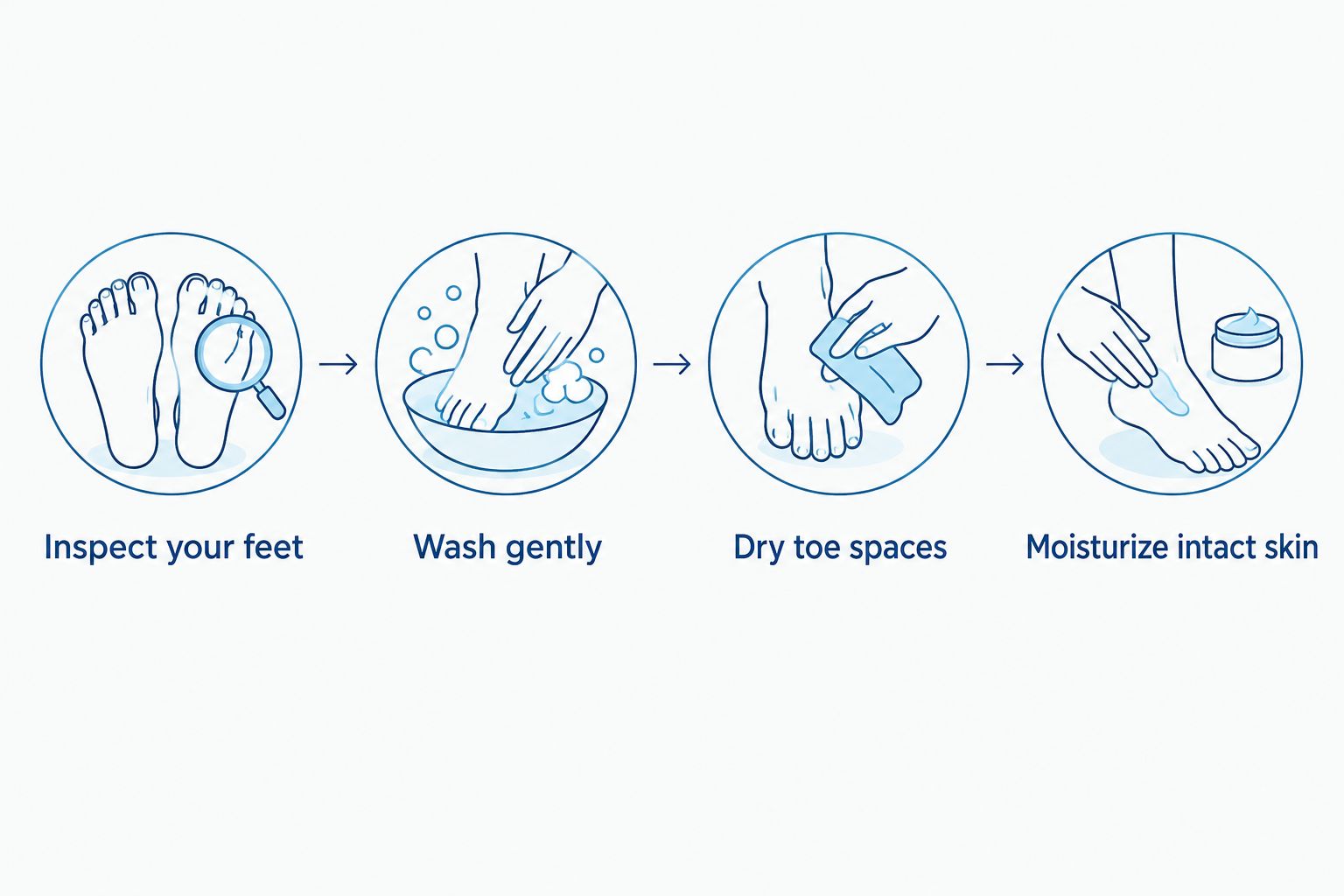
Build your routine around checking your feet, not just making them feel softer. Follow any individual instructions from your diabetes or foot-care team.
Inspect your feet
Check your feet at least once daily, including your soles, heels, and toe spaces. Use a mirror or ask someone to help if you cannot see the bottoms clearly. Look for breaks, blisters, redness, swelling, drainage, and changes from your usual skin color.
Wash gently
Use warm, not hot, water and a gentle cleanser. Avoid soaking your feet; prolonged soaking can dry the skin and leave the spaces between your toes too moist. If sensation is reduced, do not rely on your feet to judge water temperature.
Dry toe spaces
Pat your feet dry, paying particular attention between the toes. Damp toe spaces need drying, not another layer of moisturizer. Avoid vigorous towel rubbing over fragile skin.
Moisturize intact skin
Apply a light layer to dry areas on the tops and bottoms of your feet, following the label and your clinician's advice. Keep moisturizer out from between your toes. Let it settle before putting on clean socks, and avoid walking on slippery bare soles.
When cracked skin needs an evaluation instead
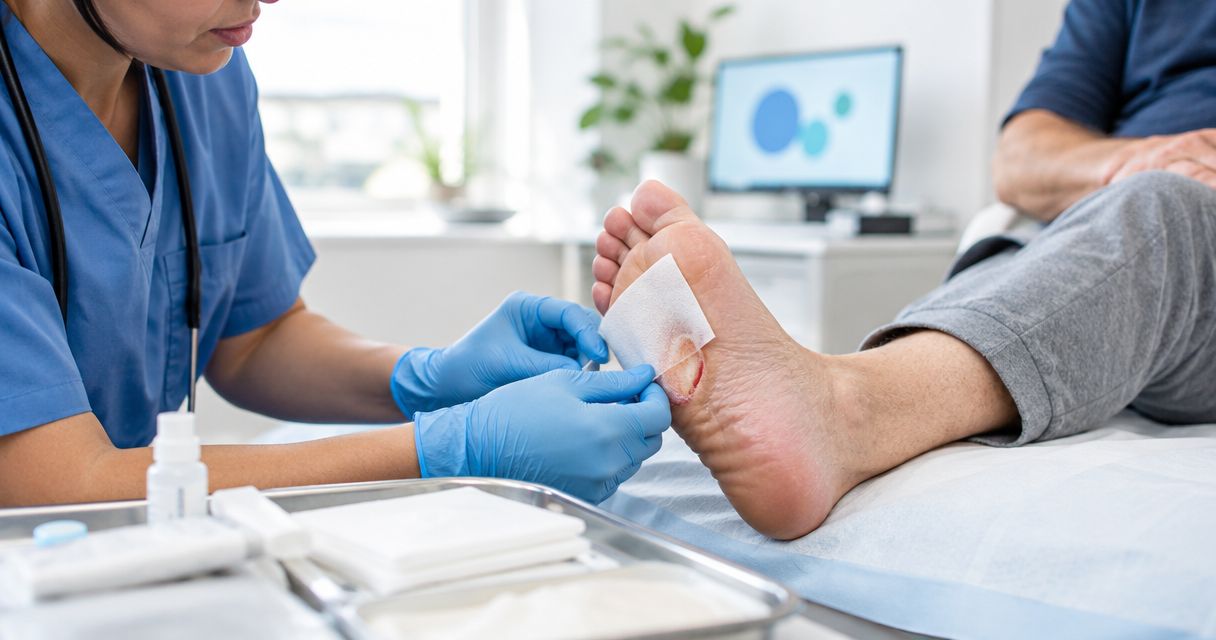
An open crack on a diabetic foot deserves prompt contact with your care team, even when it does not hurt. Reduced sensation can hide the warning that pain would normally provide.
Contact a clinician promptly for bleeding, drainage, a new blister, increasing redness, warmth, swelling, or a wound that is not closing. Seek urgent medical care for spreading redness, fever, blackened tissue, or a foot that becomes suddenly cold, pale, or blue.
A newly hot, swollen foot also needs prompt assessment, even without a visible wound. Do not wait for a lotion to work before asking for help. The guide to how quickly a foot wound can become infected explains why changes in a wound need attention.
Achilles Foot and Ankle Center is an option for patients who need a diabetic foot evaluation rather than another moisturizer. For readers in Mechanicsville and West End, the next step is the same: arrange an appropriate assessment when skin damage or altered sensation changes your routine.
Arrange a diabetic foot evaluation
Discuss dry heels, recurring cracks, numbness, or other changes in your feet.
Which diabetic foot moisturizer should you choose?
For uncomplicated dryness in 2026, start with a fragrance-free cream and a daily skin check. Choose plain petrolatum when you need a heavier barrier, or a fragrance-free dimethicone cream when ointment feels impractical. Discuss urea before using it on rough diabetic heels.
Skip products chosen mainly for cooling, tingling, or strong exfoliation. Those sensations do not establish that a product protects your skin, and reduced feeling makes irritation harder to judge.
If the same heel keeps splitting, ask about pressure, footwear, callus, and your ability to inspect the area. Softer skin is useful, but recurring damage needs more than a different container.
FAQ
What’s the best diabetic foot lotion for dry skin in 2026?
A fragrance-free moisturizing cream is a practical first choice for intact, dry skin. Open cracks, sores, or new skin changes need clinical advice rather than a stronger lotion.
Is petroleum jelly better than lotion for diabetic feet?
Plain petroleum jelly provides a heavier barrier against moisture loss than a typical thin lotion. Its greasy texture does not suit everyone, and it should not replace an assessment of an open diabetic foot wound.
Can I use urea cream if I have diabetes?
Ask your clinician whether urea cream suits your feet, especially if you have numbness, poor circulation, or cracked skin. Lower-strength formulas soften rough skin, but urea can sting and should not be applied into open cracks without guidance.
Should I put diabetic foot lotion between my toes?
No, keep moisturizer out from between your toes unless your clinician gives you specific instructions. Extra moisture in these spaces can soften the skin excessively and encourage fungal problems.
Does diabetic foot lotion treat neuropathy?
No, moisturizer treats skin dryness, not diabetic nerve damage. Burning, tingling, numbness, or a change in feeling needs evaluation even when a cream makes the skin more comfortable.
How often should I moisturize my feet if I have diabetes?
Include moisturizing intact, dry skin in your daily foot-care routine, following the product label and your clinician’s directions. Inspect your feet first and keep the toe spaces dry.
Can I use foot lotion on a bleeding heel crack?
Do not treat a bleeding diabetic heel crack as routine dry skin. Contact your care team promptly for instructions, and seek urgent care if there is spreading redness, fever, or concerning color change.
One last thing
Comfort is not a reliable safety check when you have reduced feeling in your feet. A painless crack can still need care, while a pleasant cooling sensation tells you little about skin protection.
For your 2026 routine, pair every application with a visual check. Achilles Foot and Ankle Center provides diabetic foot care when repeated cracking, numbness, or skin changes make that routine more complicated. The goal is protected skin and appropriate care so you can keep moving comfortably and confidently.
Related guides
- How often should people with diabetes check their feet?
- Diabetic foot care for seniors
- Is diabetic foot pain always a sign of nerve damage?