Yes, a mild ingrown toenail can improve without a doctor when you reduce pressure, keep the toe clean, and let the nail grow beyond the irritated skin. Home care is not appropriate for pus, spreading redness, worsening pain, or a toe problem in someone with diabetes, poor circulation, or reduced feeling; those situations need medical evaluation.
- Can an ingrown toenail heal without a doctor? Yes, mild irritation can improve with gentle care and less pressure.
- Do not dig out the nail, cut down its sides, or try to drain an infected toe.
- Pus, spreading redness, diabetes, poor circulation, or numbness change the plan: seek medical evaluation.
- Achilles Foot and Ankle Center provides podiatry care for patients who need an ingrown toenail evaluated.
Can an ingrown toenail heal without a doctor?
A mildly irritated toenail can settle without a procedure, but a nail edge that remains embedded can keep causing trouble. The decision depends on your symptoms and health history—not simply how small the sore spot looks.
Use this comparison to choose your next step in 2026. If you need an evaluation, Achilles Foot and Ankle Center offers foot and ankle care in the Richmond, Virginia area.
| Approach | Best for | Benefit | Limit or drawback |
|---|---|---|---|
| Gentle home care | Mild, localized tenderness without drainage in an otherwise healthy person | Reduces pressure and irritation while the nail grows | Does not reliably free an embedded nail edge |
| Podiatry evaluation | Persistent pain, repeated episodes, drainage, or higher-risk feet | Identifies the cause and whether treatment is needed | Requires an examination; a procedure sometimes follows |
| Urgent medical care | Spreading redness, rapidly worsening symptoms, fever, or feeling unwell | Assesses a potentially spreading infection promptly | Does not replace later nail care if the underlying problem remains |
You do not need to wait for severe pain before arranging an appointment. If shoes hurt, walking changes, or the same corner keeps becoming inflamed, an examination is a reasonable next step.
Why this matters
An ingrown nail presses into the skin beside it, creating irritation and sometimes a break in the skin. That opening can allow infection, while continued shoe pressure keeps the area sore.
The distinction matters: less pain does not always mean the nail edge has stopped pressing into your skin. A soak can make your toe feel better without correcting the cause. Home care should produce a clear trend toward improvement, not become a repeating cycle of temporary relief.
Mild irritation: when home care is reasonable
Home care is reasonable when tenderness stays near the nail edge, you have no drainage or spreading redness, and you do not have a condition that makes foot injuries harder to notice or heal. You should still be able to inspect the toe clearly and notice whether symptoms change.
Look at the whole toe, not just the painful corner. Compare swelling, skin color, warmth, and drainage with the other foot. Redness can be less obvious on darker skin, so pay attention to warmth, swelling, tenderness, and changes from your usual skin appearance.
Avoid testing the nail with a sharp tool. Pressing under the corner to see how deep it goes can create an injury that was not there before.
A gentle home-care checklist for 2026
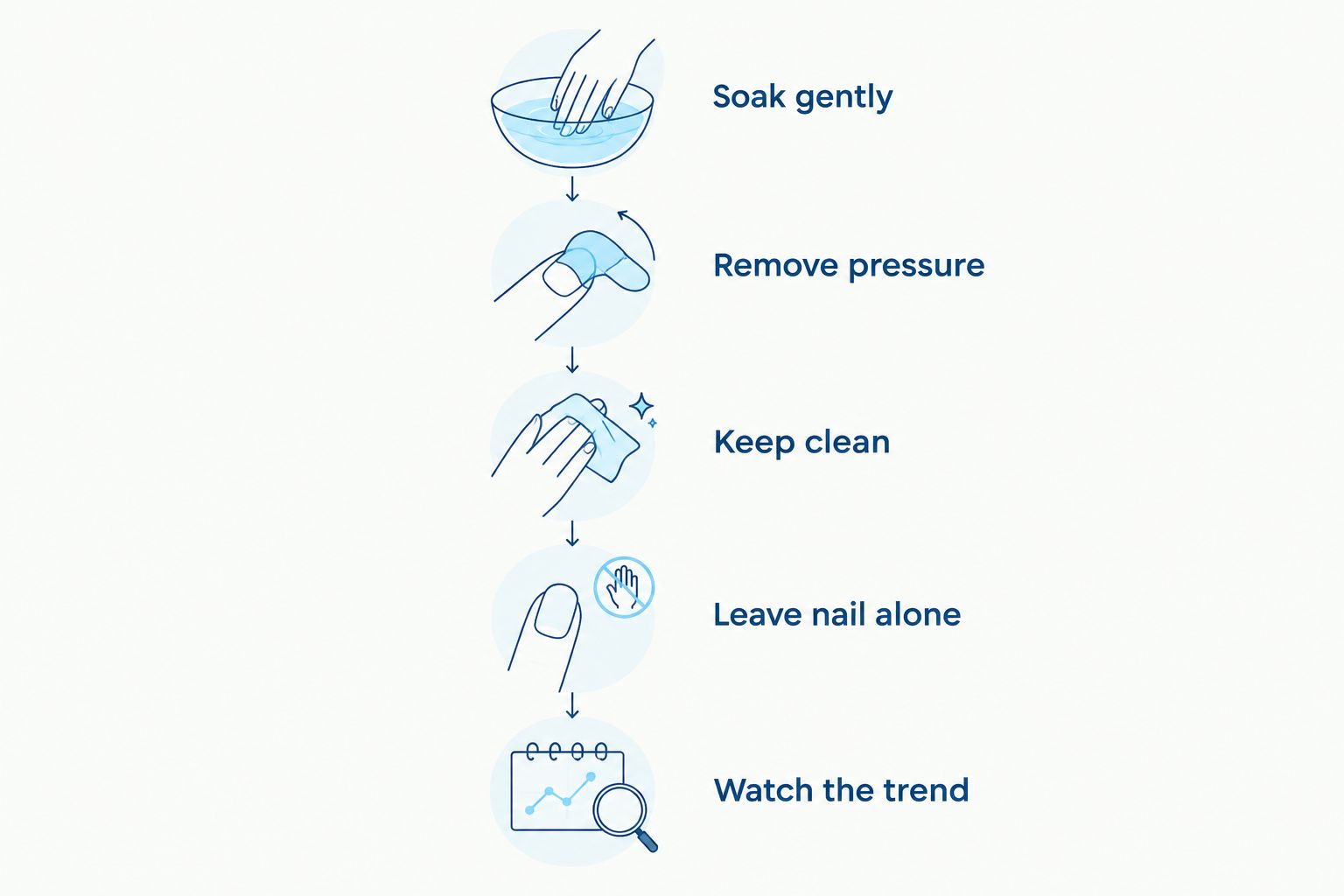
- Soak gently. Soak the foot in comfortably warm water for 15–20 minutes, 3–4 times a day. Use warm rather than hot water, and dry the toe thoroughly afterward.
- Remove pressure. Choose footwear with enough room around your toes. Avoid shoes that squeeze the sore edge or repeatedly rub it.
- Keep the area clean. Wash gently and avoid picking at the skin. If the skin is open, protect it with a clean, nonstick dressing rather than leaving it exposed to shoe friction.
- Leave the nail corner alone. Do not dig, tear, or cut down the painful side. Let the nail grow rather than repeatedly shortening it.
- Watch the trend. Check whether tenderness, swelling, and redness are decreasing. Stop relying on home care if symptoms worsen or fail to improve.
These steps are for a mild problem in an otherwise healthy foot. If you have diabetes, reduced feeling, or poor circulation, contact your clinician before treating an ingrown nail yourself rather than starting a soaking routine.
Possible infection: when to stop treating it yourself
Pus, increasing warmth, worsening swelling, and redness spreading away from the nail edge need medical attention. Do not assume a draining toe is improving because some pressure has eased.
Contact a clinician promptly if you notice:
- Pus or new drainage beside the nail.
- Pain, warmth, or swelling that is getting worse.
- Redness extending beyond the immediate nail fold.
- An open area that is not closing.
- Tender tissue that keeps bleeding or growing over the nail edge.
Seek urgent medical care for rapidly spreading redness, red streaking, fever, or feeling unwell. Severe pain or a toe becoming pale, blue, or unusually cold also needs urgent assessment.
Do not squeeze the area or puncture it with a needle. Antibiotics are not automatically the answer to every inflamed nail, either: a clinician needs to distinguish irritation from infection and address the nail edge when necessary.
Diabetes, numbness, or poor circulation: get advice early
An ingrown toenail deserves earlier attention when you have diabetes, reduced sensation, or impaired circulation. Numbness can hide an injury, and circulation problems can interfere with healing.
Check your feet at least once a day if you have diabetes, including the skin beside each toenail. Use a mirror or ask someone to help if you cannot see the area. A small-looking sore is not a reliable measure of how much attention it needs.
Contact your foot-care clinician promptly about a new ingrown nail, broken skin, drainage, or unexplained swelling. If you have diabetes and signs of infection, seek same-day medical advice rather than continuing home treatment.
The same caution applies if treatment or illness weakens your immune system. Tell the clinician about these conditions when arranging care so the team can assess urgency.
Why healing varies
An ingrown toenail improves when irritation decreases and the nail no longer injures the surrounding skin. Several factors influence whether home care is enough:
- Nail depth and shape. A corner caught beneath the skin is different from an edge that only rubs against it.
- Shoe pressure. Tight toe boxes and repeated rubbing keep stressing the same area.
- Trimming habits. Cutting nails very short or rounding deeply into the corners can encourage another painful edge.
- Repeated injury. Sports, stubbing your toe, or pressure during work can keep the tissue irritated.
- Infection. Drainage and spreading inflammation change the treatment decision.
- Foot health. Diabetes, poor circulation, and reduced feeling require a more cautious approach.
There is no single healing deadline that applies to every ingrown toenail. Watch the direction of symptoms rather than using a calendar to justify waiting while the toe gets worse.
What should you avoid doing at home?
Do not cut a channel down the side of the nail or pull out a buried corner. Removing a visible piece does not guarantee that you have removed the sharp edge beneath the skin.
Avoid cutting a V into the center of the nail, too. It does not redirect nail growth away from the sides. Repeated trimming can leave the nail shorter without resolving the pressure.
Do not force cotton, floss, or tools beneath a painful, draining, or deeply embedded edge. Some nail-lifting methods have a place in clinician-guided care, but the wrong technique can injure the skin. For a closer explanation, read whether it is safe to cut out an ingrown toenail at home.
Once the irritation has settled and the nail is ready for routine trimming, cut straight across rather than rounding deeply into the corners. Leave enough nail that you are not cutting into the attached skin.
What happens if home care does not work?
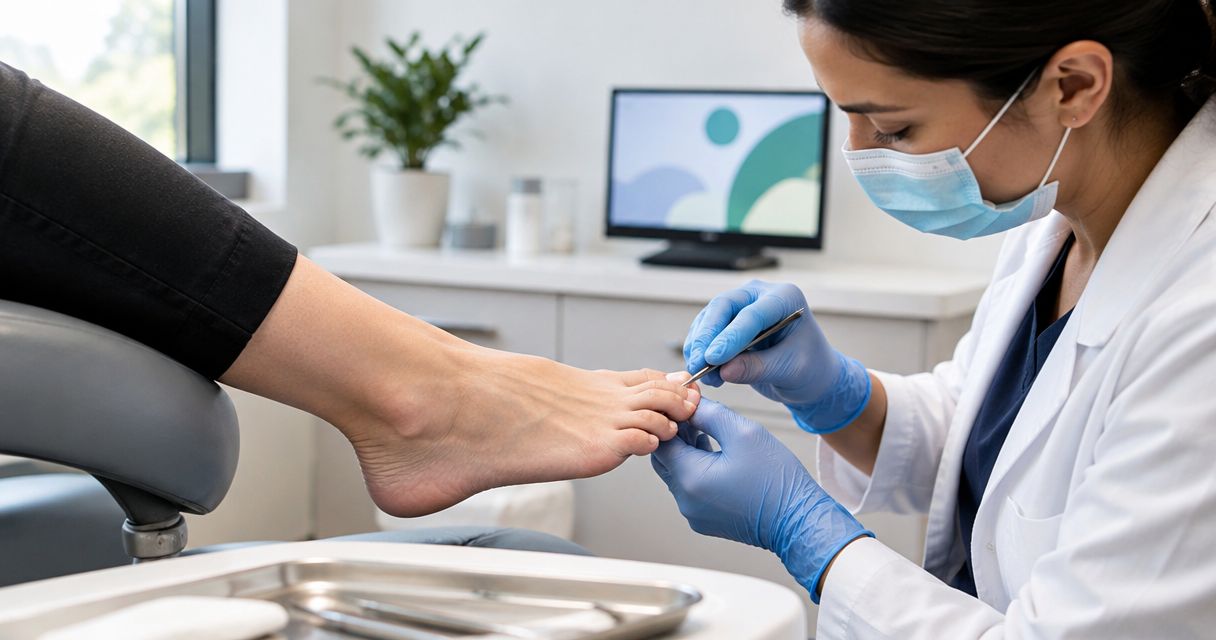
A podiatrist examines the nail edge, surrounding skin, circulation, and sensation as needed. Tell the clinician whether the problem keeps returning, what you have tried, and whether you have had drainage or spreading redness.
Treatment depends on the examination. Mild cases can receive conservative care; an embedded or repeatedly painful edge sometimes needs partial nail removal after the toe is numbed. For recurring problems, treatment of part of the nail's growth area can reduce recurrence, but no treatment guarantees that the problem will never return.
A procedure also brings aftercare responsibilities. You will need instructions about cleaning, dressings, footwear, and returning to activities. Ask how your work or exercise routine affects those instructions rather than assuming every toe heals on the same schedule.
Achilles Foot and Ankle Center is a fit for Richmond-area patients seeking podiatry evaluation for persistent or recurring ingrown toenails. For patients in Mechanicsville and the West End, the next step is an appropriate assessment—not waiting until walking becomes difficult.
Have your painful toenail evaluated
Discuss persistent pain, repeat ingrown nails, or changes that need medical attention.
Can an ingrown toenail get better if you leave it alone?
A mild ingrown toenail can improve without cutting, but leaving it alone should mean avoiding manipulation—not ignoring symptoms. Reduce pressure, keep the area clean, and arrange care if the toe is not clearly improving.
An embedded edge or recurring problem needs more than repeated waiting. Continued tenderness is a reason to have the nail examined, even without obvious pus.
Will soaking fix an ingrown toenail?
Soaking for 15–20 minutes can soften the surrounding skin and ease discomfort, but it does not reliably remove an embedded nail edge. Dry the foot carefully afterward, and do not use temporary relief as a reason to overlook worsening swelling or drainage.
Does an infected ingrown toenail always need antibiotics?
An infected ingrown toenail needs assessment, but antibiotics are not required for every irritated nail. A clinician decides whether infection is present, whether it has spread, and whether the nail edge needs treatment.
FAQ
Can an ingrown toenail heal without a doctor in 2026?
Yes, a mild ingrown toenail can improve with gentle care and reduced pressure if there is no drainage, spreading redness, or higher-risk medical condition. Persistent, worsening, or recurring symptoms need an evaluation.
How long should I soak an ingrown toenail?
For a mild ingrown toenail in an otherwise healthy foot, soak in comfortably warm water for 15–20 minutes, 3–4 times a day, then dry thoroughly. If you have diabetes, poor circulation, or reduced feeling, ask your clinician before starting home treatment.
Can I pull out the ingrown corner myself?
Do not pull out or dig out an ingrown nail corner yourself. You can tear the skin, leave a sharp fragment, or make an infection worse.
Is pus from an ingrown toenail normal?
Pus is a sign of possible infection and needs medical attention. Seek urgent care if redness spreads rapidly, you develop fever, or you feel unwell.
Should I see a podiatrist if the same toenail keeps becoming ingrown?
Yes, a repeatedly ingrown toenail deserves a podiatry evaluation. Achilles Foot and Ankle Center offers foot and ankle care for patients seeking assessment of persistent or recurring nail problems.
Can I treat an ingrown toenail at home if I have diabetes?
Contact your clinician before treating an ingrown toenail yourself if you have diabetes. New drainage, broken skin, redness, or swelling needs prompt attention, even when the toe does not hurt much.
How do I know whether my ingrown toenail is improving?
Improvement means decreasing tenderness, swelling, and redness without new drainage or spreading inflammation. Pain relief immediately after a soak is not enough to confirm that the underlying nail problem has resolved.
One last thing
For your 2026 foot-care routine, focus on the nail edge—not just the pain score. A toe can hurt less after soaking while the corner still presses into the skin.
Choose care based on the trend: improving irritation supports gentle care; worsening or recurring symptoms call for evaluation. You do not need to dig deeper or wait for severe pain to take the next step.
Related guides
- Ingrown toenail home care to an in-office procedure
- Can a foot wound get infected quickly?
- How often should people with diabetes check their feet?