Recovery after ingrown toenail surgery generally takes several weeks for the wound to heal, although comfortable walking often returns sooner. For your 2026 recovery plan, distinguish getting back into shoes from complete healing: the amount of nail removed, treatment of the nail root, and your circulation all affect how long you need wound care.
- How long does recovery take after ingrown toenail surgery? Wound healing takes weeks; walking often resumes sooner.
- Partial nail removal and nail-root treatment have different recovery needs; follow your own discharge instructions.
- Achilles Foot and Ankle Center offers podiatry evaluation for ingrown toenails and diabetic foot concerns.
- Increasing redness, worsening pain, pus, or fever needs medical attention rather than a longer wait.
How long does recovery take after ingrown toenail surgery?
Plan around wound healing, not just pain relief. Removing the nail edge can relieve pressure before the surrounding skin has closed. You still need to protect the area and follow dressing instructions even when the toe feels much better.
The procedure also matters. Your clinician might remove a narrow nail edge, remove the entire nail, or treat the growth area beneath the nail to prevent the troublesome section from returning. The ingrown toenail home-care-to-procedure guide explains that treatment pathway.
| Procedure | Best suited to | Main benefit | Recovery limitation |
|---|---|---|---|
| Partial nail removal | An ingrown edge that needs removal | Removes the offending section while preserving the remaining nail | The exposed nail bed still needs protection; the edge can regrow without root treatment |
| Whole nail removal | Problems involving more of the nail, when clinically appropriate | Gives access to the full affected nail bed | Leaves a larger exposed area requiring wound care |
| Nail-root treatment with removal | Recurrent ingrowing where preventing regrowth is appropriate | Reduces the chance that the treated nail section grows back | Can cause prolonged drainage while the treated area heals |
These are treatment approaches, not a menu to choose without an examination. Your clinician should explain what was done and what that means for your recovery.
Why this matters
A toe can tolerate a short walk before it tolerates a full shift, tight footwear, or running. Treating all those milestones as the same deadline creates avoidable pressure on a healing wound.
For a 2026 procedure, ask for separate guidance on dressing changes, footwear, work, exercise, and follow-up. Your discharge instructions take priority over a general recovery estimate. Instructions differ because the wound and the procedure differ, not because there is one correct schedule for everyone.
What happens during each stage of recovery?
Immediately afterward: protect the numb toe
A local anesthetic usually numbs the toe for the procedure. While sensation is reduced, protect it from bumps, pressure, and heat; lack of pain does not mean the area is safe from injury.
Follow instructions about rest, elevation, and the original dressing. Arrange footwear that accommodates the bandage without squeezing your toe, and ask about transport if the procedure or dressing affects your ability to drive safely.
Early recovery: manage discomfort and dressings
Some tenderness and drainage can occur after nail surgery, particularly when the nail root has been chemically treated. The important distinction is whether symptoms are settling or getting worse.
Use the pain-relief plan your clinician recommends, taking your other medicines and medical conditions into account. Do not add leftover antibiotics or apply household remedies to the wound. Antibiotics are not automatically required after every ingrown toenail procedure.
Later recovery: let the wound close
The toe can feel comfortable while the nail bed remains open or continues to drain. Keep following the wound-care plan until your clinician says you can stop; pain relief alone is not a reason to leave an unhealed area unprotected.
Ask what a healed wound should look like after your particular procedure. Continued drainage, fragile tissue, or a dressing that keeps sticking needs individualized advice rather than repeated changes to home treatment.
Nail regrowth: a separate process
Wound healing and nail regrowth run on different timelines. If the nail root remains intact, the removed section can grow back after the surrounding skin has healed.
When the root is treated to prevent regrowth, the goal is different: the treated section is intended not to return. Ask whether your procedure was temporary nail removal or permanent treatment of the problem edge.
Why ingrown toenail surgery recovery varies
The same procedure does not produce the same recovery experience for every patient. These factors change the wound-care plan and the timing of activity:
- Amount of nail removed: A narrow edge and an entire nail leave different areas of exposed tissue.
- Nail-root treatment: Chemical treatment can produce drainage during healing, even without infection.
- Infection or inflamed tissue: An already irritated toe needs monitoring for worsening redness, swelling, and discharge.
- Circulation and health conditions: Poor blood flow and diabetes can complicate wound healing; reduced sensation can hide injuries.
- Footwear and activity: Tight shoes, repeated impacts, and long periods on your feet place different demands on the toe.
- Wound care: Dressing problems, rubbing, and picking at healing tissue can interfere with recovery.
Tell your clinician about diabetes, circulation problems, reduced feeling, immune-suppressing treatment, and medicines that affect bleeding. Do not stop prescribed medication on your own before or after surgery.
How should you care for the toe at home?
Use the instructions supplied after your procedure, rather than combining several online routines. A soaking schedule, dressing product, or cleaning method prescribed for another patient is not automatically suitable for your wound.
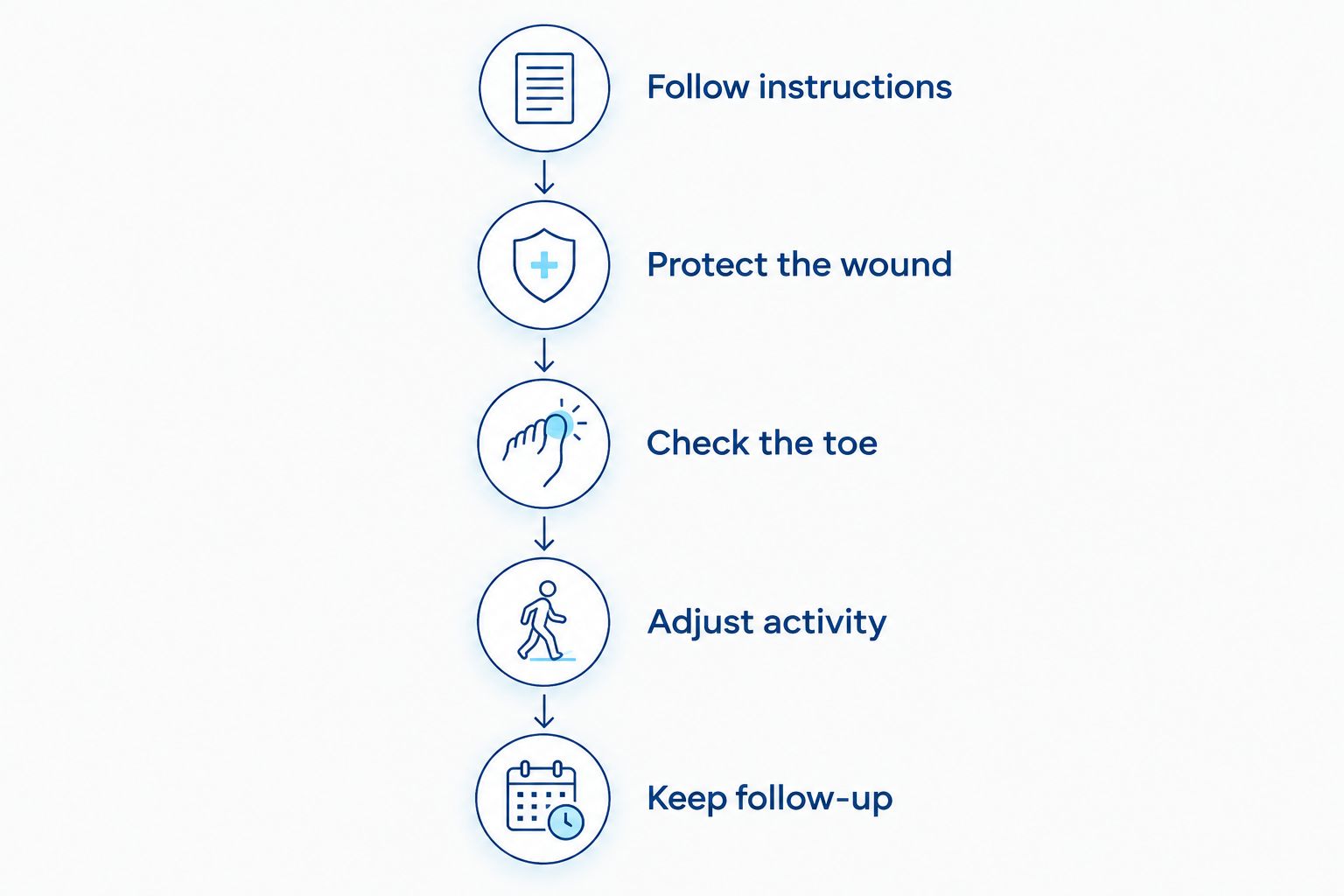
- Follow instructions. Confirm when to remove the original dressing, how to clean the area, and whether soaking is part of your plan.
- Protect the wound. Apply the recommended dressing without wrapping it tightly. Ask what to do if it becomes wet, dirty, or stuck.
- Check the toe. Watch for spreading redness, increasing swelling, worsening pain, unusual discharge, or a change in color.
- Adjust activity. Avoid footwear and movements that rub the wound, restart bleeding, or increase drainage.
- Keep follow-up. Attend the recommended review and contact the practice sooner when symptoms worsen.
Do not dig beneath the remaining nail or cut away tissue that looks loose. If another edge begins to hurt, arrange an assessment instead of trying to correct it with scissors. The guide to cutting out an ingrown toenail at home explains why deeper cutting can make the problem worse.
When can you wear shoes and return to work?
You can return to suitable footwear when it accommodates the dressing and does not press against the healing area. A roomy toe box matters more than whether a shoe is described as comfortable or supportive.
Your job also changes the decision. Desk work with room to protect your foot is different from a shift spent standing, climbing, or wearing close-fitting safety footwear. Discuss those requirements before the procedure rather than discovering afterward that your required shoes press on the wound.
If you are arranging leave in 2026, describe your actual duties when asking for advice. Include your commute, the footwear you must wear, and whether temporary changes to your tasks are possible.
Return to work is not the same as unrestricted activity. Ask separately about prolonged standing, driving, lifting, and exercise. Do not drive while numbness, pain, a bulky dressing, or medication prevents you from controlling the vehicle safely.
When can you exercise or swim again?
Running, jumping, and sports that involve kicking or sudden stops put more pressure on the toe than ordinary walking. Resume them according to your clinician's advice, not simply because you can walk around your home comfortably.
For swimming, ask when the wound is sufficiently healed and whether you need a review first. An open or draining wound needs protection; a covering does not automatically make pool or open-water exposure appropriate.
When you restart activity, watch how the toe responds during the activity and afterward. New bleeding, increased drainage, or renewed soreness means you should stop the aggravating activity and ask for guidance.
What is normal drainage, and what suggests infection?
Light drainage can occur as a nail-surgery wound heals, especially after chemical treatment of the root. Drainage alone does not establish an infection, and its appearance needs to be interpreted alongside pain, redness, swelling, and your overall health.
Contact your treating clinician promptly for increasing pain, spreading redness, warmth, swelling, pus, or an unpleasant smell. Persistent bleeding or a toe that becomes unusually pale, blue, cold, or numb also needs prompt assessment.
Seek urgent medical care for rapidly spreading redness, fever with worsening toe symptoms, or feeling seriously unwell. If you have diabetes, poor circulation, or reduced sensation, contact your care team promptly about new wound changes rather than waiting for pain.
Who should arrange an evaluation before waiting longer?
Arrange an assessment if the wound is not progressing as your clinician expected, if your dressing needs are unclear, or if pain prevents you from wearing necessary footwear. Repeatedly extending your own recovery deadline can delay treatment of a dressing problem, infection, or another cause of poor healing.
Achilles Foot and Ankle Center is for Richmond-area patients seeking podiatry evaluation for ingrown toenails. Its foot and ankle care also includes diabetic foot concerns, which matter when planning safe wound care.
For patients in Mechanicsville and West End, the next step is the same: explain the procedure you had, your current symptoms, and any diabetes or circulation concerns when requesting an evaluation. Bring your discharge instructions and medication list so the discussion starts with your actual treatment.
Get your toe evaluated
Discuss ingrown toenail symptoms, healing concerns, and an appropriate foot-care plan.
Your 2026 recovery discussion checklist
Before you leave the appointment, make sure you understand the procedure and the plan. Written instructions are especially useful when someone else will help with dressings.
- Was part or all of the nail removed, and was the root treated?
- What drainage and discomfort should I expect after this procedure?
- How should I clean and dress the toe?
- When can I wear my work shoes and resume my usual duties?
- What symptoms require a call, and where should I seek urgent help?
- When should the wound be reviewed?
Ask for clarification if the instructions conflict with something you read online. Your treating clinician can connect the advice to the wound they examined.
FAQ
How long does recovery take after ingrown toenail surgery?
Recovery generally takes several weeks for the wound to heal, while comfortable walking often returns sooner. The amount of nail removed, nail-root treatment, circulation, and wound condition affect your individual timeline.
Can I walk after having an ingrown toenail removed?
Walking is often possible before the wound has completely healed, but follow your clinician’s limits. Protect the numb toe initially and avoid footwear or activity that causes rubbing, bleeding, or increased pain.
Does permanent ingrown toenail removal take longer to heal?
Treating the nail root can prolong drainage and wound care compared with removing the nail edge alone. Ask your clinician what to expect from the specific method used rather than relying on a general deadline.
Is drainage normal after ingrown toenail surgery?
Some drainage can occur during healing, especially after chemical nail-root treatment. Increasing pain, spreading redness, pus, an unpleasant smell, or fever needs medical advice.
When can I go back to work after ingrown toenail surgery?
Your return depends on the wound, your footwear, and the physical demands of your job. Ask separately about desk work, prolonged standing, safety shoes, and driving.
Do I need antibiotics after ingrown toenail surgery?
Antibiotics are not automatically needed after every ingrown toenail procedure. Your clinician decides whether there is an infection that requires them; do not use leftover medication.
What if I have diabetes and my toe is not healing?
Contact your treating clinician promptly if you have diabetes and the wound is not healing as expected. Reduced sensation can hide worsening problems, so do not use pain alone to judge recovery.
One last thing
A less painful toe is not necessarily a closed wound. Before returning to tight shoes or strenuous activity in 2026, check that your progress matches the instructions for your procedure—not just how comfortable you feel.
Achilles Foot and Ankle Center offers podiatry care for patients who need an ingrown toenail assessed. An evaluation is the appropriate next step when recovery stalls, symptoms worsen, or you are unsure how to protect the toe.
Related guides
- Can a foot wound get infected quickly?
- Home diabetic wound care to office treatment
- Foot care for nurses