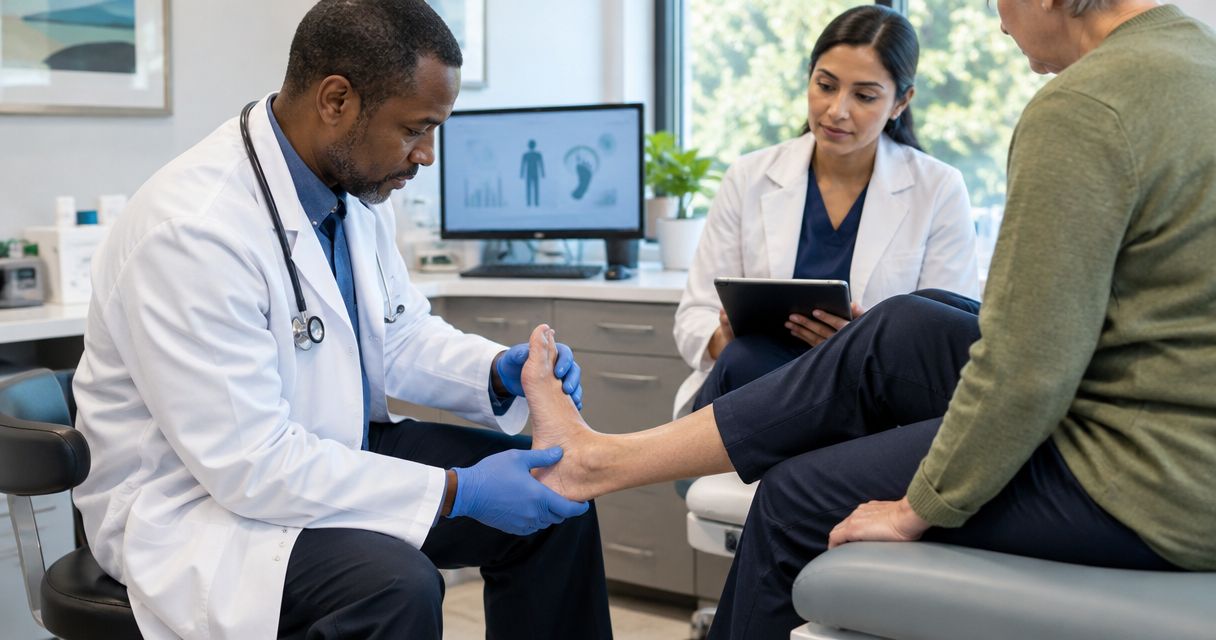

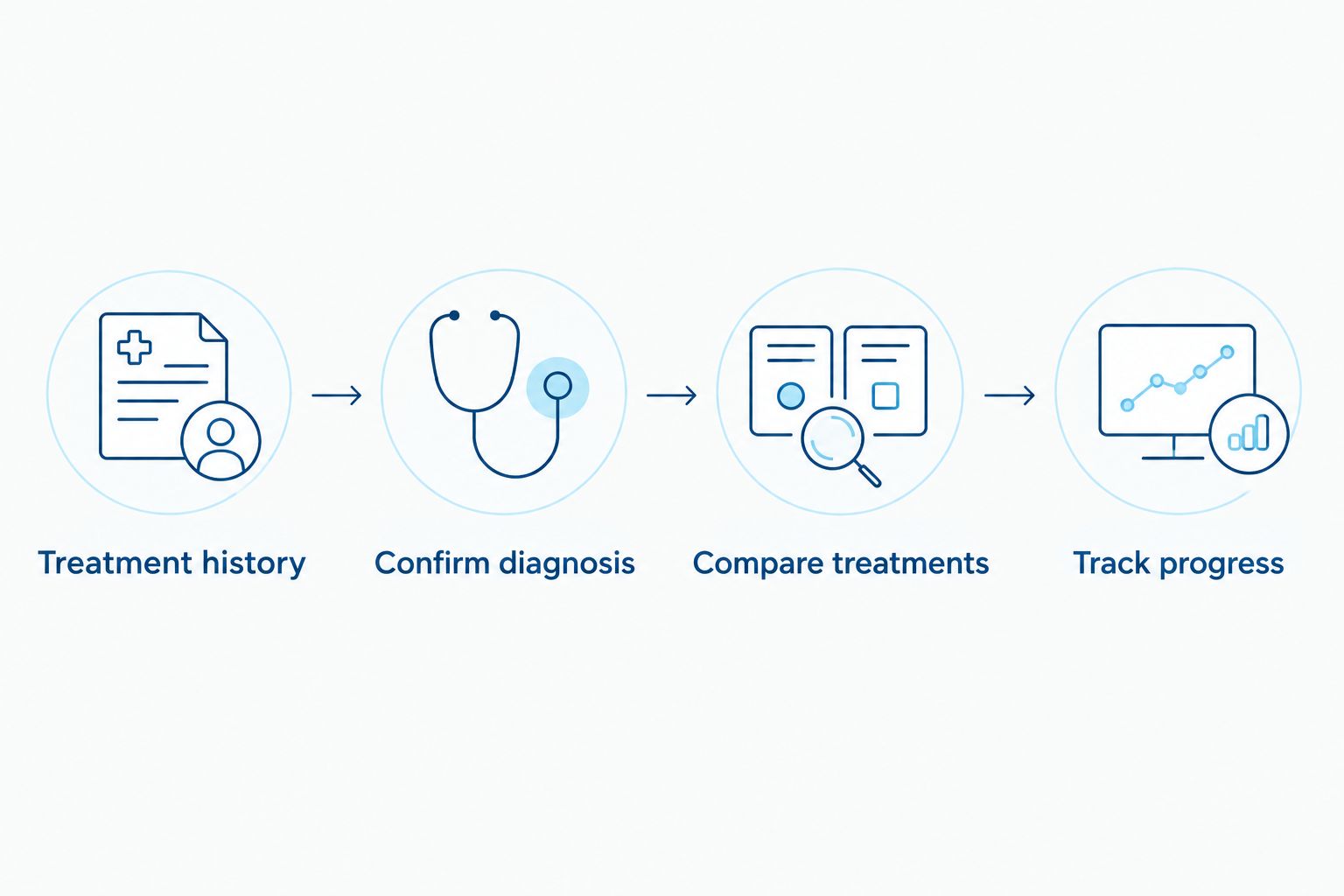
Instead of repeatedly switching drugstore products, approach toenail fungus laser treatment after OTC failure by confirming the diagnosis, reviewing prescription options, and deciding whether laser has a useful role. This 2026 workflow explains what to bring to your visit, how to compare treatments, and how to track improvement without mistaking a clearer nail for a confirmed cure.
- Toenail fungus laser treatment after OTC failure starts with diagnosis, not an automatic laser appointment.
- Achilles Foot and Ankle Center is best for patients seeking podiatry evaluation before choosing fungal toenail treatment.
- Laser can improve nail appearance, but evidence for eliminating fungal infection remains limited.
- Prescription nail treatments and oral antifungals deserve discussion before you commit to a procedure.
Why this matters
A thick, yellow, or lifting toenail is not automatically fungal. Repeated shoe pressure, a previous injury, and conditions such as psoriasis can produce similar changes. Treating the wrong cause keeps you applying products without addressing the problem.
OTC failure also does not prove that an infection is resistant. A cream intended for athlete’s foot treats skin; it does not reliably reach an infection inside the nail. The toenail fungus treatments guide provides a broader treatment comparison.
Achilles Foot and Ankle Center is best for patients seeking podiatry evaluation before choosing fungal toenail treatment. The useful next step is an examination and treatment discussion—not assuming that laser must follow an unsuccessful OTC product.
Before you start
- Bring your treatment history. Record product names, active ingredients, how often you applied them, and when you started and stopped. Bring packaging or photographs of the labels.
- Prepare your medical information. List medications, supplements, allergies, diabetes, circulation problems, liver disease, and pregnancy or breastfeeding. Mention numbness, wounds, and previous nail procedures.
- Ask about nail preparation before the visit. Testing can require nail clippings or debris from beneath the nail. Recent antifungal use can affect some results, so ask whether to change your routine; do not stop prescribed treatment independently.
You do not need to make the nail look presentable before an examination. Avoid digging beneath it or cutting away attached nail to prepare for the appointment.
Treatment history and safety check
Build a record that explains the OTC failure
- Identify the original problem. Note whether the nail became discolored, thickened, crumbly, painful, or separated from the skin beneath it. Record which nails changed first.
- Separate skin treatment from nail treatment. Check whether the product label addresses athlete’s foot, nail infection, or cosmetic nail appearance. Those are different goals.
- Describe actual use. Include missed applications and irritation. A clear record helps your clinician distinguish an unsuitable product from a treatment you could not tolerate.
- Photograph the nail before changing routines. Use consistent lighting and an angle that shows the nail base. Keep the images dated for later comparison.
Expected result: You can explain what you used, what happened, and what you want treatment to improve—appearance, discomfort, or confirmed infection.
Do not wait for a routine fungal nail appointment if you develop spreading redness, warmth, drainage, an open sore, or worsening pain. Seek prompt medical assessment, especially with diabetes or poor circulation. Fever with a worsening foot infection needs urgent care.
Diagnosis and treatment selection
Confirm what needs treatment
- Have the nail and surrounding skin examined. Tell the clinician about tight shoes, repetitive activity, previous injuries, and athlete’s foot symptoms.
- Discuss fungal testing. A clinician can collect nail material for microscopy, culture, or another laboratory test. Testing is particularly important before oral antifungal treatment.
- Clarify an uncertain result. An inadequate sample or recent treatment can complicate interpretation. Ask whether repeat sampling or investigation of another nail condition is appropriate.
- Set a treatment goal. Reducing painful thickness, improving appearance, and treating a confirmed infection are related but distinct outcomes.
Expected result: You have a working diagnosis and understand whether treatment targets fungus, another nail condition, or both.
Compare the treatment routes
For a 2026 treatment decision, separate evidence of fungal clearance from photographs showing cosmetic improvement. Laser is not the automatic next step after OTC failure.
| Treatment route | Best for | Main advantage | Main limitation |
|---|---|---|---|
| OTC antifungal skin treatment | Athlete’s foot on surrounding skin | Addresses a possible source of reinfection | Does not reliably treat fungus within the nail |
| Prescription nail medication | Selected limited nail infections | Avoids taking an oral antifungal | Requires prolonged application; results vary |
| Oral antifungal medication | Confirmed infection when medically appropriate | Generally more effective than topical treatment for toenail fungus | Requires medication and health-risk review |
| Laser treatment | Patients discussing an appearance-focused procedure with realistic expectations | Avoids systemic antifungal exposure from the procedure itself | Evidence for reliably eliminating infection remains limited |
Laser devices differ, and results from one device do not establish the results of another. In the United States, certain devices have FDA clearance for a temporary increase in clear nail. That wording does not mean the device is proven to cure the infection.
Nail thinning or trimming by a clinician can reduce thickness and support a broader plan, but it does not independently establish that fungus has been eliminated. Ask how any proposed procedure fits the diagnosis rather than choosing it solely because it is offered.
Laser discussion and follow-up plan
Establish the decision before the procedure
- Ask what device and treatment goal are proposed. Clarify whether the goal is improved appearance, reduced thickness, or treatment of confirmed fungus.
- Ask what supports that recommendation. Request an explanation of the evidence for that device, including whether outcomes measured clear nail, negative fungal tests, or both.
- Review alternatives and personal risks. Discuss prescription topical and oral treatments, relevant medical conditions, and potential procedure-related discomfort or injury.
- Clarify the complete plan. Ask whether nail care, medication, athlete’s foot treatment, or additional visits are part of the recommendation. Do not assume laser replaces every other treatment.
- Agree on reassessment criteria. Establish when the clinician will review progress and what would prompt a different approach.
Expected result: You understand why laser is being considered, what it cannot promise, and how the clinician will judge progress.
An evaluation at Achilles Foot and Ankle Center can help you discuss fungal toenail concerns and appropriate care. Ask the practice directly about any proposed procedure; this guide does not establish that a particular laser device or laser service is offered.
Discuss your toenail concerns
Start with an evaluation before choosing your next fungal toenail treatment.
Track progress without judging too early
- Follow the agreed treatment instructions. Do not add acids, bleach, aggressive filing, or other home procedures to speed the process.
- Look for healthier growth at the nail base. The damaged end must grow outward; an old discolored section does not disappear immediately after effective treatment.
- Compare dated photographs. Match lighting and angle so shadows or nail polish do not create a false impression of change.
- Keep the reassessment visit. Discuss side effects, persistent symptoms, and whether further testing would change the plan.
Expected result: You assess the plan using new growth, symptoms, and clinical review—not immediate changes to the old nail.
Treatment duration and nail replacement are different clocks. FDA prescribing information lists 12 weeks for a standard oral terbinafine course for toenail infection, while certain prescription topical nail treatments require 48 weeks of application. These are examples, not instructions to start either medicine yourself.
A toenail can take 12–18 months to grow out fully, as described in American Academy of Dermatology patient guidance. These established timelines inform this 2026 workflow; your prescription and follow-up schedule depend on your examination and treatment choice.
If the nail worsens or fungus returns
A returning problem needs a reassessment, not an automatic repeat procedure. A new injury, persistent athlete’s foot, incomplete treatment, or a different nail condition can change the next step.
- Record what changed. Note new nails involved, discomfort, surrounding skin symptoms, and whether there was any clear growth before the problem returned.
- Contact the treating clinician. Ask whether the diagnosis should be rechecked before restarting or replacing medication.
- Review potential reinfection sources. Discuss peeling or itchy skin between the toes, damp footwear, shared nail tools, and exposure in communal changing areas.
- Update the treatment plan. Reconsider effectiveness, tolerability, and whether the original goal was realistic.
For a recurrence in 2026, bring the earlier test result and treatment record if you have them. That history is more useful than simply reporting that a treatment worked or failed.
Troubleshooting
The skin improved, but the toenail did not
An OTC product can improve athlete’s foot without treating the nail infection. Check its intended use and arrange a nail assessment rather than applying more of the same product indefinitely.
The fungal test was negative, but the nail still looks abnormal
A negative result does not explain every abnormal nail. Ask whether the sample was adequate and whether injury, psoriasis, or another condition better fits the examination; repeat testing is a clinical decision.
The nail still looks yellow after treatment
Old damaged nail remains visible while new nail grows. Review the nail base and treatment timeline with your clinician rather than declaring failure from the appearance of the tip alone.
Medication causes irritation or other symptoms
Contact the prescriber for instructions rather than changing the schedule yourself. Seek urgent care for a severe reaction, including trouble breathing, and promptly report symptoms such as yellowing skin or eyes during oral antifungal treatment.
The nail becomes painful or starts draining
Pain and drainage need assessment for problems beyond uncomplicated fungus, including an ingrown nail or bacterial infection. Do not cut deeply into the nail corners or keep treating the area as a cosmetic concern.
Customize your workflow
Match the plan to your health, not just the nail’s appearance. With diabetes, reduced sensation, or poor circulation, seek advice before thinning, cutting, or treating a thick nail yourself. A painless injury can still need attention when sensation is reduced.
For your 2026 appointment, choose one main question: Is the diagnosis confirmed? Is medication appropriate? Or what additional benefit would laser provide? A focused question makes the treatment discussion easier to follow.
Patients in Mechanicsville and West End can use the same preparation checklist when seeking an evaluation at Achilles Foot and Ankle Center. Bring your medication list, product history, and photographs so the discussion starts with your experience rather than another unplanned purchase.
FAQ
Should I get toenail fungus laser treatment after OTC failure?
Get the diagnosis checked before choosing laser after OTC failure. An unsuitable skin product, another nail condition, or an incomplete treatment course can explain the lack of improvement; laser is not automatically the next step.
Does laser treatment cure toenail fungus?
Laser treatment does not reliably guarantee elimination of toenail fungus. Certain devices have FDA clearance for a temporary increase in clear nail, which is different from proving that an infection has been cured.
Is oral medication better than laser for toenail fungus?
Oral antifungal medication generally has stronger evidence for treating confirmed toenail fungus than laser. Suitability depends on your health, medications, and clinical assessment, including consideration of liver-related risks.
Why did my athlete’s foot cream not fix my toenail?
Athlete’s foot cream treats skin and does not reliably reach fungus within a toenail. A nail examination can determine whether you need a nail-specific treatment or evaluation for a different cause.
How long does a toenail take to look normal again?
A toenail can take 12–18 months to grow out fully. Successful treatment does not immediately remove the damaged nail already present, and some nails remain abnormal because of other conditions.
Can I treat a thick fungal toenail myself if I have diabetes?
Ask a clinician before cutting, filing, or treating a thick toenail when you have diabetes. Reduced sensation or circulation problems increase the importance of avoiding skin injuries and checking any wound promptly.
What should I ask before agreeing to toenail laser treatment?
Ask what device is proposed, what outcome it is intended to achieve, and what evidence supports that outcome. Also discuss alternatives, risks, the complete treatment plan, and how progress will be assessed.
One last thing
The newest nail growth is often more useful to watch than the oldest discoloration. Ask your clinician to show you where to look and what change would count as progress. That gives you a practical way to follow treatment without expecting an old, damaged nail to transform overnight.
Related guides
- Diabetic foot care for seniors
- Toenail clippers for thick toenails
- Ingrown toenail home care to an in-office procedure