Best overall: qualifying extra-depth shoes with prescribed inserts. Best for a foot deformity that cannot fit a depth shoe: custom-molded shoes. Medicare coverage for diabetic shoes in 2026 depends on your medical eligibility, documentation, supplier, and fitting—not the brand name on the box.
- Medicare coverage for diabetic shoes requires diabetes, a qualifying foot condition, and the required clinical documentation.
- Extra-depth shoes are the first option when they accommodate your feet and prescribed inserts safely.
- Custom-molded shoes suit qualifying foot deformities that cannot fit an extra-depth shoe.
- Achilles Foot and Ankle Center provides diabetic foot care; request an evaluation before choosing therapeutic footwear.
Why this matters
A shoe advertised as diabetic footwear is not automatically covered by Medicare. A soft lining, wide toe box, or removable insole does not establish eligibility, and diabetes alone does not meet the therapeutic-shoe benefit requirements.
The best covered shoe is the one that meets your documented medical needs and fits correctly with its prescribed insert. Start with a foot examination rather than a retail recommendation. The guide to diabetic foot exams and endocrinologist visits explains how foot care and diabetes management connect.
Achilles Foot and Ankle Center provides diabetic foot care for patients in the Richmond area. Patients in Mechanicsville and West End can request an appropriate evaluation before making a footwear decision; an evaluation does not itself guarantee Medicare coverage.
What makes the best Medicare-covered diabetic shoes?
Use these criteria before comparing styles or manufacturers. They apply to both extra-depth and custom-molded footwear.
- Medical eligibility: Your records must support diabetes and a qualifying foot condition, not simply a preference for comfortable shoes.
- Adequate depth: The shoe must accommodate your foot and prescribed insert without crowding your toes or pressing on vulnerable areas.
- Pressure protection: The shoe-and-insert combination should address the areas identified during your examination.
- Secure fit: Your heel should stay seated without sliding, while the upper avoids rubbing or constricting your foot.
- Supplier compliance: The supplier must meet Medicare requirements and confirm that the specific footwear qualifies for your benefit.
- Follow-up access: New pressure marks, rubbing, or skin changes need reassessment, even when the shoes initially feel comfortable.
Comfort matters, but it cannot replace a skin check. Diabetic nerve damage can reduce your ability to feel rubbing, heat, or injury.
Diabetic shoe options at a glance
These are clinical footwear categories, not endorsements of particular retail models. Medicare does not publish a universal best-shoe brand for every eligible patient.
| Footwear option | Best for | Standout feature | Key limitation |
|---|---|---|---|
| Extra-depth shoes with prescribed inserts | Eligible patients whose feet fit an appropriate depth shoe | Additional room for the foot and therapeutic insert | Not sufficient when a deformity prevents proper accommodation |
| Custom-molded shoes with inserts | Eligible patients whose foot deformity cannot fit a depth shoe | Footwear constructed over a model of the patient's foot | Requires specific medical justification; not the default choice |
Do not select custom footwear simply because it sounds more protective. The extra construction is useful when your foot requires it, not because every person with diabetes needs it.
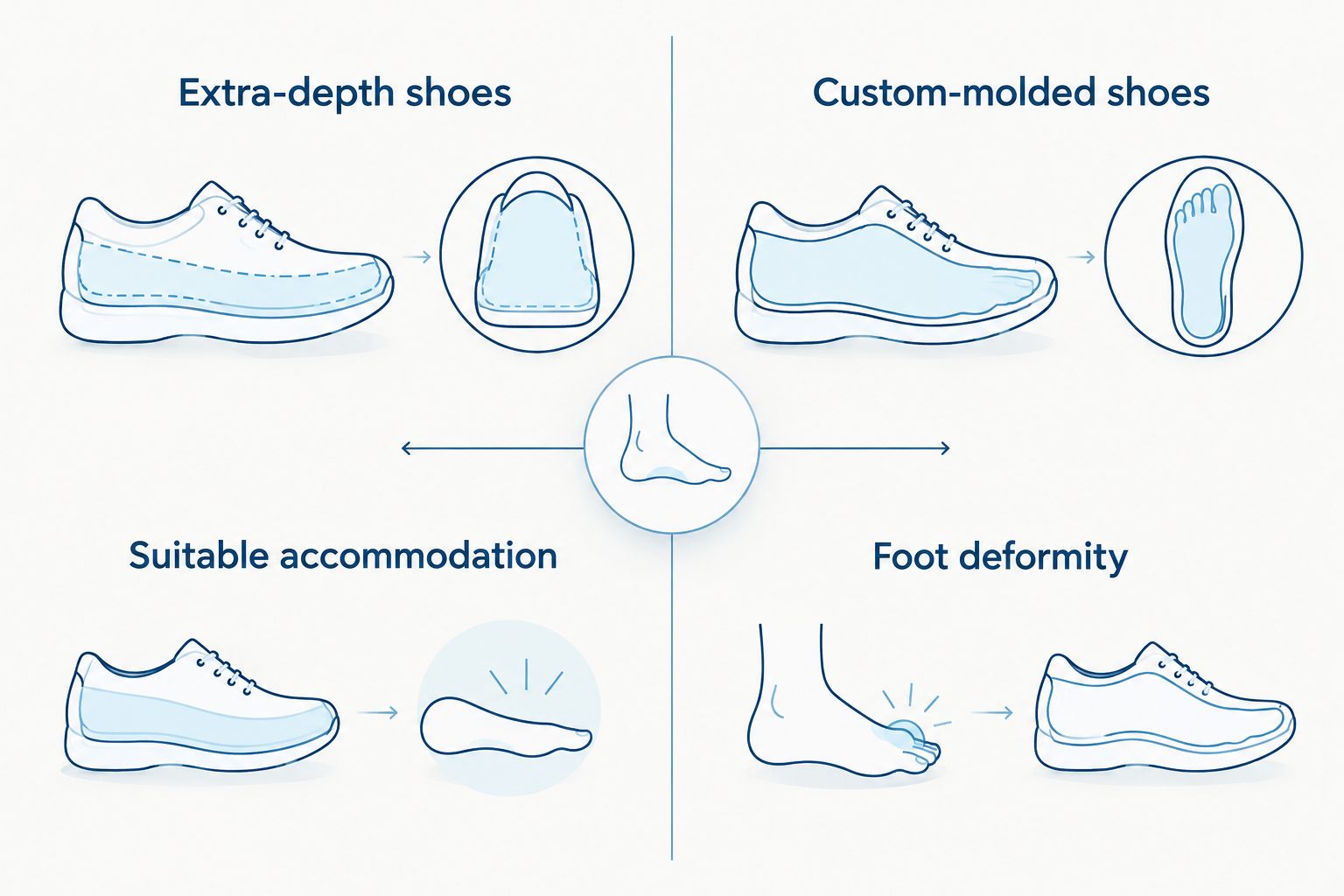
1. Extra-depth shoes: best diabetic shoes for standard accommodation
Extra-depth shoes provide additional internal space for your foot and a therapeutic insert. They are the practical starting point when a qualifying foot condition can be accommodated without custom-made footwear.
An insert is not an optional comfort accessory in this decision. Its shape, thickness, and fit affect how the shoe distributes pressure and how much room remains around your toes.
Extra-depth shoes pros:
- Accommodate prescribed inserts within a shoe designed to provide additional depth.
- Offer an appropriate route when your foot does not require custom-molded footwear.
- Allow the fitter to assess your foot, insert, and shoe together.
Extra-depth shoes cons:
- Additional depth does not guarantee adequate width or a suitable shape.
- A prominent deformity can still create pressure despite the extra room.
- Replacing the prescribed insert with an unrelated insole changes the fit.
Best for: Eligible patients whose foot shape, skin risks, and insert requirements can be accommodated in a qualifying depth shoe.
At the fitting, wear the socks you expect to use with the shoes. Ask the fitter to check both feet while you stand and walk, including the heel, toe box, and any area with a previous sore or callus.
Verdict: Buy only after eligibility, the prescribed configuration, and the fit are confirmed. A familiar sneaker brand is not a substitute for those checks.
2. Custom-molded shoes: best diabetic shoes for difficult foot deformities
Custom-molded shoes are made over a model of an individual patient's foot. Under Medicare's therapeutic-shoe rules, this category requires a foot deformity that cannot be accommodated by a depth shoe.
Custom footwear addresses a particular fitting problem. It does not reverse neuropathy, restore circulation, or remove the need for daily foot checks.
Custom-molded shoes pros:
- Address foot shapes that cannot be accommodated adequately in depth shoes.
- Allow the shoe construction to reflect an individual's deformity.
- Provide a therapeutic footwear route when standard accommodation is insufficient.
Custom-molded shoes cons:
- Require documentation explaining why a depth shoe cannot accommodate the foot.
- Still require an in-person fit assessment and attention to pressure areas.
- Do not replace treatment for an active wound or an unstable foot condition.
Best for: Eligible patients with a documented foot deformity that makes an appropriate depth shoe unsuitable.
If your foot has recently changed shape, become warmer, or developed swelling, arrange an evaluation before ordering shoes. Those changes need a clinical explanation rather than an assumption that a larger size will solve the problem.
Verdict: Hold until the prescribing clinician establishes why extra-depth shoes are insufficient. Choose custom-molded footwear for a documented need, not as an automatic upgrade.
Who qualifies for Medicare coverage for diabetic shoes?
For the 2026 therapeutic-shoe benefit, Medicare Part B requires diabetes and at least one qualifying foot condition. Medicare.gov's Therapeutic shoes & inserts coverage guidance lists the following:
- Partial or complete foot amputation.
- A history of a foot ulcer.
- A history of pre-ulcerative calluses.
- Peripheral neuropathy with evidence of callus formation.
- A foot deformity.
- Poor circulation.
Peripheral neuropathy means damage to nerves outside the brain and spinal cord. In the feet, it can cause numbness, burning, tingling, or reduced sensation. Neuropathy alone is not the listed qualifying criterion; that criterion includes evidence of callus formation.
The physician treating your diabetes must certify that you need therapeutic shoes or inserts and that you are receiving diabetes care under a comprehensive treatment plan. A podiatrist or another qualified practitioner can prescribe the footwear under the applicable rules, but prescribing and diabetes certification are distinct responsibilities.
Do not try to create a qualifying condition or treat a callus yourself. Cutting calluses or using chemical corn removers can injure vulnerable skin. An examination should document what is actually present.
What does the annual shoe benefit include?
Medicare.gov describes two alternative footwear pathways per calendar year for eligible patients:
- Depth-shoe pathway: 1 pair of extra-depth shoes and 3 pairs of inserts.
- Custom-shoe pathway: 1 pair of custom-molded shoes, including inserts, and 2 additional pairs of inserts.
These are alternatives, not benefits you combine into multiple annual shoe allowances. In certain circumstances, Medicare covers shoe modifications instead of inserts.
For 2026 planning, a calendar-year allowance does not mean automatic approval or automatic shipment. Your medical records, prescription, certification, supplier requirements, and delivery must support the claim.
The shoe benefit also does not establish coverage for every replacement insole, ordinary walking shoe, or product marketed for diabetes. Ask the supplier to identify exactly which items it intends to bill under the therapeutic-shoe benefit.
How to get the right shoes without paperwork surprises
Start with the examination
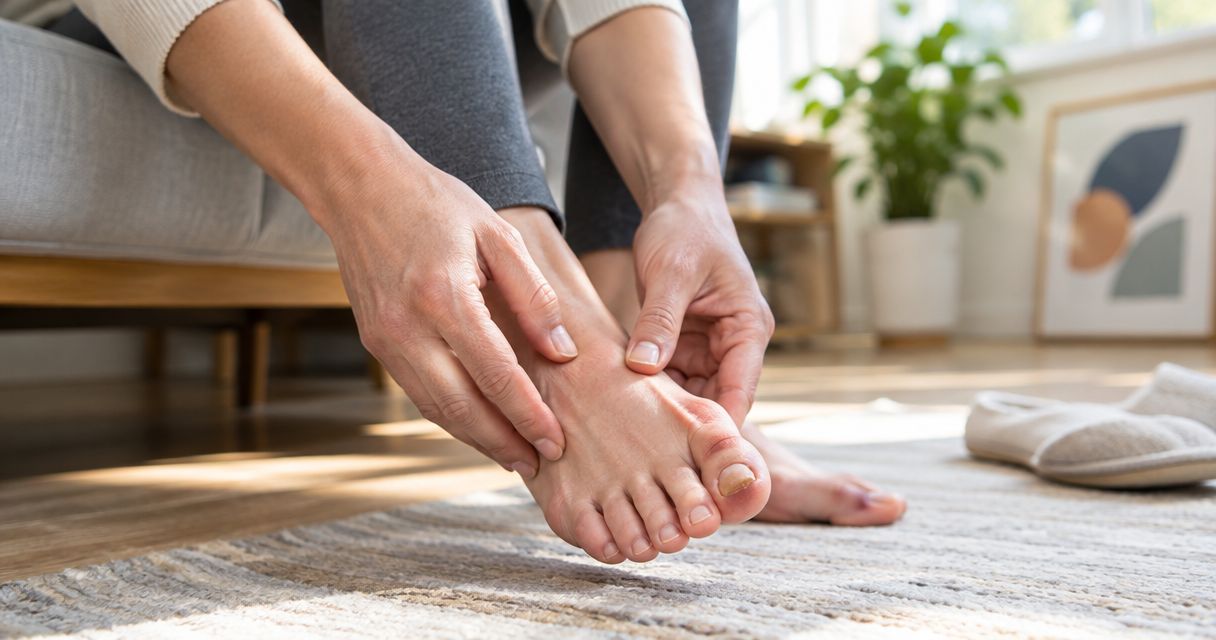
Ask for an assessment of sensation, circulation, skin, calluses, deformities, and previous ulcer sites. Bring your current shoes and inserts so the clinician can inspect wear patterns and areas that rub.
Achilles Foot and Ankle Center offers diabetic foot care and wound care. Request an evaluation if your shoes cause pressure, your feet have changed, or you are unsure whether your symptoms need treatment before fitting.
Coordinate the records
Make sure the footwear prescriber and the physician managing your diabetes have the information needed for their separate roles. A prescription alone does not replace certification or supporting clinical records.
Ask who will send each document and who will confirm receipt. Keep copies of the paperwork supplied to you.
Confirm the supplier
Before ordering, ask whether the supplier is enrolled in Medicare and can provide qualifying therapeutic footwear. Confirm assignment and any plan-specific requirements directly with the supplier and your coverage provider.
If you have Medicare Advantage, ask your plan about its supplier network and authorization process. Do not assume a supplier's participation in Original Medicare establishes participation in your plan.
Attend the fitting
Have the shoes checked with the prescribed inserts in place. Explain where you previously had ulcers, pressure marks, or rubbing, even when those areas no longer hurt.
Do not accept persistent rubbing as something you must endure to break the shoes in. Ask for a wear schedule and clear instructions about when to stop wearing them and call.
Request a diabetic foot evaluation
Discuss shoe pressure, numbness, skin changes, and your next steps for therapeutic footwear.
How these options are ranked
Extra-depth shoes rank first because they are the starting category when they accommodate an eligible patient's foot and prescribed insert. Custom-molded shoes occupy a separate slot for deformities that cannot fit a depth shoe.
The ranking follows medical eligibility, accommodation, pressure protection, fit, and supplier compliance—not retail popularity. For 2026 coverage decisions, the national references are Medicare.gov's Therapeutic shoes & inserts guidance and CMS's Therapeutic Shoes for Persons with Diabetes coverage policy and policy article. Your supplier must apply the requirements relevant to your claim.
Which diabetic shoes should you choose?
Choose qualifying extra-depth shoes when they fit your foot and prescribed insert correctly. Choose custom-molded shoes when a documented deformity prevents that fit. Neither option should be selected solely from an online size chart.
Achilles Foot and Ankle Center is a starting point for patients who need diabetic foot care before choosing therapeutic footwear. For patients in Mechanicsville and West End, the next move is the same: arrange an evaluation, coordinate the diabetes records, and confirm the supplier before ordering.
If you have an open sore, spreading redness, drainage, or a new hot, swollen foot, seek prompt medical assessment rather than waiting for shoes. Fever, rapidly spreading redness, or feeling very unwell warrants urgent care.
FAQ
What are the best diabetic shoes covered by Medicare in 2026?
Qualifying extra-depth shoes with prescribed inserts are the starting option when they accommodate your feet safely. Custom-molded shoes are appropriate when a documented foot deformity cannot be accommodated by a depth shoe. Coverage depends on eligibility and documentation, not a universal brand ranking.
Does Medicare cover diabetic shoes just because I have diabetes?
No. Medicare requires diabetes, a qualifying foot condition, and the required certification and documentation. Diabetes alone does not establish eligibility for therapeutic shoes.
How many pairs of diabetic shoes does Medicare cover each year?
For eligible patients, Medicare’s benefit includes 1 pair of extra-depth shoes with 3 pairs of inserts, or 1 pair of custom-molded shoes including inserts with 2 additional pairs of inserts per calendar year. These are alternative pathways, not combined allowances.
Can my podiatrist prescribe Medicare-covered diabetic shoes?
A podiatrist can prescribe therapeutic footwear under Medicare’s applicable rules. The physician treating your diabetes has a separate certification role, so a footwear prescription alone does not complete the coverage requirements.
Does neuropathy automatically qualify me for diabetic shoes?
No. Medicare lists peripheral neuropathy with evidence of callus formation as a qualifying condition, rather than neuropathy alone. Your examination can also identify whether another listed condition applies.
Will Medicare reimburse any diabetic shoes I buy online?
Do not assume an online purchase will qualify for reimbursement. The footwear, supplier, documentation, and fitting must meet the applicable Medicare requirements; confirm the process before ordering.
Are custom-molded shoes better than extra-depth shoes?
Custom-molded shoes are better suited to a documented foot deformity that cannot be accommodated by a depth shoe. They are not automatically the better choice when extra-depth shoes fit appropriately.
What should I do if my new diabetic shoes leave marks?
Stop using shoes that cause rubbing, blisters, or persistent pressure marks and contact your fitter or clinician. If skin is broken or you notice warmth, swelling, drainage, or spreading redness, seek prompt medical assessment.
One last thing
A shoe can feel comfortable and still injure a numb foot. Check the inside for debris, folded lining, or an insert that has shifted before putting it on, and inspect your skin every day.
In 2026, the most useful footwear upgrade is still a matched plan: appropriate shoes, prescribed inserts, daily checks, and timely reassessment when your feet change.
Related guides
- How often should diabetics check their feet?
- Can diabetic foot ulcers recur after healing?
- Is a diabetic foot ulcer a medical emergency?