Diabetic foot care has no single standard cost in 2026: your out-of-pocket bill depends on the examination, any treatment you need, and your insurance benefits. A visit estimate does not necessarily include wound treatment, testing, dressings, prescribed footwear, or follow-up appointments, so ask what the estimate covers before comparing providers.
- How much does diabetic foot care cost? Separate the examination, treatment, supplies, and insurance responsibility before comparing estimates.
- Achilles Foot and Ankle Center offers diabetic foot care; request an evaluation for concerns that need a diagnosis.
- Routine diabetic foot exams and active wound care involve different services; ask for an itemized estimate.
- A new wound, spreading redness, or drainage needs prompt medical attention, not a delayed appointment while comparing bills.
Why this matters
You need an estimate for the care your feet actually require, not a general podiatry appointment. A preventive examination and treatment for an open sore answer different clinical needs, and their billing can differ accordingly.
Compare the scope of care before comparing the total. Ask whether the estimate includes only the examination or also a procedure, supplies, and a return visit. The guide to diabetic foot exams and endocrinologist visits explains how foot care fits alongside diabetes management.
For your 2026 planning, separate scheduled preventive care from treatment for a new problem. An estimate helps you prepare; it should not become a reason to postpone assessment of a wound.
How much does diabetic foot care cost in 2026?
Your personal cost is the amount you owe after the services are identified and any applicable insurance benefits are applied. Without those details, a general appointment estimate cannot tell you the full bill.
Use this breakdown to request an estimate that matches your situation:
| Type of care | Best for | What to clarify | Limitation of a visit-only estimate |
|---|---|---|---|
| Preventive foot examination | Checking skin, sensation, circulation, and foot risk | Whether testing or treatment is separate | Does not automatically include procedures |
| Nail or callus care | A clinician-identified nail or pressure problem | Whether the service meets your plan's coverage rules | Diabetes alone does not establish coverage for every service |
| Wound evaluation and treatment | An open sore or ulcer | Procedures, dressings, pressure relief, and follow-up | The treatment plan depends on the wound assessment |
| Assessment of numbness or pain | Finding the cause of new or persistent symptoms | Whether further testing is needed | The first visit does not always complete the evaluation |
| Prescribed footwear or inserts | A documented need for protection or pressure redistribution | Product coverage and required documentation | A device can be billed separately from the visit |
These are care categories, not interchangeable packages. You do not need every service simply because you have diabetes. Ask the clinician to explain what is necessary now, what needs monitoring, and what requires a separate decision.
Preventive diabetic foot exams: clarify the visit scope
A preventive examination looks for problems you might not notice yourself. Diabetes can affect sensation and circulation, making pain an unreliable warning sign.
General diabetes foot-care guidance includes at least 1 comprehensive foot examination per year, with more frequent assessment when your risk or symptoms require it. Your clinician should set your schedule based on findings, previous ulcers, circulation, sensation, and other relevant health issues.
The benefit of a preventive visit is an assessment of your current foot health and guidance tailored to it. Its limit is equally important: an examination does not automatically include nail treatment, wound procedures, or prescribed devices.
When requesting an estimate, describe whether you are scheduling a routine check or seeking care for a specific concern. Mention a sore, drainage, new numbness, or a previous ulcer rather than asking only for a general appointment amount.
Nail and callus care: confirm medical necessity and coverage
Professional nail or callus care addresses a different need from an examination alone. Thick nails, reduced sensation, difficulty reaching your feet, and pressure areas deserve a discussion about safe care.
The benefit of professional assessment is identifying what is causing the problem and whether treatment is appropriate. The limitation is that insurance coverage for routine foot care has specific rules; having diabetes does not mean every nail service is covered.
Ask whether the proposed service is covered under your circumstances and what documentation the insurer requires. If it is not covered, request the patient responsibility before agreeing to nonurgent treatment.
Do not cut a callus with a blade or apply a medicated corn remover to a diabetic foot without clinical guidance. These approaches can injure skin, particularly when sensation is reduced.
Diabetic wound care: estimate the treatment plan, not just the visit
An open sore needs assessment of its depth, surrounding skin, infection risk, circulation, and pressure on the area. Treatment can include dressings, removal of unhealthy tissue when indicated, and a way to reduce pressure while healing.
The benefit of a wound evaluation is a plan based on the actual wound. Its financial limitation is that an initial estimate cannot settle every later treatment decision before the examination.
Ask which services are planned for the first appointment and which depend on findings. Also ask who supplies dressings, whether a pressure-relieving device is prescribed, and how follow-up will be arranged.
For 2026 budgeting, distinguish the first visit from the expected course of care. Do not assume that an estimate for wound assessment includes every dressing, device, and follow-up visit. Healing progress determines whether the plan needs to change.
Why diabetic foot care costs vary
Several parts of the care and billing process affect your responsibility:
- Reason for the visit: A scheduled examination differs from assessing a new ulcer, infection concern, or painful nail.
- Services performed: An examination, a procedure, and diagnostic testing are separate services even when they happen together.
- Insurance benefits: Deductibles, copayments, coinsurance, and exclusions determine how a covered claim is shared.
- Network status: Confirm the treating provider and location with your insurer; accepting insurance is not the same as being in network.
- Supplies and devices: Dressings, prescribed footwear, inserts, and pressure-relieving devices need their own coverage checks.
- Follow-up needs: A preventive check and an active wound do not necessarily follow the same appointment schedule.
These factors explain why another patient's bill is not a dependable estimate for yours. Your own diagnosis, proposed services, and benefits are the relevant comparison.
How to get a useful estimate before your appointment
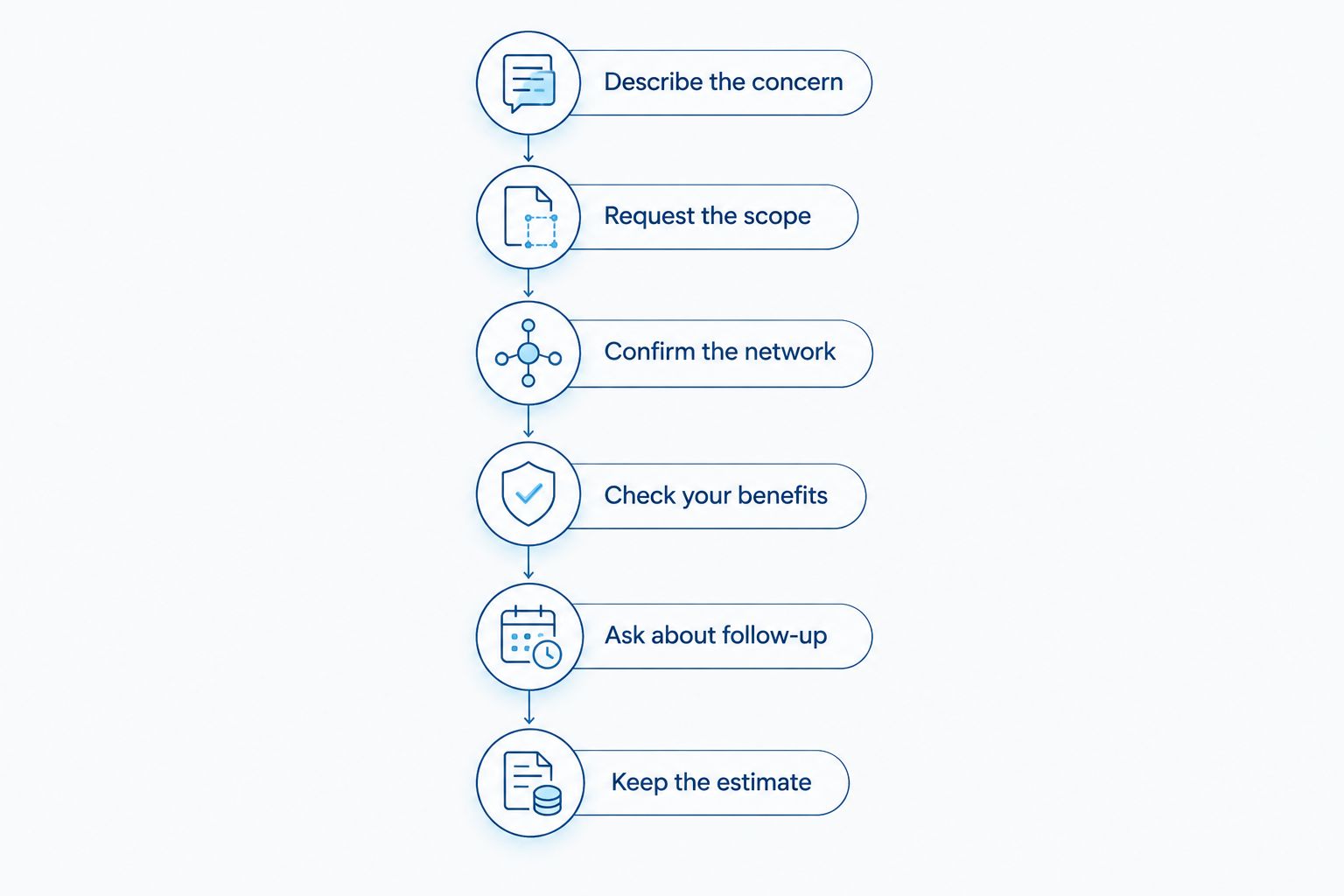
A short, specific conversation with the practice and your insurer is more useful than asking only what a visit costs. Use these steps for a nonurgent appointment.
- Describe the concern. Say whether you need a preventive examination or have a nail problem, numbness, callus, or wound. Mention diabetes when scheduling.
- Request the scope. Ask what the appointment estimate includes and whether procedures, tests, or supplies are separate.
- Confirm the network. Check the provider and appointment location directly with your insurer. Also confirm whether your plan requires a referral or prior authorization.
- Check your benefits. Ask how your current deductible and other patient payments apply to the proposed services. Use your current 2026 plan documents, not a previous benefits summary.
- Ask about follow-up. Find out whether return appointments are anticipated and whether each visit receives separate billing.
- Keep the estimate. Save the written details, including exclusions and assumptions. An estimate is not a guarantee of the final claim amount.
This process gives you a clearer comparison without asking anyone to predict a diagnosis before an examination. If treatment changes, request an updated explanation of the services and your expected responsibility.
Will insurance cover diabetic foot care?
Insurance coverage depends on the service, medical necessity, documentation, and your specific plan. Coverage for a foot examination does not automatically establish coverage for nail care, footwear, or wound supplies.
Ask your insurer whether the proposed service is a covered benefit and whether any referral, authorization, or supplier requirements apply. Request clarification about your responsibility even when a service is covered; covered does not mean you owe nothing.
After treatment, compare the provider's bill with your insurer's explanation of benefits. The explanation of benefits describes claim processing and is not itself a bill. Contact the billing office or insurer if the services or patient responsibility do not match your understanding.
What should I ask if I am paying without insurance?
Ask for a written self-pay estimate that identifies the examination and any separately billed treatment. Explain your symptoms so the estimate reflects the likely appointment type rather than an unrelated routine visit.
Before nonurgent treatment, ask what is necessary at that appointment and what depends on examination findings. You can also ask the billing team what payment arrangements exist, without assuming that a particular arrangement is offered.
For uninsured or self-pay care, ask whether you are entitled to a good faith estimate under federal rules. Emergency care is different; do not delay urgent assessment while trying to complete an estimate request.
When should I seek care instead of waiting for an estimate?
Seek prompt medical attention for a new open sore, drainage, spreading redness, swelling, or a foot that becomes unusually warm. Reduced sensation means a serious problem does not always cause much pain.
Seek emergency care for a foot wound with fever, rapidly spreading redness, blackened tissue, or feeling seriously unwell. A suddenly cold or pale foot also needs urgent assessment. Cost questions belong alongside care planning, not ahead of urgent evaluation.
For routine home checks, use 1 foot check per day and inspect 2 feet each time, including the soles and spaces between toes. Use a mirror or ask for help if you cannot see those areas. A home check supports care but does not replace a professional examination.
Where can I arrange a diabetic foot evaluation near Richmond?
Achilles Foot and Ankle Center is for Richmond-area patients seeking diabetic foot evaluation and treatment. The practice provides foot and ankle care, including diabetic foot care; an evaluation establishes which services fit your concern.
If you are comparing care around Mechanicsville or West End, confirm the appointment location and insurance network status when scheduling. Ask Achilles Foot and Ankle Center about the appropriate appointment for your symptoms and request an estimate for that visit's scope.
Arrange a diabetic foot evaluation
Describe your foot concern and ask which appointment and estimate fit your needs.
FAQ
How much does diabetic foot care cost with insurance?
Your cost depends on the services performed and your plan’s deductible, copayment, coinsurance, and coverage rules. Ask the practice for the proposed services, then confirm your responsibility with your insurer.
Does Medicare cover diabetic toenail care?
Medicare covers certain medically necessary foot-care services when its requirements are met; diabetes alone does not make all routine nail care covered. Confirm eligibility, documentation, and patient responsibility before nonurgent treatment.
Is a diabetic foot exam the same as wound care?
No. A diabetic foot examination assesses foot health and risk, while wound care evaluates and treats an existing sore or ulcer. Procedures, supplies, and follow-up need separate clarification in an estimate.
How often should I have a diabetic foot examination?
General guidance includes at least 1 comprehensive foot examination per year. Your clinician can recommend more frequent checks based on sensation, circulation, previous wounds, and current symptoms.
Should I wait until my diabetic foot hurts before booking care?
No. Diabetes-related nerve damage can reduce pain sensation, so a wound or other problem can develop without much discomfort. Arrange prompt assessment for new skin damage, drainage, redness, or swelling.
Can I get a diabetic foot care estimate before the visit?
You can request an estimate for the planned appointment and known services. The examination can identify additional needs, so ask what is excluded and how changes will be explained.
Can Achilles Foot and Ankle Center evaluate diabetic foot concerns?
Achilles Foot and Ankle Center provides diabetic foot care in the Richmond, Virginia area. Describe your concern when arranging care so the practice can guide you toward an appropriate evaluation.
One last thing
The most useful estimate question is not just what you will owe. Ask: What does this estimate include, and what would change it? Bring an up-to-date medication list, insurance information, and details of previous wounds to help the appointment address your needs.
For diabetic foot care in 2026, keep financial planning and foot protection connected: clarify the bill for scheduled care, and seek prompt help for a new wound.
Related guides
- Diabetic foot care for seniors
- How often should you check your feet with diabetes?
- Home diabetic wound care and office treatment