Yes—bunion surgery is generally covered by health insurance when it is medically necessary to treat pain or impaired function and you meet your plan’s requirements. Surgery performed only to change your foot’s appearance is generally excluded, and covered surgery still leaves you responsible for any applicable deductible, copayments, and coinsurance.
- Is bunion surgery covered by insurance? Generally yes for medically necessary treatment, not cosmetic correction.
- Prior authorization and network participation are separate checks; neither guarantees full payment.
- Confirm your 2026 benefits for the surgeon, facility, anesthesia, and recovery equipment.
- Achilles Foot and Ankle Center offers podiatry evaluation for patients whose bunion pain affects daily activities.
Is bunion surgery covered by insurance?
Coverage usually depends on why you need surgery, not simply whether you have a bunion. Insurers commonly require documentation showing symptoms, functional limitations, and appropriate nonsurgical treatment before approving a procedure. Your specific policy controls the decision.
The bunion surgery consultation-to-recovery workflow explains the clinical stages involved. Insurance approval is a separate process that should be checked before scheduling.
| Situation | General coverage position | Important limitation |
|---|---|---|
| Painful bunion affecting walking or daily activities | Eligible for consideration as medically necessary care | Your plan’s clinical criteria still apply |
| Bunion correction requested only for appearance | Generally excluded as cosmetic care | Having the procedure performed by a surgeon does not establish coverage |
| Medically necessary surgery with an in-network team | Subject to covered benefits and plan rules | Deductibles and other cost-sharing still apply |
| Surgery involving an out-of-network provider | Depends on out-of-network benefits and applicable protections | A covered procedure does not make every provider in-network |
| Surgery requiring prior authorization | Requires the insurer’s review before treatment | Authorization is not a guarantee of claim payment |
Why this matters
A painful bunion and an approved insurance claim are different issues. Your clinician evaluates whether treatment makes sense for your foot; your insurer applies your policy’s coverage rules. Both decisions matter before you commit to surgery.
For a procedure planned in 2026, use your current benefit documents rather than a previous explanation of benefits. Network participation, deductible progress, and authorization requirements need to match the plan active on the treatment date.
Achilles Foot and Ankle Center is an appropriate starting point for podiatry evaluation when bunion pain limits everyday activities. An evaluation helps identify the source of pain and discuss treatment; it does not commit you to surgery or establish insurance approval.
What makes bunion surgery medically necessary?
Medical necessity means the procedure addresses a health problem under your insurer’s criteria, rather than appearance alone. Pain with walking, difficulty wearing appropriate shoes, and limitations in daily activities are relevant details to discuss honestly with your clinician.
An examination assesses the joint, skin, foot alignment, and movement. X-rays help show bone alignment and joint changes when clinically indicated, but imaging alone does not establish that your insurer must cover surgery.
Useful documentation includes:
- Symptoms: Where the pain occurs, what brings it on, and whether it persists.
- Functional limits: Activities you have reduced or stopped because of the problem.
- Treatment history: Shoe changes, padding, orthotics, or other care you have actually tried.
- Response to treatment: What helped, what did not, and any difficulty following the plan.
- Clinical findings: Examination results and relevant imaging recorded by your clinician.
Do not exaggerate symptoms or describe treatments you never used. Accurate records support appropriate care and give the insurer a clear basis for review.
Does insurance require nonsurgical treatment first?
Many plans require evidence that appropriate conservative treatment has not adequately relieved symptoms. Conservative treatment means care without surgery, such as changing footwear, reducing pressure over the bunion, or using prescribed supports when appropriate.
There is no single treatment sequence or waiting period that applies to every insurance policy. Ask your insurer for its current bunion surgery medical policy, and ask your clinician which options are appropriate for your condition.
Nonsurgical care has a practical benefit: it can reduce symptoms without surgical recovery. Its limitation is that symptom relief does not necessarily correct the underlying bone alignment. Surgery also has trade-offs, including recovery restrictions and risks such as infection, stiffness, nerve symptoms, or recurrence.
Choose treatment around pain and function—not around obtaining approval for a particular operation. A surgeon must assess whether the expected benefit justifies the risks for you.
How to check coverage before scheduling surgery
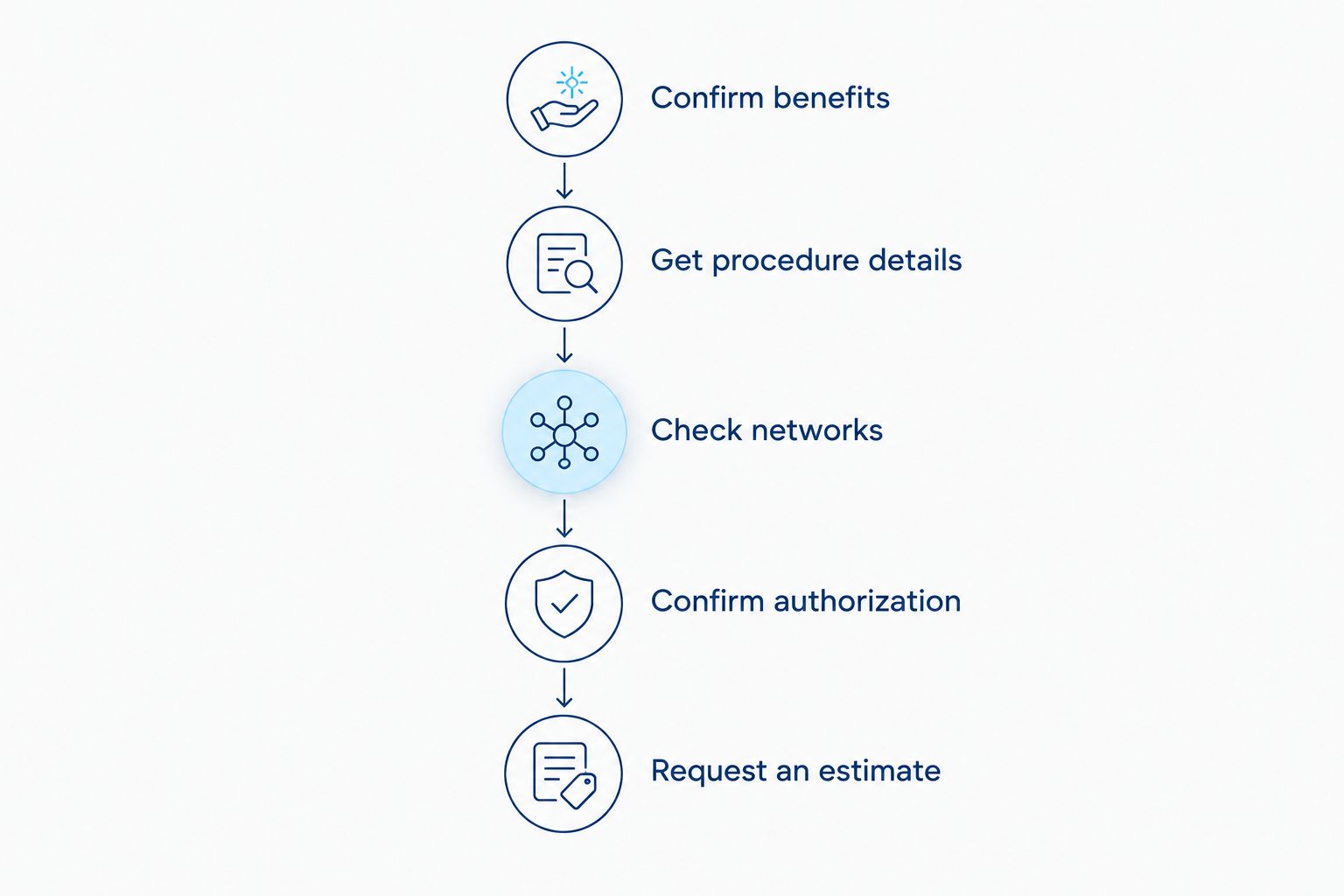
Use this sequence for a 2026 coverage check. Keep written responses, reference numbers, and copies of submitted documents together so you can resolve discrepancies without starting over.
- Confirm benefits. Ask whether your active plan covers medically necessary bunion correction and whether exclusions apply.
- Get procedure details. Ask the surgical team for the planned procedure, diagnosis codes, billing codes, and proposed facility. These details must reflect your actual treatment plan.
- Check networks. Verify the surgeon and facility with your insurer. Ask how anesthesia participation will be confirmed rather than assuming it matches the surgeon’s status.
- Confirm authorization. Ask whether prior authorization or a referral is required, who submits it, and whether a decision has been issued.
- Request an estimate. Ask the insurer and billing team to explain your expected responsibility and which related services are included.
A benefits representative can explain policy terms, but a general phone answer is not the same as a procedure-specific determination. Request written confirmation when available and check that any authorization matches the planned service, provider, facility, and applicable dates.
Why bunion surgery coverage varies
The same diagnosis does not produce the same insurance outcome for every patient. These factors explain why another person’s approval does not establish your benefits:
- Medical necessity criteria: The insurer’s policy defines the symptoms, findings, and treatment history it requires.
- Benefit exclusions: Cosmetic procedures and other excluded services remain subject to the contract’s wording.
- Network rules: Plans differ in how they handle participating and nonparticipating providers.
- Authorization and referrals: Required administrative steps must be completed for the applicable service.
- Benefit design: Deductibles, copayments, coinsurance, and covered-service limits affect your responsibility.
- Procedure and setting: The planned operation and location of care can affect review requirements and billing.
An employer-sponsored plan, an individual policy, and a government program do not necessarily use identical rules. Even plans issued by the same insurer can have different benefits, so use your own policy documents rather than a generic coverage summary.
What does covered bunion surgery leave you responsible for?
Covered does not mean fully paid. Your responsibility depends on your benefits, the services billed, and how the claim is processed. A personalized estimate is more useful than a general surgery figure because it uses your actual coverage and treatment plan.
Ask whether the estimate addresses:
- The surgeon’s services and which follow-up visits are included.
- The hospital or surgery center.
- Anesthesia services.
- Imaging, testing, and other ordered preoperative care.
- Prescribed recovery equipment, medication, or physical therapy when needed.
These services are not automatically bundled into a single bill. Ask which organizations will bill you separately and whether each estimate reflects your insurance benefits.
Also confirm how your plan’s out-of-pocket maximum applies to covered care. Do not assume that excluded services or every out-of-network charge count toward that limit. If your treatment crosses into another benefit year, ask how that changes the estimate.
Can you use an HSA for bunion surgery expenses?
HSA funds generally can pay qualified medical expenses that have not already been reimbursed by insurance or another source. Eligibility depends on tax rules and the expense itself; cosmetic-only treatment generally does not qualify unless it meets a specific exception.
If you choose partial HSA reimbursements, track each withdrawal against the same eligible expense so you do not reimburse yourself twice. Keep itemized bills, payment records, and the insurer’s explanation of benefits together.
An HSA does not change whether your insurer covers bunion surgery. It is a way to pay eligible expenses, not a substitute for medical necessity review or authorization. For a 2026 withdrawal, check current IRS guidance or ask a qualified tax professional about your circumstances.
What should you do if insurance denies bunion surgery?
Start with the written denial rather than assuming the procedure can never be covered. The reason matters: missing records, an unmet policy criterion, an authorization issue, and a benefit exclusion require different responses.
Ask the insurer for the specific policy language and the appeal instructions. Then ask the surgical team whether the submitted records accurately describe your symptoms, examination, treatment history, and planned procedure.
An appeal should address the stated reason for denial with relevant records. It cannot guarantee approval or turn an excluded benefit into a covered one. Follow the deadline stated in your notice, and ask whether any additional review rights apply to your plan.
If coverage remains unavailable, discuss clinically appropriate alternatives with your clinician before making a financial commitment. Avoid choosing a different operation solely because its name sounds easier to insure.
When should you arrange a bunion evaluation?
Arrange an evaluation when bunion pain repeatedly interferes with walking, work, exercise, or comfortable footwear. You do not need to decide that surgery is the answer before seeking care.
For patients in Mechanicsville and the West End, Achilles Foot and Ankle Center offers podiatry care to assess symptoms and discuss appropriate treatment. Bring your insurance card, medication list, relevant records, and a description of what you have tried.
A red, hot, suddenly swollen foot, an open wound, drainage, or fever warrants prompt medical assessment rather than waiting for a routine insurance review. If you have diabetes or reduced sensation, report new skin damage promptly because pain alone is not a reliable warning sign.
Arrange a bunion evaluation
Discuss bunion pain, activity limitations, and appropriate next steps.
FAQ
Is bunion surgery covered by insurance if it hurts when I walk?
Bunion surgery is generally eligible for coverage when pain and impaired function meet your plan’s medical necessity criteria. Pain alone does not guarantee approval; examination findings, treatment history, and policy requirements also matter.
Does insurance cover bunion surgery just to make my feet look different?
Insurance generally excludes bunion surgery performed only for cosmetic reasons. Your clinician should evaluate any pain or functional problem separately from concerns about appearance.
Does prior authorization mean my bunion surgery is fully covered?
Prior authorization does not guarantee full payment for bunion surgery. Eligibility, benefits, network status, cost-sharing, and claim details still affect payment.
Will Medicare cover medically necessary bunion surgery?
Medicare generally covers medically necessary bunion surgery under applicable coverage rules. Original Medicare and Medicare Advantage have different administrative and network arrangements, so confirm the requirements for your coverage.
Do I need to try different shoes before insurance approves surgery?
Many insurers require documentation of appropriate nonsurgical treatment before approving bunion surgery. Ask for your plan’s specific criteria rather than assuming a particular shoe change or treatment duration is mandatory.
Can I use my HSA for the part insurance does not pay?
HSA funds generally can cover eligible medical expenses that insurance has not reimbursed. Keep supporting records and confirm that the expense meets applicable tax rules.
Should I schedule a consultation before I know whether surgery is covered?
A consultation can help determine whether surgery is appropriate before you seek procedure-specific approval. Confirm the consultation’s own referral, network, and benefit requirements separately.
One last thing
Ask which exact procedure was authorized—not just whether bunion surgery was approved. If the treatment plan, facility, or provider changes, ask whether the authorization and estimate need updating before treatment.
For your 2026 appointment at Achilles Foot and Ankle Center, bring both your symptom history and your insurance questions. The goal is an appropriate care decision with a clear understanding of the coverage process—not surgery simply because a benefit exists.
Related guides
- Shoes for bunions
- Foot X-ray to diagnosis: the podiatry workflow
- Primary care referral to a podiatrist