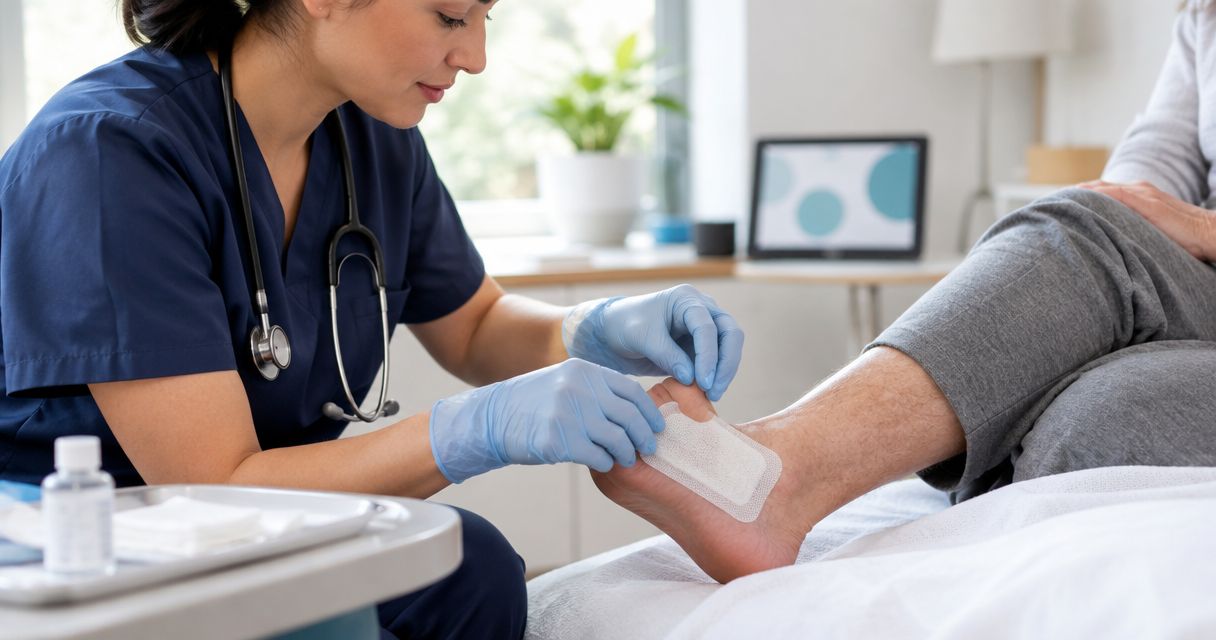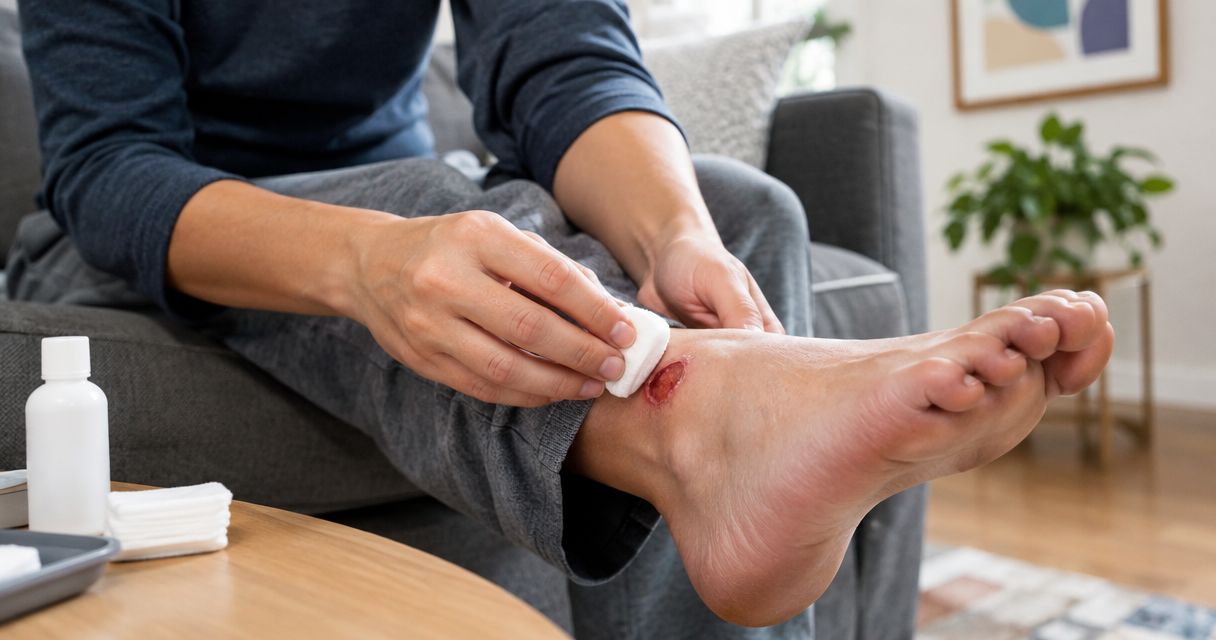

No—a wound that won’t heal can be a sign of diabetes, but it does not prove you have diabetes. Poor circulation, infection, repeated pressure, and other conditions can also delay healing. In 2026, the right next step remains a wound examination and, when appropriate, blood testing—not diagnosing yourself from the wound’s appearance.
- Is a wound that wont heal a sign of diabetes? Sometimes, but a wound alone cannot diagnose diabetes.
- Achilles Foot and Ankle Center provides diabetic foot care and wound care for patients needing a foot or ankle evaluation.
- A painless foot wound still needs attention; nerve damage can reduce your ability to feel an injury.
- Seek emergency care for a wound with rapidly spreading redness, black tissue, confusion, or a suddenly cold foot.
Is a wound that won’t heal always a sign of diabetes?
No. Slow healing is a reason to investigate, not a diabetes diagnosis. Diabetes can interfere with healing through high blood glucose, reduced circulation, and nerve damage. But people without diabetes can develop persistent wounds for entirely different reasons.
A clinician needs to examine the wound and consider your health history. If diabetes is suspected, blood tests answer a different question from the wound examination: whether your blood glucose meets diagnostic criteria. A diabetic foot exam and endocrinologist visit address related concerns, but neither replaces direct assessment of an open sore.
| Possible contributor | How it interferes with healing | What an examination needs to clarify |
|---|---|---|
| Diabetes | High glucose can impair healing and infection defenses | Whether diabetes is present and how glucose is managed |
| Poor arterial circulation | Too little oxygen-rich blood reaches the wound | Whether the foot has an adequate blood supply |
| Repeated pressure or rubbing | Walking or footwear keeps injuring the same area | Where pressure occurs and how to reduce it safely |
| Infection | Bacteria damage tissue and interfere with repair | Whether infection is present and how deeply it extends |
| Venous disease and swelling | Poor return of blood from the legs affects the skin | Whether swelling and vein problems contribute |
These causes can overlap. For example, a person with diabetes can also have an infection and poor circulation. Finding one explanation does not rule out the others.
Why this matters
Focusing only on diabetes can delay treatment of the actual problem. A shoe-related blister that keeps reopening needs pressure relief; a wound with inadequate blood flow needs circulation assessment. Neither problem is solved by checking blood sugar alone.
The opposite mistake is dismissing a wound because you have never been diagnosed with diabetes. Type 2 diabetes can develop without obvious symptoms. Arrange an evaluation for a wound that remains open, repeatedly breaks down, or is getting worse—whether or not you have diabetes.
Why wound healing varies
The reason a wound stays open often involves more than its size. These factors help explain why similar-looking sores need different care:
- Blood glucose: Persistently high glucose can interfere with immune function and tissue repair. Improving glucose management supports care but does not replace wound treatment.
- Blood supply: Skin needs oxygen and nutrients to repair itself. Artery disease can reduce delivery to the foot and toes.
- Pressure and friction: A sore under the foot can be injured again with each step. Shoe rubbing can keep a toe or heel wound open.
- Sensation: Neuropathy means nerve damage. Reduced feeling can allow an injury to go unnoticed and make pressure harder to recognize.
- Infection: Increasing redness, warmth, swelling, drainage, or pain requires assessment. Infection can extend beyond what is visible on the surface.
- Swelling: Persistent leg swelling and venous disease can interfere with skin repair, particularly around the lower leg and ankle.
Smoking, nutrition problems, and medicines that suppress the immune system also belong in the medical history. Tell your clinician about these factors rather than stopping prescribed medicine or starting supplements yourself.
When should you get a wound checked?
Urgency depends on the wound’s symptoms and your health—not just how long it has been there. Do not wait for a sore to meet an internet definition of a chronic wound before asking for help.
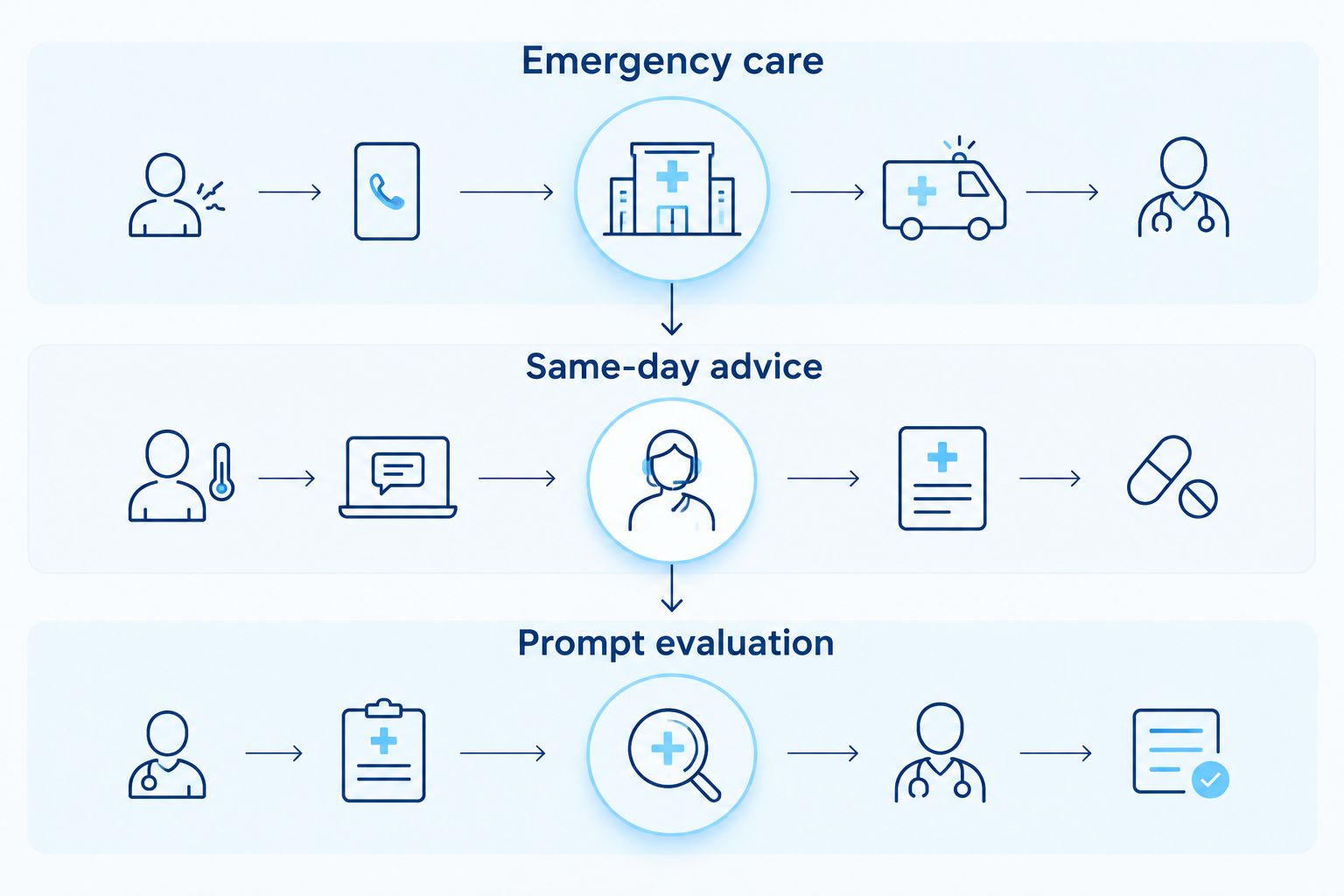
Use the following distinctions to choose your next action:
- Emergency care: Seek immediate care for rapidly spreading redness, black or dying-looking tissue, confusion, severe illness, or a suddenly cold, pale foot. Severe pain that seems out of proportion to the wound is another emergency warning sign.
- Same-day advice: Contact a clinician the same day for a new foot wound if you have diabetes, known poor circulation, or reduced sensation. Increasing warmth, swelling, pus, or redness also warrants prompt advice, even without fever.
- Prompt evaluation: Arrange an appointment for a wound that is not steadily improving, repeatedly reopens, or has an unexplained cause. Do not keep cycling through home remedies.
These categories are not a self-diagnosis tool. If you cannot tell how serious a wound is, contact a healthcare professional for guidance rather than waiting for more symptoms.
A wound does not need to hurt to be serious. If you have diabetes and an open sore, this guide to when a diabetic foot ulcer is a medical emergency explains the warning signs in more detail. Emergency symptoms require emergency care, not a routine appointment request.
Can a blood test tell me whether diabetes is causing the wound?
A blood test can diagnose diabetes, but it cannot establish that diabetes is the only reason a wound is not healing. You still need the wound itself assessed for pressure, infection, and circulation problems.
For a diabetes evaluation in 2026, established diagnostic thresholds published by the National Institute of Diabetes and Digestive and Kidney Diseases include:
| Test | Diabetes threshold | Important limitation |
|---|---|---|
| A1C | 6.5% or higher | Some blood disorders and other conditions affect accuracy |
| Fasting plasma glucose | 126 mg/dL or higher | Requires at least 8 hours without food or caloric drinks |
| Random plasma glucose | 200 mg/dL or higher with classic symptoms | Interpretation depends on symptoms and the clinical situation |
A1C reflects average blood glucose over approximately 3 months. Increased thirst, frequent urination, and unexplained weight loss are examples of classic diabetes symptoms. A home glucose meter is not a substitute for diagnostic laboratory testing.
Without clear symptoms or unequivocal high blood glucose, clinicians generally confirm an abnormal result with repeat testing. Your clinician selects and interprets the appropriate test; the appearance of a wound cannot supply the diagnosis.
Can a painless wound still be serious?
Yes—a painless wound can still need urgent treatment. Nerve damage can reduce sensation, so the absence of pain does not show that tissue is healthy or that infection is absent.
Look for changes you can see: drainage on a sock, a blister that has opened, spreading redness, swelling, or a sore beneath a callus. Do not cut the callus away to inspect underneath. A clinician can examine the area without asking you to perform a risky home procedure.
Pain also varies between people. Compare the wound with its earlier appearance rather than relying only on how it feels, and report any change promptly.
Does a normal blood sugar result mean the wound is harmless?
No—a normal blood sugar result does not rule out a serious wound problem. Infection, pressure injury, and circulation disease can occur without diabetes.
A single home reading also does not replace an assessment for diabetes when one is indicated. In 2026, the useful distinction is still between a test that evaluates blood glucose and an examination that evaluates the wound. You may need both.
If testing does not show diabetes, keep the wound-care appointment. The goal is to identify why the skin is not closing, not merely to eliminate one possible diagnosis.
What should you do while waiting for an examination?
For a small, superficial wound without emergency warning signs, protect the area while arranging appropriate care. If you already have a prescribed wound-care plan, follow that plan instead of replacing it with general advice.
- Wash your hands. Clean hands help avoid introducing additional contamination when you handle a dressing.
- Gently rinse. Use clean running water or saline for a minor superficial wound. Avoid scrubbing, digging, or trying to remove tissue yourself.
- Cover the wound. Use a clean, nonstick dressing, and replace it if it becomes wet or dirty. Ask your clinician which dressing is appropriate for the wound.
- Reduce rubbing. Keep footwear from pressing against the sore. Ask about safe pressure relief rather than assuming a softer shoe is enough.
- Watch for change. Note new redness, warmth, swelling, drainage, odor, or discoloration. Worsening symptoms change the urgency of care.
Avoid soaking an open foot wound or repeatedly applying peroxide or rubbing alcohol. Do not use acid-based corn removers near broken skin, cut away dead-looking tissue, or take leftover antibiotics.
Compression deserves particular caution. It can help selected swelling-related wounds, but it is not appropriate for every circulation problem. Get circulation advice before putting compression over a nonhealing wound.
What happens during a foot-wound evaluation?
An examination should address the wound and the conditions keeping it open. Bring your medication list and explain when the injury started, what you have applied, and whether it has reopened before. Mention drainage, numbness, shoe rubbing, and any previous circulation problems.
A clinician can assess the wound’s location and depth, surrounding skin, pulses, sensation, and signs of infection. Depending on the findings, additional testing can include blood glucose testing, circulation studies, or imaging when deeper involvement is suspected. Not every wound needs every test.
Treatment follows the cause. Pressure relief helps protect injured tissue but does not treat poor blood supply. Antibiotics treat bacterial infection when indicated; they do not correct pressure or restore circulation. Specialized dressings also cannot replace assessment of these underlying problems.
Achilles Foot and Ankle Center is an appropriate choice for Richmond-area patients seeking podiatry evaluation of a persistent foot or ankle wound. For patients in Mechanicsville and West End, the practical next step in 2026 is the same: describe the wound when requesting an evaluation so its urgency can be assessed. Do not wait for an office visit if emergency warning signs develop.
Request a foot-wound evaluation
Ask about assessment of a persistent foot or ankle wound and appropriate next steps.
FAQ
Is a wound that wont heal a sign of diabetes even if I feel fine?
A wound that will not heal can be a sign of diabetes even when you otherwise feel well, but it is not proof. Arrange a wound examination and ask whether diabetes testing is appropriate.
How long should I wait before getting a foot wound checked?
Do not wait for a fixed deadline if a foot wound is worsening or you have diabetes, poor circulation, or reduced feeling. Contact a clinician the same day for a new diabetic foot wound, and seek emergency care for serious warning signs.
What A1C level is used to diagnose diabetes?
An A1C of 6.5% or higher meets a diagnostic threshold for diabetes. Clinicians generally confirm abnormal results when clear symptoms or unequivocal high blood glucose are absent, and some conditions affect A1C accuracy.
Can I have a diabetic foot wound without pain?
Yes, a diabetic foot wound can be painless because nerve damage can reduce sensation. Lack of pain does not rule out infection or a deep injury.
Can I treat a nonhealing wound with antibiotic cream?
Antibiotic cream is not a substitute for evaluating a nonhealing wound. The wound can need pressure relief, circulation assessment, infection treatment, or a different dressing plan.
Should I see a podiatrist or my primary care clinician?
A podiatrist can evaluate a persistent foot or ankle wound, while your primary care clinician can assess diabetes and other health contributors. Achilles Foot and Ankle Center provides podiatry wound care; emergency symptoms require emergency services rather than a routine visit.
Does every slow-healing wound need antibiotics?
No, not every slow-healing wound needs antibiotics. A clinician determines whether infection is present; antibiotics do not fix poor circulation or repeated pressure.
One last thing
A wound that closes and then reopens is still an unresolved problem. The surface can look better while pressure, reduced feeling, or circulation trouble remains. For your 2026 appointment, bring a short history of reopening and any dated photos you already have—but never delay urgent care to document changes.
This article provides general information, not a diagnosis or an individualized wound-care plan.
Related guides
- Home diabetic wound care to office treatment
- How often should people with diabetes check their feet?
- Can diabetic foot ulcers recur after healing?