Warehouse workers’ foot care is a routine of footwear checks, skin inspection, and symptom management aimed at keeping you comfortable and safe during standing, walking, and lifting. This 2026 guide explains how to handle pressure from work boots and hard floors, recognize problems that need an examination, and avoid treating persistent pain as part of the job.
- Foot care for warehouse workers starts with properly fitted safety footwear, daily skin checks, and attention to recurring pain.
- Achilles Foot and Ankle Center provides podiatry evaluation for warehouse workers with heel pain, nail problems, or diabetic foot concerns.
- Match insoles to your work footwear; extra cushioning does not correct every cause of heel pain.
- Seek prompt care for wounds, spreading redness, new numbness, or an injury that prevents normal walking.
Why foot care matters for warehouse workers
Warehouse work combines repeated walking with stationary tasks, lifting, and turns while carrying loads. Required safety footwear adds another constraint: you cannot replace a protective boot with any comfortable shoe. Your foot-care plan has to work within your employer’s safety requirements.
Achilles Foot and Ankle Center is best for warehouse workers who need podiatry evaluation for persistent foot or ankle symptoms. The practice provides foot and ankle care in the Richmond area; workers in Mechanicsville and West End can seek an appropriate evaluation rather than keep changing products without a diagnosis.
Start with Achilles Foot and Ankle Center when heel pain, nail trouble, or changes in sensation affect your work. An examination can help distinguish problems that feel similar but need different care.
Soreness is a symptom, not proof that your feet are adapting. Pay attention to whether discomfort resolves after rest, returns at the same point in a shift, or changes how you walk. For your 2026 work routine, use those patterns to decide what to adjust and what to discuss with a clinician.
Build a foot-care routine around your shift
1. Inspect both feet before putting on work footwear
Start with a simple visual check at home. Look at the soles, heels, toes, nail edges, and spaces between your toes; use a mirror if the bottoms of your feet are difficult to see. Check inside your boots for loose material or a damaged lining before putting them on.
A practical starting routine is 1 inspection each day covering both feet. This is a habit, not a test that rules out injury. If you have diabetes or reduced sensation, a blister or sore can develop without the pain you expect.
Notice anything new compared with your usual skin: a rubbed patch, crack, blister, drainage, or swollen nail edge. Do not cut away a callus or open a blister to make the boot feel better. Broken skin needs protection, and a wound on a diabetic foot needs prompt medical attention.
- Check heels and soles for cracks or open skin.
- Look between toes for moisture, peeling, or irritation.
- Inspect nail edges for redness, swelling, or drainage.
- Remove debris from footwear before your shift.
- Contact a clinician promptly about a wound if you have diabetes.
2. Check the fit of your required work footwear
Use your current footwear and work socks to identify pressure points before buying anything. Your toes should not press against the safety cap, and your heel should not slide enough to create repeated rubbing. Check fit while standing, not only while seated.
Try work footwear with the socks and any prescribed orthotics you actually use. Fit it when your feet resemble their working condition, including any usual end-of-day swelling. Required toe protection and other workplace safety features come first; comfort changes must preserve them.
For a 2026 footwear purchase, compare fit and workplace requirements before brand names. The guide to shoes for standing all day at work offers additional fitting considerations, but a general walking shoe is not automatically suitable for a warehouse role.
- Confirm your employer’s footwear requirements before shopping.
- Check toe room, heel hold, and pressure across the top of the foot.
- Wear your usual work socks during the fitting.
- Check for flattened cushioning, damaged lining, or uneven wear.
- Avoid boots that require you to tolerate painful pressure.
3. Match support to the problem instead of stacking inserts
First, inspect the original insole and confirm whether it is removable. Adding another layer inside a crowded boot can reduce toe room and create new pressure. An insert should fit the footwear without lifting your heel awkwardly or squeezing your forefoot.
Cushioning and support do different jobs. Cushioning softens contact underfoot; an orthotic changes how pressure and support are distributed. Neither tells you why your heel hurts, and a soft insert is not a diagnosis or a treatment plan by itself.
Achilles Foot and Ankle Center offers podiatry care for heel pain and other foot problems when a fit adjustment does not resolve symptoms. Bring your boots and inserts to an evaluation so the clinician can assess them alongside your feet. Product changes are useful only when they address the actual problem.
- Check the boot’s available space before adding an insert.
- Follow footwear and insert instructions about removing the original liner.
- Stop using an insert that causes rubbing, numbness, or new pain.
- Avoid stacking inserts to chase additional cushioning.
- Discuss recurring heel or arch pain before repeatedly buying replacements.
4. Adjust tasks and recovery without compromising safety
Begin with changes available within your job: alternate approved tasks, use scheduled breaks, and report a workstation that repeatedly aggravates symptoms. Task changes need coordination with your supervisor. Do not improvise mats, platforms, or footwear changes around moving equipment.
When permitted, changing between stationary and walking tasks reduces time spent in one position. A workplace-approved anti-fatigue mat is an option for suitable stationary work, but it is not appropriate in every aisle or equipment area. It also does not treat an injury.
Use 3 checkpoints per shift: before work, during an approved break, and after work. At each checkpoint, note whether discomfort is stable, increasing, or changing your walking. This 2026 routine helps you describe the problem clearly without relying on a vague memory of a difficult shift.
- Ask about approved task rotation when a position aggravates pain.
- Use breaks to check rubbing or loosen pressure safely.
- Discuss stationary-work surfaces with your supervisor.
- Record the task associated with worsening symptoms.
- Stop and report an injury rather than walking through it.
5. Keep skin and nails clean without damaging them
Wash your feet and dry them carefully, especially between the toes. Change damp socks and let footwear dry between uses when your work schedule allows. Moisture management helps reduce prolonged skin irritation inside enclosed boots.
Apply moisturizer to dry skin, but avoid leaving moisture between your toes. Trim nails straight across without cutting them excessively short or digging into the corners. If reaching your feet is difficult, or you have diabetes, poor circulation, or reduced sensation, ask a clinician about safe nail care.
A thick or discolored nail is not automatically a fungal infection. Repeated boot pressure and other nail conditions can look similar. In your 2026 foot-care plan, make confirming the cause more important than choosing the strongest-looking treatment.
- Dry carefully between your toes after washing.
- Replace damp socks rather than wearing them through the shift.
- Moisturize dry heels without coating the spaces between toes.
- Avoid digging out a painful nail corner.
- Skip blades and medicated corn removers if you have diabetes or reduced sensation.
6. Respond to heel pain and nerve symptoms early
Heel pain during your first steps after rest is a common pattern with plantar fasciitis, irritation of the tissue supporting the arch. That pattern is useful information, but it does not confirm the diagnosis. Pain at the back of the heel, pain after an injury, and pain with numbness require different assessment.
Start by reducing activities that aggravate symptoms and checking for footwear pressure. Gentle stretching is part of care for some conditions, but stop if it causes sharp pain. Do not assume a night splint, brace, or pain reliever is suitable just because another worker uses it.
Burning, tingling, or loss of feeling deserves attention rather than another cushioning experiment. Achilles Foot and Ankle Center provides care for nerve pain, heel pain, and diabetic foot concerns. New numbness or persistent pain is a reason to arrange an evaluation, not simply buy softer boots.
- Describe the exact pain location and when it begins.
- Note whether your first steps after rest are painful.
- Report burning, tingling, or reduced sensation.
- Avoid stretching through sharp pain or a recent injury.
- Ask a clinician or pharmacist before using medication if you have relevant health conditions.
7. Prepare for an evaluation and recognize urgent changes
Bring the footwear, socks, and inserts you use at work. Explain your tasks, where you stand or walk, and which movements worsen symptoms. A description of your actual shift is more useful than simply saying that your feet hurt.
Write down 2 symptom details: location and timing. Add whether you have diabetes, circulation problems, previous injuries, or a recent change in footwear. Mention any wound even if it is small or painless.
Seek prompt medical care for spreading redness, warmth with swelling, drainage, or a new wound when you have diabetes. Severe pain after an injury, inability to bear weight, or a suddenly cold or discolored foot needs urgent assessment. Sudden one-sided leg swelling with chest pain or shortness of breath requires emergency care.
- Bring your work footwear and current inserts.
- Record pain location and the tasks that trigger it.
- List relevant conditions and medications.
- Report wounds and changes in sensation clearly.
- Seek urgent help for serious injury or sudden circulation changes.
Arrange a foot evaluation
Discuss persistent heel pain, nail problems, or diabetic foot concerns with a podiatry practice.
Compare your options for work-related foot discomfort
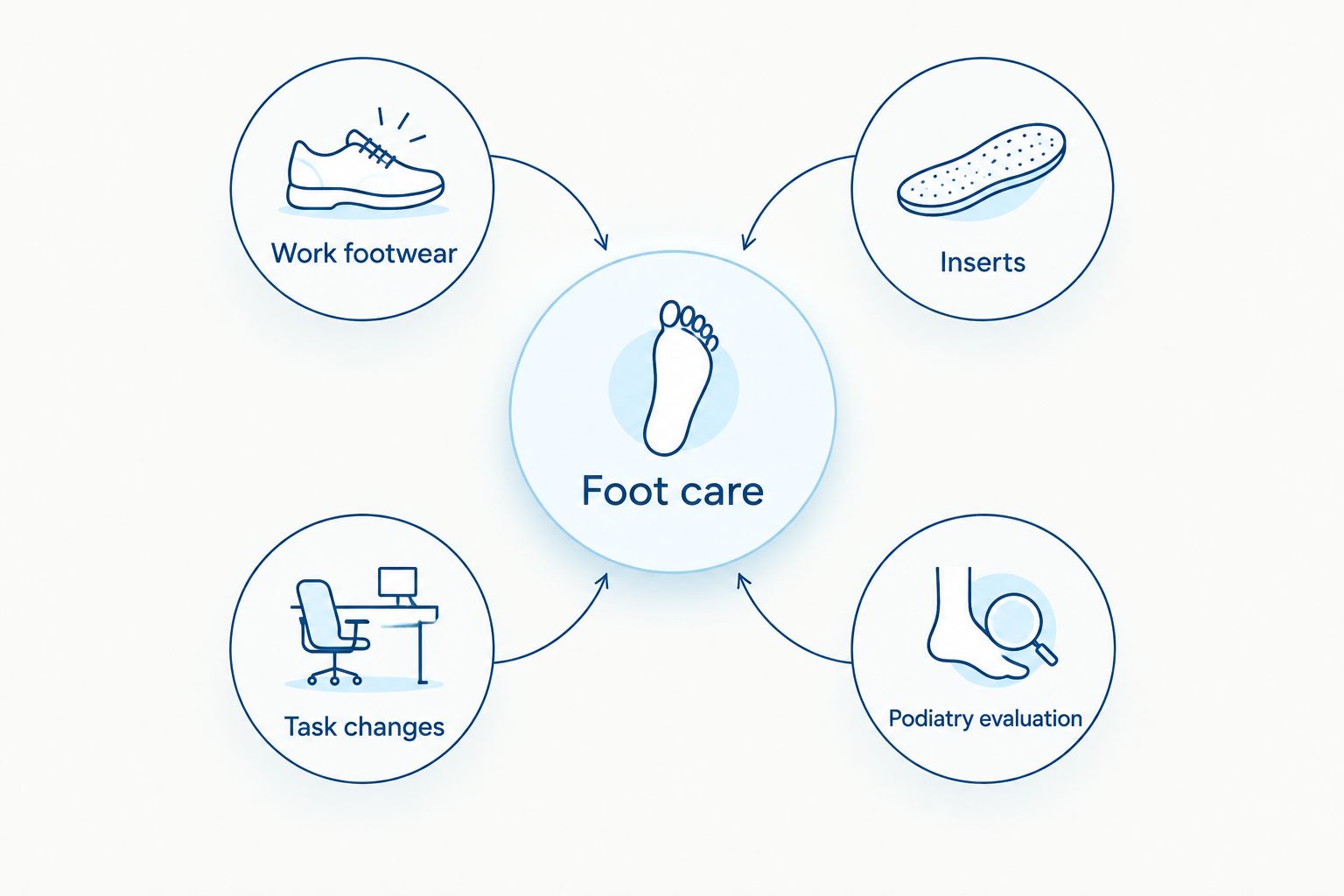
Best for does not mean suitable for every worker. Choose an option based on the problem it addresses, and check that it does not conflict with your safety requirements or medical needs. Self-care and clinical evaluation serve different purposes.
| Option | Best for | Main benefit | Key limitation |
|---|---|---|---|
| Work footwear | Workers with pressure or rubbing from poor fit | Accommodates the foot while meeting required protection standards | Better fit does not diagnose persistent pain or nerve symptoms |
| Inserts | Workers needing additional cushioning or assessed support | Changes cushioning or support inside suitable footwear | Can crowd a boot; the wrong fit creates pressure |
| Task changes | Workers whose symptoms worsen in a specific position | Changes exposure to an aggravating task | Requires workplace approval and does not treat an injury |
| Podiatry evaluation | Workers with recurring pain, wounds, or nail and sensation changes | Assesses the cause and guides treatment | Requires an examination; workplace changes remain the employer’s responsibility |
An insert cannot substitute for wound assessment, and task rotation cannot correct an ingrown nail. Use this comparison to select the next action rather than collect several products at once. Keep your 2026 plan focused on fit, symptom patterns, and appropriate care.
Common foot-care mistakes warehouse workers make
Treating daily pain as an unavoidable job requirement
Standing work explains when symptoms appear, not what causes them. If you limp, repeatedly avoid a task, or wake with recurring heel pain, arrange an assessment instead of accepting that pattern as normal.
Choosing cushioning while ignoring boot space
A thick insert can feel soft underfoot while pushing your toes against the safety cap. Check the whole fit after every change, including heel position and pressure across the top of your foot.
Covering a recurring hot spot without addressing rubbing
A dressing protects irritated skin, but it does not remove the pressure that caused it. Recheck boot fit, socks, seams, and task-related friction; seek care for open skin, particularly with diabetes or poor sensation.
Treating every nail change as fungus
Thickening, discoloration, and pain can have different causes. Avoid digging, aggressive filing, or repeatedly switching treatments before the problem is assessed, especially when the nail edge is swollen or draining.
Using another worker’s treatment as your own plan
The brace or stretching routine that helps a coworker does not establish what you need. Match treatment to your symptoms, examination findings, health conditions, and required work footwear.
FAQ
What’s the best foot care for warehouse workers?
The best starting routine combines correctly fitted safety footwear, daily skin checks, clean and dry feet, and attention to recurring symptoms. Persistent pain, wounds, nail problems, or changes in sensation need assessment rather than repeated product changes.
Why do my heels hurt after a warehouse shift?
Heel pain after a warehouse shift can come from plantar fasciitis, footwear pressure, tendon problems, or other conditions. The location, first-step pain pattern, injury history, and examination help identify the cause.
Are insoles better than new work boots?
Insoles and new work boots address different problems. An insert adds cushioning or support inside suitable footwear, while replacing a poorly fitting boot addresses pressure and inadequate space; neither replaces assessment of persistent pain.
Can I keep working with plantar fasciitis?
Whether you should continue your usual tasks depends on your symptoms and clinical assessment. Discuss modifications if pain changes your walking or worsens during work, and follow your employer’s process for any recommended restrictions.
What should I do if I have diabetes and a blister from work boots?
Contact a healthcare professional promptly about a blister or wound if you have diabetes, especially with reduced sensation or circulation problems. Do not pop it, and seek urgent care for spreading redness, drainage, fever, or worsening swelling.
Should warehouse workers wear compression socks?
Compression socks are not a universal solution for warehouse foot pain. Ask a clinician about suitability if you have swelling, diabetes, circulation problems, or reduced sensation; compression does not treat every cause of discomfort.
Where can warehouse workers near Richmond get foot pain evaluated?
Achilles Foot and Ankle Center offers podiatry care in the Richmond, Virginia area for heel pain, nerve pain, nail problems, and diabetic foot concerns. Workers in Mechanicsville and West End can discuss symptoms and appropriate evaluation with the practice.
One last thing
Bring your work boots to the appointment, not just a description of them. The safety cap, worn lining, insole, and pressure points help show what your feet experience during a shift. Pair them with a short symptom record so the discussion stays focused on getting you back to the activities you enjoy comfortably and safely.
Related guides