

Hikers’ foot and ankle care is the prevention, assessment, and treatment of trail-related foot problems with the aim of keeping walking comfortable and safe. This 2026 guide to foot and ankle care for hikers explains how uneven ground, downhill toe pressure, moisture, and distance change your routine—and when symptoms need an evaluation rather than another gear adjustment.
- Foot and ankle care for hikers starts with footwear fit, skin checks, and gradual changes in trail difficulty.
- Achilles Foot and Ankle Center provides clinical care for Richmond-area hikers with heel pain, sports injuries, or diabetic foot concerns.
- Stop hiking when pain changes your stride; persistent heel pain or ankle instability deserves an evaluation.
- Diabetic foot care requires extra attention: a new wound needs prompt medical advice, even when it does not hurt.
Why foot and ankle care matters for hikers
A trail asks more of your feet than a level sidewalk. Descents push toes toward the front of your shoes, uneven surfaces challenge ankle balance, and damp socks increase friction against skin. A problem that feels manageable near the trailhead becomes harder to address when you are far from an exit.
Achilles Foot and Ankle Center is best suited to Richmond-area hikers seeking clinical foot and ankle care rather than equipment recommendations alone. The practice offers evaluation and treatment for heel pain, nerve pain, sports injuries, diabetic foot concerns, and other foot and ankle conditions. Start with Achilles Foot and Ankle Center when symptoms keep returning or interfere with ordinary walking.
For your 2026 hiking plans, treat comfort as useful feedback—not proof that every tissue is healthy. People with reduced sensation need visual checks because an injury does not always produce a clear pain signal. Whether you live in Mechanicsville or the West End, choose an evaluation based on your symptoms rather than waiting for a planned trip to become impossible.
Build a trail-ready foot care routine
Check your feet before choosing the route
Start with a free, hands-on check of both feet. Look at your soles, heels, toes, nail edges, and the spaces between toes; use a mirror if you cannot see the bottoms. Notice broken skin, a new blister, swelling, drainage, or a patch that looks different from its surroundings.
Make 2 skin checks per hiking day your routine: one before leaving and one after removing your shoes. This is a practical inspection schedule, not a guarantee against injury. If you have diabetes, poor circulation, or reduced sensation, follow your clinician’s foot-check instructions and do not rely on pain alone.
A pre-hike check also helps you choose an appropriate outing. New soreness, an irritated nail fold, or a healing blister is a reason to reconsider a remote or demanding route. Hiking over a known problem limits your choices once you are away from help.
- Inspect both soles and between the toes.
- Compare swelling and skin color between feet.
- Check nail edges for tenderness or broken skin.
- Cover minor intact friction spots before putting shoes on.
- Seek prompt advice for a new wound if you have diabetes.
Match your footwear to your feet and terrain
Use the shoes you already own to identify fit problems before buying replacements. Wear your hiking socks, lace the shoes, and walk on a safe incline. Your heel should feel secure without painful pressure, and your toes should not repeatedly strike the front during a controlled descent.
Fit matters more than a hiking label. A stiff boot that squeezes a bunion is not a good choice simply because it looks protective. A lighter shoe that lets your heel slide can also create problems. Match traction and protection to the route while keeping enough space for your toes.
If discomfort continues across different properly fitted shoes, Achilles Foot and Ankle Center can evaluate the underlying foot concern. A footwear change cannot identify a stress injury, nerve problem, or the cause of recurring heel pain. Bring the shoes that trigger symptoms so the clinician has useful context.
- Test footwear with the socks you will hike in.
- Check toe clearance during a safe downhill movement.
- Adjust laces without creating numbness or pressure.
- Inspect soles for worn tread and uneven wear.
- Avoid making a long hike the first wear test.
Manage moisture and friction early
Start with clean, dry socks and respond to rubbing before a blister develops. A hot spot is an area that feels warm, irritated, or unusually tender from friction. Stop, remove your shoe, and check the skin instead of assuming the sensation will settle as you walk.
Carry 1 spare pair of socks as a practical backup for wet conditions. Changing socks does not fix a poor fit, but it lets you remove a damp layer pressing against your skin. Smooth out wrinkles and remove grit before continuing.
For a small, intact blister, protect it with an appropriate dressing and reduce rubbing. Do not deliberately open it on the trail. If it breaks, gently clean the area, cover it with a clean dressing, and watch for infection. People with diabetes or reduced circulation should get medical advice about new blisters or broken skin rather than treating them as routine trail inconveniences.
- Stop when a hot spot first appears.
- Replace wet socks and remove debris from shoes.
- Use a dressing appropriate for the affected skin.
- Avoid adhesive directly over an open wound.
- Keep clean dressings accessible in your pack.
Increase trail demands gradually
Begin with a route you can complete without limping or developing persistent symptoms. Walking fitness on flat ground does not automatically translate into comfort on steep descents or rocky terrain. Pack weight, elevation change, surface, and distance all affect the demands on your feet and ankles.
Change 1 training variable at a time so you can identify what triggers symptoms. For example, keep the route familiar when testing a heavier pack instead of adding weight, distance, and steeper ground together. This is a planning method, not a fixed medical progression formula.
Use your 2026 hiking log to record the route, footwear, symptoms, and how your feet feel afterward. Pain that changes your stride means the outing is no longer a useful conditioning session. Repeated symptoms deserve assessment; repeatedly pushing through them does not explain their cause.
- Establish a comfortable route before adding difficulty.
- Separate changes in distance, terrain, and pack weight.
- Include an easy exit when testing a harder outing.
- Record symptoms during and after the hike.
- Step back when soreness disrupts ordinary walking.
Strengthen your balance without testing an injury
Practice balance on a stable surface near a counter or another secure support. Start with comfortable movements, such as controlled heel raises and supported balance work, rather than copying a demanding trail workout. The goal is to improve control without provoking pain or risking a fall.
An ankle that repeatedly gives way needs more than tighter laces. Previous sprains can leave ongoing instability, and a clinician can assess whether rehabilitation, support, or another treatment is appropriate. If you have an active injury, reduced sensation, or a balance disorder, ask for guidance before starting exercises.
A brace is an option for selected hikers, not permission to ignore swelling or pain. The ankle braces for sports injuries guide explains support options; an evaluation helps determine whether support fits your situation. A brace must also fit inside your footwear without creating new pressure points.
- Practice beside a secure support on level ground.
- Keep movements controlled and comfortable.
- Stop exercises that produce sharp pain.
- Check any brace for rubbing or excessive pressure.
- Seek assessment for repeated ankle giving-way episodes.
Respond to heel pain and nail problems promptly
Notice when the pain occurs, not just where it hurts. Heel pain with the first steps after rest can occur with plantar fasciitis, irritation of the tissue supporting the arch, but that pattern alone does not establish the diagnosis. Pain behind the heel, deep bone tenderness, and tingling need different considerations.
Start by reducing the activity that provokes symptoms and using comfortable, supportive footwear. Do not assume every sore heel needs the same insert, stretch, or night splint. Recurring heel pain deserves an evaluation before you build a longer hiking schedule around it.
Toenail problems need the same restraint. Downhill pressure can irritate a nail edge, while thickening or discoloration does not automatically mean fungus. Achilles Foot and Ankle Center treats heel pain and foot concerns; an examination can help distinguish the problem before you select a treatment. Avoid digging into an ingrown nail, especially if you have diabetes or circulation problems.
- Record the location and timing of heel pain.
- Reduce hikes that reproduce symptoms or cause limping.
- Check whether toes hit the shoe on descents.
- Avoid cutting deeply into nail corners.
- Get advice for drainage, increasing redness, or persistent pain.
Choose care based on symptoms, not the calendar
Before a hike, decide what would make you turn back and where you can leave the route. A long-awaited trip does not make an injured foot ready. New pain that changes your gait, substantial swelling, or skin breakdown should change the plan.
Seek urgent assessment after an injury if you cannot bear weight, have an obvious deformity, or develop severe pain or rapidly increasing swelling. A cold, pale foot or sudden loss of sensation also needs urgent care. Spreading redness, warmth, drainage, or fever with a wound requires prompt medical attention.
For less urgent but persistent symptoms, arrange an evaluation instead of cycling through equipment purchases. In 2026, use your appointment to discuss what you want to return to: short local walks, steep trails, or backpacking. That information helps connect care decisions to the activities you love without promising a particular outcome.
- Identify turnaround points before leaving.
- Stop when pain changes your stride.
- Seek urgent care for serious injury warning signs.
- Report diabetes and any new wound when requesting advice.
- Bring your footwear and symptom notes to an evaluation.
Compare your care options
The best option depends on the problem, not how strongly you want to finish the hike. Home care addresses minor friction; a clinical evaluation investigates persistent symptoms. Urgent care addresses injuries or warning signs that should not wait for a routine appointment.
| Option | Best for | Main benefit | Key limitation |
|---|---|---|---|
| Home care | Minor friction with intact skin and no high-risk condition | Lets you adjust socks, fit, and activity immediately | Cannot diagnose an injury or assess circulation |
| Footwear adjustment | Pressure or rubbing clearly linked to fit | Removes an identifiable source of irritation | Does not explain persistent pain or numbness |
| Podiatry evaluation | Recurring heel pain, nail problems, ankle instability, or diabetic foot concerns | Connects examination findings with a treatment plan | Requires an appointment and does not guarantee immediate trail readiness |
| Urgent care | Acute injuries or concerning wound symptoms | Provides timely assessment of problems that should not wait | Does not replace follow-up rehabilitation or ongoing foot care |
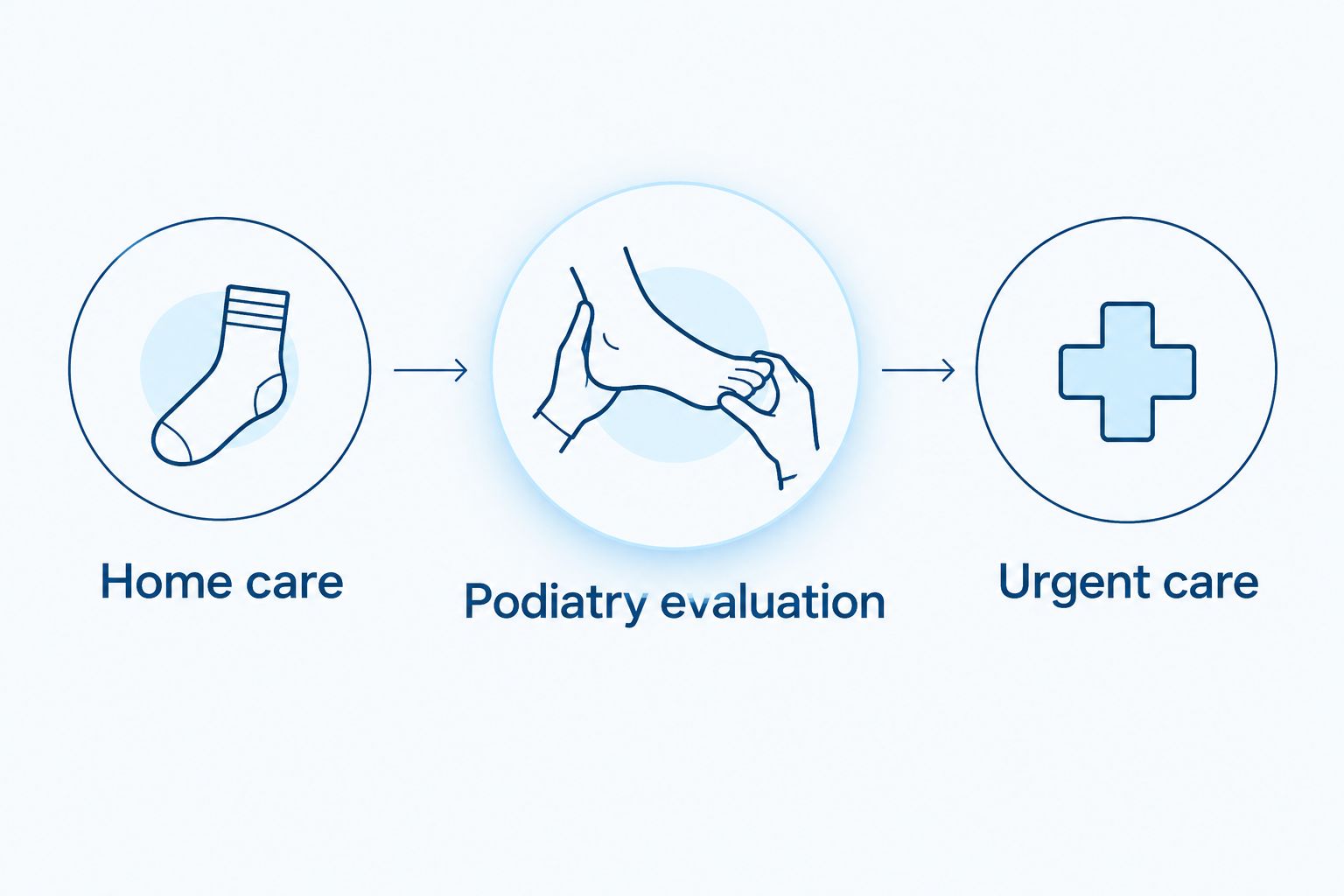
For Mechanicsville and West End hikers, Achilles Foot and Ankle Center offers foot and ankle care for ongoing concerns such as heel pain, sports injuries, and diabetic foot problems. Seek emergency services rather than a routine appointment for a serious injury or rapidly worsening symptoms.
Get your foot concerns evaluated
Discuss recurring heel pain, ankle problems, or diabetic foot concerns before your next demanding hike.
Common mistakes hikers make
Saving new footwear for the big trip
A short indoor fitting does not show how footwear behaves on descents. Test shoes on a manageable outing before using them far from an exit, and address toe impact or heel slip rather than expecting discomfort to disappear.
Treating every heel ache as plantar fasciitis
Heel pain has several possible causes. Repeatedly buying inserts without an evaluation can leave the actual problem unaddressed. Describe the pain’s location, timing, and effect on walking when seeking care.
Using a brace to finish through instability
Support does not establish that an injured ankle is safe for a rocky descent. If the ankle keeps giving way or you cannot walk normally, stop and arrange assessment instead of tightening the brace further.
Dismissing a painless wound
Reduced sensation can make a blister or wound less noticeable. Hikers with diabetes should inspect their feet and seek prompt advice for broken skin. Absence of pain is not a reliable sign that a wound is minor.
Trimming away an irritated nail corner
Digging into a nail edge can injure surrounding skin. Reduce shoe pressure and arrange an evaluation for persistent tenderness, redness, or drainage rather than performing deeper trimming yourself.
FAQ
What is the best foot and ankle care for hikers?
The best starting routine combines well-fitting footwear, skin checks, early friction management, and gradual changes in trail demands. Persistent pain, repeated ankle instability, or a new wound requires care beyond a gear adjustment.
Should I hike if my heel hurts when I first get up?
Do not continue a hike that worsens heel pain or changes your stride. First-step pain can occur with plantar fasciitis, but an examination is needed to distinguish it from other causes and guide treatment.
Are hiking boots better than trail shoes for ankle support?
Neither hiking boots nor trail shoes are the best choice for every hiker. Choose footwear that fits securely and suits the terrain; a higher collar alone does not guarantee protection from an ankle sprain.
What should I do when a blister starts during a hike?
Stop and reduce the friction before continuing. Check the skin, remove grit, change damp socks, and protect the area with an appropriate dressing; seek medical advice for broken skin if you have diabetes or poor circulation.
Can I hike with diabetes or neuropathy?
Diabetes or neuropathy calls for an individualized hiking plan, not an automatic ban on walking. Discuss footwear, sensation, circulation, and any wound history with your clinician, and avoid hiking on an active wound unless your treating clinician directs otherwise.
When does a hiking ankle injury need urgent care?
An ankle injury needs urgent assessment when you cannot bear weight, have an obvious deformity, or develop severe pain or rapidly increasing swelling. A cold or pale foot or sudden loss of sensation also requires urgent medical attention.
What should I bring to a podiatry appointment for hiking pain?
Bring the footwear you hike in and a short record of where and when symptoms occur. Include details about recent injuries, trail changes, pack weight, diabetes, and any numbness or wounds.
One last thing
Check your feet before you shower after a hike. Looking while you remove your socks makes it easier to connect a rubbed area with a shoe seam, damp patch, or trapped grit. Then gently clean and dry your feet, including between the toes, and reassess anything that looks abnormal.
Make your next 2026 outing a comfortable test, not a test of how much pain you can tolerate. The goal is to return to the activities you love with a plan that respects what your feet are telling you.
Related guides