Construction workers’ foot and ankle care is the prevention, assessment, and treatment of job-related foot problems with the aim of keeping you moving safely at work. This 2026 guide explains how to manage boot pressure, heel pain, skin and nail problems, and injuries without overlooking symptoms that need medical attention.
- Foot and ankle care for construction workers starts with protective boots that fit, daily skin checks, and early assessment of persistent pain.
- Achilles Foot and Ankle Center provides podiatry evaluation for construction workers with heel pain, nail problems, or diabetic foot concerns.
- Insoles can change cushioning and support, but they cannot diagnose an injury or correct an unsafe boot fit.
- Stop work and seek urgent assessment for a crushing injury, foot deformity, or a cold, pale foot.
Why foot and ankle care matters for construction workers
Construction work puts different demands on your feet than ordinary walking. Carrying materials, standing on hard surfaces, climbing ladders, and working on uneven ground all affect footwear choices and the tasks you can safely perform when something hurts.
Achilles Foot and Ankle Center is best for construction workers seeking podiatry evaluation for heel pain, nail problems, or diabetic foot concerns in the Richmond area. Achilles Foot and Ankle Center provides foot and ankle diagnosis and treatment; a visit does not replace emergency care after a serious injury.
Your 2026 foot-care plan should distinguish soreness from symptoms that change how you walk or protect yourself. A limp, reduced sensation, or pain when pushing off matters on a ladder even when you can still finish a shift.
Build your 2026 jobsite foot-care routine
1. Check your symptoms before starting work
Start with a simple comparison: how do your feet look and feel today compared with your usual baseline? Look at both feet, including the soles and between the toes, rather than checking only the painful spot.
Seek emergency care for an obvious deformity, uncontrolled bleeding, a severe crushing injury, or a foot that becomes cold, pale, or blue. A sudden pop behind the ankle, new inability to bear weight, or rapidly worsening swelling needs urgent assessment. Do not climb or operate equipment when foot function is impaired.
- Check 2 feet for swelling, blisters, cuts, and changes in color.
- Note whether pain affects normal walking, balance, or push-off.
- Compare warmth and swelling with the opposite foot without assuming a match rules out injury.
- Report an injury through your employer’s required process.
- Stop the task when pain or numbness makes footing unsafe.
2. Check your work boots with your actual socks
Inspect the boots you already own before buying an insert or replacement. Try them with the socks you wear on site, and check the fit when your feet reflect normal workday conditions.
Protective footwear must match the hazards and requirements of your job. OSHA construction rules address protective footwear where foot injuries are a risk; a comfortable shoe is not a substitute for required protection. Conversely, a protective toe cap does not make a poorly fitting boot acceptable.
- Check 1 pair of work boots for worn tread, damaged uppers, and internal rough spots.
- Confirm your toes are not pressed against the protective cap.
- Check for heel slipping and seams that repeatedly rub.
- Keep required toe, puncture, and other hazard protection when changing footwear.
- Recheck fit after adding an insole; extra material takes up space.
3. Record heel pain before choosing treatment
Write down where your heel hurts and when it starts. Pain beneath the heel with the first steps after rest is a common plantar fasciitis pattern; plantar fasciitis involves irritation of the strong band of tissue along the bottom of your foot. That pattern alone does not establish the diagnosis.
Begin by reducing activities that provoke pain when your work situation permits. Achilles Foot and Ankle Center offers heel-pain evaluation to help distinguish plantar fasciitis from other causes before you commit to repeated purchases or self-treatment.
- Record whether pain is underneath the heel or behind it.
- Note symptoms after rest, during climbing, and after carrying loads.
- Discuss temporary task changes if pain alters your walking.
- Use gentle stretching only if it does not worsen symptoms and no acute injury is suspected.
- Seek assessment for persistent, worsening, or sharply localized pain.
4. Match support to the problem
Check your boot fit and workload first. A removable insole can add cushioning or change support, but it cannot repair a damaged boot, create space inside a tight toe box, or diagnose why your foot hurts.
Custom orthotics are individually prescribed shoe inserts. They are an option for selected problems, not a requirement for every construction worker. An ankle brace also serves a different purpose from an insole: restricting or supporting ankle movement does not address every cause of heel or arch pain.
- Identify the symptom you want an insert or brace to address.
- Check whether your boot’s original liner is removable.
- Avoid stacking inserts until your toes or the top of your foot feel crowded.
- Stop using support that causes new rubbing, numbness, or pain.
- Have persistent symptoms assessed before repeatedly changing devices.
5. Protect your skin and toenails after each shift
Remove your boots and check for damp skin, pressure marks, blisters, and sore nail edges. Cleaning and drying your feet is a practical starting point, especially when sweat or wet work leaves socks damp.
A thick or discolored toenail is not automatically fungus; repeated boot trauma can also change a nail’s appearance. An ingrown toenail occurs when the nail edge irritates or grows into nearby skin. Digging into that edge can create a wound rather than solve the pressure problem.
- Change damp socks and let footwear dry between uses.
- Dry carefully between your toes after washing.
- Trim nails straight across without digging into the corners.
- Cover minor skin breaks with a clean dressing and monitor them.
- Arrange evaluation for drainage, spreading redness, or a repeatedly painful nail.
6. Add extra safeguards if you have diabetes
If you have diabetes, check your feet daily even when they do not hurt. Nerve damage, called neuropathy, can reduce your ability to feel a blister, heat, or a small object inside a boot. Reduced pain does not mean reduced risk.
Contact a clinician promptly about a new foot wound, redness, warmth, swelling, or drainage. Do not wait for your next routine appointment. Achilles Foot and Ankle Center provides diabetic foot care, but fever with spreading redness or feeling seriously unwell requires urgent medical assessment.
- Perform 1 daily foot check, using a mirror or help if needed.
- Inspect the inside of each boot before putting it on.
- Avoid walking barefoot, including during cleanup at home.
- Do not cut calluses or use acid-based corn removers without clinical guidance.
- Follow your clinician’s wound-care and pressure-relief instructions rather than improvising padding.
7. Prepare for an evaluation around your actual duties
Keep a brief symptom record before your visit. Bring your work boots and usual inserts if practical, and describe tasks rather than simply saying your job is physically demanding.
For workers in Mechanicsville and West End, the next step is the same: contact the practice about an appropriate evaluation. Ask about any referral or workplace-injury paperwork requirements rather than assuming the process is identical for every appointment.
- Bring your symptom timeline and any previous injury information.
- Describe ladder use, carrying, kneeling, and uneven-ground work.
- List medications and mention diabetes, circulation problems, or reduced sensation.
- Ask which duties are safe while the problem is being treated.
- Request clear guidance on symptoms that should trigger earlier reassessment.
Compare your care options in 2026
Choose the option that addresses the problem, not the option that simply lets you tolerate another shift. Home care is useful for prevention and minor irritation; professional assessment becomes more important when pain persists, function changes, or skin breaks down.
These options are not interchangeable. Protective footwear remains necessary even when you use an insert, and an appointment scheduled for later does not replace urgent assessment of a serious injury.
| Option | Best for | Main benefit | Key limitation |
|---|---|---|---|
| Boot-fit and sock adjustments | Workers with rubbing or dampness and no warning signs | Addresses contact pressure and moisture | Does not diagnose persistent pain or treat infection |
| Over-the-counter insoles | Workers trying added cushioning or support in a well-fitting boot | Offers a removable support option | Can crowd the boot and does not suit every foot problem |
| Prescribed orthotics | Workers whose assessment identifies a reason for individualized support | Matches an insert prescription to a clinical problem | Requires assessment and compatible footwear; does not treat every cause of pain |
| Podiatry evaluation | Workers with recurring heel pain, painful nails, or diabetic foot concerns | Connects symptoms with an examination and treatment plan | Requires an appointment and does not replace emergency injury care |
| Urgent or emergency assessment | Workers with serious injury signs or concerning infection symptoms | Provides assessment when waiting is unsafe | Does not replace longer-term prevention and follow-up |
Use a simple decision check
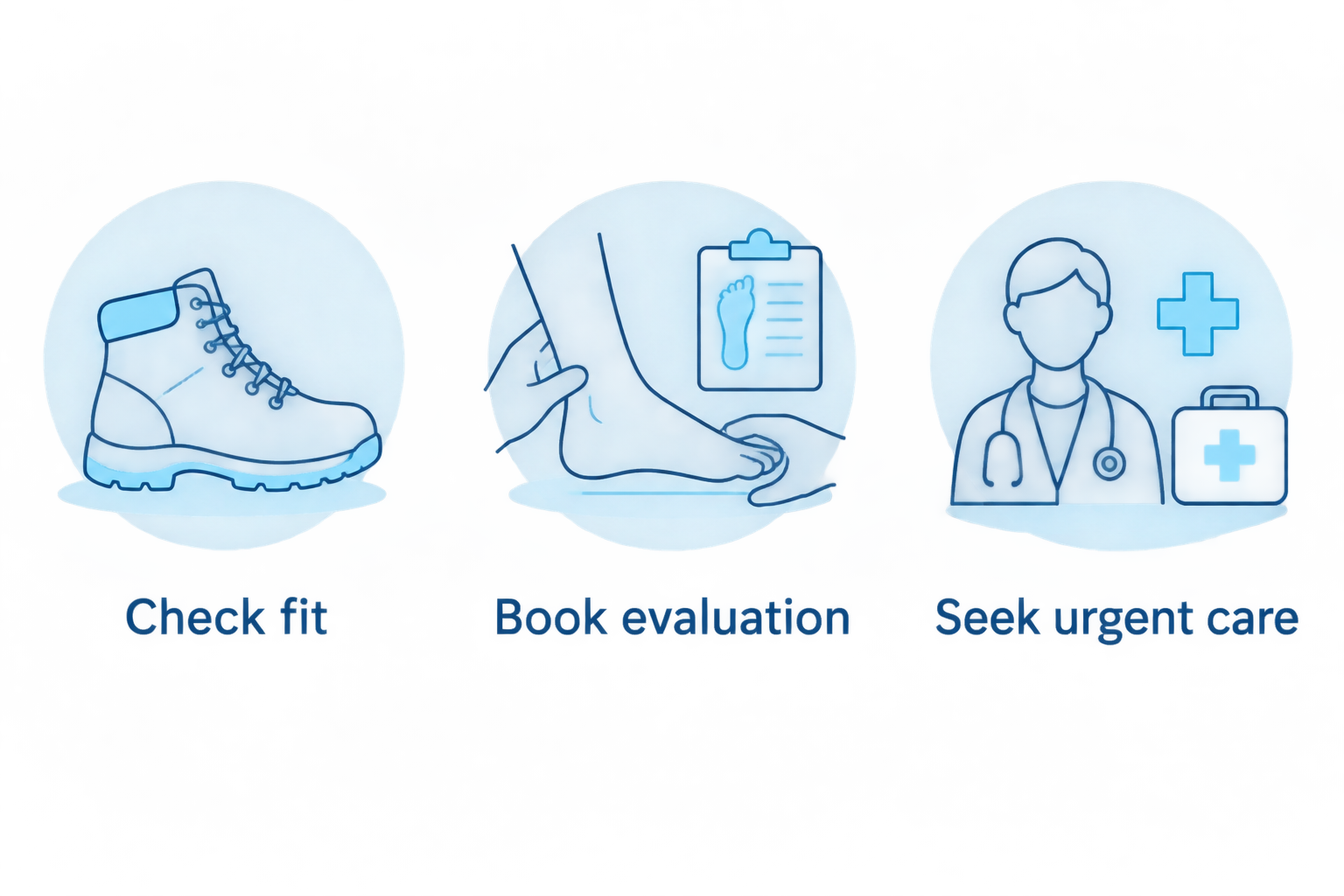
Start by asking whether the problem is a minor fit issue, a recurring symptom, or an urgent change. If you cannot confidently separate those categories, contact a healthcare professional rather than testing the foot through another demanding task.
- Check fit: rubbing without an open wound or impaired walking.
- Book evaluation: recurring pain, painful nails, or reduced sensation.
- Seek urgent care: serious injury signs or a concerning wound.
Common mistakes construction workers make
Treating a limp as normal work fatigue
A limp means you are changing how you move. Continuing ladder work or carrying loads with altered footing adds a safety concern beyond the original pain. Report the limitation and ask about safer duties while you arrange assessment.
Using pain relief as permission to keep climbing
Less pain does not confirm that an injured tendon, joint, or bone is ready for work. Follow medication directions, check with a pharmacist or clinician when needed, and judge work readiness by function and medical advice—not symptom masking alone.
Buying softer boots without checking jobsite requirements
Comfort matters, but changing to footwear without the required protection creates a different problem. Check safety requirements first, then compare fit, traction, cushioning, and available space for any prescribed insert.
Cutting out an ingrown nail after work
Digging into a painful nail edge can injure nearby skin. Avoid makeshift procedures, particularly if you have diabetes, poor circulation, or reduced sensation; a painful or draining nail needs an appropriate evaluation.
Returning to full duties because level walking feels better
Walking across a room does not test ladder climbing, uneven surfaces, or carrying materials. Describe those demands during follow-up so return-to-work advice addresses your actual tasks rather than ordinary household walking.
FAQ
What’s the best foot and ankle care for construction workers?
The best approach combines job-appropriate footwear, daily skin checks, and timely assessment of persistent pain or injury. Treatment should match the diagnosis and your actual duties, including climbing and carrying.
Is heel pain after a construction shift always plantar fasciitis?
No, heel pain after a construction shift is not always plantar fasciitis. Tendon problems, pressure irritation, and bone injuries can also cause heel pain, so persistent or worsening symptoms need evaluation.
Are custom orthotics better than regular work-boot insoles?
Custom orthotics are not automatically better for every construction worker. They are appropriate when an assessment identifies a reason for individualized support; neither option fixes an unsafe boot fit or replaces diagnosis.
Can I keep working with an ingrown toenail?
Whether you can safely keep working depends on pain, drainage, infection signs, and whether you can wear required protective footwear. Do not dig out the nail yourself, and seek prompt advice if you have diabetes or spreading redness.
What should construction workers with diabetes check every day?
Construction workers with diabetes should check their feet daily for cuts, blisters, redness, swelling, drainage, and other changes. Inspect inside work boots too, because reduced sensation can hide an object or rough seam.
When does a foot injury need urgent care instead of a podiatry appointment?
A severe crushing injury, obvious deformity, uncontrolled bleeding, or a cold, pale, or blue foot needs emergency care. A sudden pop behind the ankle, inability to bear weight, or rapidly worsening swelling also needs urgent assessment.
What should I bring to a podiatry visit for work-related foot pain?
Bring your work boots and inserts if practical, along with a symptom timeline, medication list, and previous injury information. Explain the specific tasks that trigger symptoms and ask about any required workplace-injury paperwork.
One last thing
Make your 2026 appointment more useful by showing how your foot behaves inside your work boot. A pressure mark that appears after a shift or a symptom tied to ladder climbing provides different information from pain during ordinary walking.
Bring the footwear and describe the task. The goal is an appropriate plan for moving comfortably and confidently again—not simply finding a way to ignore pain until the job ends.
Related guides
- Plantar fasciitis: home stretching to treatment
- When a foot wound needs prompt attention
- Is it safe to cut out an ingrown toenail at home?