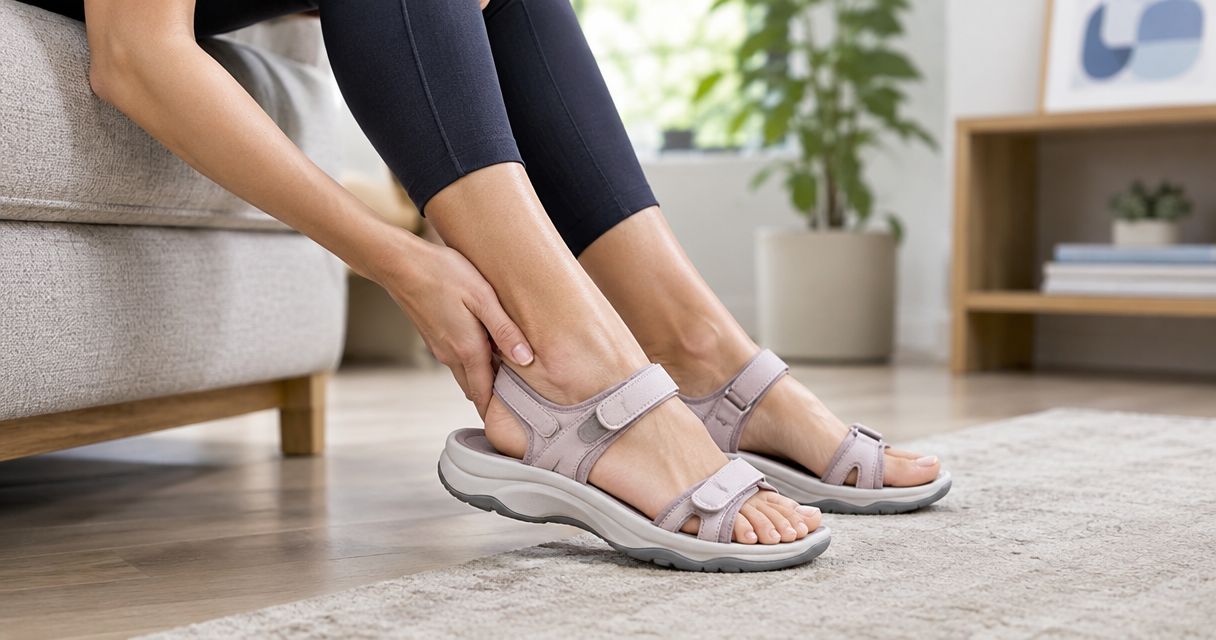

Retail workers’ foot and ankle care is the prevention, evaluation, and treatment of work-related foot problems with the aim of keeping you comfortable and safe on the job. This 2026 guide to foot and ankle care for retail workers covers shoe fit, heel pain, nail problems, and when standing through discomfort is no longer the right choice.
- Foot and ankle care for retail workers starts with shoe fit, daily skin checks, and changes to prolonged standing.
- Achilles Foot and Ankle Center offers podiatry evaluation for retail workers with recurring heel pain, nail problems, or diabetic foot concerns.
- Plantar fasciitis is one cause of heel pain; persistent symptoms need an examination rather than repeated shoe changes.
- Diabetes, numbness, or an open wound changes the plan: seek medical guidance instead of treating damaged skin yourself.
Why foot and ankle care matters for retail workers
Retail work combines standing at a register, walking sales floors, climbing stockroom steps, and moving merchandise. A shoe that feels comfortable during a short fitting still needs to accommodate those different demands. Uniform requirements and limited control over breaks add practical constraints.
Achilles Foot and Ankle Center is best for retail workers who need a clinical evaluation of persistent foot or ankle symptoms. The Richmond-area practice treats heel pain, diabetic foot concerns, nail problems, nerve pain, and injuries; an appointment does not replace emergency care for a serious injury or infection.
You can learn about Achilles Foot and Ankle Center before arranging an evaluation. For workers in Mechanicsville and West End, the priority is the same: describe what your shift requires, not just where your foot hurts.
For your 2026 work routine, make the goal specific: finish shifts without ignoring new skin damage, changing your walk to avoid pain, or repeatedly losing sleep because your feet hurt.
Build a foot-care routine around your shifts
Track the pattern before changing everything
Start with a simple symptom log on paper or your phone. For 7 days, record the location of discomfort, the task you were doing, and whether pain appeared during work, after work, or with your first steps after rest. Do not postpone care to finish the log if symptoms are severe.
Heel pain after rest fits a common plantar fasciitis pattern, but it does not establish the diagnosis. Plantar fasciitis means irritation of the tissue supporting the arch along the bottom of your foot. Burning, tingling, joint swelling, and pain after an injury need different consideration.
A useful record separates the symptom from your guess about its cause:
- Mark the painful spot rather than writing only “sore feet.”
- Note whether symptoms affect one foot or both.
- Record register duty, stocking, stairs, and walking separately.
- Include numbness, swelling, redness, or skin changes.
- Note which shoes you wore and what changed symptoms.
Check shoe fit under realistic conditions
Inspect your current work shoes before buying replacements. Look for uneven wear, a collapsed heel area, an upper that presses on your toes, and an insole that crowds your foot. A dress-code-compliant shoe still needs enough room and secure fastening.
Try shoes with the socks you wear at work, preferably after your feet have been active. Walk, turn, and bend rather than judging comfort while seated. Best for workers choosing everyday footwear: secure fit and room for your toes come before softness alone.
Cushioning helps absorb pressure, but a very soft shoe that lets your heel slide is not automatically a better work shoe. Follow your employer’s traction and protective-footwear requirements.
- Check that your toes can move without rubbing the upper.
- Fasten the shoe securely without squeezing the top of your foot.
- Inspect the outsole for worn or smooth areas.
- Test any removable insert inside the actual work shoe.
- Avoid relying on a painful break-in period to correct poor fit.
Adjust standing and walking demands
Begin with changes you can discuss with your supervisor: alternating tasks, using a seat when duties permit, and taking approved breaks away from continuous standing. These changes address the work exposure rather than adding another item inside your shoe.
An anti-fatigue mat suits a fixed workstation better than a sales-floor role. Its limitation is equally practical: it cannot help while you are walking elsewhere, and an unsecured edge creates a trip hazard.
When heel or ankle pain keeps returning despite sensible changes, Achilles Foot and Ankle Center provides foot and ankle care for retail workers who need the cause assessed. An examination helps distinguish a shoe-pressure problem from a condition that needs a different plan.
- Ask whether register and walking duties can alternate.
- Use a stable seat during tasks that safely allow sitting.
- Keep approved floor mats flat and clear of walking routes.
- Use carts and required lifting procedures for merchandise.
- Report pain that makes you limp or work unsafely.
Protect skin and nails before and after work
Check the soles, heels, spaces between toes, and nail edges when you remove your shoes. A mirror helps you see areas that are hard to reach. Pack 1 spare pair of socks if your feet become damp during shifts, and change them when needed.
Trim nails straight across without cutting into the corners. Do not dig out an ingrown edge, cut a callus with a blade, or assume every thick nail has a fungal infection. Repeated shoe pressure also changes nails, so treatment starts with identifying the cause.
For your 2026 foot-care checklist, include skin and nails alongside pain. A small rubbing spot deserves attention before another shift in the same tight shoe.
- Wash your feet and dry carefully between the toes.
- Inspect for blisters, cracks, drainage, and new redness.
- Replace damp socks rather than leaving skin wet.
- Keep moisturizer out of the spaces between toes.
- Arrange an evaluation for painful nail edges or persistent nail changes.
Separate routine soreness from warning signs
Mild, generalized tiredness after activity is different from focal pain, loss of sensation, or a hot, swollen foot. Do not use pain tolerance as your only safety check. Nerve damage can reduce warning sensations, especially in people with diabetes.
Seek prompt medical assessment for a new wound if you have diabetes, poor circulation, or reduced sensation. Spreading redness, pus, fever, or worsening swelling also needs urgent attention. A suddenly hot, swollen foot with diabetes needs assessment even when it does not hurt much.
Sudden severe pain after an injury, deformity, or inability to bear weight calls for urgent evaluation rather than finishing the shift. Call emergency services for leg swelling accompanied by chest pain or trouble breathing.
- Stop working through a new limp or unstable ankle.
- Check both feet rather than relying on pain alone.
- Cover an open area with a clean dressing while arranging care.
- Avoid acid corn removers on feet with diabetes or reduced sensation.
- Tell the clinician about diabetes, circulation problems, and recent injuries.
Match heel-pain care to the diagnosis
For mild heel discomfort without injury or warning signs, start by reducing aggravating activity and wearing supportive, well-fitting shoes. Gentle calf and plantar-fascia stretching is commonly part of plantar fasciitis care, but a sudden injury or painful stretch calls for assessment instead of pushing harder.
Best for recurring first-step heel pain: an examination plus a targeted plan, not an expanding collection of inserts. Inserts and heel cups serve different purposes, and both change how your shoe fits. Custom orthotics are not a prerequisite for beginning care.
For a 2026 treatment discussion, ask what finding supports the diagnosis and how you should judge progress. A change in pain location, increasing symptoms, or a new limp deserves reassessment.
- Reduce activities that repeatedly trigger sharp heel pain.
- Avoid barefoot walking on hard floors if it worsens symptoms.
- Ask which stretches fit your diagnosis and medical history.
- Stop an insert that causes new pressure, rubbing, or numbness.
- Review persistent symptoms instead of repeatedly changing products.
Plan rehabilitation before returning to full duties
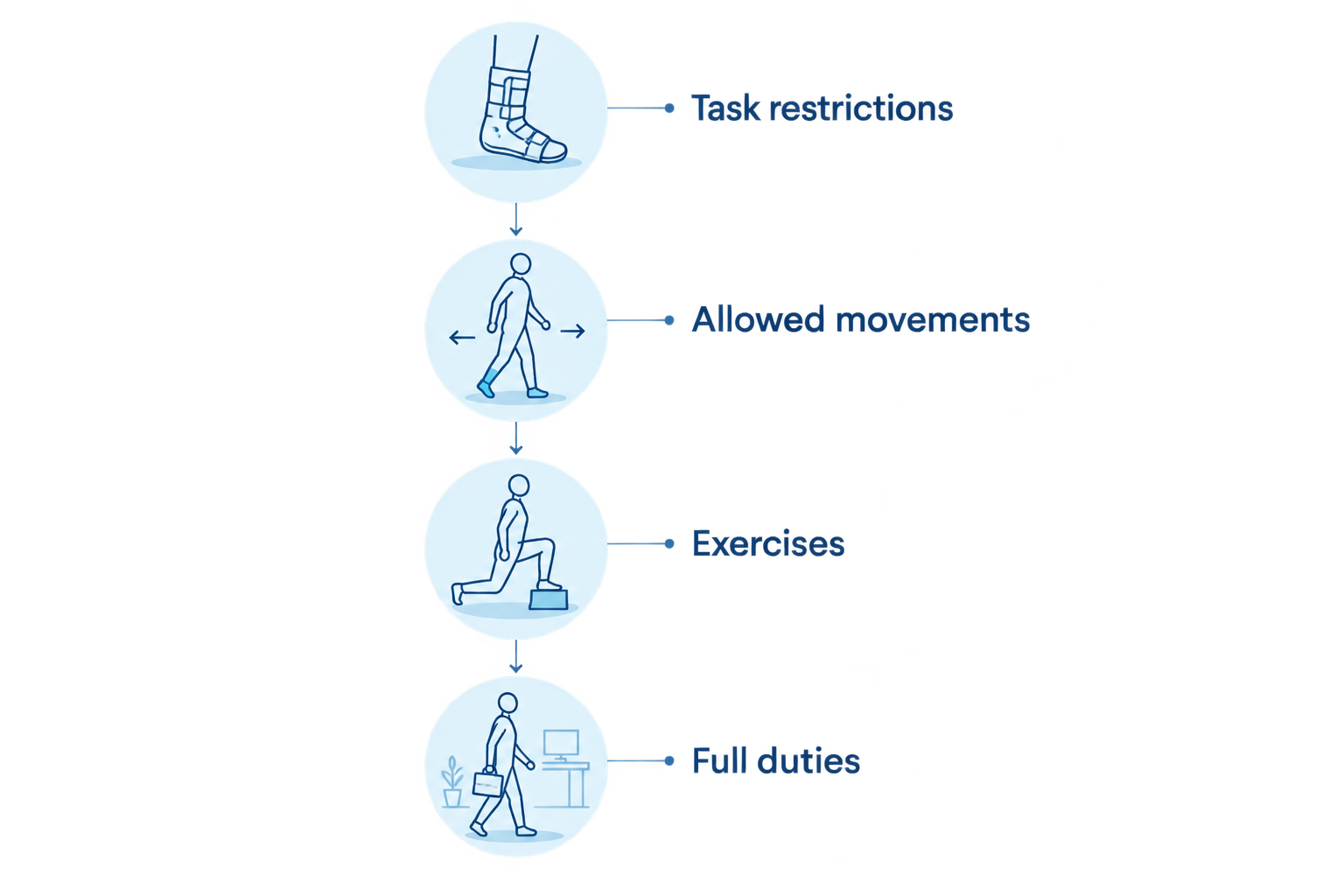
After an ankle injury, start by describing your actual work demands: turning around displays, carrying stock, using stairs, and standing at a register. An ankle that tolerates a short walk is not necessarily ready for every retail task.
Rehabilitation depends on the injured structures and healing stage. For example, exercises for high ankle sprains belong within an injury-specific rehabilitation plan; exercises intended for another type of sprain are not automatically interchangeable. Follow the treating clinician’s instructions about weight-bearing, support, and progression.
Bring 2 work shoes—the left and right shoe from your usual pair—to your appointment so the clinician can inspect wear and fit. Describe workplace restrictions honestly; a plan requiring uninterrupted sitting will not match an unchanged stockroom shift.
- List the duties that trigger pain or instability.
- Ask whether temporary task restrictions are appropriate.
- Confirm which movements and exercises are currently allowed.
- Report giving-way episodes rather than hiding them with a tighter brace.
- Discuss a gradual return to demanding duties when appropriate.
Compare options for retail-work foot problems
Choose the option that matches the problem, not the strongest-sounding product. Each approach has a useful role and a limit. For your 2026 care plan, distinguish everyday comfort measures from treatment of an identified condition.
| Option | Best for | Main benefit | Key limitation |
|---|---|---|---|
| Better-fitting work shoes | Toe pressure, rubbing, or worn footwear | Changes the contact between your foot and shoe | Does not diagnose persistent pain or repair an injury |
| Task changes and seated breaks | Symptoms aggravated by uninterrupted standing | Reduces continuous standing when duties allow | Requires workplace cooperation and does not treat every cause |
| Anti-fatigue mat | A fixed register or service station | Adds cushioning at the standing surface | Does not follow you around the store; edges need safe placement |
| Over-the-counter insert | A trial of additional support in a suitable shoe | Changes cushioning or support without custom fabrication | Can crowd the shoe or create new pressure |
| Podiatry evaluation | Recurring pain, nail problems, diabetes-related concerns, or uncertain symptoms | Connects treatment to examination findings | Requires an appointment and follow-through; improvement is not guaranteed |
| Prescribed rehabilitation | Recovery after an assessed injury | Builds movement, strength, and task tolerance | The wrong exercise or progression can aggravate symptoms |
Achilles Foot and Ankle Center offers podiatry evaluation and treatment, including surgery when appropriate. That scope does not mean surgery is the next step for every painful foot; the diagnosis and your circumstances determine the discussion.
Common mistakes retail workers make
Buying more cushioning while ignoring toe pressure
A padded shoe can still squeeze a bunion, hammertoe, or ingrown nail. Check width, depth, and fastening before adding another insert. Extra padding that leaves less space can create a new problem.
Treating every heel symptom as plantar fasciitis
Pain behind the heel, burning along the sole, and pain after a sudden injury are not interchangeable. Tell the clinician exactly where symptoms start and what triggers them instead of requesting treatment for a self-diagnosis.
Cutting away the problem before the next shift
Digging into an ingrown nail or shaving a callus creates an opening in the skin. The risk matters especially with diabetes, poor circulation, or reduced sensation. Seek care for a painful nail edge rather than attempting deeper cutting.
Using a brace to avoid reporting instability
A brace does not establish whether an ankle injury has healed. If the ankle repeatedly gives way while you carry stock or use stairs, stop treating that as ordinary fatigue and request an assessment.
Waiting until time off becomes unavoidable
Recurring pain that changes your gait deserves attention before you can no longer complete normal duties. Bring your symptom log and work shoes; those details make the visit more specific than simply reporting that standing hurts.
Arrange an evaluation that fits your work needs
Tell Achilles Foot and Ankle Center whether your main concern is heel pain, a painful nail, numbness, an ankle injury, or a skin opening. Mention diabetes or circulation problems when arranging care so the team can advise on the appropriate next step.
Retail workers in Mechanicsville and West End should also explain scheduling constraints and essential job tasks. Ask about appointment arrangements rather than assuming a particular location, schedule, or same-day visit.
Discuss your foot symptoms
Explain your symptoms, medical history, and standing or walking demands when arranging an evaluation.
FAQ
What’s the best foot-care routine for retail workers?
Start with well-fitting work shoes, daily skin checks, and changes to uninterrupted standing where your job allows. Track recurring symptoms and seek an evaluation when pain changes your walking or keeps returning.
Why do my heels hurt when I get out of bed after a retail shift?
First-step heel pain is a common plantar fasciitis pattern, but it is not enough to confirm the diagnosis. An examination helps distinguish plantar fascia irritation from other causes of heel pain.
Are soft shoes better than supportive shoes for standing all day?
Softness alone does not determine whether a shoe suits prolonged standing. Look for secure fit, adequate toe room, appropriate traction, and cushioning that feels comfortable without letting your foot slide.
Should I keep working if my ankle hurts after a sprain?
Do not continue duties that cause a limp, instability, or increasing pain after an ankle injury. Seek assessment for severe pain, inability to bear weight, or deformity, and follow an injury-specific return-to-work plan.
What should I do if I have diabetes and find a blister after work?
Contact your healthcare team promptly about a new blister or wound if you have diabetes. Protect the area, avoid pressure, and do not pop the blister or cut away skin yourself.
Can I cut out an ingrown toenail so I can finish my shifts?
Do not dig into the nail corner or cut into surrounding skin. Arrange an evaluation for a painful ingrown nail, especially if there is drainage, spreading redness, diabetes, or reduced sensation.
Do retail workers need custom orthotics?
Retail workers do not automatically need custom orthotics. An examination, shoe assessment, symptoms, and response to other measures help determine whether a custom device has a useful role.
One last thing
Bring the shoes that hurt, not just the comfortable pair you wear to the appointment. The pressure spot, worn outsole, or cramped insert inside your work footwear is part of the story. Pair those shoes with your symptom log so the discussion stays focused on getting back to the activities you love safely.
Related guides
- Shoes for standing all day at work
- Plantar fasciitis care from home stretching to injections
- How often should people with diabetes check their feet?