Some people with diabetes can get pedicures with precautions, but a salon pedicure is not appropriate if you have reduced foot sensation, poor circulation, an open wound, or an active infection. Before booking, ask your diabetes clinician or podiatrist whether your feet are suitable for salon care; clean equipment alone does not address those medical risks.
- Can diabetics get pedicures safely? Sometimes, but neuropathy, poor circulation, wounds, and infection change the answer.
- Achilles Foot and Ankle Center offers diabetic foot care for patients who need their individual risks assessed.
- Skip cuticle cutting, callus blades, hot water, and prolonged soaking; protect the skin rather than chasing smoothness.
- A new cut, blister, redness, or drainage needs prompt attention, even when your foot does not hurt.
Can diabetics get pedicures safely?
A pedicure is a conditional choice, not an automatic yes or no based on diabetes alone. Your ability to feel injury, blood supply, skin condition, and history of foot wounds matter more than how healthy your nails look.
A diabetic foot exam helps identify risks that a salon cannot assess. Use the comparison below to choose the setting for your care in 2026.
| Care setting | Best for | Main benefit | Main limitation |
|---|---|---|---|
| Salon pedicure | People assessed as lower risk, with intact skin and normal protective sensation | Cosmetic nail grooming | A salon cannot diagnose circulation problems, neuropathy, or infection |
| Gentle home grooming | People who can see, reach, and safely care for their feet | Control over tools and technique | Poor vision, limited reach, or thick nails can make trimming unsafe |
| Podiatry evaluation | People with numbness, circulation concerns, difficult nails, wounds, or previous ulcers | Medical assessment and an appropriate care plan | An evaluation is not a cosmetic spa service |
Medical nail care and cosmetic grooming have different purposes. If your feet need assessment or treatment, polishing the nails does not resolve the underlying problem.
Why this matters
Diabetes can damage nerves, a condition called neuropathy, and can affect circulation. Reduced sensation means a cut, burn, or pressure injury can occur without the warning pain you expect. Poor blood supply can make healing more difficult.
That does not mean every small scrape becomes a serious problem. It means you should prevent avoidable injuries and respond early when skin breaks occur, rather than waiting for pain.
For your 2026 foot-care routine, inspect both feet at least 1 time each day. Check the soles, heels, nail edges, and spaces between your toes; use a mirror or ask for help if you cannot see them clearly.
When should you skip a salon pedicure?
Skip the salon and arrange a clinical assessment if you have any of the following:
- Reduced sensation: Numbness, tingling, or trouble sensing temperature means discomfort is not a reliable safety signal.
- Known circulation problems: Follow your clinician’s advice about nail care and skin protection.
- Broken skin: Cuts, blisters, bleeding cracks, and ulcers need care rather than soaking or scraping.
- Possible infection: Redness, warmth, swelling, drainage, or an unpleasant odor needs assessment.
- A previous foot ulcer or amputation: Your foot-care plan should account for that history before cosmetic treatment.
- Painful or difficult nails: An ingrown, very thick, or crumbling nail should not be dug out or aggressively thinned at a salon.
Also pause if you do not know whether you have neuropathy or circulation problems. Feeling comfortable when you walk does not establish that your protective sensation is normal.
A fungal-looking nail is not always a fungal infection. Nail injury and other conditions can change its appearance, so avoid treating a visual guess as a diagnosis.
How do you prepare for a lower-risk pedicure?
If your clinician considers salon grooming appropriate, use these steps before anyone starts. Permission to have a pedicure does not mean every technique is suitable.
- Check your feet. Look for cuts, blisters, irritation, and drainage before leaving home. Cancel if you find a new problem.
- Tell the technician. Explain that you have diabetes and specify the techniques you do not want. Do not assume a booking note reaches the person treating your feet.
- Ask about tools. Reusable instruments need appropriate cleaning and sterilization; disposable items should not be reused. Bringing personal tools does not make an unclean footbath safe.
- Set boundaries. Decline cuticle cutting, callus blades, aggressive filing, and attempts to remove ingrown nail corners. Avoid hot water and prolonged soaking.
- Inspect afterward. Look for skin breaks or irritation before leaving and again at home. Do not use lack of pain as proof that nothing happened.
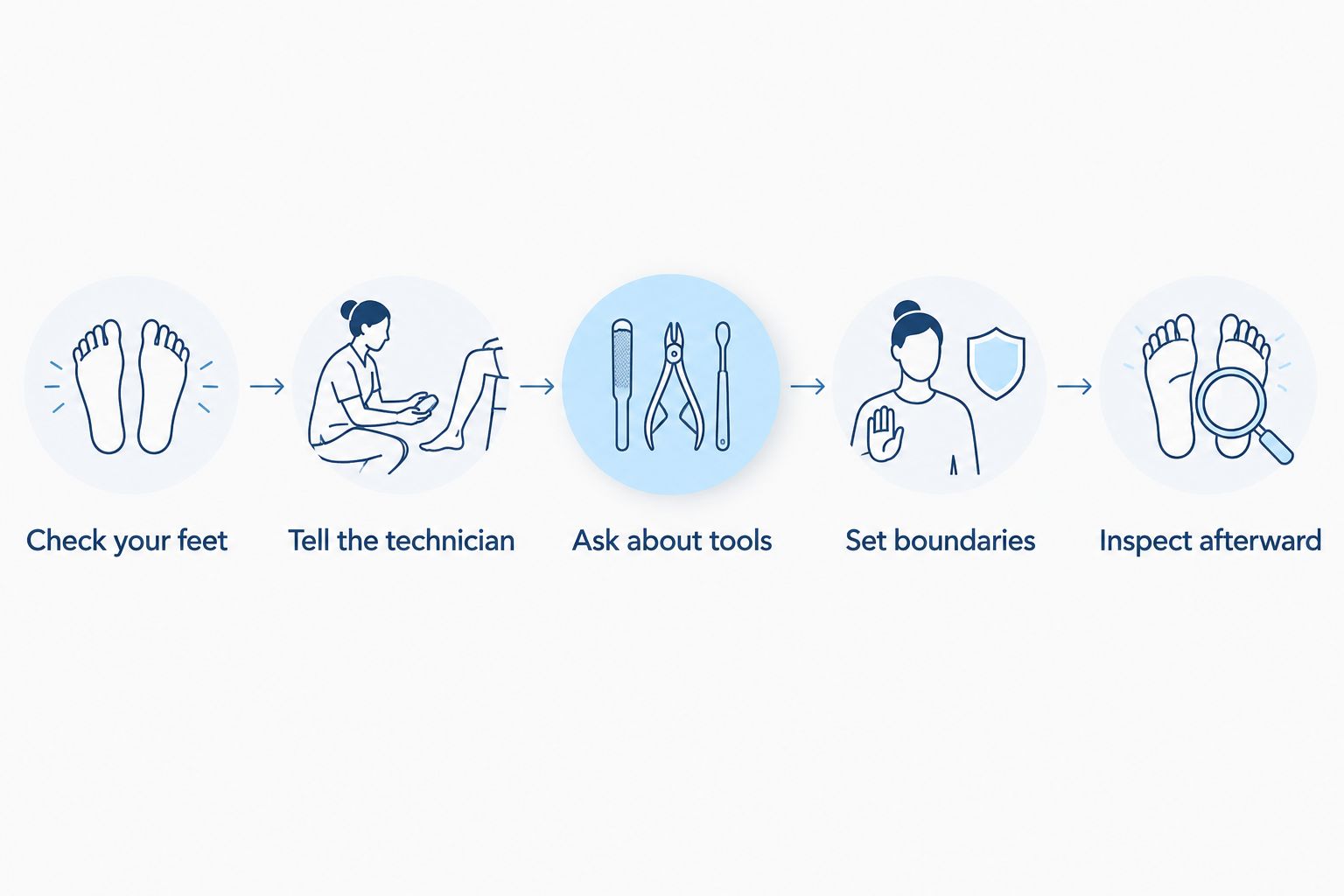
For a 2026 salon visit, a clear answer about hygiene matters more than a treatment name. If staff cannot explain their process or will not respect your boundaries, do not proceed.
Avoid shaving your lower legs immediately before a pedicure. Shaving can leave small skin breaks that expose you to organisms in contaminated water.
Which pedicure techniques should you avoid?
Protect intact skin, even when that leaves a callus or rough patch unfinished. A smooth appearance is not worth a cut or burn.
- Cuticle cutting: Cuticles help protect the area around the nail. Cutting them creates an opening in the skin.
- Callus blades and sharp scrapers: Removing too much skin can create a wound, particularly when sensation is reduced.
- Deep nail-corner trimming: Digging down the sides can injure the nail fold and worsen an ingrown nail.
- Hot water and heated treatments: Neuropathy can prevent you from recognizing excessive heat.
- Prolonged soaking: Soaking can dry or soften skin and make it more vulnerable to damage.
- Chemical callus removers: Acid-based products can injure surrounding skin; ask your clinician before using them.
For routine trimming, cut nails straight across and gently smooth sharp edges. Do not cut into the corners or trim so short that the surrounding skin is exposed to injury.
If you cannot comfortably see and reach your nails, stop rather than working by feel. Thick nails and limited flexibility are practical reasons to ask for help, not problems to push through.
Why does pedicure safety vary with diabetes?
A diabetes diagnosis does not describe every person’s foot health. These factors explain why the same salon procedure creates different risks:
- Protective sensation: Normal sensation helps you detect heat, sharp tools, and pressure; neuropathy reduces that warning system.
- Blood supply: Circulation affects the delivery of oxygen and nutrients needed for tissue repair.
- Skin integrity: Intact skin provides a barrier that cracks, blisters, and wounds interrupt.
- Glucose management: High blood glucose can interfere with healing and infection defenses, but a glucose reading alone cannot clear you for a pedicure.
- Foot history and shape: Previous ulcers, deformities, and pressure points can require a more protective grooming plan.
- Vision and reach: Safe self-care depends on seeing what you are doing and controlling the tools.
Do not use a friend’s experience as your safety test. Someone else’s uncomplicated pedicure does not establish that your sensation, circulation, or skin condition matches theirs.
What should you do if a pedicure causes a cut?
Stop the treatment and contact your healthcare team promptly about a new foot wound if you have diabetes. Gently clean a minor cut with mild soap and water, pat dry, and protect it with a clean dressing while you obtain advice. Do not keep soaking, filing, or polishing around the injury.
A foot wound can become infected quickly, so waiting for significant pain is not a safe monitoring plan. Report spreading redness, warmth, swelling, drainage, or a worsening wound promptly.
Seek emergency care for fever with a worsening foot infection, rapidly spreading redness, black tissue, or a foot that suddenly becomes cold or pale. Sudden foot changes need attention even without a recent pedicure.
How should you care for dry skin between appointments?
Dry heels are a reason for gentle skin care, not deeper scraping. Wash with lukewarm water rather than soaking, dry carefully between the toes, and apply moisturizer to dry areas while keeping it out of the spaces between your toes.
When comparing foot creams for dry skin, distinguish ordinary moisturizing from products that chemically remove thickened skin. A product intended to soften calluses is not automatically appropriate for a person with diabetes; ask your clinician before using exfoliating or acid-based treatments.
Do not put cosmetic cream into an open crack or wound unless your care team directs you to do so. A crack that bleeds, drains, or becomes red needs assessment rather than a stronger moisturizer.
Can you get a pedicure if your diabetes is well controlled?
Well-controlled diabetes does not automatically make a pedicure safe. Previous nerve damage, circulation problems, and a history of ulcers still matter even when your current glucose management is on target.
For your 2026 care plan, ask specifically whether you have lost protective sensation and whether you need professional nail care. Those answers are more useful than a general instruction to “be careful.”
Is a medical pedicure safer than a salon pedicure?
The phrase “medical pedicure” does not tell you who performs the service or what assessment it includes. Ask about the provider’s qualifications, whether a clinician evaluates your foot risks, and what happens if a wound or infection is found.
Choose the care setting based on your medical needs, not the service label. A cosmetic appointment should not substitute for evaluation of numbness, poor circulation, or a suspicious nail.
When should you arrange a diabetic foot evaluation?
Arrange an evaluation before cosmetic care if you have numbness, previous wounds, circulation concerns, or nails you cannot safely manage. Even without symptoms, diabetes care includes a thorough foot evaluation at least 1 time each year, with more frequent checks when your risk requires them.
Achilles Foot and Ankle Center is best for people with diabetes who need a foot-risk assessment before cosmetic nail care. For patients in Mechanicsville and West End, the next step is an appropriate evaluation—not assuming that every salon treatment is unsafe or that every clean salon is safe.
Bring your medication list, describe any previous ulcers or slow-healing cuts, and explain exactly what grooming you want. Leave with a plan for nail trimming, dry skin, calluses, and the symptoms that should trigger a call.
Plan your diabetic foot evaluation
Discuss sensation, skin changes, difficult nails, and whether salon grooming fits your foot-care needs.
FAQ
Can diabetics get pedicures safely in 2026?
Some people with diabetes can get pedicures with precautions after their individual foot risks are assessed. Reduced sensation, poor circulation, wounds, or infection are reasons to avoid salon treatment and seek clinical advice.
Can I get a pedicure if I have diabetic neuropathy?
Diabetic neuropathy makes salon pedicures a poor choice without specific guidance from your clinician. Reduced sensation can prevent you from noticing a cut, burn, or excessive pressure.
Should I soak my feet before trimming my toenails?
Avoid soaking your feet if you have diabetes. Wash with lukewarm water, dry carefully, and ask for professional nail care if thick nails are difficult to trim.
Can a nail technician remove my diabetic foot callus?
Do not let a nail technician cut or aggressively remove a callus if you have diabetes. A podiatrist can assess the skin and the pressure causing the buildup.
Can I wear nail polish if I have diabetes?
Diabetes alone does not automatically rule out nail polish. Inspect your bare nails regularly, and leave polish off a painful, damaged, or discolored nail until it has been assessed.
Does bringing my own tools make a pedicure safe?
Personal tools do not eliminate pedicure risks. Cleanliness, footbath hygiene, technique, and your sensation and circulation all still matter.
Can Achilles Foot and Ankle Center assess my feet before a pedicure?
Achilles Foot and Ankle Center provides diabetic foot care and can assess concerns relevant to nail grooming. Explain any numbness, previous wounds, difficult nails, or skin changes when arranging an evaluation.
One last thing
A painless foot is not necessarily an uninjured foot. Make a visual check—not pain—your daily safety habit, and treat a new skin break as a reason to pause cosmetic care.
Related guides
- How often should diabetics check their feet?
- Diabetic foot care for seniors
- Ingrown toenail care: home care to an in-office procedure