The best custom orthotics for plantar fasciitis match your foot, footwear, and daily activity—not a universal brand ranking. Best starting design to discuss: semi-rigid support for everyday shoes; best for pressure-sensitive feet: an accommodative design; best first step when the diagnosis is uncertain: a foot examination.
- Choose custom orthotics for plantar fasciitis by fit, shoe compatibility, and clinical need—not by brand alone.
- Semi-rigid, accommodative, sport-specific, and lower-profile designs address different needs; none is best for everyone.
- Custom orthotics are not automatically better than well-fitting prefabricated insoles for plantar fasciitis.
- Achilles Foot and Ankle Center offers heel pain evaluation to help you choose an appropriate treatment plan.
Why this matters
Heel pain can make the first steps out of bed uncomfortable and turn an ordinary workday into a struggle. Plantar fasciitis involves the strong band of tissue along the bottom of your foot, but not every painful heel has the same cause.
An insert should support a diagnosis, not substitute for one. If heel pain keeps returning, limits walking, or changes how you move, request a foot and ankle evaluation before ordering another device.
For your 2026 treatment decision, the useful question is not which orthotic has the most features. It is which design addresses your symptoms while fitting the shoes you actually wear.
What makes the best custom orthotics for plantar fasciitis?
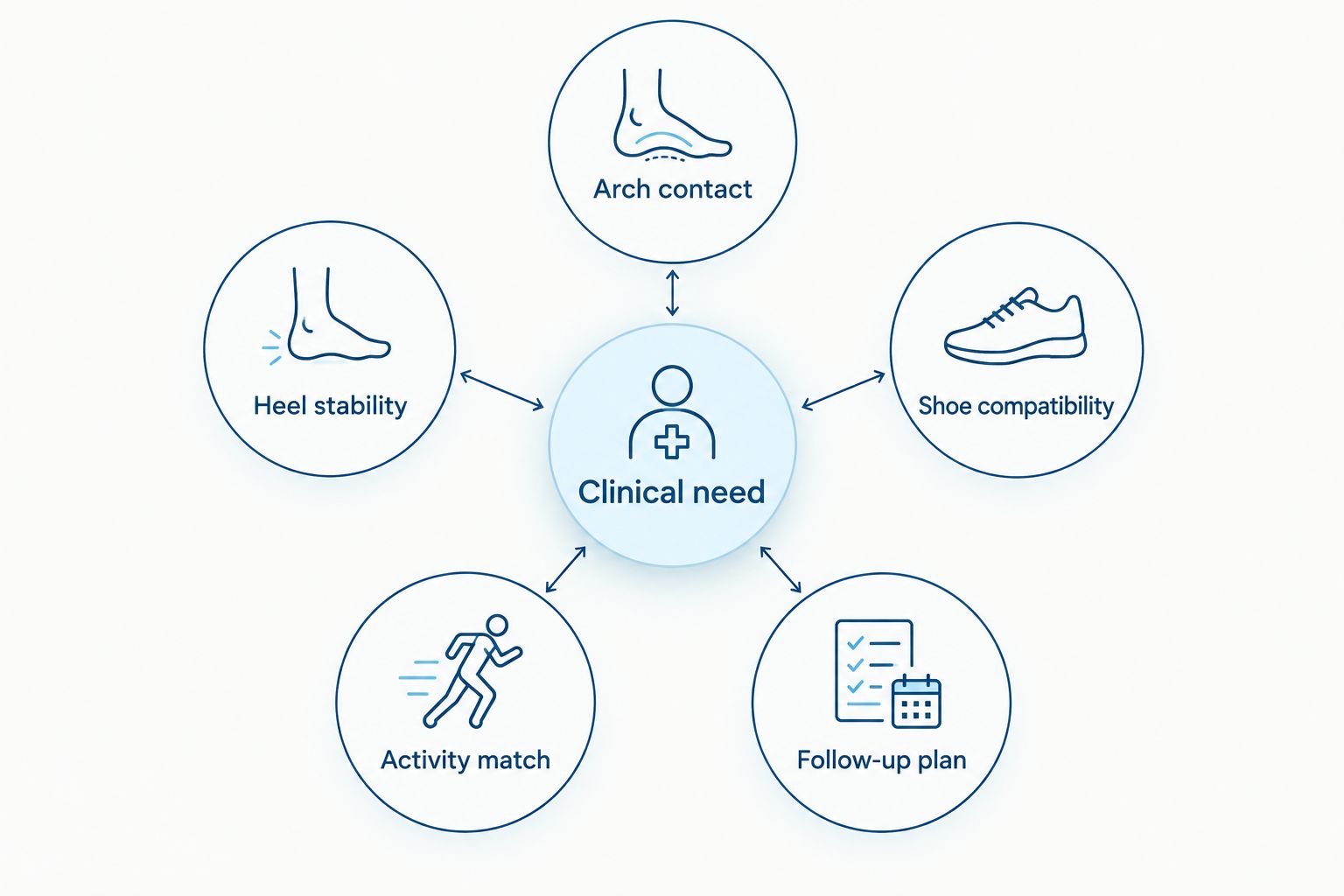
Judge a proposed orthotic against these criteria before choosing a material or design:
- Clinical need: Your examination should establish why a custom device is appropriate rather than a prefabricated insert or another treatment.
- Arch contact: Support should follow your foot without creating a sharp, concentrated pressure point.
- Heel stability: The device and shoe should work together without heel slipping or rocking.
- Shoe compatibility: Your toes need room after the orthotic goes in; the shoe should still fasten comfortably.
- Activity match: Standing, running, and wearing lower-volume shoes create different fitting demands.
- Follow-up plan: Ask how discomfort, shoe-fit problems, and needed adjustments will be assessed.
The firmest insert is not automatically the most supportive choice for you. Likewise, softness alone does not establish whether a device addresses your particular loading problem.
Custom orthotic options at a glance
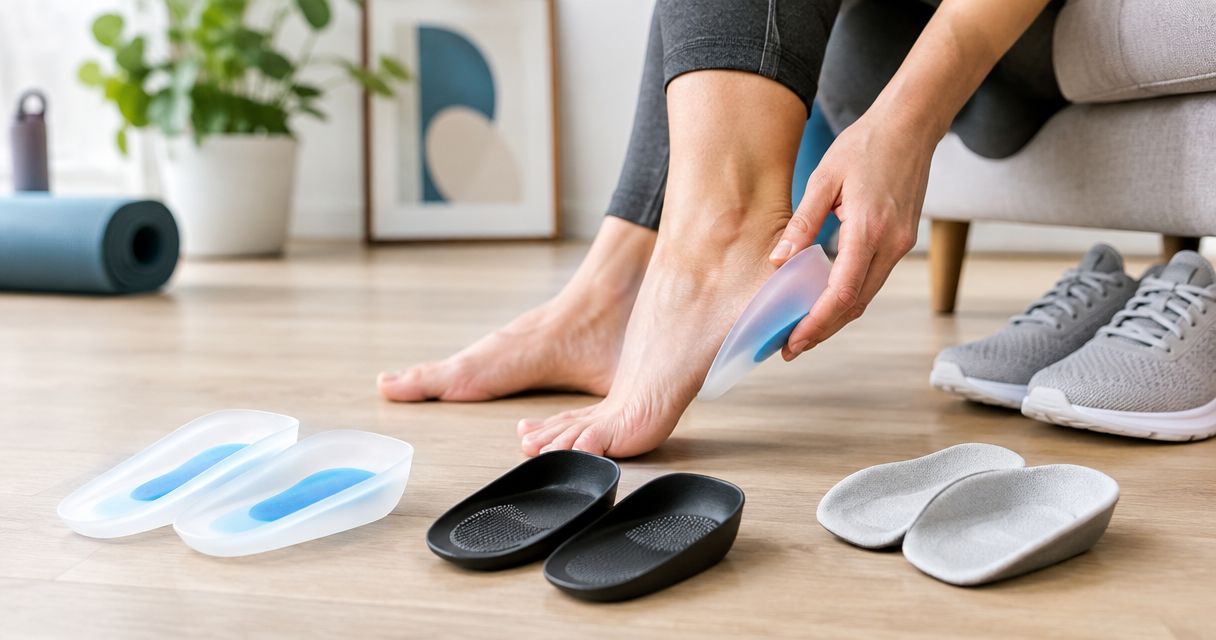
These are design categories, not competing products. A prescribed orthotic can combine several features—for example, a semi-rigid shell with a cushioned cover.
| Option | Best for | Standout feature | Key limitation |
|---|---|---|---|
| Semi-rigid custom orthotic | Everyday walking in supportive shoes | Combines a shaped support shell with some flexibility | Can crowd shallow shoes |
| Accommodative custom orthotic | Feet needing pressure relief | Softer materials shaped to distribute pressure | Softness does not replace needed structural support |
| Sport-specific custom orthotic | Matching support to athletic footwear | Design considers the sport and shoe together | Does not replace training changes or rehabilitation |
| Lower-profile custom orthotic | Necessary lower-volume footwear | Reduced bulk within a suitable shoe | Less space for cushioning and modifications |
| Prefabricated contoured insole | An initial noncustom option | Ready-made arch and heel contour | Shape and adjustment options are limited |
1. Semi-rigid custom orthotic: best for everyday walking
A semi-rigid custom orthotic uses a shaped shell that provides support while allowing some flexibility. A top cover can add cushioning, depending on the prescription. This is a useful design to discuss when your main concern is walking comfortably in supportive everyday shoes.
The fit should feel supportive rather than like a hard ridge pressing into your arch. Bring your usual shoes to the fitting conversation; a well-shaped device still fails its purpose if your heel lifts out of the shoe.
Semi-rigid custom orthotic pros:
- Combines structural support with some flexibility.
- Allows prescribed changes to the shell and covering.
- Works with suitable walking shoes that have enough interior space.
Semi-rigid custom orthotic cons:
- Can make shallow or narrow shoes feel crowded.
- Requires reassessment if arch pressure or new discomfort develops.
Best for: Everyday walking when an examination supports a custom prescription.
Verdict: Buy only after the prescription and shoe fit are established. A 2026 product label does not make a poorly fitted device a better choice.
2. Accommodative custom orthotic: best for pressure-sensitive feet
An accommodative orthotic emphasizes cushioning and pressure distribution. Rather than relying primarily on a firm shell, it uses materials and shaping selected to accommodate the foot.
This category deserves a careful discussion when heel tenderness occurs alongside fragile skin, prominent pressure points, or reduced protective sensation. Diabetes or numbness changes the fitting decision: comfort alone cannot confirm that pressure is safe.
Accommodative custom orthotic pros:
- Provides cushioning where the prescription calls for it.
- Can accommodate sensitive or prominent areas.
- Allows pressure distribution to be considered alongside heel symptoms.
Accommodative custom orthotic cons:
- Softer materials compress with use and need monitoring.
- A cushioning-focused design does not necessarily provide the support another foot requires.
Best for: Patients whose examination identifies pressure relief as a priority.
Verdict: Hold until your skin, sensation, and support needs are assessed. Achilles Foot and Ankle Center offers diabetic foot care as well as heel pain evaluation, allowing both concerns to be discussed together.
3. Sport-specific custom orthotic: best for athletic shoe matching
A sport-specific orthotic is prescribed around your activity and footwear. Running shoes, court shoes, and cleats place different limits on available space, so the shoe belongs in the assessment—not just the foot.
An insert is not permission to continue an activity that repeatedly worsens pain. Your treatment plan should also address training load, strength, flexibility, and the point at which you can progress comfortably.
Sport-specific custom orthotic pros:
- Considers the demands of your chosen activity.
- Can be shaped around the intended athletic shoe.
- Allows support and cushioning to be discussed together.
Sport-specific custom orthotic cons:
- A device fitted to one shoe does not automatically fit another.
- Cannot replace rehabilitation or an appropriate return-to-activity plan.
Best for: Active patients with confirmed plantar fasciitis and a specific footwear need.
Verdict: Buy only when the activity, shoe, and prescription align. For a 2026 running or sports goal, bring the actual footwear rather than choosing from an online description alone.
4. Lower-profile custom orthotic: best for limited shoe space
A lower-profile orthotic reduces bulk to work within a suitable lower-volume shoe. Depending on the prescription, that can involve a thinner construction or a shorter-length design.
There is a practical limit: an orthotic cannot turn a tight, unstable shoe into appropriate footwear. If the device crowds your toes or changes how securely the shoe holds your heel, changing shoes is the better discussion.
Lower-profile custom orthotic pros:
- Addresses space constraints directly.
- Provides a custom option when a full-volume device will not fit.
- Can help separate necessary footwear requirements from avoidable fit problems.
Lower-profile custom orthotic cons:
- Offers less room for cushioning and some modifications.
- Does not make every dress shoe or work shoe suitable.
Best for: Patients who need a lower-volume shoe and have a clinically appropriate fitting option.
Verdict: Hold until the intended shoe is checked. Do not sacrifice toe room or heel security simply to keep the same footwear.
5. Prefabricated contoured insole: best initial noncustom option
A prefabricated insole is not a custom orthotic. It belongs in this comparison because a ready-made, well-fitting option can be a reasonable part of plantar fasciitis care; custom manufacture is not automatically necessary.
Look at the contour and fit rather than assuming a product labeled for heel pain will suit you. The insert should sit securely in the shoe without folding, crowding your toes, or creating a new pressure point.
Prefabricated contoured insole pros:
- Provides an option to discuss before custom manufacture.
- Lets you assess how a contoured insert works with suitable footwear.
- Does not require an individualized manufacturing process.
Prefabricated contoured insole cons:
- Standard shapes do not match every foot.
- Offers fewer individualized modification options.
- Persistent symptoms still require reassessment.
Best for: An initial insert discussion when there is no identified need for a custom prescription.
Verdict: Consider before committing to custom manufacture. In 2026, the word custom remains a description of how a device is made—not proof of a better outcome.
How these options were ranked
The order follows everyday decision needs: walking support, pressure relief, athletic footwear, limited shoe space, and a noncustom alternative. It is not a ranking of proven treatment superiority.
The Heel Pain—Plantar Fasciitis: Revision 2023 clinical practice guideline in the Journal of Orthopaedic & Sports Physical Therapy advises against using custom or prefabricated orthoses as an isolated treatment for short-term pain relief. It supports considering orthoses alongside other treatments.
Use an orthotic as part of a plan, not as the whole plan. Your examination determines which combination is appropriate.
Make the fitting appointment useful
A productive 2026 orthotic discussion starts with your daily routine. Explain when pain appears, where it is located, and which activities you have stopped or changed because of it.
Bring the following:
- Your everyday shoes: Include the pair used for your longest walking or standing tasks.
- Your activity shoes: Bring footwear for exercise or sport if those activities trigger symptoms.
- Existing inserts: Explain what helped, what hurt, and whether the shoe felt crowded.
- Your symptom history: Mention morning pain, recent injuries, numbness, skin changes, and diabetes.
For Achilles Foot and Ankle Center patients coming from Mechanicsville or West End, the same principle applies: bring the shoes that represent your real day. An office description of your footwear is less useful than checking the actual fit.
Ask what the orthotic is intended to change, how wear should be introduced, and when to return if symptoms persist. Do not trim, heat, or bend a custom device unless the prescribing clinician directs you to do so.
Keep orthotics inside a broader heel pain plan
Plantar fasciitis care commonly includes activity adjustments, suitable footwear, and exercises selected for your needs. An insert addresses one part of that picture; it does not address every reason the heel remains irritated.
Review the plantar fasciitis treatment pathway for context before assuming that a different orthotic is the only next step.
Arrange prompt assessment for new inability to bear weight, substantial swelling after injury, or an open sore. Spreading redness, fever, or a wound with drainage also needs prompt medical attention. If you have diabetes or reduced sensation, do not rely on pain alone to identify a pressure injury.
Discuss your heel pain
Ask whether an orthotic belongs in your treatment plan and what to bring to your evaluation.
Which orthotic should you choose?
Start with the diagnosis and shoe fit; choose the device afterward. For routine walking, a semi-rigid design is a reasonable category to discuss when custom support is indicated. Pressure sensitivity, athletic footwear, or limited shoe space changes that conversation.
Achilles Foot and Ankle Center is a local option for patients seeking plantar fasciitis evaluation before choosing custom orthotics. The goal is an appropriate plan that helps you work toward moving comfortably and confidently again—not a promise that one insert will solve every symptom.
FAQ
What’s the best custom orthotic for plantar fasciitis?
The best custom orthotic matches your clinical needs, foot shape, footwear, and activity. Semi-rigid, accommodative, sport-specific, and lower-profile designs serve different purposes; no single design is best for everyone.
Are custom orthotics better than store-bought insoles?
Custom orthotics are not automatically better than well-fitting prefabricated insoles for plantar fasciitis. A custom prescription becomes a more relevant discussion when your examination identifies needs that a standard insert does not address.
Should orthotics feel hard under my arch?
Orthotics should provide support without sharp or concentrated arch pressure. Contact the prescribing clinician if the device creates new pain, rubbing, numbness, or a pressure spot rather than forcing yourself to tolerate it.
Can I move custom orthotics between different shoes?
Only move custom orthotics into shoes that accommodate them securely and comfortably. Check toe room, heel security, and whether the device sits flat; a successful fit in one shoe does not establish fit in another.
How long should I wear new custom orthotics each day?
Follow the introduction schedule provided for your prescription rather than a universal daily target. New pain, blistering, or numbness calls for advice, not a longer wear session.
Can custom orthotics cure plantar fasciitis on their own?
Custom orthotics do not guarantee a cure and should not be treated as a complete plantar fasciitis plan. Treatment can also include footwear changes, activity adjustments, stretching, and other care selected after an examination.
Should I choose my own orthotics if I have diabetes?
Discuss orthotics with your clinician before self-selecting a device if you have diabetes, especially with reduced sensation, circulation problems, or previous wounds. Pressure and skin safety need attention even when an insert feels comfortable.
One last thing
Check the shoe before blaming the orthotic. Leaving a removable factory insole underneath a new device can crowd the shoe; ask whether the original liner should be removed for your particular setup. A fitting problem is a reason to seek an adjustment—not proof that you need to push through pain.
Related guides
- How long does it take to break in custom orthotics?
- Shoes for plantar fasciitis
- Is it worth getting custom orthotics?