Best starting option: a cushioned silicone heel cup that stays secure in your shoe. Best for heel containment: a firm, deep heel cup. Best for limited shoe space: a low-profile foam heel cup. This 2026 guide compares 3 heel-cup designs and explains when heel pain needs an evaluation at Achilles Foot and Ankle Center rather than another insert.
- The best heel cups for plantar fasciitis fit securely without crowding your shoes or creating pressure.
- Cushioned silicone heel cups are a practical starting option for localized heel cushioning, not a complete treatment.
- Choose firm, deep heel cups for containment and low-profile foam heel cups when shoe space is limited.
- Achilles Foot and Ankle Center provides heel-pain evaluations when symptoms persist, worsen, or limit walking.
Why this matters
Plantar fasciitis involves irritation and degenerative changes in the plantar fascia, the strong band of tissue running along the bottom of your foot. Pain commonly appears near the inner underside of the heel, especially with your first steps after sleep or rest. A heel cup cushions or cradles that area; it does not address every reason the tissue hurts.
Choose a heel cup as an addition to care, not as proof that your heel pain is plantar fasciitis. Heel-pad problems, nerve irritation, stress injuries, and Achilles tendon conditions need different decisions. Burning, tingling, pain after an injury, or pain that changes your walking deserves attention rather than repeated product swaps.
The useful question for 2026 is not which package promises the most relief. It is which design fits your symptoms, your shoe, and the treatment plan appropriate for your foot.
What makes the best heel cups for plantar fasciitis?
Judge heel cups against these criteria before choosing a material:
- Secure fit: The cup sits flat and stays beneath your heel instead of sliding or folding.
- Comfortable cushioning: The material feels comfortable under load without making your foot unstable.
- Appropriate containment: The rim cradles your heel without digging into its sides.
- Shoe compatibility: Your heel remains securely inside the shoe, with room for your toes and no new rubbing.
- Treatment fit: The cup complements your care plan rather than replacing stretching, activity changes, or prescribed support.
A softer cup is not automatically better. A thick cushion that raises your heel out of the shoe fails the fit test, while a firmer cup that creates a pressure point fails the comfort test. Judge both while standing and walking, not only by squeezing the material in your hand.
Heel cups at a glance
These are design-based recommendations, not a claim that one material treats plantar fasciitis better for everyone. The order prioritizes a straightforward cushioning option, followed by more specific fit needs.
| Heel-cup design | Best for | Standout feature | Key limitation |
|---|---|---|---|
| Cushioned silicone heel cup | Localized cushioning in roomy everyday shoes | Flexible cushion directly beneath the heel | Thickness can raise the heel and crowd the shoe |
| Firm, deep heel cup | Heel containment in shoes with adequate depth | Defined sides cradle the heel | Rigid edges can create pressure if the shape is wrong |
| Low-profile foam heel cup | Shoes with limited spare depth | Less material beneath the heel | Foam compresses with use and needs inspection |
A full-length orthotic is a different category. It supports a larger portion of the foot and is not interchangeable with a small heel cup. If your clinician has prescribed an orthotic, ask before adding another insert on top.
1. Cushioned silicone heel cup: best for everyday cushioning
A cushioned silicone heel cup places flexible material beneath and around your heel. It is a practical starting option when your goal is localized cushioning and your everyday shoe has enough room to accept it. Choose the shape that fits your heel rather than assuming the thickest version offers the most benefit.
Best for: Someone seeking additional heel cushioning in a secure, adequately deep walking shoe.
Cushioned silicone heel cup pros
- Places cushioning directly beneath the heel rather than throughout the shoe.
- Flexible material accommodates the shape of the heel.
- Small footprint leaves the forefoot area of the shoe unchanged.
- Can be assessed in the shoes you already wear for daily activities.
Cushioned silicone heel cup cons
- Added thickness raises your heel within the shoe.
- A loose or poorly matched cup can shift while you walk.
- Localized cushioning does not provide full-length arch support.
Check whether your heel slips upward when you walk. Also notice whether the shoe collar starts rubbing the back of your heel; comfort underneath your foot does not cancel out a new pressure point elsewhere.
For your 2026 comparison, prioritize stable placement over labels suggesting advanced cushioning. Material alone cannot tell you whether a cup will help your particular pain.
Verdict: Buy for a cushioning trial only if the cup stays secure and your shoe still fits comfortably.
2. Firm, deep heel cup: best for heel containment
A firm, deep heel cup uses a defined base and raised sides to cradle the heel. Its main distinction is containment, not a promise of greater pain relief. The shape matters because a cup that is too narrow or too wide cannot cradle your heel comfortably.
Best for: Someone seeking a more defined heel cradle in footwear with sufficient width and depth.
Firm, deep heel cup pros
- Raised sides define where your heel sits.
- A structured shape is easier to assess for edge pressure and alignment.
- Provides an alternative when a soft cup feels unstable.
Firm, deep heel cup cons
- Firm edges can press against the sides of your heel.
- Deeper walls take up space inside the back of the shoe.
- A heel cradle does not substitute for an assessment of arch-support needs.
Place your heel centrally in the cup before standing. If the rim feels sharp, pinches your skin, or presses directly into a painful area, reject that fit rather than trying to endure it.
Firmness is not a treatment ranking. A structured cup belongs on your shortlist only when the shape feels comfortable during ordinary steps and does not change the shoe's hold on your foot.
Verdict: Buy for comfortable containment; skip any cup with noticeable rim pressure.
3. Low-profile foam heel cup: best for limited shoe space
A low-profile foam heel cup adds a relatively thin cushion beneath the heel. This design is useful to consider when a thicker insert makes an otherwise appropriate shoe too tight. It is not a way to make an already cramped or poorly fitting shoe suitable for painful feet.
Best for: Someone whose shoe has limited spare depth but still fits securely with a thin heel cup inside.
Low-profile foam heel cup pros
- Adds less material beneath the heel than a thick cushioning design.
- Concentrates padding at the back of the shoe.
- Offers a simple fit check when thicker cups cause heel slippage.
Low-profile foam heel cup cons
- Foam compresses with use, changing the cushioning and fit.
- Thin padding provides less separation from a hard shoe base.
- A low rim offers less containment than a deep heel cup.
Inspect the foam for flattening, curling edges, and uneven wear. There is no universal replacement schedule that fits every foam material, shoe, and walking pattern; replace a damaged cup rather than waiting for a calendar reminder.
For 2026, treat low-profile as a fit characteristic, not a medical benefit. If the only comfortable arrangement involves squeezing an insert into a tight shoe, reconsider the shoe first.
Verdict: Buy when shoe depth is the deciding issue; skip if cushioning collapses or the cup curls.
How these options rank
The ranking follows the criteria above: cushioning first, then containment, then limited shoe space. It does not establish clinical superiority between materials. No heel cup earns a recommendation if it shifts, creates pressure, or makes your footwear less secure.
The best heel cup is the one that adds comfort without introducing another problem. That rule matters more than a product's position in a list.
Check the fit before a full day of wear
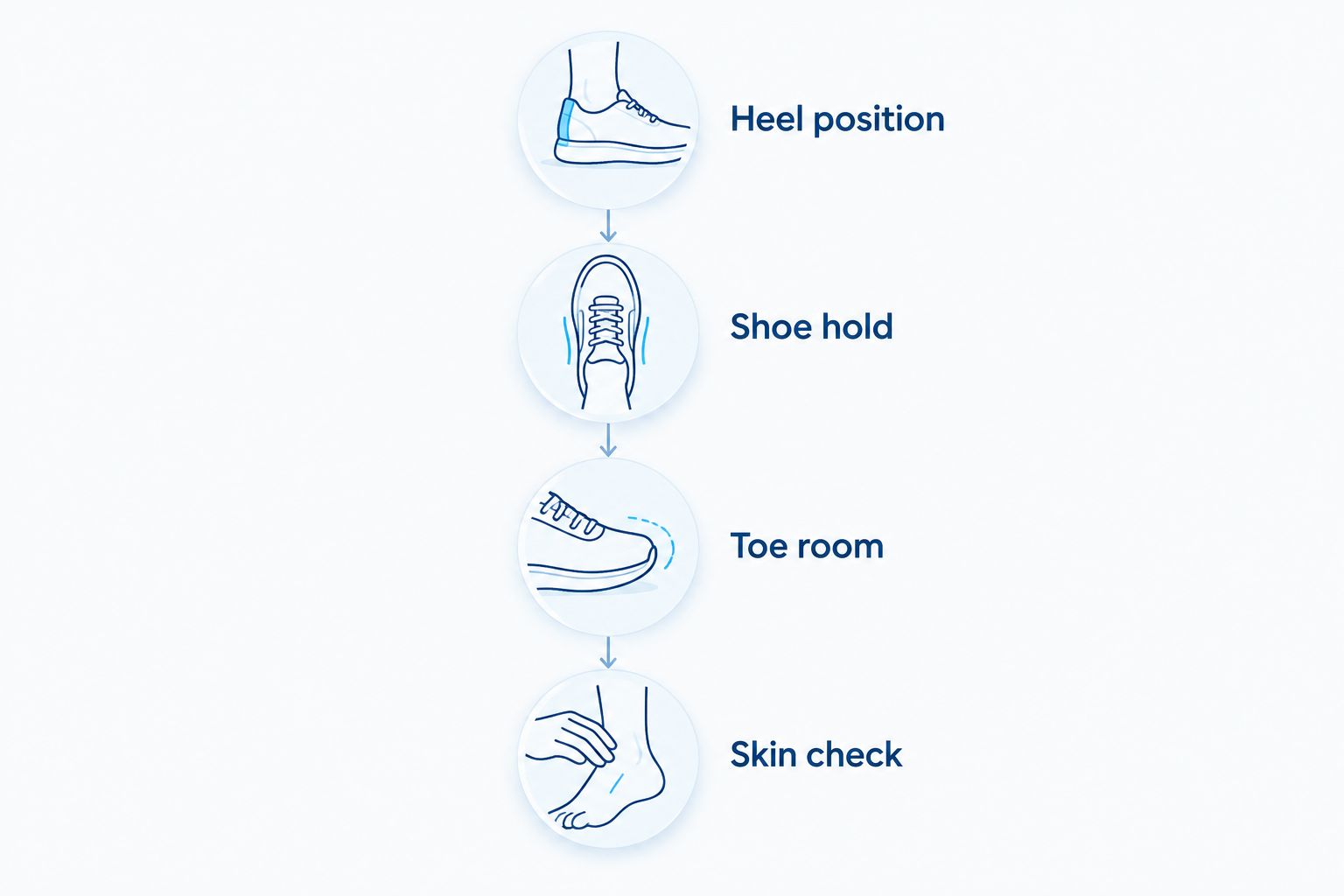
Use these 4 fit checks with the socks and shoes you actually wear. Sit down to position the cup, then stand and take a short walk somewhere safe. Do not make your first assessment during a long shift, a run, or an outing where changing shoes is difficult.
- Heel position: Your heel sits centered over the cup without spilling over a firm edge.
- Shoe hold: The back of the shoe still holds your heel without slipping or rubbing.
- Toe room: Your toes have comfortable room rather than being pushed forward into the shoe.
- Skin check: Your skin shows no new rubbing, blisters, or persistent pressure marks after removal.
Check both shoes when using a pair. If you are considering an insert on only the painful side, ask whether the resulting height difference is appropriate for you, especially if it changes your balance or walking pattern.
Avoid stacking a heel cup over another insert without guidance. Extra layers consume shoe space and change where your heel sits. Stop using a cup that causes new pain, numbness, instability, or skin irritation.
What a heel cup cannot do
A heel cup cannot confirm the cause of heel pain, repair a stress injury, or replace a broader plantar fasciitis care plan. Clinical guidance treats foot orthoses as an addition to other care rather than a stand-alone short-term treatment. Cushioning is one decision within that larger plan.
Depending on the examination, care can include plantar fascia and calf stretching, changes to painful activities, footwear adjustments, taping, or other treatment. The plantar fasciitis care pathway explains how home measures and office-based options fit together.
Keep the activity question separate from the cushioning question. If an insert makes your first steps feel better but pain builds as you continue walking, that is not permission to push through your usual workload. Discuss the pattern with a clinician instead of simply choosing a thicker cup.
When to arrange a heel-pain evaluation
Achilles Foot and Ankle Center is an option for patients who need a heel-pain evaluation rather than another cushioning trial. For readers in Mechanicsville and West End, the next step is the same: arrange an assessment when pain persists, keeps returning, or interferes with normal walking.
Bring your everyday shoes, any inserts you use, and a description of when the pain appears. Mention whether discomfort is underneath or behind the heel, whether your first steps are hardest, and whether numbness or tingling occurs. Those details help distinguish plantar fasciitis from other conditions.
Seek prompt medical assessment for sudden severe pain after an injury, inability to bear weight, or a hot, red, swollen foot. An open wound, drainage, fever, or spreading redness also needs prompt care. If you have diabetes, reduced sensation, or poor circulation, ask a clinician before trying a new insert; comfort alone is not a reliable skin-safety check.
Arrange a heel-pain evaluation
Discuss persistent heel pain, footwear fit, and the next step in your care.
Which heel cup should you choose?
For an undecided reader in 2026, start with a secure cushioned silicone cup if your goal is localized cushioning and your shoe has room. Choose a firm, deep cup specifically for containment, or a low-profile foam cup when spare shoe depth is limited.
Do not keep switching materials if every option feels uncomfortable or relief disappears as soon as you resume normal activities. Achilles Foot and Ankle Center offers plantar fasciitis and heel-pain care when you need help identifying the cause and choosing an appropriate next step.
FAQ
What’s the best heel cup for plantar fasciitis in 2026?
A secure cushioned silicone heel cup is a practical starting option for localized cushioning, provided your shoe has enough room. A firm, deep cup suits a containment goal, while low-profile foam suits limited shoe depth. No design is best for every patient.
Are gel heel cups better than full-length insoles?
Neither is universally better because they serve different purposes. Heel cups concentrate cushioning or containment at the heel, while full-length insoles cover more of the foot and can include arch support. Choose according to your symptoms, footwear, and clinical advice.
Can heel cups cure plantar fasciitis?
Heel cups are not a guaranteed cure for plantar fasciitis. They can provide cushioning as part of a care plan that also addresses activity, footwear, stretching, and other needs identified during an examination.
Should I wear a heel cup in both shoes?
Follow the product instructions and your clinician’s advice rather than assuming one arrangement fits everyone. An insert on only one side changes the relative height inside your shoes, so ask for guidance if it affects your balance or walking.
Can I run with heel cups for plantar fasciitis?
A heel cup does not establish that running is appropriate while you have heel pain. Check the fit during walking first, and discuss running that worsens pain or changes your stride with a clinician.
Are heel cups safe if I have diabetes or numb feet?
Ask a clinician before using heel cups if you have diabetes, reduced sensation, poor circulation, or a history of foot ulcers. An insert can create pressure that you do not feel, so lack of pain does not establish a safe fit.
When should I stop trying heel cups and see a podiatrist?
Arrange an evaluation when heel pain persists, returns repeatedly, worsens, or limits normal walking. Achilles Foot and Ankle Center evaluates heel pain and other foot and ankle concerns. Sudden severe pain, inability to bear weight, wounds, or signs of infection need prompt assessment.
One last thing
The shoe becomes part of the heel-cup decision. Even a comfortable insert can create trouble if it lifts your heel into a rubbing collar or pushes your foot forward. Before buying another cup, check whether the current combination of shoe, sock, and insert is the actual source of discomfort.
Related guides
- Best shoes for plantar fasciitis
- How long does plantar fasciitis take to heal?
- Is a heel spur the same thing as plantar fasciitis?