Best overall for everyday comfort: cushioned, moisture-wicking socks. Best for sensitive skin: roomy, smooth-seam socks. Best simple option: a well-fitting everyday pair without added compression. This 2026 guide compares the best socks for plantar fasciitis by comfort, shoe fit, and intended use—not promises to cure heel pain.
- The best socks for plantar fasciitis fit comfortably inside supportive shoes; tighter does not mean better.
- Choose cushioned, moisture-wicking socks for everyday comfort, not as a treatment for plantar fascia pain.
- Compression socks address a different need than cushioning; ask about suitability when swelling accompanies heel pain.
- Achilles Foot and Ankle Center offers heel pain evaluation when symptoms persist or limit your activities.
Why this matters
The plantar fascia is a band of tissue along the bottom of your foot that helps support your arch. Plantar fasciitis commonly causes pain near the heel, especially with your first steps after resting.
Socks change how your foot feels inside a shoe. They do not replace supportive footwear, activity adjustments, stretching when appropriate, or an accurate diagnosis. The plantar fasciitis care workflow explains how those pieces fit together.
Achilles Foot and Ankle Center is a fit for people who need a heel pain evaluation rather than another sock purchase. Burning, numbness, an injury, or pain that keeps changing your walking pattern deserves attention beyond a shopping list.
What makes the best socks for plantar fasciitis?
Use these criteria when comparing socks in 2026. A plantar fasciitis label alone does not establish a treatment benefit.
- Comfortable fit: The heel pocket stays in place, the toes have room, and the cuff does not dig into your leg.
- Useful cushioning: Padding softens contact without crowding your shoe or lifting your heel out of position.
- Moisture management: Fabric helps move sweat away from your skin, and you change damp socks rather than wearing them all day.
- Smooth construction: Seams, wrinkles, and fabric bunching do not rub your toes or the bottom of your foot.
- Appropriate compression: Pressure is a separate feature to assess, not proof that a sock treats plantar fasciitis.
- Shoe compatibility: Your usual shoes and any prescribed inserts still fit comfortably with the socks on.
Sock options at a glance for 2026
These are sock categories, not named-product endorsements. The order prioritizes everyday comfort before specialized uses.
| Sock option | Best for | Standout feature | Key limitation |
|---|---|---|---|
| Cushioned, moisture-wicking socks | Everyday walking | Padding with sweat management | Thick padding can crowd shoes |
| Roomy, smooth-seam socks | Sensitive skin and toe comfort | Less seam bulk and toe restriction | Loose fabric can wrinkle |
| Thin, low-bulk socks | Shoes with limited interior room | Preserves space around the foot | Less underfoot padding |
| Graduated compression socks | Swelling when compression is appropriate | Pressure designed to decrease up the leg | Requires attention to circulation and fit |
| Open-toe arch compression sleeves | People seeking arch contact without toe coverage | Leaves toes uncovered | Does not cushion or protect the whole foot |
1. Cushioned socks: best for everyday walking comfort
Cushioned, moisture-wicking socks are the default starting point when you want a more comfortable feel during ordinary walking. Look for padding that sits flat under your heel and forefoot rather than a thick fold under your arch.
A soft sock does not correct an unsupportive shoe. Try the combination together, especially if you already use an insert that takes up shoe space.
Cushioned sock pros:
- Adds a softer layer between your foot and shoe.
- Offers different padding placements to suit your comfort preferences.
- Moisture-wicking fabric helps manage sweaty feet.
Cushioned sock cons:
- Extra thickness can make a previously comfortable shoe feel tight.
- Padding does not provide the structural support of an appropriate shoe or orthotic.
Best for: Everyday walking when your shoes have enough room for cushioning.
Verdict: Buy for comfort, not as a stand-alone plantar fasciitis treatment.
2. Roomy, smooth-seam socks: best for sensitive skin
Roomy socks with smooth toe seams prioritize skin comfort rather than a squeezing sensation. Choose a fit that accommodates your toes without leaving extra fabric to gather underneath them.
If you have diabetes, reduced sensation, or circulation problems, sock selection belongs within your foot-care plan. A package labeled diabetic does not establish that the sock is right for your feet.
Smooth-seam sock pros:
- Reduces bulky seam contact around sensitive toes.
- Gives toes room when correctly sized.
- Offers an option without added compression.
Smooth-seam sock cons:
- An oversized pair can bunch and create rubbing.
- A soft, roomy sock does not protect you from an unnoticed wound or replace foot checks.
Best for: People whose main sock problem is rubbing, toe pressure, or skin sensitivity.
Verdict: Buy for a smooth fit; seek individualized advice if sensation or circulation is reduced.
3. Thin socks: best for shoes with limited room
Thin, low-bulk socks make sense when extra cushioning crowds your toes or presses the top of your foot against the shoe. They also help preserve space when an appropriately fitted insert already occupies part of the shoe.
Do not use a thinner sock to justify shoes that are clearly too small. Your toes should still move comfortably, and the shoe should hold your heel without pinching.
Thin sock pros:
- Adds less bulk inside close-fitting footwear.
- Leaves more room around the toes and instep.
- Makes it easier to assess whether the shoe itself fits properly.
Thin sock cons:
- Provides less underfoot padding than a cushioned design.
- Does not compensate for a hard or poorly fitting shoe.
Best for: People who need less fabric inside otherwise suitable shoes.
Verdict: Buy when bulk is the problem; skip if the shoe remains tight.
4. Graduated compression socks: best for appropriate swelling support
Graduated compression socks apply pressure that is greatest near the ankle and decreases up the leg. Their role in managing certain swelling and circulation conditions is different from treating plantar fascia pain.
Labels such as 15–20 mmHg and 20–30 mmHg describe compression pressure in millimeters of mercury, not expected pain relief. Do not choose a higher pressure because your heel hurts more.
Graduated compression sock pros:
- Provides graduated pressure rather than an undefined tight fit.
- Comes in measured sizes and labeled pressure ranges.
- Serves a specific purpose when compression is part of your care plan.
Graduated compression sock cons:
- Is not appropriate for every circulation condition.
- Can be difficult to put on and uncomfortable when incorrectly fitted.
- Does not directly establish a treatment benefit for plantar fasciitis.
Best for: People with swelling whose clinician has confirmed that compression is appropriate.
Verdict: Hold until the purpose, pressure, and fit are clear.
5. Open-toe arch sleeves: best for uncovered toes
An open-toe sleeve wraps around part of the foot while leaving the toes exposed. Some people prefer that fit to a full sock, but a close-fitting band is not the same as a supportive shoe or prescribed orthotic.
Check the sleeve edges carefully. Rolling, bunching, or a concentrated pressure line is a reason to remove it, not a sign that it is working.
Arch sleeve pros:
- Leaves the toes uncovered.
- Provides a close-fitting layer around the arch.
- Allows you to assess arch contact separately from toe coverage.
Arch sleeve cons:
- Does not cushion the full sole or protect the toes from shoe friction.
- Can create pressure where its edges meet the skin.
- Is not interchangeable with a night splint.
Best for: People who prefer uncovered toes and tolerate light arch contact comfortably.
Verdict: Skip as your first purchase if your main need is cushioning or shoe support.
How to check the fit before a full day
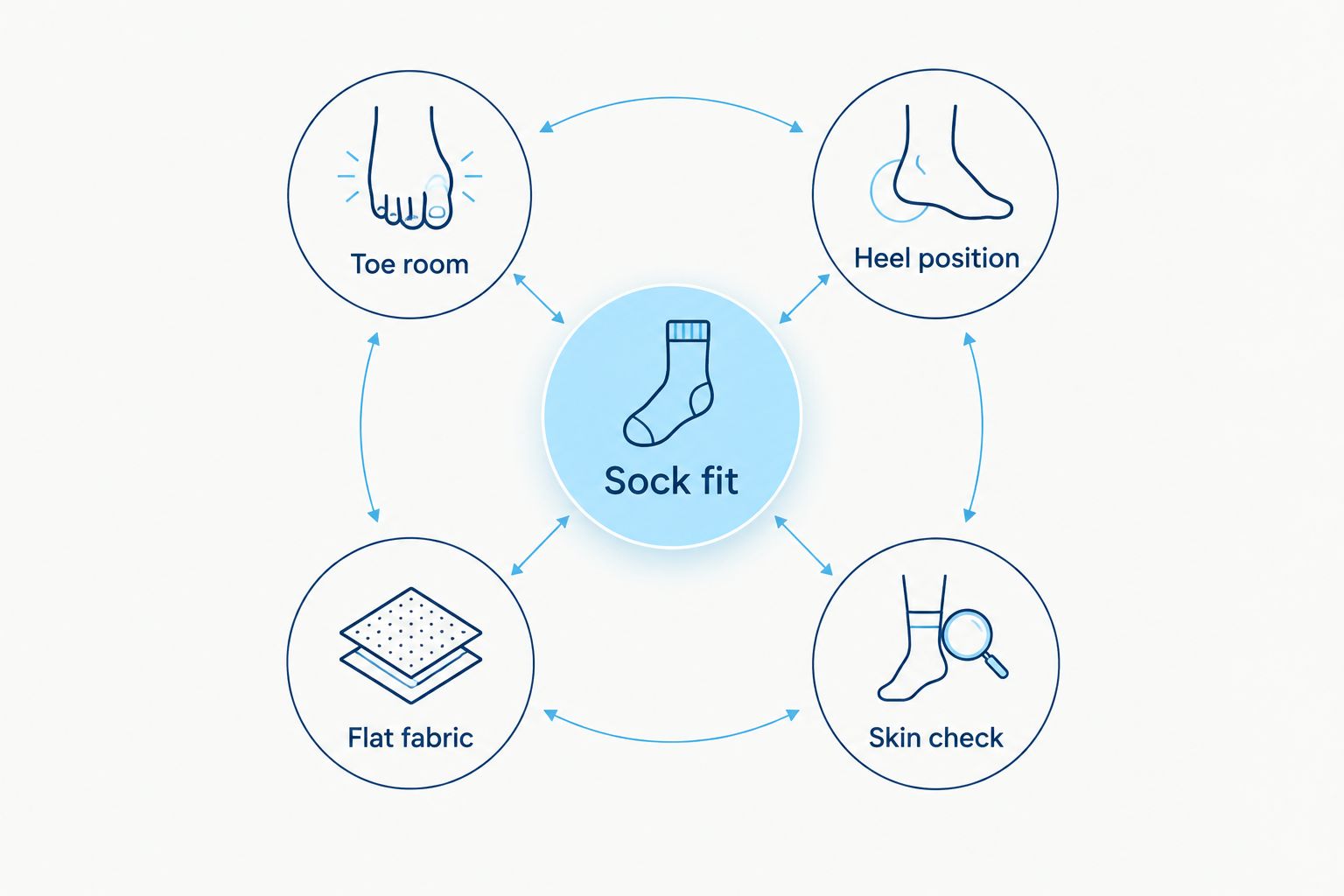
Try 1 pair with the shoes and inserts you actually use. Walk indoors, then remove the socks and inspect both feet; comfort while sitting does not tell you how the combination feels in motion.
- Toe room: Your toes move without pulling against the fabric.
- Heel position: The sock heel stays aligned with your heel.
- Flat fabric: No folds collect under your sole or between your toes.
- Skin check: Look for rubbing, blisters, or persistent pressure marks.
Remove the socks if you develop new numbness, tingling, cold toes, color changes, or increasing pain. Seek medical advice if those symptoms persist; sudden severe pain or a cold, pale foot needs urgent assessment.
Standing shifts: separate heel pain from swelling
For long shifts in 2026, start by naming the problem you want the sock to address. Heel pain, sweaty feet, rubbing, and leg swelling are different concerns, even when they occur together.
The distinction matters when comparing compression socks for restaurant servers: a sock selected for lower-leg swelling should not be assumed to treat pain under the heel. For plantar fasciitis, also assess footwear, time spent standing, and the activities that trigger symptoms.
Build breaks and changes of position into your routine when possible. If your heel pain keeps worsening through a shift, do not respond only by adding tighter socks or more padding.
When to choose an evaluation instead
Book an evaluation when heel pain persists, repeatedly returns, or limits ordinary walking. An examination helps distinguish plantar fasciitis from other causes of heel pain and guides treatment choices.
Achilles Foot and Ankle Center offers plantar fasciitis and heel pain care in the Richmond area. Patients in Mechanicsville and West End can contact the practice to discuss an appropriate evaluation.
Seek prompt care for a new wound, spreading redness, drainage, or a hot, swollen foot, especially if you have diabetes. Sudden pain after an injury or difficulty bearing weight also needs assessment rather than another sock trial.
How these sock options were ranked
This 2026 ranking prioritizes fit, cushioning, moisture management, smooth construction, and compatibility with shoes. Specialized compression appears later because it needs a specific purpose and additional safety considerations.
The ranking is a feature-based buying guide, not a clinical trial or a claim that one sock category heals plantar fasciitis faster. No sock earns a higher position simply because its packaging promises heel pain relief.
Which socks should you choose?
Choose cushioned, moisture-wicking socks as your everyday comfort starting point. Switch to a thinner or smoother design when padding or seams create pressure, and treat compression as a separate decision.
For your 2026 heel pain plan, buy around the shoes you wear—not around a treatment claim on a package. Achilles Foot and Ankle Center offers heel pain evaluation when comfort changes alone do not address the problem.
FAQ
What are the best socks for plantar fasciitis in 2026?
Cushioned, moisture-wicking socks are a practical starting point for everyday comfort when they fit inside supportive shoes. No sock category is a substitute for an accurate diagnosis or an appropriate plantar fasciitis treatment plan.
Do compression socks cure plantar fasciitis?
Compression socks are not an established cure for plantar fasciitis. They serve a different purpose when prescribed for certain swelling or circulation conditions, and they do not replace heel pain care.
Should I wear plantar fasciitis socks to bed?
Do not assume a daytime compression sock is appropriate for sleeping. Follow the product instructions and your clinician’s advice; a night splint is a different device with a different purpose.
Are thick socks better than thin socks for heel pain?
Thick socks are not automatically better for heel pain. Cushioning helps comfort only when it leaves enough room in the shoe; thinner socks are preferable when extra fabric causes pressure.
Can I wear compression socks if I have diabetes?
Ask your clinician before choosing compression if you have diabetes, especially with reduced sensation, circulation problems, or a wound. The appropriate choice depends on your foot health, not just a diabetic label.
How tight should plantar fasciitis socks feel?
Socks should feel secure without causing pain, numbness, cold toes, or color changes. Remove a pair that causes these symptoms, and seek medical advice if symptoms persist.
When should I see a podiatrist for heel pain?
Arrange an evaluation when heel pain persists, returns repeatedly, or interferes with walking. Seek prompt assessment for injury-related pain, inability to bear weight, or signs of infection.
One last thing
Bring your usual socks, work shoes, and inserts to a heel pain appointment. Seeing the combination helps your clinician understand where crowding, rubbing, or footwear choices fit into the problem—details that a sock label cannot show.
Related guides
- Best shoes for plantar fasciitis
- Best night splints for plantar fasciitis
- Can walking barefoot make plantar fasciitis worse?