Best overall: roomy walking shoes with a rounded toe box. Best for exercise: running shoes that hold your heel without squeezing your toes. Best for occasional open-toe wear: adjustable sandals. The best shoes to prevent ingrown toenails in 2026 reduce pressure around the nail, but no shoe guarantees prevention or treats an embedded nail edge.
- The best shoes to prevent ingrown toenails provide toe room without letting your foot slide forward.
- Choose walking shoes for daily wear, running shoes for exercise, and extra-depth shoes when toe height is tight.
- Achilles Foot and Ankle Center provides evaluation for recurring ingrown toenails; changing shoes does not remove an embedded nail.
- Seek prompt care for drainage, spreading redness, or a painful nail when you have diabetes or poor circulation.
Why shoe fit matters
A tight toe box presses the skin against the nail edge. Shoes that let your foot slide forward also create repeated contact at the front, particularly during downhill walking or exercise. Nail shape, trimming habits, and injuries matter too.
Reduce pressure, but do not mistake pressure relief for treatment. If a nail keeps becoming painful, Achilles Foot and Ankle Center offers foot and ankle evaluation in the Richmond area. A footwear change cannot establish whether the nail needs treatment.
What makes the best shoes to prevent ingrown toenails?
Use these five criteria for your 2026 shoe search. A shoe that fails the pressure test is not a good choice simply because its label says “wide” or “comfort.”
- Toe width: Your toes rest naturally without being pushed together or against the sidewall.
- Toe height: The upper does not press down on your nails, including while you walk.
- Heel security: Laces or straps hold your heel without forcing you to tighten the forefoot excessively.
- Length clearance: Allow approximately 1/2 inch beyond your longest toe, then confirm that your heel stays secure.
- Activity match: Choose footwear suited to your walking, running, workplace, or dress requirements.
Do not buy a longer shoe solely to gain width. Excess length can leave your foot sliding inside it, replacing sideways pressure with repeated impact against the front.
Shoe options at a glance
These are footwear categories, not tested product rankings. Choose the category that matches your activity, then judge the individual shoe on your own feet.
| Rank and option | Best for | Standout feature to check | Key limitation |
|---|---|---|---|
| 1. Roomy walking shoes | Everyday errands and walking | Rounded forefoot with secure fastening | A wide label does not guarantee nail clearance |
| 2. Properly fitted running shoes | Running and exercise walking | Heel hold with adequate space ahead of the toes | Fit changes with model and foot shape |
| 3. Extra-depth shoes | Pressure above thick or raised toenails | Additional vertical space over the toes | Extra depth does not guarantee enough width |
| 4. Wide-fit work shoes | Jobs requiring enclosed footwear | Roomy forefoot within workplace requirements | Protective toe caps can restrict space |
| 5. Rounded-toe dress shoes | Office and formal occasions | Toe shape that avoids tapering across the toes | Stiff uppers can press on tender areas |
| 6. Adjustable sandals | Occasional open-toe wear | An open front and adjustable retention | Exposed toes lack protection from impacts |
1. Roomy walking shoes: best for everyday wear
Roomy walking shoes are the default starting point for errands, commuting, and recreational walking. Look for a rounded forefoot and laces or adjustable fasteners that keep your heel in place without compressing your toes.
Best for: Daily walking when enclosed shoes are appropriate and your nail is not rubbing against the upper.
Walking shoe pros:
- Enclose your toes against everyday bumps.
- Adjustable fastening helps control forward sliding.
- Different width fittings let you compare forefoot space.
Walking shoe cons:
- A wide shoe can still taper around the big toe.
- A shallow upper can press down despite adequate width.
Try the shoes with your usual socks. Walk normally and turn corners; if you curl your toes to keep the shoe on, reassess the fit rather than accepting the extra space as a benefit.
Verdict: Buy if your toes stay uncompressed and your heel stays secure.
2. Properly fitted running shoes: best for exercise
Running shoes suit running and exercise walking, but a familiar model name does not guarantee a suitable fit. Your toes need clearance while the rest of the shoe holds your foot during movement.
Best for: Exercise that repeatedly loads the forefoot or brings the toes toward the front of the shoe.
Running shoe pros:
- Lacing lets you adjust how securely the shoe holds your foot.
- Athletic designs provide options for different foot shapes.
- Secure fit helps limit repeated forward movement.
Running shoe cons:
- A pointed forefoot can crowd the big or little toe.
- Sizing up without checking heel hold can increase sliding.
For your 2026 replacement pair, evaluate fit rather than automatically repeating your old size. Check both feet while standing, and test the shoes with the socks you actually exercise in.
Verdict: Buy for exercise only after checking toe clearance during movement.
3. Extra-depth shoes: best for pressure above the nail
Extra-depth shoes provide more vertical room inside the shoe. That makes this category worth considering when a raised toe or thickened nail contacts the upper, even though the shoe feels wide enough.
Best for: Toes that need more room above them, rather than simply more space from side to side.
Extra-depth shoe pros:
- Additional height gives you another fitting option.
- Room above the nail reduces direct contact when correctly fitted.
- Accommodates foot shapes that do not suit shallow footwear.
Extra-depth shoe cons:
- Extra height does not correct a narrow toe box.
- A roomy fit still needs secure heel retention.
Do not assume a thick or discolored nail is an ingrown nail or fungal infection. Persistent changes deserve an examination, especially when you cannot trim the nail safely or feel pressure in several different shoes.
Verdict: Buy when vertical pressure is the problem; seek evaluation for persistent nail changes.
4. Wide-fit work shoes: best for enclosed-footwear jobs
Work shoes must meet your employer's safety requirements as well as fit your foot. For standing, walking, or protective-footwear jobs, evaluate the space inside the actual shoe rather than relying on its exterior shape.
Best for: Workers who cannot switch to open-toe footwear during a shift.
Work shoe pros:
- Enclosed construction protects toes from routine contact.
- Appropriate models meet the demands of your workplace.
- Width choices provide alternatives to squeezing into a standard fit.
Work shoe cons:
- Rigid toe caps do not stretch to make room.
- Heavy or stiff uppers can contact an irritated nail.
For a 2026 work-shoe replacement, bring your work socks and any prescribed inserts to the fitting. An insert takes up space, so assess the complete setup rather than trying the empty shoe alone.
Verdict: Buy only when the shoe meets both workplace requirements and your toe-clearance needs.
5. Rounded-toe dress shoes: best for formal occasions
Rounded-toe dress shoes are a better starting point than designs that taper sharply across your toes. Low heels also avoid the forward pressure associated with high heels, but the shoe still needs a secure fit.
Best for: Office days, events, and occasions that call for dress footwear.
Dress shoe pros:
- A rounded forefoot leaves more usable space than a sharply tapered shape.
- Laces or adjustable straps improve retention.
- Low-heeled designs reduce the need to balance on the forefoot.
Dress shoe cons:
- Firm seams can press against the nail fold.
- A rounded appearance does not guarantee enough internal room.
Do not plan to “break in” a shoe that already presses against a sore nail. Test sitting, standing, and walking; comfort in a chair does not establish a comfortable fit for an event.
Verdict: Buy a pressure-free fit; skip dress shoes that squeeze from the first wear.
6. Adjustable sandals: best for occasional open-toe wear
Adjustable sandals leave the nail area uncovered while straps retain the foot. They are an option for suitable settings, not a substitute for protective footwear or treatment of an inflamed nail.
Best for: Short, casual outings when open-toe footwear is safe and appropriate.
Sandal pros:
- An open front avoids an enclosed toe box.
- Adjustable straps let you refine the fit.
- Visible toes make rubbing easier to notice.
Sandal cons:
- Exposed toes are vulnerable to bumps and debris.
- Loose sandals encourage sliding or toe gripping.
The same fit rule applies to men's leather sandals: strap placement and foot retention matter more than the material name. A strap crossing a tender nail area defeats the purpose of choosing an open design.
Avoid treating sandals as the automatic answer if you have diabetes, reduced sensation, or an open wound. Ask your clinician which footwear provides appropriate protection.
Verdict: Buy for suitable occasional use; skip any pair that rubs or fails to hold your foot.
How to check fit before you commit
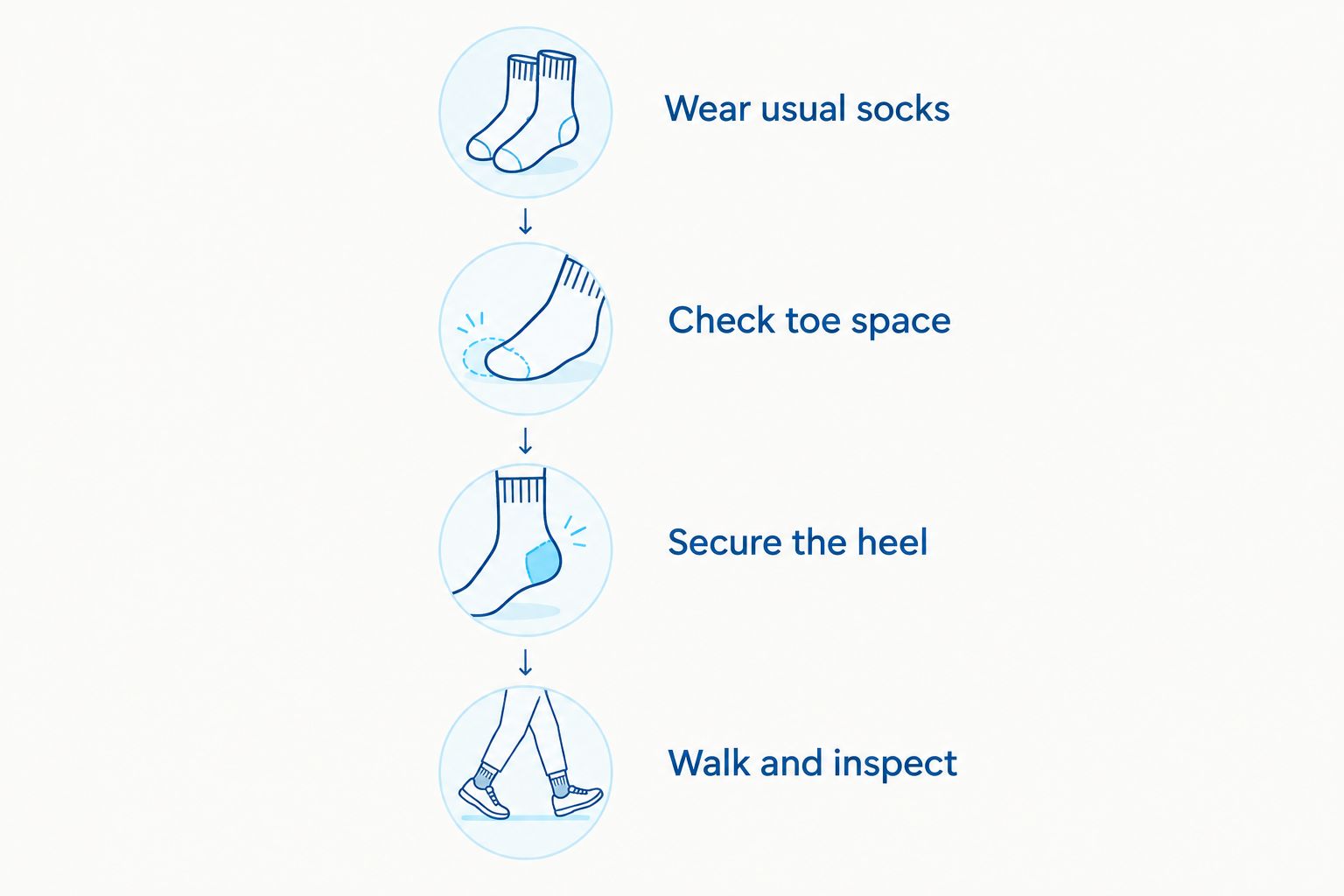
Use this sequence when comparing shoes in 2026. Test both shoes, not just the one on your more comfortable foot.
- Wear usual socks. Include prescribed inserts when checking the fit.
- Check toe space. Stand and confirm that your toes are not pushed together or pressed from above.
- Secure the heel. Adjust the fastening without tightening the forefoot excessively.
- Walk and inspect. Check for rubbing, forward sliding, and pressure near the nail folds.
Compare both feet rather than assuming they need identical space. Fit the larger foot, then confirm the other shoe remains secure. If you have reduced sensation, do not rely on pain alone to judge whether a shoe fits safely.
When a shoe change is not enough
A shoe can remove pressure; it cannot remove a nail edge embedded in skin. Seek an evaluation for recurring pain, drainage, increasing swelling, or redness around the nail. Spreading redness, fever, or feeling unwell requires urgent medical attention.
If you have diabetes, poor circulation, or reduced sensation, contact a clinician promptly about a new nail problem rather than cutting into it yourself. Avoid digging down the side, tearing off a corner, or using a sharp tool under the nail. The guide to ingrown toenail home care and in-office treatment explains that care pathway.
For patients in Mechanicsville and West End, Achilles Foot and Ankle Center offers evaluation of foot and ankle concerns. Bring your usual shoes and explain whether pain occurs during walking, at work, or even without shoes.
Get your painful toenail evaluated
Discuss recurring nail pain, shoe pressure, and the next appropriate treatment step.
How these options were ranked
The order prioritizes everyday usefulness, toe clearance, secure retention, and protection. It is a fit-based buying framework, not a claim that a particular shoe prevents recurrence. Achilles Foot and Ankle Center is the care provider, not a footwear brand in this ranking.
Which shoes should you choose?
Start with roomy walking shoes for daily wear. Choose a different category only when your activity, toe height, workplace, or dress requirements call for it. For 2026, prioritize the fit you can demonstrate on your foot over a product's comfort claims.
FAQ
What’s the best shoe shape for preventing ingrown toenails?
A rounded, roomy toe box is the best starting point because it avoids squeezing the toes together. Check height above the nails as well as width, and make sure your heel stays secure.
Should I buy a bigger size if my toenail hurts?
Do not automatically buy a longer shoe. You might need more width or depth instead; excessive length can let your foot slide forward and hit the front.
Are sandals better than sneakers for an ingrown toenail?
Sandals remove enclosed toe-box pressure but provide less protection. Properly fitted sneakers are often more appropriate for walking and work; neither option treats an embedded nail edge.
Can tight shoes cause an ingrown toenail?
Tight shoes contribute pressure around the nail and are a recognized risk factor. Nail trimming, nail shape, and injury also affect whether an ingrown toenail develops.
Can I keep running with a painful ingrown toenail?
Do not run through increasing nail pain or drainage. Reduce activities that aggravate the toe and arrange an evaluation before returning to repeated pressure.
How should I trim my toenails to reduce ingrown nails?
Trim toenails straight across and avoid cutting them too short or rounding deeply into the corners. Get professional help if thick nails, poor vision, or limited reach make trimming unsafe.
When should I see a podiatrist instead of changing shoes?
Arrange care for persistent or recurring nail pain, drainage, or increasing redness. Achilles Foot and Ankle Center evaluates these concerns; diabetes, poor circulation, or reduced sensation makes prompt assessment especially important.
One last thing
Your longest toe is not always your big toe. Check clearance beyond the longest toe, then separately check that the big toenail has room beside and above it. Overall shoe length and nail clearance are different checks.
Related guides
- Is it safe to cut out an ingrown toenail at home?
- Recovery after ingrown toenail surgery
- Best shoes for hammertoes