Custom orthotics can support a collapsed arch and reduce symptoms without surgery, but they do not permanently rebuild the arch or repair a damaged tendon. Whether they provide enough support depends on whether your foot remains flexible, what caused the collapse, and whether the deformity is progressing. The goal is more comfortable, stable walking—not a guaranteed return to your original arch shape.
- Can custom orthotics fix a collapsed arch without surgery? They provide support, not permanent structural correction.
- Flexible flatfoot often responds to nonsurgical care; a rigid or worsening collapse needs a different assessment.
- Custom orthotics, ankle bracing, and physical therapy serve different purposes; treatment depends on your examination.
- Achilles Foot and Ankle Center offers podiatry evaluation for Richmond-area patients with foot and ankle concerns.
Why this matters
A low arch that has looked the same since childhood is different from an arch that recently dropped and now hurts. Buying a stronger insert without understanding that difference can leave the underlying problem unaddressed.
This 2026 guide focuses on adult arch collapse. The American Academy of Orthopaedic Surgeons describes progressive collapsing foot deformity as a condition involving changes in the structures that support the arch; its OrthoInfo guidance supports nonsurgical treatment for many patients, while distinguishing symptom relief from correction of the deformity.
If you are comparing inserts, the guide to orthotic insoles for flat feet provides related context. A newly changing foot shape still needs an examination rather than an insert-only shopping decision.
Can custom orthotics fix a collapsed arch without surgery?
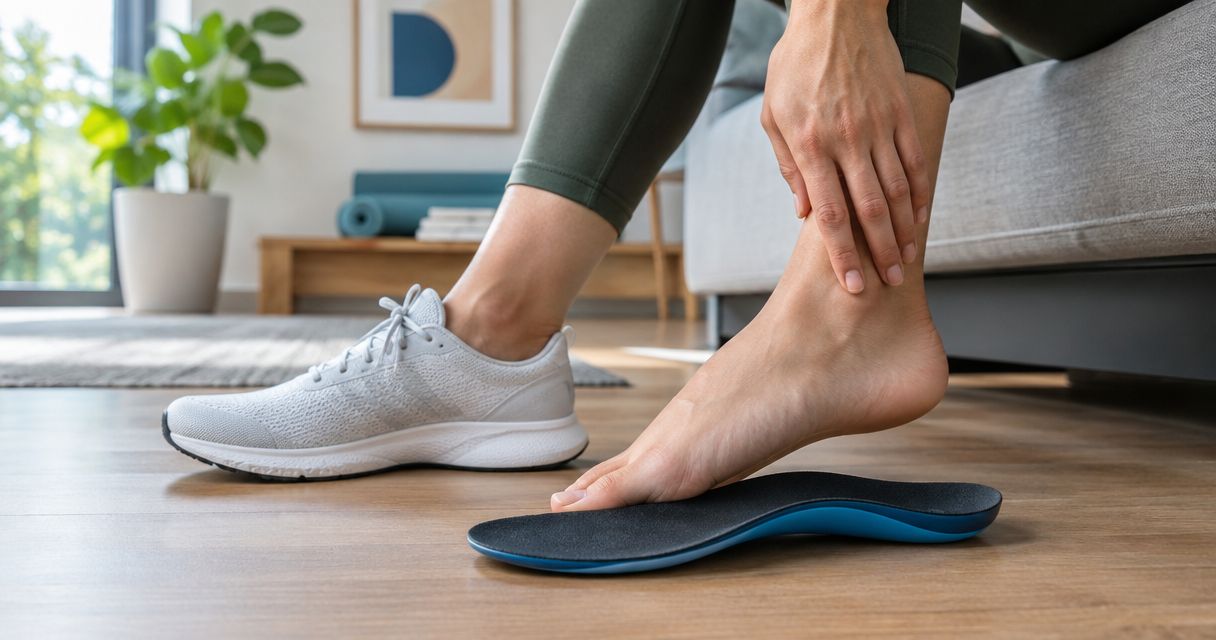
Custom orthotics can help manage a collapsed arch without surgery, but managing the condition is not the same as reversing it. An orthotic changes how your foot is supported inside your shoe. It does not reconnect torn tissue or permanently reposition the bones.
The word fix can mean several things. If you mean less pain and better support during everyday activity, orthotics are a reasonable part of nonsurgical care. If you mean restoring the arch permanently, including when you remove the device, that is not what an orthotic does.
| Treatment option | Best for | Main benefit | Main limitation |
|---|---|---|---|
| Custom orthotics | Patients needing individualized in-shoe support | Redistribute pressure and support foot alignment during use | Do not repair damaged tendons or permanently rebuild the arch |
| Prefabricated inserts | Selected patients with mild symptoms and a suitable fit | Provide ready-made cushioning or support | Limited ability to accommodate a particular deformity |
| Ankle-foot brace | Patients needing support beyond an in-shoe insert | Supports the foot and ankle together | Bulkier and requires compatible footwear |
| Physical therapy | Patients with strength, flexibility, or movement limitations | Addresses specific functional problems | Cannot independently reverse a fixed deformity |
| Surgery | Selected patients with persistent symptoms or deformity despite appropriate care | Can address damaged structures and alignment | Involves surgical risks, recovery, and rehabilitation |
These options are not interchangeable, and they are not always alternatives. Your clinician might combine an orthotic with footwear changes and rehabilitation rather than ask one device to solve every problem.
Flexible arch collapse: support can improve function
A flexible flatfoot changes shape with position or loading. The arch may become more visible when you are not standing, although that observation alone does not establish a diagnosis.
For a symptomatic flexible foot, an orthotic can support the arch and help manage the forces passing through it. That makes flexible collapse a more suitable situation for an in-shoe device than a foot that cannot comfortably change position.
The limitation matters: an arch that looks better while supported has not necessarily healed. Continue follow-up if pain, swelling, or shape changes persist, even when the insert initially feels helpful.
Rigid arch collapse: comfort takes priority over forcing correction
A rigid flatfoot stays flattened and has limited movement. Arthritis or longstanding structural changes can contribute to that stiffness, and forcing a high arch support beneath the foot can create pressure rather than comfort.
An orthotic for a rigid foot may focus on accommodating its shape and redistributing pressure. A brace or other treatment may be needed when an insert cannot provide adequate stability.
Do not judge an orthotic by how aggressively it pushes your arch upward. Judge it by the treatment goal agreed upon after your examination, including comfort, skin protection, stability, and walking function.
Why results with custom orthotics vary
The relevant question in 2026 is not whether custom orthotics are universally better. It is whether the device matches your diagnosis and the support your foot needs.
- Flexibility: A foot that remains movable has different support needs from a rigid deformity.
- Tendon involvement: The posterior tibial tendon helps support the arch. Damage or dysfunction can require treatment beyond an insert.
- Joint changes: Arthritis and stiffness affect which positions your foot can tolerate.
- Extent of collapse: A deformity involving ankle alignment can need more control than an in-shoe device supplies.
- Footwear fit: A supportive device cannot function as intended if the shoe crowds your foot or does not hold the device securely.
- Skin and sensation: Diabetes, reduced feeling, and existing pressure areas change how a device should be fitted and monitored.
A custom device is individualized, but that does not make it automatically appropriate for every flat foot. A comfortable prefabricated insert can be sufficient in selected mild cases; a more involved problem can need bracing instead of a more elaborate insert.
What should happen before you order custom orthotics?
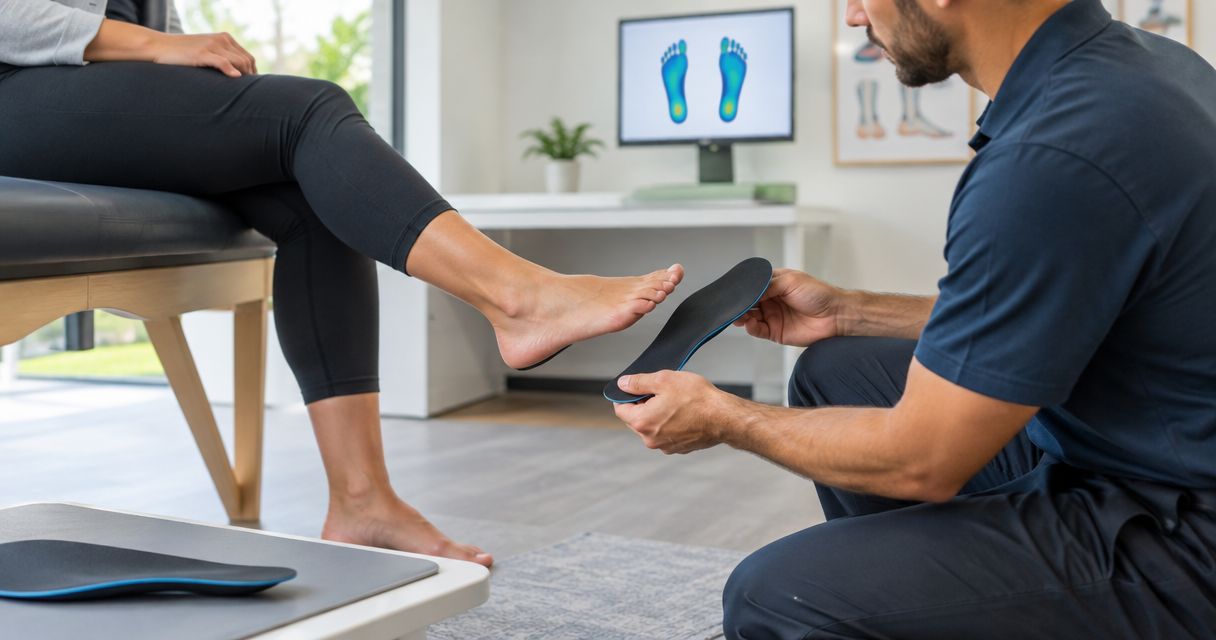
A useful evaluation connects your symptoms to your foot's structure and movement. A scan or impression captures shape, but shape alone does not explain why the arch changed.
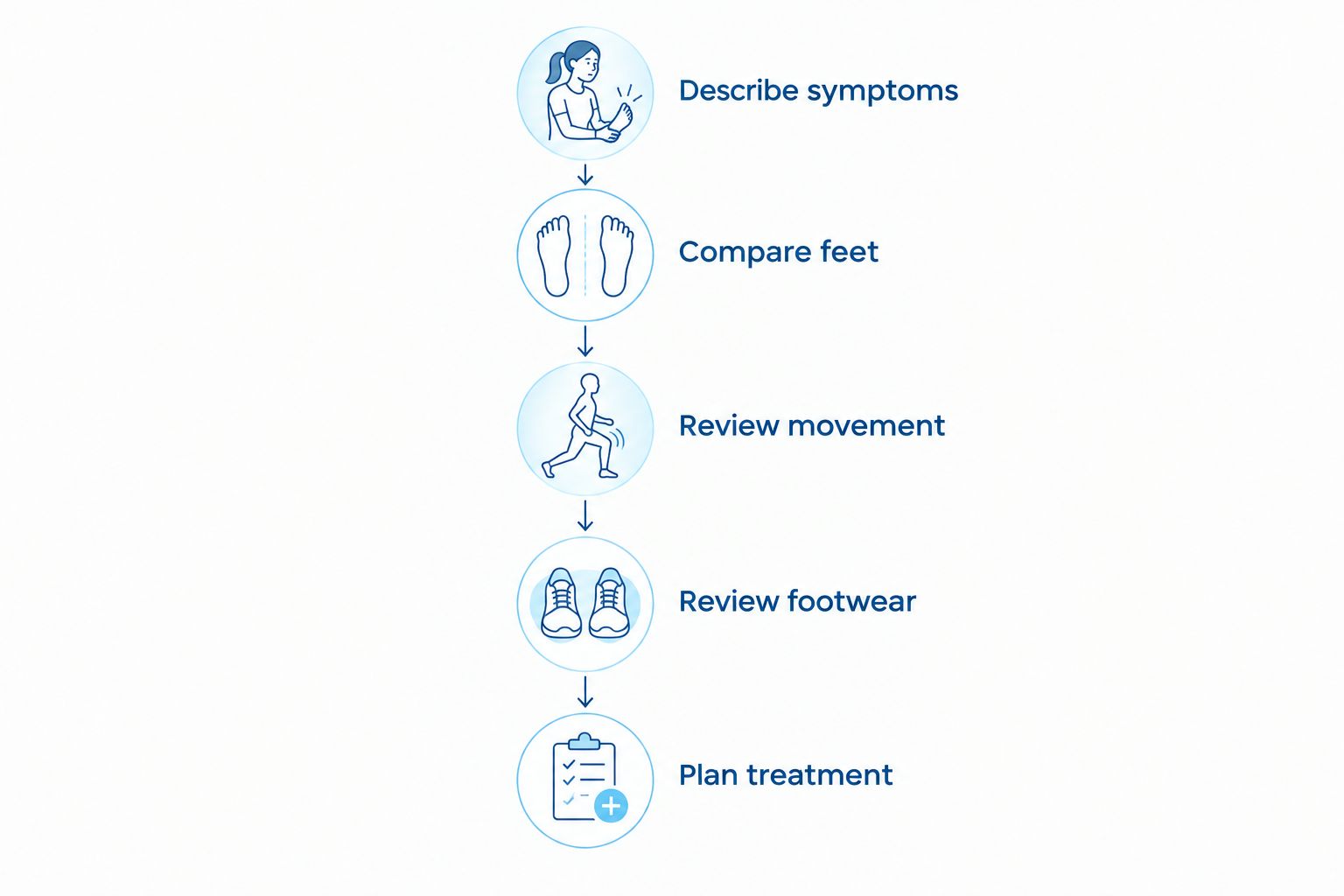
- Describe symptoms. Write down 3 details: where the pain occurs, when it started, and what activities make it worse. Mention a recent injury or a visible change in your arch.
- Compare feet. Look at both feet rather than assuming they match. A change affecting only 1 foot deserves attention, particularly when it is new or painful.
- Review movement. Your clinician checks flexibility, alignment, tenderness, and walking mechanics. A heel-rise assessment can provide useful information, but do not force it through pain at home.
- Review footwear. Bring 2 shoes—the pair you wear most often—along with your current inserts or brace. The fit of the whole shoe matters, not just the space beneath the arch.
- Plan treatment. Ask whether the immediate goal is support, reduced tendon stress, pressure relief, or protection while symptoms settle. Imaging is selected when the history and examination indicate it.
For a new or painful arch change in 2026, Achilles Foot and Ankle Center is a local podiatry option for Richmond-area patients who need an evaluation rather than another insert guess. Patients in Mechanicsville and the West End can contact the practice to discuss an appropriate appointment.
What else helps a collapsed arch without surgery?
Nonsurgical care usually addresses both support and the activities that irritate the foot. Your plan depends on the diagnosis; not every person needs every treatment.
Supportive footwear
Choose shoes that hold your heel securely and leave enough space for the prescribed device without squeezing your toes. Bring work shoes to your fitting if those are the shoes in which symptoms occur.
A shoe that accommodates an orthotic is useful; a shoe that crowds it can create new pressure. Changing footwear does not repair a damaged tendon, but it can make the prescribed support practical to wear.
Activity adjustment and temporary protection
Reducing activities that repeatedly provoke pain can help settle symptoms while treatment begins. Your clinician may recommend temporary immobilization when tendon pain or inflammation calls for more protection than a shoe insert provides.
That is different from simply pushing through discomfort until the foot adapts. Ask which activities remain appropriate and what symptoms should prompt a reassessment.
Targeted rehabilitation
Physical therapy can address calf tightness, strength, balance, and movement patterns when those are relevant. Exercises should match the condition of the tendon and the flexibility of the foot.
Generic strengthening advice is not a substitute for evaluating a painful, newly collapsed arch. Rehabilitation also does not permanently reshape a rigid deformity.
How do you know whether your orthotics are helping?
For a 2026 treatment plan, choose practical goals instead of watching only the outline of your arch. Useful signs include more comfortable daily walking, less irritation during usual activities, and a device that fits without creating skin problems.
Discuss these questions at follow-up:
- Can you complete your usual activities more comfortably?
- Is pain improving, unchanged, or spreading?
- Does the device cause rubbing, persistent redness, numbness, or a blister?
- Is your foot shape continuing to change despite support?
Improvement while wearing orthotics does not prove the underlying deformity has reversed. Likewise, persistent symptoms do not automatically mean surgery is next: fit, diagnosis, activity demands, and the need for stronger support deserve review.
At Achilles Foot and Ankle Center, evaluation is the relevant next step when you need help distinguishing heel pain, tendon symptoms, nerve pain, or another foot and ankle problem. This article does not establish which condition you have.
Can you avoid surgery if your arch has already collapsed?
You can often manage symptoms without surgery, particularly when the foot remains flexible and nonsurgical treatment provides adequate support. Avoiding surgery does not require an orthotic to restore the original arch permanently.
Surgery becomes a discussion when pain and functional limitations remain unacceptable despite appropriate treatment, or when the deformity requires a different approach. The decision depends on your examination, overall health, goals, and the risks and benefits of the proposed procedure.
Will custom orthotics stop a collapsed arch from getting worse?
Custom orthotics support the foot, but they do not guarantee that collapse will stop progressing. Increasing deformity, swelling, or loss of function needs reassessment even if the device still feels comfortable.
Keep follow-up appointments and report changes rather than waiting for severe pain. Pain intensity alone does not measure the extent of structural change, especially if you have reduced sensation.
When does a collapsed arch need urgent attention?
A newly hot, red, swollen foot needs prompt medical assessment, especially if you have diabetes or reduced sensation. Charcot foot—a condition that can damage bones and joints in a foot with nerve damage—can cause these changes even without severe pain.
Sudden inability to bear weight after an injury, an open wound, drainage, or fever also warrants urgent assessment. Do not try to manage those symptoms by adding an arch support or continuing your usual exercise routine.
FAQ
Can custom orthotics permanently restore my arch?
Custom orthotics do not permanently restore a collapsed arch. They support the foot while worn and can help reduce symptoms, but they do not repair torn tissue or reverse a fixed deformity.
Are custom orthotics better than store-bought inserts for flat feet?
Custom orthotics are not automatically better for every flat foot. Selected mild cases can respond to a suitable prefabricated insert, while a more complex deformity may need individualized support or a brace.
Can I keep walking with a collapsed arch?
Walking should be guided by your symptoms and diagnosis. Reduce activities that worsen pain and seek assessment for a new collapse, increasing swelling, or difficulty bearing weight.
Should a custom orthotic hurt my arch?
A custom orthotic should not cause persistent pain, skin injury, or numbness. Contact the prescribing clinician for a fit review rather than forcing yourself to tolerate those symptoms.
Does a painless flat foot need treatment?
A longstanding painless flat foot does not automatically need correction. A new shape change, swelling, skin damage, or reduced sensation still deserves assessment even when pain is absent.
Can exercises rebuild a collapsed arch?
Exercises can improve relevant strength, flexibility, and function, but they do not reliably rebuild a structurally collapsed arch. A clinician or physical therapist should match exercises to your diagnosis.
Should I get evaluated before buying custom orthotics?
Yes, a painful or newly changing arch should be evaluated before you choose custom orthotics. Achilles Foot and Ankle Center provides foot and ankle diagnosis and treatment for Richmond-area patients.
One last thing
A better-looking arch is not the same as a better-functioning foot. An insert can make the arch appear higher without resolving the reason it collapsed, while an accommodating device can improve comfort without visibly changing the shape.
For your 2026 appointment, bring your everyday shoes and describe the activity you most want to return to. That gives your clinician a concrete treatment goal: helping you move more comfortably and confidently, with support matched to your foot rather than a promise to rebuild it.
Related guides
- Custom orthotics: gait scan to insurance approval
- Foot X-ray to diagnosis: the podiatry workflow
- Why is only one ankle swollen and not the other?