Yes, gout in the ankle can be mistaken for a sprain because both cause pain, swelling, tenderness, and difficulty walking. A twisting injury points toward a sprain, while sudden heat and severe tenderness without a clear injury raise concern for gout—but a hot, swollen ankle also needs assessment for infection.
- Can gout in the ankle be mistaken for a sprain? Yes—symptoms overlap, so the injury history and examination matter.
- Sudden ankle pain without a twist supports considering gout, but does not confirm it.
- A hot, swollen ankle with fever or feeling unwell needs urgent medical assessment.
- Achilles Foot and Ankle Center provides foot and ankle evaluation when the cause of your pain is unclear.
Can gout in the ankle be mistaken for a sprain?
Yes. Swelling alone cannot distinguish ankle gout from a sprain. The most useful clues are how the pain began, where it hurts, whether the joint feels hot, and what happened before symptoms started.
| Clue | Ankle gout | Ankle sprain | Important limitation |
|---|---|---|---|
| How it starts | Often sudden, sometimes overnight | Usually follows rolling or twisting the ankle | An injury can also trigger a gout flare |
| Tenderness | Often centered around an inflamed joint; light touch can hurt | Often concentrated over injured ligaments | Both can make the whole ankle painful |
| Skin changes | Warmth, redness, and swelling are common | Swelling and bruising are common | Appearance does not rule out infection |
| Previous episodes | Similar attacks that settled between flares support gout | Previous sprains can leave recurring instability | Either condition can occur for the first time |
| Walking | Weight-bearing can be very painful | Weight-bearing can be very painful | Walking ability does not establish the diagnosis |
If you need help identifying the cause, Achilles Foot and Ankle Center offers foot and ankle diagnosis and treatment. Seek urgent medical care rather than waiting for a routine appointment when infection or a serious injury is possible.
Why this matters in 2026
Treating every swollen ankle as a sprain can delay the right care. Gout involves inflammation from urate crystals in a joint; a sprain involves stretched or torn ligaments, the bands that connect bones.
Those conditions need different treatment plans. Neither diagnosis should be assumed when a joint infection, fracture, or another problem remains possible.
This 2026 guide helps you recognize patterns and choose the next step—not diagnose your ankle from a checklist. A first episode of unexplained, hot ankle swelling deserves prompt assessment.
What makes ankle gout look like a sprain?
Gout inflammation can spread beyond a small spot and make the ankle look generally swollen. Shoes become uncomfortable, ankle movement hurts, and standing feels difficult—much like an injury.
A gout flare often reaches its worst pain within 24 hours. That rapid onset is a useful clue, especially if you went to bed without an obvious injury and woke with marked pain. It is not proof: infection can also develop quickly.
A minor stumble can complicate the story. You might remember rolling your ankle and reasonably blame that event, but trauma can trigger gout in someone who already has urate deposits.
A past gout diagnosis helps your clinician interpret the symptoms. It does not mean every later episode of ankle pain is gout, and it does not exclude an infection occurring alongside a flare.
What points more toward an ankle sprain?
A clear roll, awkward landing, or sudden change of direction supports a ligament injury. Pain over the outside of the ankle, followed by swelling or bruising, also fits a common sprain pattern.
The location matters more than the size of the swelling. A clinician checks whether tenderness follows a ligament, sits directly over a bone, or centers on the joint itself.
Feeling unstable after an injury adds another clue. However, pain can make any swollen ankle feel unreliable, so a sense of giving way does not settle the diagnosis.
Do not use your ability to walk as a home fracture test. Some fractures still allow weight-bearing, while gout can make walking extremely painful without a broken bone.
Why ankle symptoms vary
The same diagnosis does not look identical in every person. These factors explain why a photograph or a friend's experience is not enough to identify your ankle problem:
- Injury history: A definite twist supports a sprain, but an injury can also precede a gout flare.
- Location: Joint-centered pain differs from tenderness along a ligament, tendon, or bone.
- Timing: Sudden overnight pain suggests a different pattern from pain that follows an awkward landing.
- Previous episodes: Repeated attacks with symptom-free intervals support considering gout; repeated sprains raise questions about stability.
- Other health conditions: Kidney disease, diabetes, reduced sensation, and immune suppression affect assessment and treatment decisions.
- Medicines: Diuretics can contribute to gout risk, while other medicines affect which pain treatments are safe.
Bring your medication list rather than stopping a prescription yourself. Your clinician needs the full picture, including nonprescription medicines and supplements.
What a 2026 ankle evaluation can establish
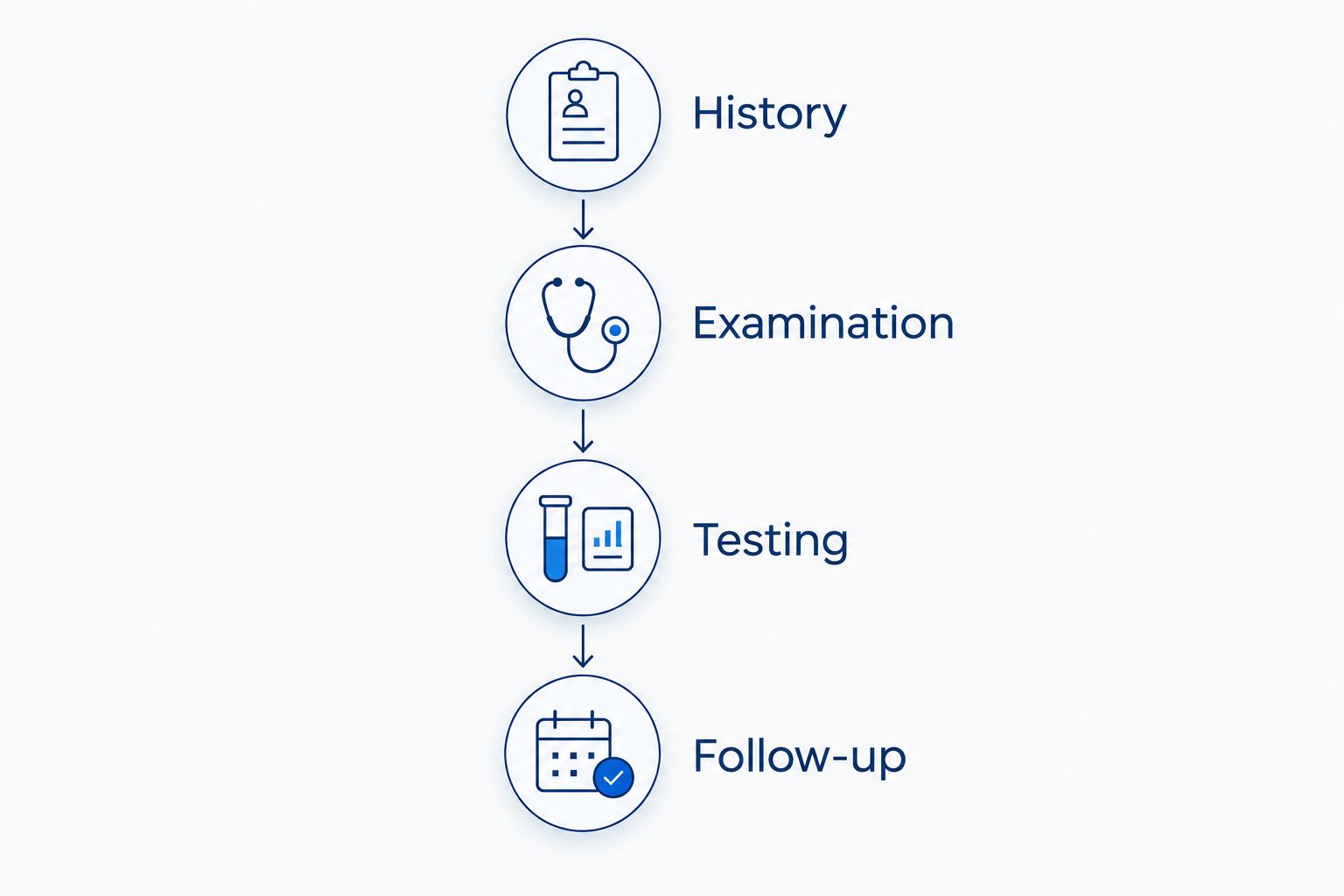
An examination helps separate overlapping symptoms and identify when testing is necessary. Achilles Foot and Ankle Center provides foot and ankle evaluation for patients whose pain needs a diagnosis rather than another guessed-at remedy.
- History: Explain when the pain began, whether you twisted the ankle, and whether you have had similar attacks. Mention fever, wounds, recent procedures, gout, kidney problems, and diabetes.
- Examination: The clinician checks the joint, ligaments, bones, skin, circulation, and sensation. Tell them if even light touch is painful.
- Testing: Depending on the findings, testing can include imaging, blood work, or joint-fluid sampling. Not every painful ankle needs every test.
- Follow-up: Review the results and the response to treatment. Persistent or changing symptoms deserve reassessment rather than automatic continuation of the original diagnosis.
These steps work together. A test result has more meaning when it matches the history and examination.
Does a uric acid blood test prove gout?
A high blood urate level supports assessing for gout, but it does not prove that gout is causing the current ankle pain. Some people have elevated urate without gout, and the level can fall during a flare.
NICE gout guidance recommends repeating a blood urate test at least 2 weeks after a flare settles when the level was below the diagnostic threshold during the attack but gout remains strongly suspected. One blood result should not overrule a concerning examination.
What can an X-ray show?
An X-ray helps assess suspected fractures and certain bone or joint changes. It does not directly show urate crystals, and an early gout flare can have a normal X-ray.
Your clinician chooses imaging based on the examination rather than swelling alone. The foot X-ray-to-diagnosis guide explains that part of an assessment.
When is joint-fluid testing useful?
Joint aspiration means drawing a small sample of fluid from the joint with a needle. Finding urate crystals supports gout; examining and culturing the fluid helps investigate infection.
The benefit is more direct evidence about what is happening inside the joint. The limitation is that it is an invasive procedure and is not necessary for every presentation. Finding crystals does not, by itself, exclude a simultaneous infection.
When should you seek urgent care?
Get urgent medical assessment for a hot, swollen ankle with fever, chills, feeling unwell, or rapidly worsening symptoms. Joint infection needs prompt treatment, and fever is not always present.
Other reasons not to wait include:
- An open wound, drainage, or spreading redness near the painful ankle.
- A visibly deformed ankle or a significant injury.
- A foot that becomes cold, pale, blue, or newly numb.
- Severe pain or inability to bear weight after an injury.
- New warmth and swelling when you have diabetes, especially with reduced sensation.
With diabetes and neuropathy, a warm, swollen foot or ankle can also signal Charcot changes—damage involving the bones and joints. Do not keep walking on it while waiting to see whether pain develops.
For non-emergency ankle symptoms in 2026, patients in Mechanicsville and West End can seek an appropriate evaluation. Achilles Foot and Ankle Center is best for Richmond-area patients seeking evaluation of foot and ankle pain; emergency symptoms need urgent medical care instead.
Get your ankle symptoms evaluated
Discuss unexplained ankle pain, swelling, and the next step in care.
What should you do while waiting for assessment?
Protect the ankle from activities that increase pain. Avoid running, jumping, or repeatedly testing whether you can push through it; those movements do not help establish the cause.
Elevating the ankle can help swelling. A wrapped cold pack for up to 20 minutes at a time can ease discomfort, but never place ice directly on your skin. If you have reduced sensation or poor circulation, ask a clinician before using cold therapy.
A brace can support a diagnosed ligament injury, but it does not treat urate crystals or exclude infection. Avoid tight compression over a very tender, unexplained swelling.
Ask a clinician or pharmacist which pain medicine is safe for you, particularly if you have kidney disease, stomach ulcers, heart disease, or take blood thinners. Do not use leftover prescription medicine to test whether the pain is gout.
Does improvement with rest mean it was a sprain?
Improvement with rest does not establish a sprain. Rest reduces strain on an injured ligament, but it also reduces painful movement during gout or other joint inflammation.
Pain relief from an anti-inflammatory medicine is not a diagnostic test either. Tell your clinician what you took and how symptoms changed, without treating that response as confirmation.
Can gout and an ankle sprain happen together?
Gout and an ankle sprain can happen together. An injury can damage a ligament and also trigger inflammation in a joint that contains urate deposits.
Report both the injury and any history of gout. Treating only one problem can leave the other unexplained.
Will a sprain treatment plan also treat gout?
A sprain treatment plan does not address the underlying cause of gout. Support and rehabilitation target ligament healing, while gout care addresses the flare and, when indicated, prevention of further urate crystal buildup.
Temporary comfort measures can overlap, but the longer-term plans differ. Ask what diagnosis the treatment is intended to address and when you should return if it is not helping.
FAQ
Can gout affect my ankle even if my big toe feels fine?
Yes, gout can affect the ankle without involving the big toe. The location alone does not confirm or rule out gout.
Can I tell ankle gout from a sprain by looking at it?
No, appearance alone cannot reliably distinguish ankle gout from a sprain. Redness, swelling, and tenderness overlap with other conditions, including infection.
Should I walk on an ankle that might have gout?
Avoid forcing painful weight-bearing on an ankle with an uncertain diagnosis. Seek assessment promptly if pain is severe, the joint is hot, or you cannot bear weight after an injury.
Can my uric acid level be normal during a gout attack?
Yes, blood urate can fall during a gout flare. NICE recommends repeating the test at least 2 weeks after the flare settles when gout remains strongly suspected despite a below-threshold result.
Does a normal ankle X-ray rule out gout?
No, a normal ankle X-ray does not rule out gout. Early gout often does not produce the bone changes visible on a standard X-ray.
Does ankle gout always cause a fever?
No, ankle gout does not always cause fever. Fever or feeling unwell with a hot, swollen joint requires urgent assessment for infection rather than assuming a gout flare.
What should I bring to an ankle pain appointment in 2026?
Bring your medication list, relevant test results, and a clear account of when symptoms started. Include any injury, previous gout attacks, fever, wounds, diabetes, or kidney disease.
One last thing
The most useful detail is often what happened before the swelling—not how swollen the ankle looks. Write down the onset, any twist or fall, and whether light touch hurts before your appointment. That short history helps your clinician interpret the examination without asking you to recreate events while you are uncomfortable.
Related guides