The best arch support for high arches is a firm but slightly flexible insole that touches your whole arch, cushions the heel and the ball of your foot, and holds your heel in a deep cup. If you have very high arches or pain that keeps coming back, custom orthotics are the strongest choice. If you mostly want comfort while walking, running or standing all day, a premade cushioned insole is usually enough.
Do you need arch support if you have high arches? In most cases, yes. A high arch is a rigid foot that absorbs little shock and rolls toward the outside edge. That pushes extra load onto your heel and forefoot, and the strain can travel up to your knees and hips. The shelf of "high arch" insoles is crowded, though, and a soft pad and a structured support do very different jobs.
This list ranks five types of support, from most corrective to most everyday. Each one covers how it works, who it suits and what to check before you buy. We are a podiatry practice serving the Richmond area and Central Virginia, so we also flag when a product stops being enough and a foot exam makes sense.
1. Custom orthotics
How it works
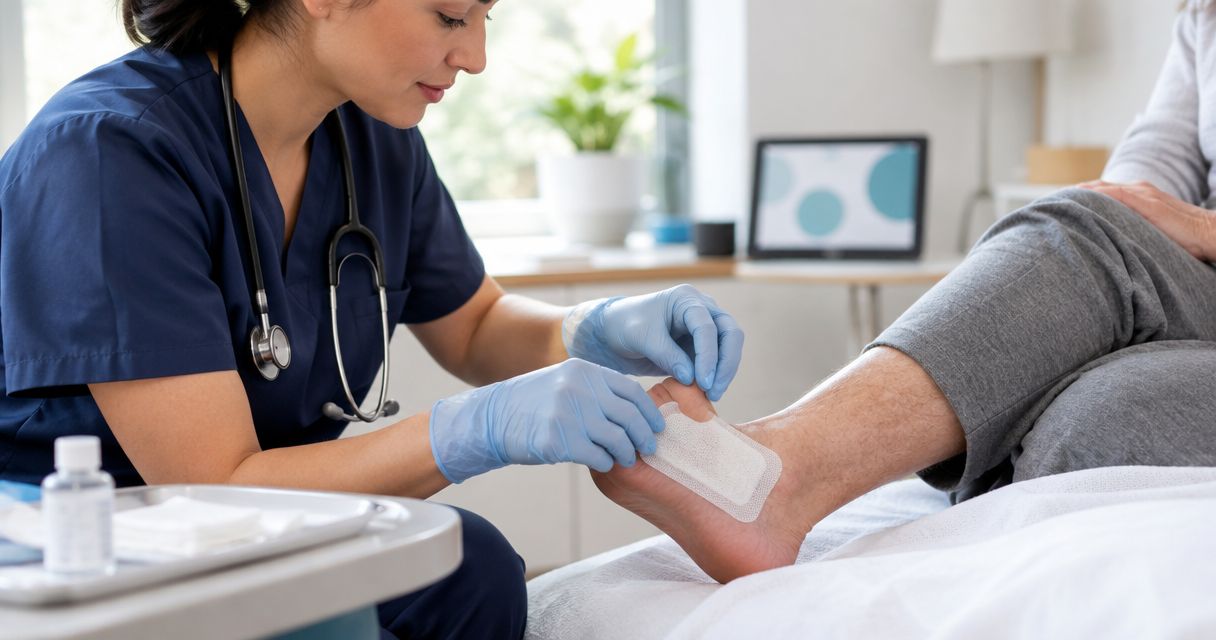
Custom orthotics are prescription devices built around your foot structure to improve support, comfort, balance and pressure distribution. At Achilles Foot & Ankle Center, a podiatrist examines your foot, and our state-of-the-art 3D imaging system captures its shape. The device is made to fill the space under your arch and spread pressure across the heel and forefoot, so no single spot takes the whole load.
A custom device matches your exact arch, which no off-the-shelf insole can do.
Who it suits
Choose this option if your arches are very high, if premade insoles have not helped, or if pain keeps returning. It also fits people with plantar fasciitis, Achilles tendinitis or diabetes. See a doctor first if only one foot has a high arch. A high arch that appears in a single foot can point to a neurological cause, and an insole will not address that.
Cost and what to check
The price depends on the device and your insurance, and coverage for orthotics varies by plan. We accept all major insurance plans, so ask before your visit. You can book a same-day appointment online or by phone, which saves weeks of trial and error with products that miss.
2. Cushioned full-length insoles with a deep heel cup
How it works
A premade cushioned insole adds shock absorption that a rigid high-arched foot lacks. The deep heel cup cradles the fatty pad under your heel bone and keeps your foot centered. This is the type most people picture when they search for insoles for high arches, and brands such as Superfeet and Spenco make versions for them.
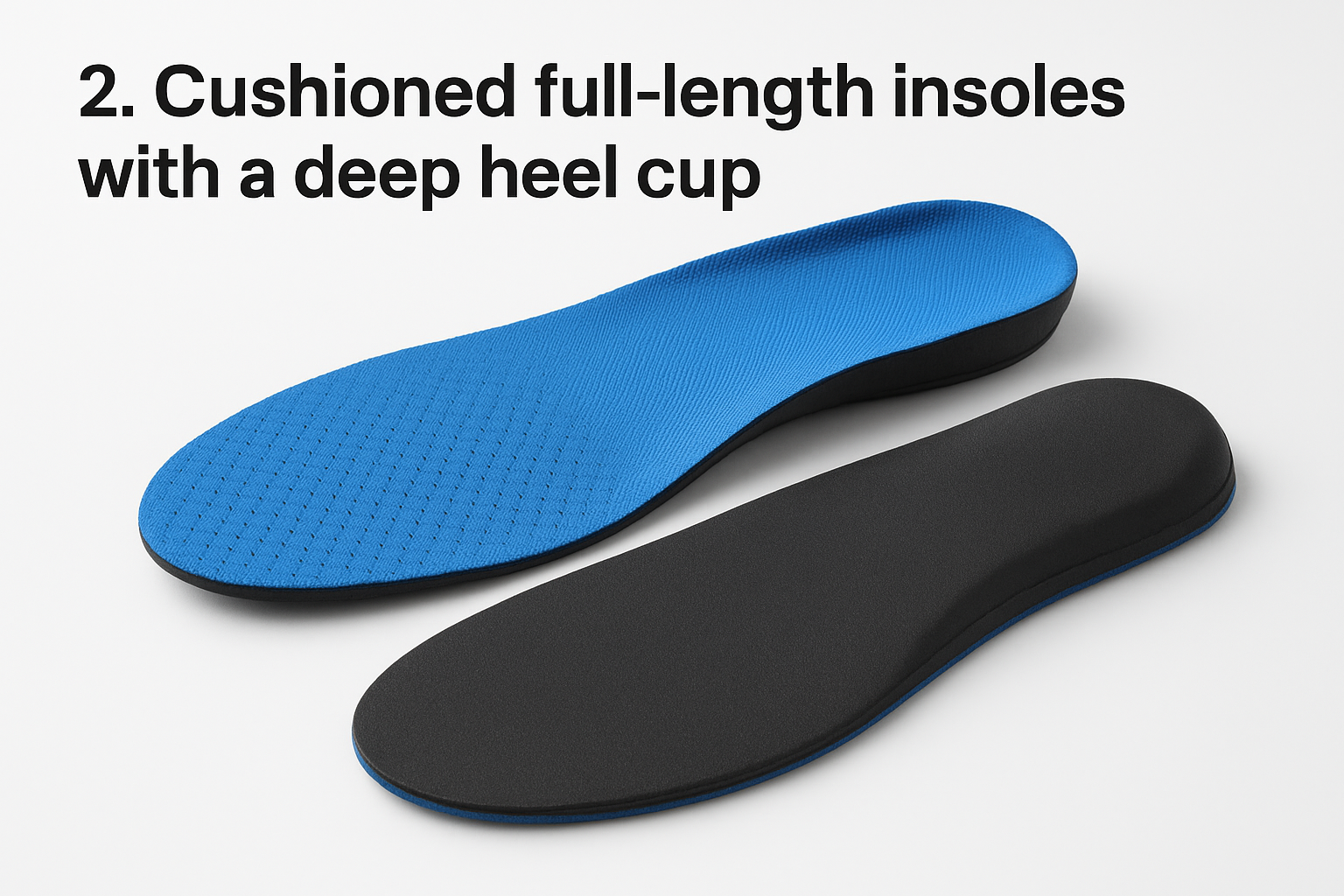
Cushioning without a heel cup feels soft at first but leaves the foot unstable.
Who it suits
This is the best everyday pick for standing all day, long walks, errands and running. It also suits people with mild to moderate heel soreness, including early plantar fasciitis. Women’s feet are often narrower, so choose a women’s-sized or narrow-width insole instead of cutting down a men’s one.
Cost and what to check
Specialty insoles for high arches commonly run about $35 to $125 a pair. Cheap pharmacy insoles often wear out in a few months, while better ones last roughly 6 to 12 months. At $45 replaced twice a year, you spend about $90 annually. Check three things:
- Cushioning in the heel and the ball of the foot
- An arch labeled for high arches, not one-size-fits-all
- A heel cup you can feel when you press on it
3. Semi-rigid contoured arch supports
How it works
A semi-rigid support has a firm shell shaped to your arch, with a little give. The goal is total contact: the insole meets your arch instead of leaving a gap. That contact spreads weight across the foot, so your outer edge and heel stop carrying it all. Cushioned top covers add comfort on top of the firm base.
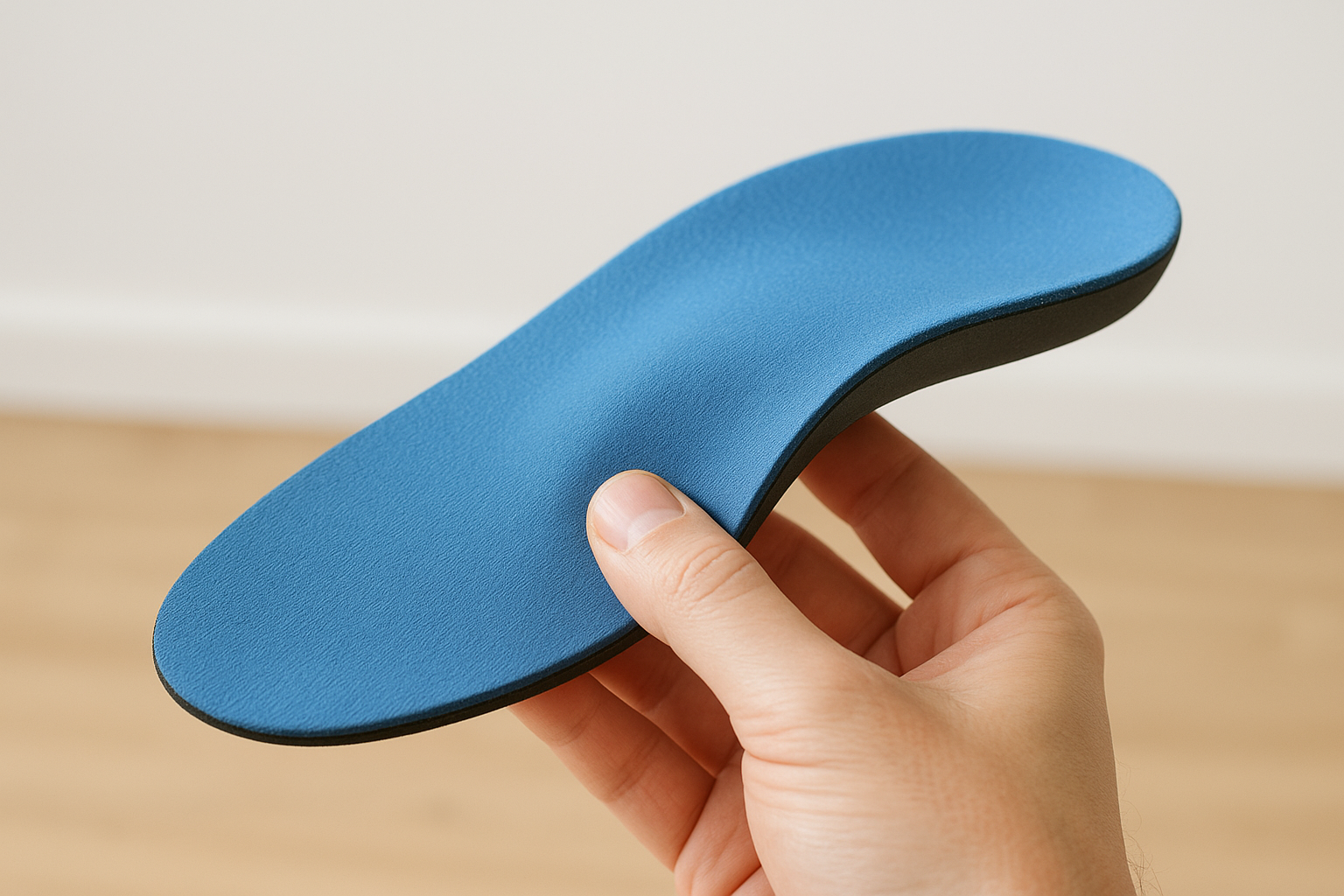
Aim for support you can flex with effort, not support that collapses under your thumb.
Who it suits
Choose this type for plantar fasciitis and for arch strain that cushioned insoles did not fix. It also works for walkers and hikers who need structure over long distances. Avoid anything extremely rigid, since a hard insole can create pressure points on a foot that already lacks flexibility. Avoid mushy foam too, because it flattens within weeks.
Cost and what to check
Expect to pay toward the middle or upper end of the range above. Pick the arch height carefully. The tallest insole is not always right, so try one step lower and compare after a few days. Give a new support a gradual break-in, wearing it a few hours at first, and stop if it causes sharp pain.
4. Metatarsal pad and forefoot relief insoles
How it works
A high arch pushes load onto the ball of the foot. Insoles with a metatarsal pad place a small dome just behind the ball, which spreads pressure away from the sore spot. Many also include extended forefoot cushioning. Think of it as arch support plus targeted relief.
If the pain sits under the ball of your foot, you need forefoot relief, not just a taller arch.
Who it suits
This type suits people whose main complaint is burning or bruised-feeling pain under the toes, or calluses under the forefoot. It helps runners and anyone in shoes with a thin forefoot. If you also get numbness or tingling, get it checked. Nerve pain needs a diagnosis, not just an insole.
Cost and what to check
Prices are close to those of standard premade insoles, often in the $40 range. The pad’s position matters. It should sit just behind the ball of your foot, not under it. If the dome presses on the ball itself, the insole is the wrong size or shape. A podiatrist can mark the right spot and fit a pad to your foot.
5. Neutral cushioned shoes with removable insoles
How it works
The shoe is half the system. Shoes with the best arch support for high arches are neutral, cushioned and firm through the midsole, with a footbed you can remove. Remove the stock insole and drop in your support. Without that, even the best insole will sit too high or slip.
Skip shoes labeled "motion control" or "stability," because they are built for flatter, more flexible feet.
Who it suits
Every high-arched wearer benefits, and shoes matter most if you walk, run or work on your feet. Look for a roomy toe box and a snug heel. If you prefer one pair of insoles across your wardrobe, shop for shoes with removable footbeds in each category: sneakers, work shoes and boots.
Cost and what to check
Good neutral shoes cost more than basic ones, but they preserve the insole’s effect. Check these before you buy:
- The footbed pulls out easily
- The heel does not slip with your insole in
- The shoe does not twist easily through the middle
- Your toes have room when the insole is inside
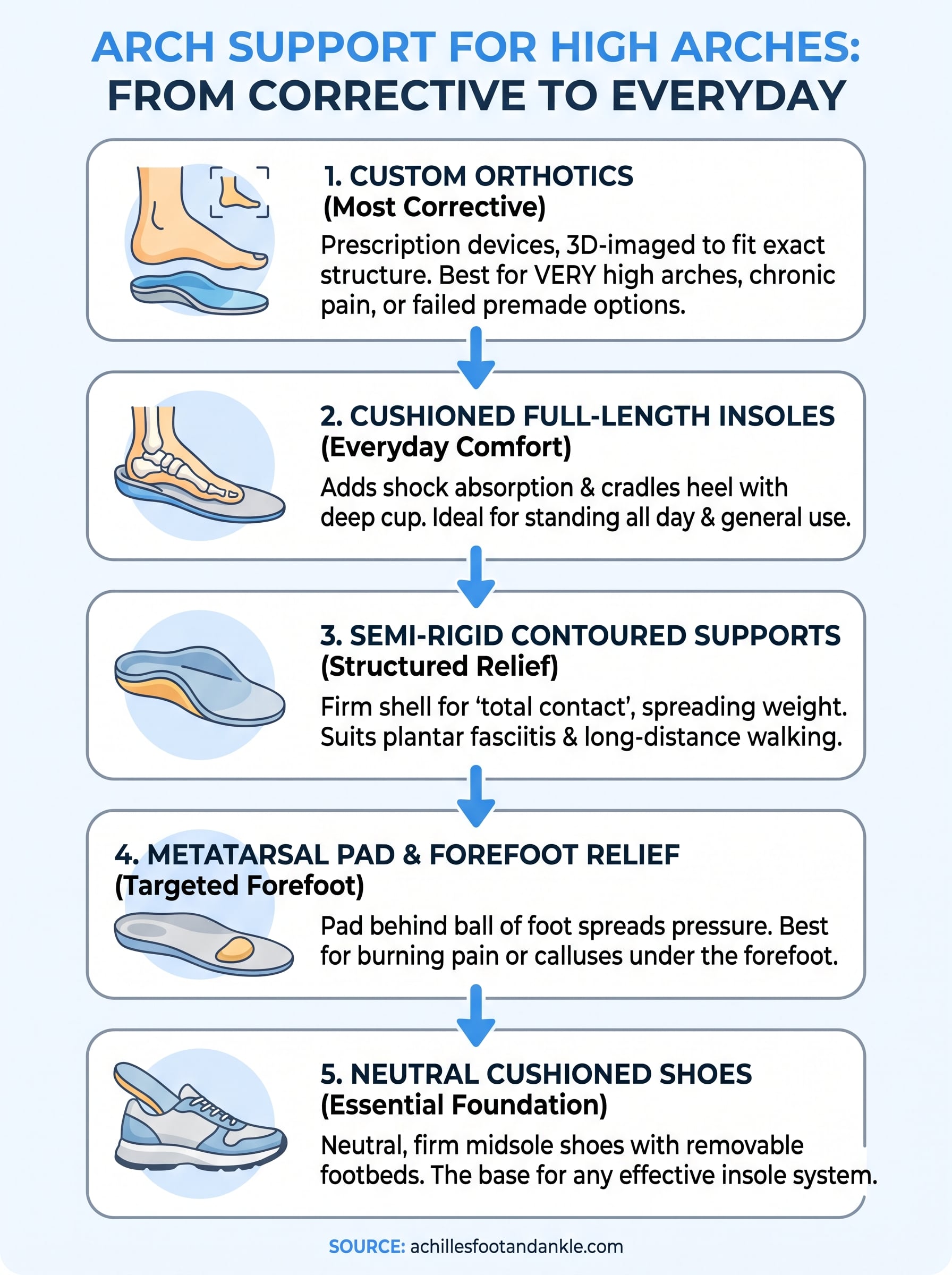
Choosing what works for your high arches
Start with how your feet feel. For everyday comfort, a cushioned insole with a deep heel cup in a neutral shoe covers most needs. For ongoing heel or arch pain, move up to a semi-rigid support or a metatarsal pad. When pain persists, your arches are very high, or only one foot is affected, custom orthotics or an exam is the safer path.
If you want an answer instead of another round of trial and error, our team can examine your feet and recommend the right support. You can book a same-day appointment at our Mechanicsville or Richmond office.