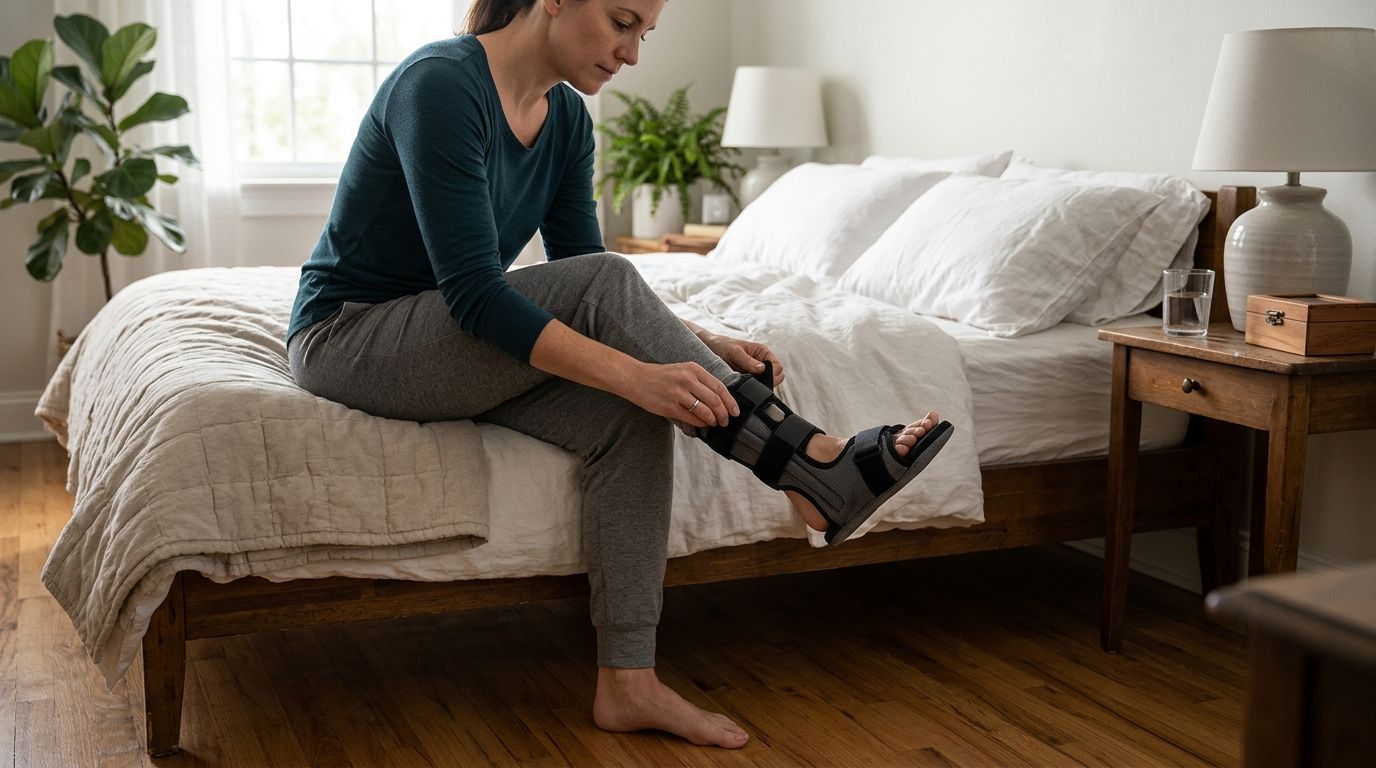

Heel-spur-related pain can improve over weeks to months, but the bony spur usually stays unless it is surgically removed. The recovery timeline depends on what is causing your pain—often irritated tissue around the heel rather than the spur itself. This 2026 guide explains what improvement looks like, what slows recovery, and when to get your heel checked.
- How long does it take for a heel spur to heal? Pain can improve over weeks to months; the bone usually remains.
- Plantar fasciitis recovery and heel-spur disappearance are different outcomes. Treating pain does not require removing every spur.
- Achilles Foot and Ankle Center provides heel-pain evaluation for patients who need a diagnosis and treatment plan.
- Seek prompt care for sudden severe pain, inability to bear weight, or a red, hot, swollen foot.
Why this matters
A heel spur on an X-ray does not prove that the spur is causing your pain. Some people have heel spurs without symptoms, while others have substantial heel pain without a spur.
If pain under your heel comes from plantar fasciitis, the useful timeline is how long plantar fasciitis takes to heal. Waiting for the bone to disappear gives you the wrong recovery target and can delay treatment of the tissue that actually hurts.
How long does it take for a heel spur to heal?
A heel spur does not usually heal by shrinking back into the heel bone. The treatment goal is to reduce pain, restore comfortable walking, and address the strain or condition responsible for your symptoms.
These related problems have different recovery expectations:
| Finding or condition | What recovery means | Main limitation |
|---|---|---|
| Heel spur without pain | No symptom treatment is usually needed | An X-ray finding alone cannot explain symptoms |
| Plantar fasciitis beneath the heel | Less pain as the plantar fascia recovers and tolerates activity | Improvement can take months; the spur can remain |
| Achilles tendon irritation behind the heel | Better tolerance of walking and tendon loading | Exercises must match the tendon problem |
| Recovery after heel surgery | Wound healing followed by rehabilitation | Timing depends on the exact procedure and postoperative restrictions |
For context in 2026, the American Academy of Orthopaedic Surgeons' patient guidance states that more than 90% of people with plantar fasciitis improve within 10 months of starting simple treatment methods. That figure describes plantar fasciitis—not disappearance of a heel spur, and not a guaranteed deadline for an individual patient.
A useful recovery question is whether ordinary walking, first steps after rest, and your usual activities are becoming more comfortable. Pain that stays unchanged, worsens, or changes character needs reassessment rather than more waiting.
A painless heel spur: no healing deadline
If a heel spur causes no symptoms, you generally do not need treatment just to remove the X-ray finding. Bone shape alone is not a reason to stop your normal activities.
The advantage of leaving a painless spur alone is avoiding unnecessary treatment. The limitation is that a previous painless finding does not explain every future episode of heel pain; new symptoms still need their own assessment.
Best for: people whose spur was found incidentally and who have no heel pain or functional limitation. Do not pursue removal solely to make an image look different.
Plantar fasciitis with a heel spur: recovery takes months
Plantar fasciitis affects the strong band of tissue running along the bottom of your foot. A common pattern is pain with the first steps after getting out of bed or standing after a period of sitting.
Supportive footwear, appropriate stretching, and adjustments to painful activity are common starting points. These approaches address tissue strain without removing bone, but they require consistency and do not produce an immediate recovery deadline.
Best for: people whose examination supports plantar fasciitis as the source of their heel pain. A spur on an X-ray is not enough to make that diagnosis by itself.
If your symptoms improve and then return after a busy day, review the activity increase rather than assuming the spur has grown. Pain can flare when the tissue is asked to do more than it currently tolerates.
Pain behind the heel: check the Achilles tendon
Pain behind the heel needs a different assessment from pain underneath it. The Achilles tendon attaches your calf muscles to the back of your heel, and irritation near that attachment can occur alongside a bony prominence.
Some exercises used for pain under the heel are not appropriate for every Achilles tendon problem. Deep heel drops off a step, for example, can aggravate symptoms where the tendon attaches to the heel.
Best for: people with pain at the back of the heel, especially when shoes press against the area. An examination helps distinguish tendon irritation, pressure from footwear, and other causes before you start a stretching routine.
Why heel-pain recovery varies
A recovery estimate becomes more useful once the diagnosis and daily demands on your foot are clear. These factors affect the plan:
- Pain source: plantar fascia irritation, Achilles tendon problems, nerve irritation, and stress fractures require different treatment.
- Daily loading: prolonged standing, running, and repeated impact can keep provoking a painful area.
- Footwear: cushioning, support, fit, and pressure against the back of the heel affect comfort during activity.
- Treatment consistency: occasional changes are different from following a tolerable plan throughout the week.
- Health conditions: diabetes, reduced sensation, and poor circulation change the safety of home care and the need for assessment.
- Activity progression: returning to demanding exercise before ordinary walking is comfortable can trigger another flare.
The right diagnosis matters more than a generic heel-spur deadline. Tell your clinician exactly where the pain sits and what brings it on; that information helps direct the examination.
What should you do while your heel recovers?
Start with measures that reduce repeated irritation without treating every heel problem as the same condition. The goal is comfortable movement, not pushing through pain to prove that the foot is healing.
Adjust activity
Reduce activities that reliably increase your heel pain, particularly repeated impact. If comfortable, use a lower-impact alternative that does not worsen symptoms during the activity or afterward.
The benefit is keeping some movement while reducing strain. The limitation is that switching activities will not resolve an undiagnosed fracture, infection, or nerve problem.
Support your feet
Choose shoes that fit securely and feel comfortable under the heel. Avoid repeatedly testing your foot barefoot on hard floors if that consistently triggers pain.
Cushioning can improve comfort, but the softest shoe is not automatically the most suitable shoe. Stability, fit, and the demands of your day also matter.
Follow targeted exercises
Use exercises matched to the diagnosis rather than copying a routine labeled for every kind of heel pain. Stop an exercise that produces sharp pain or clearly worsens symptoms.
Stretching and strengthening serve different purposes, and the right balance depends on the affected tissue. A clinician or physical therapist can help you progress without repeatedly provoking the painful area.
Track your response
Notice whether you can walk more comfortably, stand longer without a flare, and take your first steps with less pain. These changes are more useful than repeatedly pressing on the heel to see whether it still feels tender.
Keep the comparison practical: similar activities, similar footwear, and your response afterward. A better morning does not automatically mean your foot is ready for a demanding run.
Does a heel spur mean you need surgery?
No. A heel spur alone is not a reason for surgery. Many people improve without removing the spur because treatment addresses the painful tissue and the forces acting on it.
For a 2026 treatment decision, the American Academy of Orthopaedic Surgeons' plantar fasciitis guidance reserves surgery for persistent symptoms after at least 12 months of aggressive nonsurgical treatment. That threshold applies to plantar fasciitis management; it is not an instruction to leave unexplained heel pain unchecked for a year.
Surgery has potential benefits for carefully selected patients, but also risks such as infection, nerve injury, persistent pain, and a rehabilitation period. The procedure matters: plantar fascia surgery, Achilles tendon surgery, and removal of a bony prominence are not interchangeable operations.
Before considering surgery, ask what structure is causing the pain, what operation is proposed, and what restrictions apply afterward. An X-ray showing a spur cannot answer those questions on its own.
When should you get heel pain evaluated?
Arrange an evaluation when heel pain keeps returning, affects your walking, or does not improve with sensible changes to activity and footwear. You do not need to wait for the pain to become severe.
Seek urgent assessment for an injury with a pop, sudden severe pain, inability to bear weight, or significant swelling. A red, hot foot, fever, or an open wound also needs prompt medical attention, particularly if you have diabetes or reduced sensation.
Achilles Foot and Ankle Center is an option for Richmond-area patients seeking heel-pain evaluation and a treatment plan. In 2026, patients in Mechanicsville and the West End should use the same decision point: symptoms that interfere with daily life deserve assessment, not an indefinite wait for a spur to disappear.
An examination helps identify the likely pain source and whether imaging is needed. Bring a description of your symptoms, the shoes you use most, and details of treatments you have already tried.
Get your heel pain evaluated
Discuss persistent heel pain and the next steps for diagnosis and treatment.
Can you walk with a heel spur?
A painless heel spur usually does not prevent walking. If walking causes pain or changes your gait, reduce the aggravating load and get advice rather than repeatedly walking through it.
The important distinction is between tolerable activity and activity that leaves you worse afterward. A limp is a reason to reassess what your foot can currently manage.
Will a heel spur go away on its own?
A heel spur usually remains even when heel pain settles. Stretching, supportive footwear, and rehabilitation aim to improve symptoms and function; they do not dissolve the bony growth.
Pain relief without spur removal is a valid recovery outcome. You do not need a normal-looking X-ray to have a comfortable foot.
How do you know your heel is improving?
Improvement means less pain with comparable activity and a gradual return to comfortable function. Look for easier first steps, less limping, and better tolerance of ordinary walking.
A single pain-free day is encouraging, but it is not a clearance test for unrestricted exercise. Build activity gradually and follow any restrictions specific to your diagnosis.
FAQ
How long does it take for a heel spur to heal?
Heel-spur-related pain can improve over weeks to months, but the bony spur usually remains. The timeline depends on the actual pain source, treatment, and daily activity demands.
Can a heel spur disappear without surgery?
A heel spur generally does not disappear with nonsurgical treatment. Symptoms can still improve without removing the spur.
Does a heel spur always cause plantar fasciitis?
No, a heel spur does not always cause plantar fasciitis or pain. Spurs and plantar fasciitis can occur together, but the X-ray finding alone does not establish the pain source.
Is it better to rest or walk with heel pain?
Use relative rest: reduce activities that worsen heel pain while keeping comfortable movement when appropriate. Inability to bear weight or pain after a significant injury needs prompt assessment.
Do you need another X-ray to prove your heel has healed?
Pain relief and improved function do not require proof that a heel spur has disappeared. Your clinician decides whether further imaging is needed based on symptoms and examination findings.
When should someone with diabetes get heel pain checked?
New heel pain in someone with diabetes deserves medical advice, especially with reduced sensation or circulation problems. A wound, redness, warmth, or swelling needs prompt assessment rather than home treatment alone.
Can Achilles Foot and Ankle Center evaluate heel pain?
Achilles Foot and Ankle Center provides heel-pain and other foot and ankle care in the Richmond, Virginia area. An evaluation can help establish the pain source and an appropriate treatment plan.
One last thing
A spur that stays visible after your pain improves does not mean treatment failed. For your 2026 recovery plan, focus on comfortable walking, appropriate activity progression, and a clear diagnosis—not making a piece of bone disappear.
If heel pain keeps limiting your day, Achilles Foot and Ankle Center offers evaluation to help you understand the cause and discuss the next step.
Related guides
- Foot X-ray to diagnosis: the podiatry workflow
- Is plantar fasciitis surgery worth it?
- Plantar fasciitis care: home stretching to injections