What causes hammertoe is a mix of pressure and imbalance. Something holds a smaller toe bent at its middle joint for long enough that the tendons and the joint tighten and lock it there. Tight, narrow or short shoes are the most common trigger. Foot shape, injury, nerve damage, arthritis and family traits make the problem more likely.
A hammertoe is a toe that bends at the middle joint, so it sits curled like a hook. It usually affects the second, third or fourth toe. This article explains how each cause bends the toe, which causes you can change, and how to work out which one applies to you.
Our podiatrists at Achilles Foot & Ankle diagnose and treat hammertoes in Richmond and Mechanicsville.
Why the cause of a hammertoe matters
The cause matters because it decides how fast the toe stiffens and which treatment will work. A toe bent by a tight shoe needs a different plan than one pulled by nerve damage or a torn ligament.
Three stages, one direction
Hammertoes progress, and the cause keeps pushing them along until something changes it. Podiatrists group them into three stages.
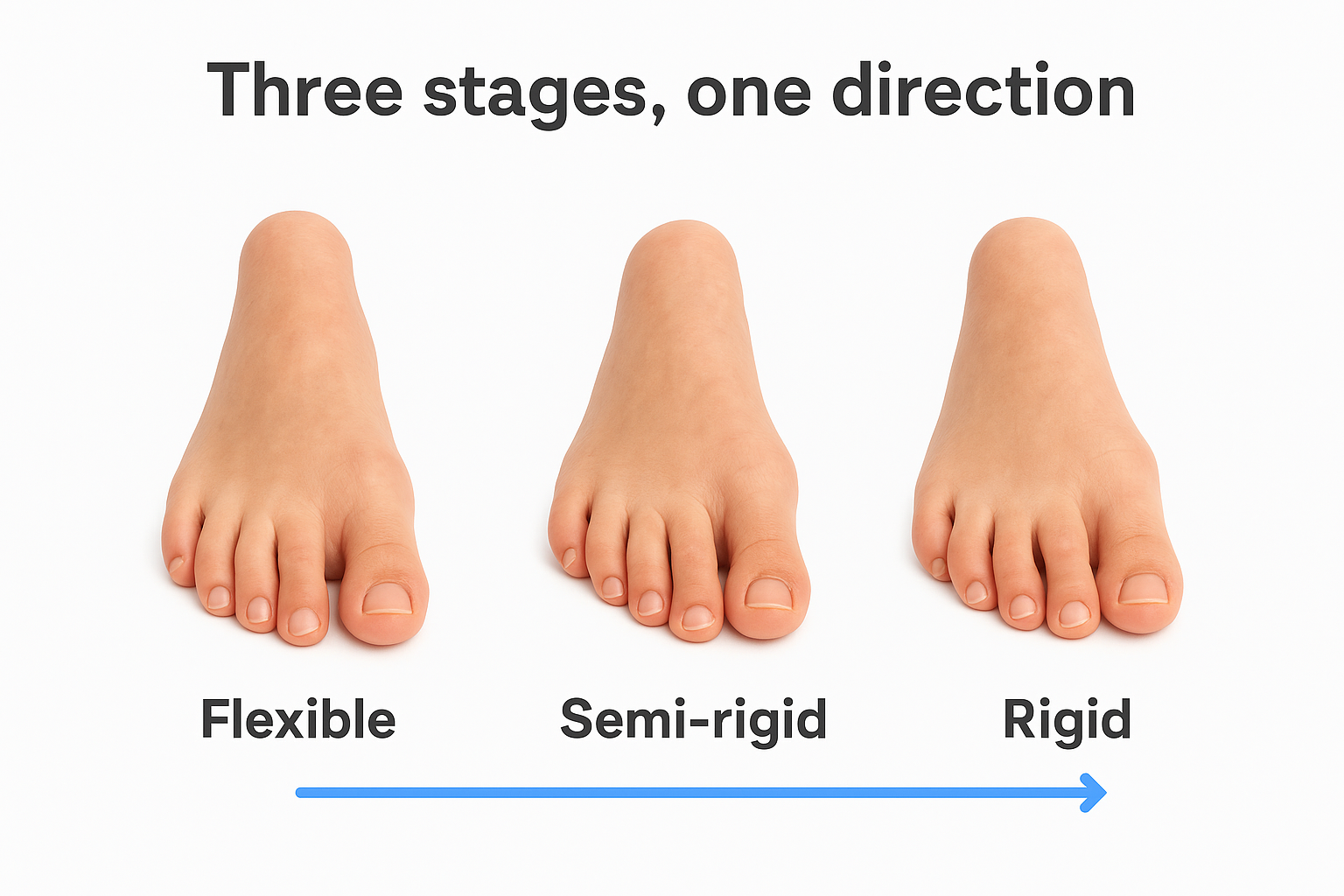
| Stage | What you notice | What it means for treatment |
|---|---|---|
| Flexible | The toe curls, but you can straighten it with your fingers | Shoe changes, padding and exercises often work |
| Semi-rigid | The toe is stiff and only partly straightens | Conservative care still helps, but the window is narrowing |
| Rigid | The toe is fixed in the curled position | Surgery becomes more likely |
The longer the cause keeps acting on the toe, the stiffer the toe gets.
What happens when you ignore it
Left alone, a hammertoe tends to worsen. Corns and calluses form on top of the bent joint where it rubs the shoe. You may also feel pain in the ball of the foot, notice swelling, and find fewer shoes that feel comfortable. Severe cases can change how you walk.
You may also hear about mallet toe and claw toe. They share most of the same causes. A hammertoe bends at the middle joint, a mallet toe bends at the joint nearest the nail, and a claw toe bends at all three joints.
How muscle and tendon imbalance bends the toe
Most hammertoes start with a tug of war inside the toe. The muscles and tendons that curl the toe have to be balanced by the ones that hold it straight. When the curling side wins, the middle joint bends.
The tug of war in the toe
Tendons that run from the lower leg pull your toes down and up. Small muscles inside the foot steady each toe and keep it flat. If those small muscles weaken, the stronger tendons pull the toe into a bend. Nerve damage, abnormal foot mechanics and long-term pressure from footwear can all tip the balance this way.
Foot shape feeds into this. Flat feet and high arches change how weight spreads across the forefoot, so some tendons work harder than they should. A toe that is loaded unevenly step after step drifts toward a bend.
Hammertoe is a muscle balance problem first, and a joint problem only later.
Why the bend becomes fixed
Soft tissue adapts to the position it is held in. If a toe stays bent, the tendons on its underside shorten and the ligaments around the joint tighten. At first you can still straighten the toe by hand. Eventually the joint stiffens and the toe stays curled, even when you are barefoot. This is why a flexible hammertoe can often improve and a rigid one usually cannot.
Shoes, injury and other outside forces
Poorly fitting shoes are the most common outside cause of hammertoe. Injuries and nearby foot problems are the other main ones.
How shoes push toes out of position
Shoes that are too short or too narrow, or that taper to a point, crowd the toes so they cannot lie flat. High heels shift your weight forward and jam the toes into the front of the shoe. Children who keep wearing shoes they have outgrown can develop the same problem. Over months and years, the toe adapts to the crowded position and stays there.
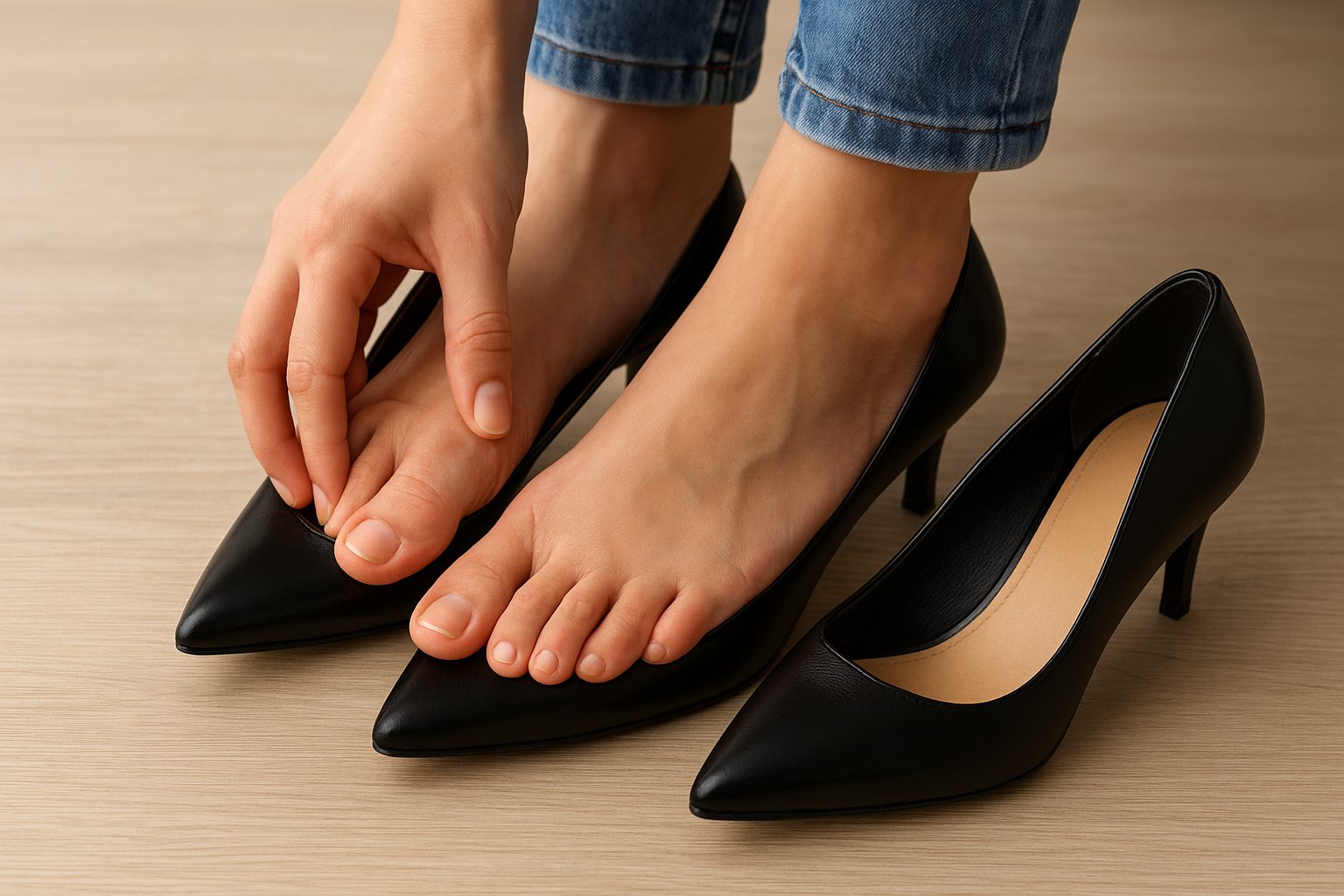
Use this checklist when you buy shoes:
- Choose a wide, deep toe box, and avoid pointed tips.
- Keep heels low.
- Pick laces or straps so you can adjust the fit.
- Shop at the end of the day, when your feet are slightly swollen.
- Measure both feet and fit the larger one.
If your toes cannot lie flat inside a shoe, the shoe is a cause, not a style choice.
Injury, bunions and plantar plate tears
A stubbed, jammed or broken toe can leave the joint or its tendons out of balance, and a hammertoe can follow. Bunions are another cause. A bunion pushes the big toe toward the second toe, which crowds it into a bend.
A plantar plate tear is a less obvious cause. The plantar plate is a ligament under the joints of the lesser toes. When it tears, the toe loses its support, drifts, and can become a hammertoe or even dislocate. Pain under the ball of the foot is a common early sign.
Risk factors that raise your odds
Genetics, foot structure, sex, age and health conditions do not bend a toe on their own. They make it easier for shoes or muscle imbalance to do it.
Family traits, foot shape and sex
Hammertoe itself is not simply inherited, but foot shape is. Flat feet, high arches, unusually long toes and the tendon patterns behind them often run in families. A long toe has less room in standard shoes, so it takes more pressure. Women develop hammertoes more often than men, which fits with the heels and narrow styles many women wear. Age adds years of pressure, so risk tends to climb over time.
Health conditions that weaken the toe
Diabetes and rheumatoid arthritis raise the risk. Nerve damage can weaken the small muscles that keep a toe straight. If you have diabetes, get any new toe change checked promptly, because a rubbing corn can break the skin.
The table below pulls the causes together and shows which ones you can change.
| Cause | How it bends the toe | Can you change it? |
|---|---|---|
| Narrow, short shoes or heels | Crowds the toe and holds it bent | Yes |
| Muscle and tendon imbalance | Curling tendons overpower straightening ones | Partly, with exercises and orthotics |
| Flat feet, high arches, long toes | Uneven load on the forefoot | Partly, with supportive inserts |
| Injury | Leaves the joint or tendons out of balance | No, but you can treat it early |
| Bunion or plantar plate tear | Crowds or destabilizes the toe | Yes, with treatment |
| Diabetes, arthritis, nerve damage | Weakens muscles or damages joints | Manage the condition |
| Family traits, sex, age | Raise baseline risk | No |
You cannot change your genes, but you can change nearly every other cause on the list.
How to find your cause and slow the bend
Check your shoes, test the toe’s flexibility, then have a podiatrist examine it. The cause points to the treatment, and flexible toes respond best to early action.
A three-step self-check
- Compare your shoes to your feet. Look for a toe box that squeezes your toes, a heel above about an inch or two, or shoes you have outgrown.
- Test the toe. Gently press the bent toe straight with your fingers. If it straightens, it is still flexible. If it resists, it is stiffening.
- Note the clues. Think about past toe injuries, bunions, pain under the ball of the foot, diabetes or arthritis, and any corns on top of the toe.
A toe that straightens by hand is a toe you can still help without surgery.
What treatment looks like once you know the cause
Most cases start with conservative care. That means wider shoes, pads, taping to hold the toe in position, toe exercises, and orthotics. Custom foot orthotics are made from your foot’s measurements, and we use a 3D imaging system to capture them. Short-term anti-inflammatory medicine can ease pain and swelling, but don’t take it for more than 10 days in a row without checking with your provider.
So can you reverse a hammertoe? A flexible one often improves over several weeks once the cause is removed. A rigid one generally needs surgery to straighten, and a podiatrist will usually recommend that only when other treatments fail or walking becomes very painful. At our offices we can take x-rays and ultrasound on site to see the joint and the tendons, and we offer telemedicine services.
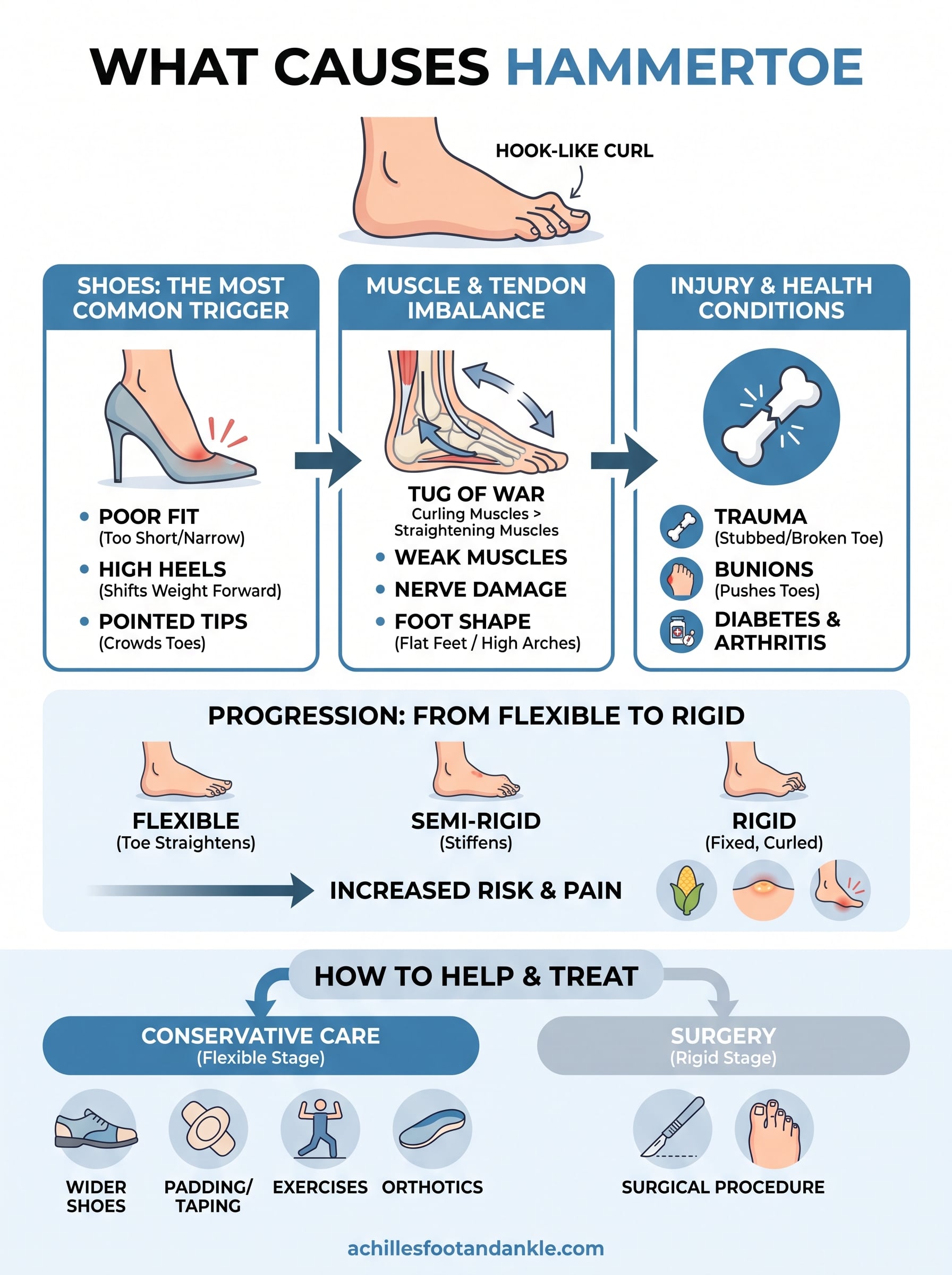
Fix the cause, not just the toe
Hammertoe develops when pressure or muscle imbalance holds a toe bent until the tendons and joint tighten. Shoes, foot shape, injury, bunions, plantar plate tears, nerve damage, arthritis and family traits all feed that process. Most of them can be managed, especially while the toe is still flexible.
If a toe looks curled, hurts in your shoes, or has started to stiffen, get it examined before it locks. You can book a same-day appointment with Achilles Foot & Ankle and find out exactly what is bending your toe.