Best overall: a long-handled inspection mirror. Best for smoothing nail edges: a fine emery board. Best for gentle washing: a soft washcloth. The best pedicure tools for diabetics in 2026 support inspection and gentle care—not cutting away calluses or digging around toenails—and no tool is safe for every foot.
- The best pedicure tools for diabetics prioritize inspection, gentle cleaning, and protecting skin—not aggressive trimming.
- A long-handled inspection mirror is the best starting tool for checking soles and heels.
- Avoid callus blades, cuticle cutters, and powered grinders for home diabetic foot care.
- Achilles Foot and Ankle Center offers diabetic foot care; seek evaluation before trimming numb or poorly healing feet.
Why this matters
Diabetes can damage nerves and reduce blood flow to your feet. Nerve damage, called neuropathy, can make an injury difficult to feel; poor circulation can make healing harder. A pedicure should never depend on pain telling you when to stop.
Achilles Foot and Ankle Center is a better choice than a home pedicure for people with diabetes who have numbness, wounds, or difficult-to-trim nails. Start with a diabetic foot evaluation if you do not know whether home nail care is appropriate.
An open sore, drainage, new redness, warmth, or swelling needs prompt medical attention. Seek emergency care for a suddenly cold, pale, blue, or black foot, rapidly spreading redness, or a foot wound accompanied by fever or feeling seriously unwell.
What makes the best pedicure tools for diabetics?
For this 2026 guide, protecting your skin matters more than achieving a salon finish. Choose tools using these criteria:
- Skin protection: Prefer tools that do not slice, scrape, or grind skin.
- Visibility: You should see the nail or skin clearly throughout the task.
- Control: A comfortable grip matters more than extra cutting power.
- Cleanability: Follow cleaning instructions, dry reusable tools, and keep them personal.
- Appropriate purpose: A washing tool is not a callus remover; a nail file is not a treatment for thick, diseased nails.
- Fit with your health: Numbness, poor circulation, previous ulcers, and limited vision change which tasks belong with a clinician.
Pedicure tools at a glance
These are tool categories, not tested product endorsements. The ranking puts inspection and gentle hygiene ahead of cutting.
| Tool | Best for | Standout feature | Key limitation |
|---|---|---|---|
| Long-handled inspection mirror | Seeing soles and heels | Helps reveal areas you cannot see directly | Does not assess circulation or sensation |
| Fine emery board | Smoothing a minor nail snag | Allows gradual edge smoothing | Friction can injure nearby skin |
| Soft washcloth | Gentle everyday washing | Cleans without an abrasive surface | Cannot safely remove calluses |
| Straight-edge toenail clipper | Routine trimming after clinical clearance | Supports a straight-across nail edge | Can cut skin or leave sharp corners |
| Long-handled lotion applicator | Reaching dry, intact skin | Reduces the need to bend | Can spread lotion between toes unintentionally |
1. Inspection mirror: best for checking soles and heels
A long-handled inspection mirror helps you see the bottoms of your feet without twisting or balancing awkwardly. A stable tabletop mirror also works if you can position your foot comfortably and see the entire sole.
Check both feet every day, including the heels, soles, and spaces between toes. Look for blisters, cracks, redness, drainage, or changes around a nail. A mirror supports observation; it cannot tell you whether an unfamiliar spot is harmless.
Inspection mirror pros:
- Helps reveal areas hidden from direct view.
- Does not require cutting or rubbing skin.
- Supports a repeatable daily foot check.
Inspection mirror cons:
- Glare or poor lighting can hide small changes.
- Limited vision still requires another person's help or professional assessment.
Best for: Anyone who cannot comfortably see the bottoms of their feet.
Verdict: Buy if reaching or visibility makes daily inspection difficult.
2. Fine emery board: best for smoothing minor nail snags
A fine emery board can smooth a small rough edge on an otherwise manageable toenail. Keep the file on the nail edge, work gently, and avoid rubbing the surrounding skin.
This is not permission to thin a thick nail or reshape an ingrown corner. If the nail is distorted, painful, crumbly, or difficult to distinguish from nearby skin, stop and arrange an assessment. Numbness removes an important warning signal during filing.
Fine emery board pros:
- Allows small adjustments rather than a large cut.
- Helps smooth an edge that catches on socks.
- Requires no powered abrasive attachment.
Fine emery board cons:
- Can scrape skin when the angle slips.
- Does not treat fungal nails or ingrown toenails.
Best for: Minor nail-edge smoothing when your clinician considers home nail care appropriate.
Verdict: Buy conditionally for small snags—not thick-nail reduction or callus removal.
3. Soft washcloth: best for gentle daily cleaning
A soft washcloth supports ordinary foot hygiene without the rough surface of a scrubber. Use lukewarm water, wash gently, and dry carefully, especially between the toes. Avoid soaking your feet.
If you have reduced sensation, do not judge water temperature with your feet. Use your elbow or ask someone with normal sensation to check it. A washcloth should glide over skin without pressure; persistent roughness is a reason to ask about care, not scrub harder.
Soft washcloth pros:
- Supports gentle washing of intact skin.
- Requires no blade, motor, or scraping surface.
- Is washable and reusable when properly cleaned and dried.
Soft washcloth cons:
- Does not remove thick calluses safely.
- A damp, unwashed cloth is unsuitable for repeat use.
Best for: Everyday cleaning rather than cosmetic exfoliation.
Verdict: Buy for gentle washing; skip abrasive scrubbing mitts.
4. Straight-edge toenail clipper: best for approved home trimming
A straight-edge toenail clipper is an option only when you can see clearly, reach comfortably, and control the tool. Ask your clinician whether you should trim your own nails, especially if you have neuropathy, circulation problems, or a previous ulcer.
When home trimming is appropriate, cut straight across rather than rounding deeply into the corners. Do not cut nails very short, dig down the sides, or force the jaws through a thick nail. Extra leverage does not make a difficult nail safe to cut.
Straight-edge clipper pros:
- Supports a straight-across trimming approach.
- Allows controlled cuts on manageable nails.
- Comes in grip designs that suit different hands.
Straight-edge clipper cons:
- Can nick skin when reach, vision, or control is limited.
- Is inappropriate for digging out an ingrown nail or treating severely thickened nails.
Best for: People whose clinician has confirmed that routine home trimming is suitable.
Verdict: Hold until you know your foot risk and can use the clipper safely.
5. Lotion applicator: best for reaching dry, intact skin
A long-handled lotion applicator helps spread moisturizer when bending is difficult. Use it gently on dry, intact skin, keeping lotion out of the spaces between your toes.
Choose a smooth applicator head that you can clean according to its instructions. Avoid rough pads sold for simultaneous exfoliation. Deep cracks, bleeding, or an open area need clinical advice rather than repeated rubbing or extra lotion.
Lotion applicator pros:
- Extends your reach without a sharp edge.
- Helps distribute moisturizer over accessible dry areas.
- Reduces the need to bend deeply.
Lotion applicator cons:
- Can leave excess moisture between toes if poorly controlled.
- Requires cleaning and does not replace inspection.
Best for: Limited flexibility when dry skin is intact and clearly visible.
Verdict: Buy conditionally if it solves a reach problem without reducing control.
Tools to leave out of your diabetic foot-care kit
A tool labeled for “diabetic” use still needs the same scrutiny in 2026. Packaging does not establish that you can safely use it with reduced sensation or poor circulation.
- Callus blades and corn planes: Skip home skin cutting. A clinician should assess and manage troublesome calluses.
- Cuticle cutters and pointed digging tools: Skip cutting cuticles or exploring under nail edges; a break in the skin creates an entry point for infection.
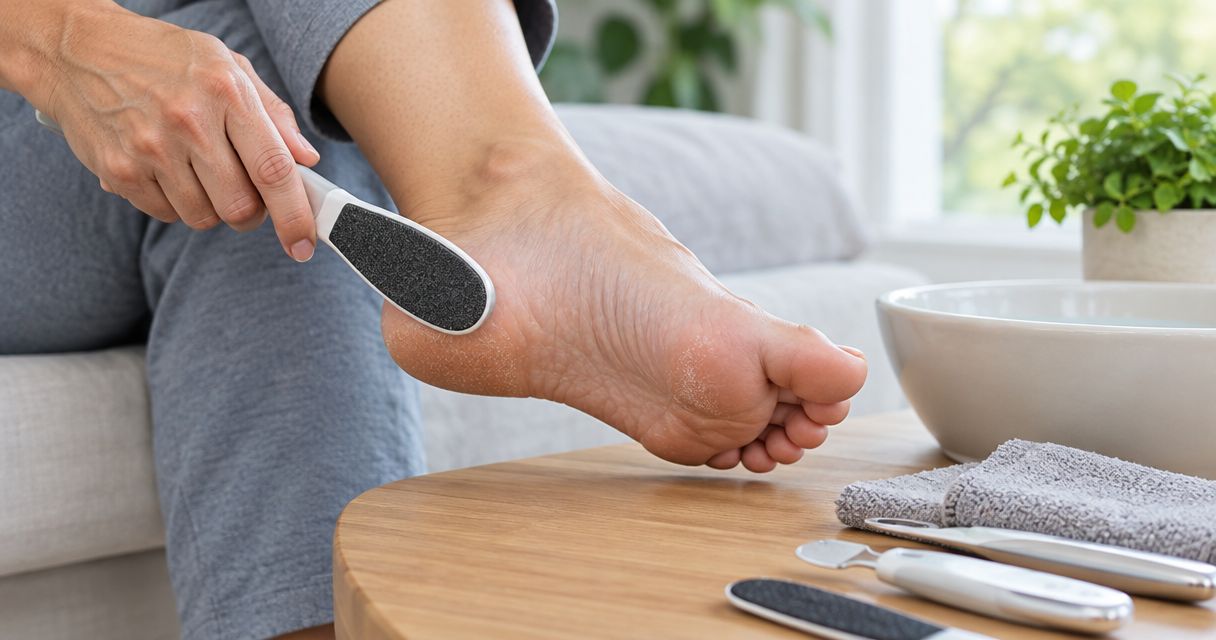
- Electric callus grinders and coarse foot files: Skip unsupervised abrasion, particularly with numbness. You can remove more skin than you realize.
- Acid corn and callus removers: Avoid self-treatment with medicated removal pads or liquids; they can damage surrounding skin.
- Sharp nail-cleaning picks: Do not dig beneath a nail to remove debris or investigate discoloration.
Pumice stones are not a default recommendation for everyone with diabetes. Ask your podiatrist whether any home callus care is appropriate for your feet.
A safer routine before you touch a nail
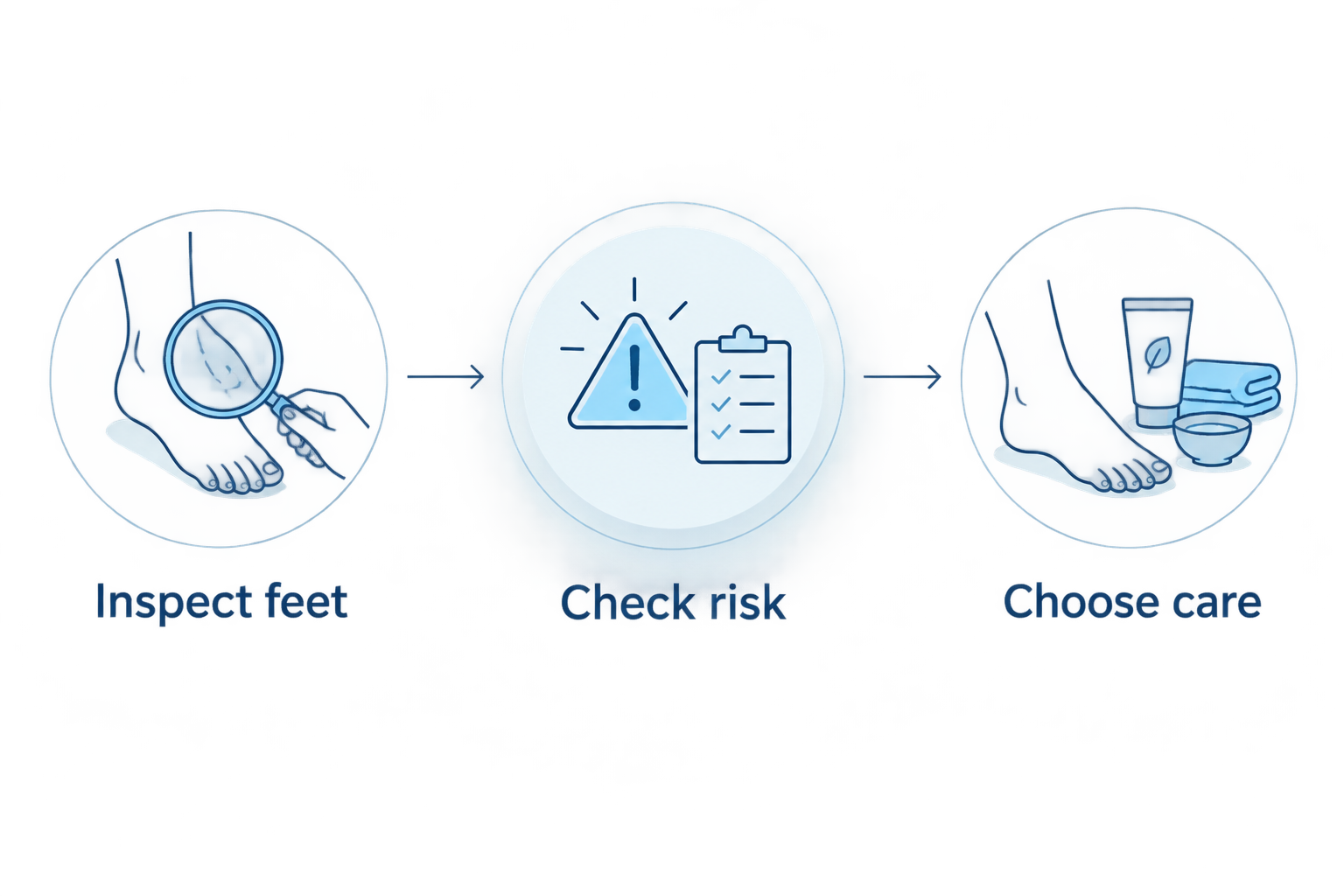
Keep your 2026 routine simple: inspect first, decide whether home care is appropriate, then perform only the task you can control. Set up while seated with good lighting rather than balancing in a bathroom.
- Inspect feet: Check both feet and between the toes before washing or trimming. Do not work over a blister, sore, bleeding area, or inflamed nail fold.
- Check risk: Stop if you cannot see, reach, or feel reliably, or if your clinician has advised against home trimming. Ask for help rather than improvising.
- Choose care: Use gentle washing and appropriate moisturizing for intact skin. Reserve nail trimming for feet and nails cleared for home care.
After care, look again for accidental scratches or irritation. Clean reusable tools according to their instructions, allow them to dry, and do not share them. A personal kit reduces sharing but does not make an unsafe technique safe.
When an evaluation is the better next step
Choose an evaluation rather than another tool when a nail becomes thick, changes shape, grows into the skin, or repeatedly causes trouble. New numbness, persistent burning, or a history of wounds also deserves an individualized foot-care plan.
Achilles Foot and Ankle Center offers diabetic foot care, nerve-pain care, and treatment for foot and ankle concerns. Patients in Mechanicsville and the West End can discuss which tasks belong at home and which need professional attention. Bring your current tools and describe any difficulty seeing or reaching your feet.
Arrange a diabetic foot evaluation
Discuss nail changes, numbness, skin concerns, and which home-care tasks are appropriate for your feet.
How these tools were ranked
The 2026 ranking prioritizes skin protection, visibility, control, cleanability, and suitability for diabetic feet. Inspection comes first because it supports recognizing changes without removing tissue. Cutting tools rank lower because safe use depends on your sensation, circulation, vision, reach, and nail condition—not simply the tool's design.
Which pedicure tools should you choose?
Start with an inspection mirror and a soft washcloth. Add a fine emery board only for minor nail-edge care when appropriate, and treat clippers as a conditional tool rather than an automatic purchase.
The best kit is the one that matches your actual abilities and medical risks. For your 2026 foot-care plan, an evaluation at Achilles Foot and Ankle Center is more useful than a larger collection of cutting attachments.
FAQ
What’s the best pedicure tool for someone with diabetes?
An inspection mirror is the best starting tool when you cannot clearly see your soles and heels. Tools that cut or abrade require a separate decision based on sensation, circulation, vision, and nail condition.
Can I cut my own toenails if I have diabetes?
Some people with diabetes can trim their own nails, but home trimming is not appropriate for everyone. Ask your clinician first if you have numbness, poor circulation, previous ulcers, difficult nails, or trouble seeing or reaching your feet.
Are electric foot files safe for diabetic feet?
Electric foot files are not a default safe choice for diabetic feet. Abrasion can injure skin, especially when reduced sensation prevents you from noticing pressure or damage.
Should I soak my feet before a pedicure?
Avoid soaking your feet when you have diabetes. Wash gently in lukewarm water instead, then dry carefully between your toes.
Can a nail salon safely remove my calluses?
Do not use a salon pedicure as a substitute for medical callus care when you have diabetes. Ask your podiatrist to assess the callus and your foot risk before anyone cuts or abrades it.
How often should I check my feet?
Check both feet at least once every day. Use a mirror or ask someone to help if you cannot see the soles, heels, and spaces between your toes.
What should I do if I nick my skin while trimming?
Stop trimming, gently clean the area, cover it with a clean dressing, and contact your healthcare team promptly for guidance. Seek urgent care for spreading redness, drainage, increasing warmth or swelling, or feeling unwell.
One last thing
No pain does not mean no injury. If neuropathy reduces sensation, a blister or cut can develop without the discomfort you expect. Make looking—not waiting for pain—the habit that guides your foot care.
Related guides
- Can diabetics get pedicures safely?
- How often should diabetics check their feet?
- Diabetic foot care for seniors