

Medicare Part B covers qualifying diabetic shoes on a calendar-year basis, not automatically every 12 months after your last pair. For 2026, the standard allowance is 1 pair of extra-depth shoes and 3 pairs of inserts, or 1 pair of custom-molded shoes and 2 additional pairs of inserts, when coverage requirements are met. A new calendar year does not guarantee approval: you still need documented medical need, current supporting paperwork, and a Medicare-enrolled supplier.
- How often does Medicare renew diabetic shoes? Medicare Part B uses a calendar-year allowance, with eligibility checked again.
- Extra-depth shoes: 1 pair plus 3 pairs of inserts per calendar year for qualifying patients.
- Custom-molded shoes: 1 pair plus 2 additional pairs of inserts when a deformity prevents using extra-depth shoes.
- Achilles Foot and Ankle Center provides diabetic foot care; arrange an evaluation before assuming replacement shoes qualify.
Why this matters
An annual benefit is not an automatic shoe shipment. If you wait until your shoes are worn out to start the paperwork, you still need the clinical documentation and supplier checks required for coverage. If you order shoes yourself, a diabetic-shoe label alone does not establish Medicare eligibility.
For 2026 planning, separate the annual allowance from the approval process. Medicare's published Therapeutic shoes & inserts coverage guidance describes the benefit; the Centers for Medicare & Medicaid Services supplies the detailed documentation rules. The Medicare diabetic shoe coverage workflow explains the path from diagnosis to fitting.
How often does Medicare renew coverage for diabetic shoes?
Medicare allows covered therapeutic footwear each calendar year, provided you continue to qualify. The benefit year runs from January 1 through December 31. It does not reset on your birthday, Medicare enrollment anniversary, or the anniversary of your last shoe delivery.
That means you do not necessarily have to wait a full 12 months after receiving your previous covered pair. However, the calendar change alone does not authorize another pair. Your supplier must confirm your eligibility, documentation, and remaining allowance before providing covered footwear.
For Original Medicare in 2026, the standard choices are:
| Covered footwear pathway | Calendar-year allowance | Best for | Important limitation |
|---|---|---|---|
| Extra-depth shoes | 1 pair of shoes and 3 pairs of inserts | Eligible patients whose feet can be accommodated in extra-depth shoes | Diabetes alone does not establish eligibility |
| Custom-molded shoes | 1 pair of shoes, including inserts supplied with them, and 2 additional pairs of inserts | Eligible patients with a foot deformity that extra-depth shoes cannot accommodate | Custom shoes require documentation explaining why extra-depth shoes are unsuitable |
These are alternative pathways, not benefits you add together. Certain shoe modifications can substitute for inserts under Medicare rules; they are not an automatic extra allowance.
The figures above describe the standard benefit. A supplier must review any request outside that allowance under the applicable replacement and medical-necessity rules rather than promise coverage.
Extra-depth shoes: 1 pair per calendar year
Extra-depth shoes provide additional room to accommodate therapeutic inserts and your foot. They are not simply ordinary shoes purchased in a larger size. Covered footwear must meet Medicare's requirements and be supplied through the appropriate process.
The standard annual allowance includes 1 pair of extra-depth shoes and 3 pairs of inserts. Your clinician and supplier determine which covered inserts and fitting approach match your needs. You should not assume that any over-the-counter insole counts as a covered therapeutic insert.
The benefit of this pathway is room for prescribed inserts without requiring a fully custom-molded shoe. Its limitation is fit: an extra-depth shoe is not appropriate if it cannot safely accommodate your foot shape. A shoe that presses against a prominent joint or rubs a toe needs reassessment, even when it is described as therapeutic.
Custom-molded shoes: 1 pair per calendar year
Custom-molded shoes are reserved for qualifying patients whose foot deformity cannot be accommodated by extra-depth shoes. Medicare requires a reason for using this pathway; choosing custom footwear based on preference is not enough.
The standard annual allowance is 1 pair of custom-molded shoes, including the inserts supplied with them, and 2 additional pairs of inserts. The additional insert allowance differs from the extra-depth pathway because inserts are already included with the custom-molded shoes.
Custom construction can accommodate a foot shape that a standard extra-depth shoe cannot. The limitation is that coverage requires supporting documentation, and custom footwear still needs a careful fit assessment. Custom does not mean a shoe can never rub, need adjustment, or become unsuitable as your foot changes.
Why diabetic shoe renewal approval varies
Medicare's calendar-year allowance is consistent, but individual approval depends on the clinical and coverage details. These factors explain why another person's approval does not establish yours:
- Qualifying foot findings: Diabetes must be accompanied by a qualifying condition, such as a previous ulcer, qualifying nerve damage, poor circulation, deformity, or amputation history.
- Diabetes management documentation: The clinician managing your diabetes must provide the required certification and supporting information.
- Current medical need: Previous coverage does not replace the documentation needed for the new footwear request.
- Shoe selection: Custom-molded shoes require evidence that extra-depth shoes cannot accommodate the deformity.
- Supplier participation: The supplier must be enrolled in Medicare and meet the applicable requirements for furnishing covered therapeutic footwear.
- Your coverage arrangement: Medicare Advantage plans can have network and authorization procedures that differ from Original Medicare's process.
Ask about eligibility before choosing a shoe. This keeps a fitting conversation from turning into an unexpected coverage dispute after you have already selected footwear.
What conditions qualify you for Medicare diabetic shoes?
You need diabetes and at least one qualifying foot condition under Medicare's therapeutic-shoe rules. The qualifying categories include:
- A previous amputation of part or all of either foot.
- A history of a foot ulcer.
- A history of pre-ulcerative calluses, meaning calluses associated with risk of skin breakdown.
- Peripheral neuropathy with evidence of callus formation. Peripheral neuropathy means nerve damage affecting the feet.
- A foot deformity.
- Poor circulation.
A clinician must document the relevant findings. Having numbness without the required supporting findings does not automatically satisfy the neuropathy category. Likewise, buying shoes advertised for diabetes does not establish a qualifying diagnosis.
Your diabetes-managing clinician must also certify that you are being treated under a plan of care for diabetes and need therapeutic shoes or inserts because of diabetes. The footwear prescription and the diabetes certification serve different purposes; a prescription alone does not complete every coverage requirement.
How do you renew diabetic shoe coverage without unnecessary delays?
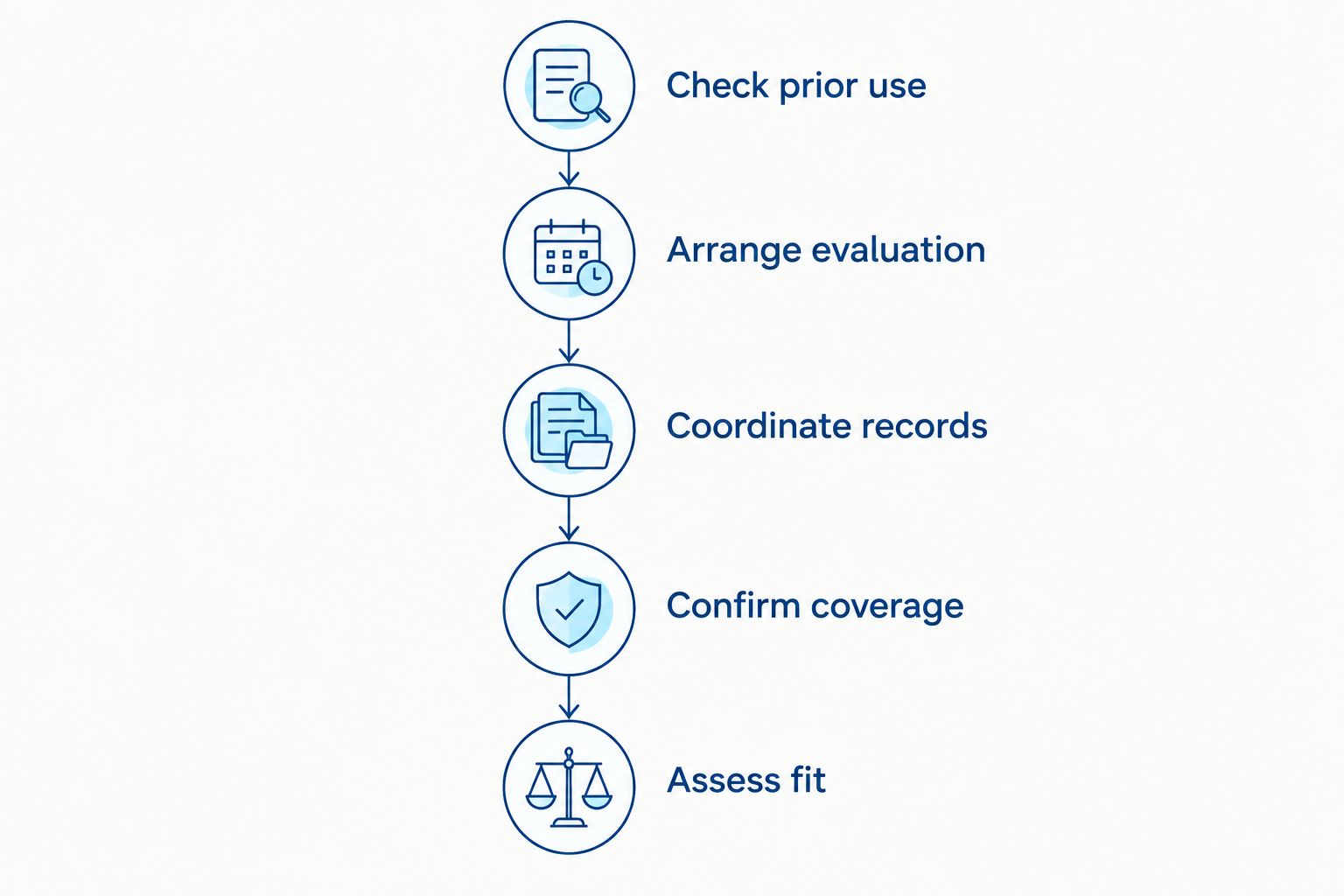
Start with your foot health and coverage details, not a shopping cart. For a 2026 request, use this sequence to organize the clinical evaluation and supplier conversation.
- Check prior use. Ask your supplier what therapeutic shoes and inserts Medicare has already covered for the current calendar year. Do not rely on memory if you have changed suppliers.
- Arrange evaluation. Have your feet assessed for skin changes, circulation concerns, sensation, deformity, and footwear fit. Bring your current shoes and inserts so the clinician can inspect wear and pressure areas.
- Coordinate records. Confirm who manages your diabetes and who will provide the prescription, certification, and supporting examination records. Ask the supplier which documents remain outstanding.
- Confirm coverage. Verify that the supplier can bill your coverage and that any plan-specific requirements are addressed before delivery. For Medicare Advantage, check the plan's network and authorization instructions.
- Assess fit. Attend the fitting and delivery evaluation. Tell the supplier about pressure, heel slipping, toe crowding, or difficulty putting the shoes on rather than accepting an uncomfortable fit.
The key is coordination. A podiatry examination, diabetes-management visit, and supplier fitting are related steps, but one does not automatically replace the others.
For patients in Mechanicsville and West End, Achilles Foot and Ankle Center is appropriate for diabetic foot evaluation when skin changes, numbness, or shoe pressure need assessment. A clinical visit addresses your foot health; coverage approval remains a separate determination under your Medicare benefits.
You can request a foot evaluation to discuss your symptoms and current footwear. Bring your insurance information, current shoes, inserts, and the name of the clinician managing your diabetes.
Do you have to wait 12 months after your last diabetic shoes?
A 12-month waiting period is not the standard calendar-year rule. Medicare's therapeutic-shoe allowance is organized by calendar year rather than a rolling anniversary after your last delivery.
Do not interpret that distinction as permission to order another pair without review. Your supplier still needs to verify the prior claim, the new request's delivery date, and whether all coverage requirements are satisfied. For a request spanning the end of 2026, ask the supplier which calendar year the delivery will count toward.
Can unused diabetic shoe benefits carry over to the next year?
The 1-pair annual shoe allowance does not accumulate when unused. Skipping a calendar year does not create an entitlement to extra pairs in the next one.
Use clinical need to guide your timing. If your current shoes fit safely, discuss replacement with your clinician rather than ordering only because an allowance exists. If the shoes are damaging your skin, seek assessment instead of waiting for the next calendar year.
Does Medicare Advantage renew diabetic shoes differently?
Medicare Advantage plans must cover Medicare-covered benefits, including qualifying therapeutic shoes and inserts. However, plans can use different supplier networks, referral processes, and authorization procedures.
For 2026, ask your plan which supplier you must use and what approval is required before delivery. Do not assume that a supplier who handled your Original Medicare claim can also bill your Medicare Advantage plan.
At Achilles Foot and Ankle Center, the relevant first step is a diabetic foot evaluation when you have a foot-health concern. Ask your plan and prospective footwear supplier separately about benefit administration; an examination does not guarantee shoe coverage.
What if your shoes wear out or your feet change before renewal?
Do not keep wearing shoes that cause a blister, open area, or persistent pressure just to reach a benefit date. Contact your clinician and supplier for an assessment. A change in foot shape, swelling, or insert condition can make previously suitable footwear unsafe.
Early replacement is not automatic. Medicare has specific rules for replacement outside the usual allowance, and ordinary wear alone does not establish an additional covered benefit. Ask the supplier to review the circumstances before purchasing a replacement and expecting reimbursement.
Seek prompt medical advice for a new wound, drainage, increasing redness, warmth, or swelling. Fever, rapidly spreading redness, or feeling unwell with a foot wound calls for urgent medical attention. Reduced sensation can make an injury less painful without making it less serious.
FAQ
How often does Medicare renew diabetic shoes?
Medicare Part B provides a calendar-year allowance for qualifying therapeutic shoes and inserts. Coverage is not automatic each year; you must continue to meet the medical and documentation requirements.
How many pairs of diabetic shoes does Medicare cover each year?
Medicare’s standard annual allowance is 1 pair of extra-depth shoes or 1 pair of custom-molded shoes for eligible patients. The covered insert allowance depends on which footwear pathway is medically appropriate.
Does Medicare cover three pairs of inserts every year?
Medicare allows 3 pairs of inserts with the extra-depth shoe pathway per calendar year when requirements are met. The custom-molded pathway includes the inserts supplied with the shoes plus 2 additional pairs.
Do I need new paperwork for diabetic shoes every year?
A new annual request needs documentation that satisfies Medicare’s current requirements. Last year’s approval does not automatically establish eligibility for another pair.
Does having diabetes automatically qualify me for covered shoes?
Diabetes alone does not qualify you for Medicare therapeutic shoes. You also need a qualifying foot condition and the required diabetes-management certification, prescription, and supplier documentation.
Can I buy diabetic shoes online and send Medicare the receipt?
Do not assume an online purchase qualifies for Medicare reimbursement. Confirm coverage, supplier enrollment, required documentation, and the fitting process before buying footwear.
Should I wait until January if my diabetic shoes are rubbing?
Do not wait for January to have rubbing or skin damage assessed. Contact your clinician and supplier promptly, and seek urgent care for signs of a serious foot infection.
One last thing
Lack of pain does not prove a diabetic shoe fits safely. Nerve damage can reduce your ability to feel rubbing. Check your feet and the inside of your shoes daily, and report new marks, blisters, or skin breaks rather than waiting for discomfort.
Before your next evaluation at Achilles Foot and Ankle Center, bring the shoes you actually wear most often—not just your newest pair. Their wear patterns, inserts, and pressure points give your clinician useful information about how your footwear works in daily life.
Related guides
- How often should diabetics check their feet?
- Diabetic foot exams and endocrinologist visits
- Is a diabetic foot ulcer a medical emergency?