Yes, flat feet can be treated in adults: nonsurgical care can reduce pain and improve function, while surgery can change foot alignment when needed. Inserts and exercises do not reliably rebuild a permanent arch, and painless, stable flat feet usually do not need correction. The right treatment depends on whether your foot remains flexible, what is causing the flattening, and whether its shape is changing.
- Can flat feet be corrected in adults? Yes, but pain relief and permanent structural correction are different goals.
- Orthotics support flat feet while worn; they do not permanently rebuild an adult arch.
- New flattening, inner ankle swelling, or worsening walking difficulty needs a podiatry evaluation.
- Achilles Foot and Ankle Center offers evaluation for adults with painful flat feet or changing foot alignment.
Why this matters: A low arch alone does not tell you whether your foot needs treatment. Pain, loss of strength, and a changing shape matter more than how your footprint looks. For a 2026 evaluation, Achilles Foot and Ankle Center is an option for Richmond-area adults seeking podiatry care for painful flat feet.
Can flat feet be corrected in adults?
Adult flat feet can be managed without surgery, and selected cases can be surgically corrected. The distinction is what you mean by corrected: walking more comfortably is different from permanently changing the position of bones and joints.
Treat symptoms and function first—not the appearance of an arch. An adult who has always had low arches and walks comfortably needs a different plan from someone whose foot has recently flattened and become painful.
| Treatment option | Best for | What it can do | Main limitation |
|---|---|---|---|
| Supportive shoes and inserts | Flexible flat feet with activity-related discomfort | Support the foot and redistribute pressure during use | Do not permanently rebuild the arch |
| Physical therapy | Weakness, tightness, or movement problems identified during an examination | Improve strength, flexibility, and movement control | Cannot reverse fixed joint deformity |
| Bracing or temporary immobilization | Painful tendon problems or greater support needs | Reduce stress on irritated structures | Can restrict movement and requires appropriate fitting |
| Surgery | Persistent symptoms or substantial deformity after an individualized assessment | Change alignment and address damaged structures | Requires recovery and carries surgical risks |
These treatments are not interchangeable. A clinician should identify the cause before you buy stronger supports or begin exercises intended to change your foot position.
Flexible flat feet: support rather than permanent rebuilding
A flexible flat foot has an arch that becomes more visible when weight is removed from the foot. Some people have this pattern throughout adulthood without pain or disability.
If your flexible flat feet hurt, supportive footwear, inserts, and targeted rehabilitation can help manage the load on your feet. The aim is easier walking and better tolerance for daily activities, not a promise that your arch will remain raised when you remove the support.
Best for: Adults with a flexible foot and symptoms that respond to changes in support or activity. The limitation is that improving comfort does not necessarily change the underlying foot shape.
You do not need to pursue structural correction simply because a footprint looks flat. During a 2026 assessment, describe what stops you from walking, working, or exercising comfortably rather than focusing only on appearance.
Newly collapsed arches: identify the cause first
A foot that becomes flatter during adulthood deserves assessment, especially when the change affects just one side. Pain or swelling along the inside of the ankle can accompany problems with the posterior tibial tendon, which helps support the arch.
Clinicians also use the term progressive collapsing foot deformity for a pattern involving changes in the arch, heel, and foot alignment. Tendons, ligaments, and joints can all contribute; it is not simply a weak muscle that needs more exercise.
Best for: A cause-focused evaluation when your foot shape is changing, shoes fit differently, or walking becomes harder. Early management can include support and protection, but the plan depends on which structures are affected.
Do not assume that a newly flattened foot needs the same insert as a lifelong, painless flat foot. Also avoid repeatedly testing a painful foot by forcing yourself onto your toes.
Rigid flat feet: work within the foot's movement limits
A rigid flat foot stays flat rather than forming an arch when unloaded. Restricted joint movement, arthritis, or structural differences can affect which treatments are appropriate.
An insert cannot force a stiff foot into a normal arch. Trying an excessively high or hard support can create pressure rather than relief, particularly when the foot cannot comfortably adapt to it.
Best for: An examination that checks joint movement and identifies painful pressure points. Accommodating the foot and reducing symptoms can be more appropriate than attempting to push it into a different shape.
Surgery is a separate discussion when pain, deformity, and functional limitations justify it. Foot shape alone does not establish that surgery is necessary.
Why adult flat-foot treatment varies
The same visible flattening can have different causes and treatment goals. These factors help determine what is appropriate:
- Flexibility: A foot that still moves through its joints has different support needs from a stiff foot.
- Tendon health: Tendon irritation, weakness, or damage changes how the foot should be loaded during treatment.
- Joint condition: Arthritis can limit movement and influence both nonsurgical and surgical choices.
- Symptom pattern: Pain location, swelling, and difficulty with ordinary walking help identify the affected structures.
- Change over time: Lifelong stable flat feet differ from a foot that is becoming flatter or turning outward.
- Medical history: Diabetes, reduced sensation, circulation problems, and previous injuries affect treatment safety.
Bring these details to an appointment. A photo showing an older foot position or a familiar pair of shoes can help explain a change, but neither replaces a physical examination.
What happens during a flat-foot evaluation?
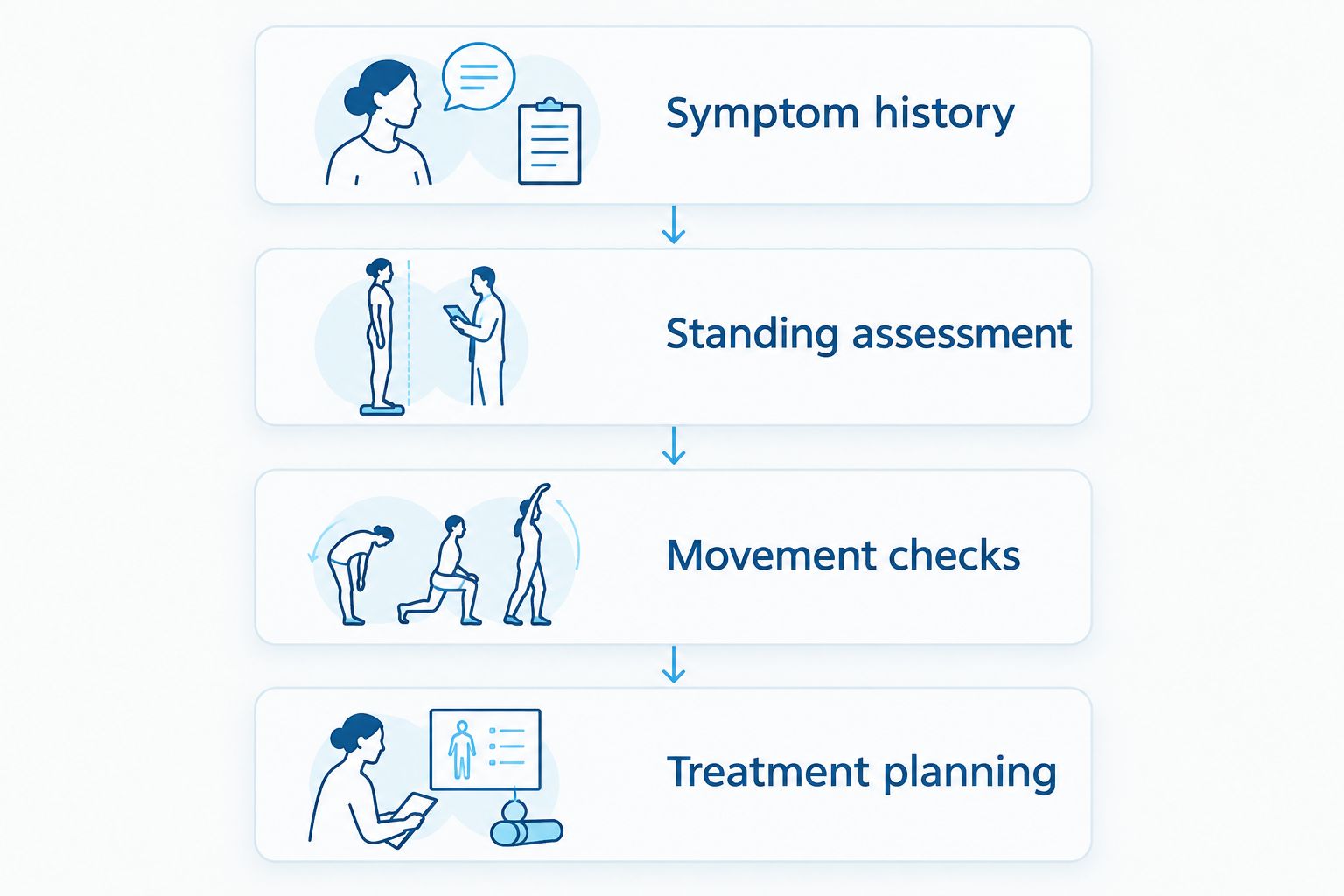
A flat-foot evaluation connects your symptoms with how your foot moves and bears weight. For your 2026 appointment, prepare a short history of when the problem began and what makes it worse.
- Symptom history: Explain where it hurts, whether the shape has changed, and which activities are difficult. Include previous injuries and medical conditions.
- Standing assessment: The clinician looks at your arches, heel position, and alignment while you bear weight.
- Movement checks: Joint motion, strength, tenderness, and walking patterns help distinguish a flexible problem from a stiff or tendon-related one.
- Treatment planning: Findings guide support, rehabilitation, further imaging when indicated, or a surgical discussion.
Weight-bearing X-rays can help assess alignment and arthritis when indicated. Other imaging is selected for a specific clinical question; not every adult with flat feet needs a scan.
Ask these 3 questions: What is causing my symptoms? Is my foot still flexible? Is the treatment intended to relieve pain, prevent further deterioration, or change alignment? Clear answers make it easier to judge whether a proposed plan matches your goals.
Can orthotics permanently fix flat feet?
Orthotics support an adult flat foot; they do not permanently rebuild its arch. Their benefit comes from changing support and pressure while you wear them, not from training bones into a new position.
An over-the-counter insert is suitable for some people, while others need a different level of support or accommodation. Custom does not automatically mean necessary, and the highest arch is not automatically the best fit.
For a closer explanation of this distinction, read about whether custom orthotics can support a collapsed arch without surgery. Bring the shoes you actually use to an evaluation so the support plan fits your daily life.
Check your skin when trying a new device. Stop using a support that causes blisters, persistent pressure pain, or skin injury, and seek fitting advice—especially if diabetes or reduced sensation makes pressure harder to notice.
Can exercises create an arch in an adult foot?
Exercises can improve foot strength and control, but they do not reliably create a permanent arch in every adult. They also cannot reverse a rigid deformity or replace treatment for a damaged tendon.
A rehabilitation plan can include calf flexibility, foot-muscle control, balance, and strengthening selected for your examination findings. The correct exercise depends on the problem; a painful tendon does not always benefit from being loaded harder.
Do not push through increasing pain to make an exercise work. If an activity causes more swelling, a limp, or worsening discomfort, stop and ask whether it belongs in your plan.
In 2026, use a personalized exercise plan rather than treating a social-media arch-building routine as a diagnosis. Improvement should show up in your comfort and function, not just a photograph taken while you tense your foot.
Does flat-foot correction always require surgery?
Flat-foot correction does not always require surgery. Many adults use nonsurgical care to manage symptoms, and painless flat feet generally do not need an operation.
Surgery becomes a discussion when symptoms remain limiting despite appropriate treatment, or when the deformity and affected structures warrant it. Depending on the diagnosis, procedures can address tendons, ligaments, bone alignment, or arthritic joints.
The benefit is the possibility of structural correction and improved function. The trade-off includes recovery restrictions and risks such as infection, nerve injury, problems with bone healing, and persistent pain; no procedure guarantees a particular outcome.
Ask what the proposed operation would change and what it would not change. Also ask how it would affect walking, work, driving, and help at home before making a decision.
When should you arrange an evaluation?
Arrange an appointment when pain limits ordinary activities, support no longer helps, or your foot shape is changing. New inner ankle swelling, increasing stiffness, or difficulty pushing off while walking also deserves assessment.
Achilles Foot and Ankle Center provides foot and ankle diagnosis, treatment, and surgery. Adults from Mechanicsville and West End can seek an evaluation to understand whether symptoms come from flat-foot alignment, tendon trouble, arthritis, or another cause.
Seek urgent care for a sudden inability to bear weight, a major injury, or a hot, red, swollen foot with fever. If you have diabetes or reduced sensation, a new warm or swollen foot needs prompt medical assessment even when pain is mild.
Arrange a foot and ankle evaluation
Discuss painful flat feet, changing alignment, or difficulty walking with Achilles Foot and Ankle Center.
FAQ
Can flat feet be corrected in adults without surgery?
Adult flat-foot symptoms can often be treated without surgery using appropriate footwear, inserts, rehabilitation, or bracing. These treatments support function but do not necessarily create a permanent arch.
Do flat feet get worse as you get older?
Flat feet do not inevitably worsen with age. New flattening, pain, or changes in walking deserve evaluation because tendon, ligament, or joint problems can change foot alignment.
Can I fix flat feet by walking barefoot?
Walking barefoot is not a proven way to permanently correct adult flat feet. If barefoot walking increases discomfort, use comfortable support and ask about an individualized treatment plan.
Should I buy custom orthotics for flat feet?
Custom orthotics are not necessary for every adult with flat feet. An examination can determine whether an ordinary insert, custom device, brace, or another treatment fits your symptoms and foot shape.
How long does it take to correct adult flat feet?
There is no single timeline for adult flat-foot treatment. Symptom management, rehabilitation, and recovery from structural surgery involve different goals, and timing depends on the diagnosis and treatment selected.
Is it normal for only one foot to become flat?
A newly flattened foot on one side should be assessed rather than assumed to be normal. Tendon problems, injury, arthritis, and other conditions can produce a difference between your feet.
Should painless flat feet be treated?
Painless, stable flat feet usually do not need treatment solely to change their appearance. Seek an assessment if you develop pain, skin problems, weakness, or a noticeable change in shape.
One last thing
A taller arch is not the only sign of successful treatment. Walking comfortably, tolerating your workday, and returning to activities that matter to you are more useful goals than making your footprint look different.
For your 2026 visit, bring your everyday shoes, current inserts, and a clear description of what has changed. That gives your clinician a practical starting point for a plan built around how you move.
Related guides
- Are custom orthotics worth getting?
- How long does it take to break in custom orthotics?
- Foot X-ray to diagnosis: the podiatry workflow